

It’s rare that technology circles back to old-school tools, but here we are using styluses to jot down notes on tablets. Of course, today’s versions swap ink and paper for pixels. If you’re shopping for a new tablet for work or leisure, this buying guide has you covered.
Tablets aren’t just oversized phones anymore. They’ve grown into versatile tools that can slot into almost any part of your life. You might use one to sketch out a design, check your bank account, catch up on a book, or even replace your laptop for occasional work.
The market now covers just about every need. There are slim, travel-friendly models you can slip into a bag without thinking, as well as heavyweight performers that handle demanding apps and multitasking with ease.
In our roundup, we’ve included both ends of the spectrum, from premium options built for serious productivity to budget-friendly picks that are great for streaming, browsing, and casual use.
Why you can trust Stuff: Our team of experts rigorously test each product and provide honest, unbiased reviews to help you make informed decisions. For more details, read how we test and rate products.
Quick list: what’s the best tablet?
The best tablets you can buy today:
1. Apple iPad Air (M3)
| Apple iPad Air (M3) specs | |
|---|---|
| Display | 11in 2360 x 1640 or 13in 2732 x 2048 Liquid Retina display |
| Processor | Apple M3 |
| RAM | 8GB |
| Storage | 128, 256, 512GB, 1TB |
| Cameras | Rear: 12MP wide camera, ƒ/1.8 aperture Front: 12MP ultrawide, ƒ/2.4 aperture |
| Battery | 10 hours |
| Connectivity | USB-C, Wi-Fi 6E, Bluetooth 5.3 |
| Software | iPadOS |
| Dimensions | 247.6×178.5×6.1mm / 9.75 x 7.03 x 0.24 in |
| Weight | 460g / 16.2 oz |
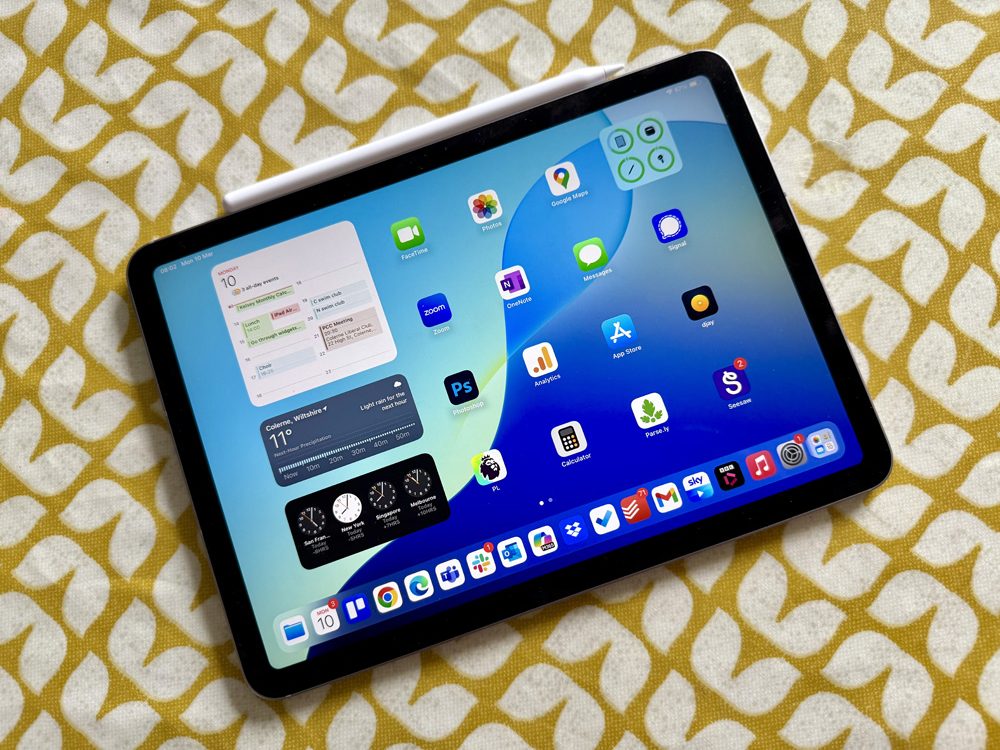
We think the iPad Air (M3) hits a perfect middle ground – it’s powerful enough to rival the iPad Pro, yet simpler and more affordable for people who don’t need every bell and whistle. With the same M3 chip found in the latest MacBook Air, it barely breaks a sweat with demanding apps. In testing, we juggled a video project in iMovie, edited photos in Lightroom, and streamed Spotify – without a single hiccup. It’s serious power, even if most people won’t come close to pushing it that hard.
Available in both 11in and 13in sizes, it’s also the first Air to offer a bigger display option. The 13in model feels roomy for design work but still light enough to use one-handed – it’s only 6.1mm thick and about 35g heavier than the Pro. The Liquid Retina display is still capped at 60Hz, but colours are punchy and sharp, with Apple’s True Tone making it comfortable for long reading or sketching sessions. We streamed HDR shows on Netflix and didn’t miss ProMotion as much as we thought we might.
Add the new Pencil Pro, and it becomes a brilliant canvas for sketching or note-taking – tilt, pressure, and haptic feedback all work beautifully. For more casual scribblers, the cheaper USB-C Pencil also pairs fine. We used both for a week, doodling and handwritten notes, and didn’t notice any lag. Snap on the updated Magic Keyboard (complete with a function row) and it quickly becomes a compact laptop – though at $269/£269, it’s not exactly a bargain.
Battery life easily lasts a full workday. We got around 10 hours of mixed use – editing, streaming, and typing – before it dipped under 20%. The front-facing 12MP ultrawide camera handles video calls well, keeping you centred with Apple’s Center Stage trick, while the 12MP rear camera is solid for quick 4K clips or scanning documents.
Sure, you’re paying a chunk more than for the regular iPad, and there’s still no Face ID or 120Hz display. But if you want a future-proof iPad that feels every bit as slick and capable as the Pro (minus the overkill), this is the one to get.
Read more: Apple iPad Air (M3) review
2. Apple iPad Pro (M4)
| Apple iPad Pro (M4) specs | |
|---|---|
| Display | 13 or 11-inch 2732 x 2064 120Hz Ultra Retina XDR Tandem OLED |
| Processor | Apple M4 |
| RAM | 8/16GB |
| Storage | 128/256/512GB and 1/2TB |
| Cameras | 12MP (rear), 12MP (front) |
| Battery | 10 hours |
| Connectivity | 5G, Wi-Fi 6E, Bluetooth 5.3, USB-C |
| Software | iPadOS |
| Dimensions | 11in: 250 x 178 x 5.3mm (11.10 x 8.50 x 0.20 in) 13in 282 x 216 x 5.1mm (11.10 x 8.50 x 0.20 in) |
| Weight | 11in: 444g or 446g (15.7 oz or 15.8 oz) 13in: 579g or 582g (20.4 oz or 20.5 oz) |
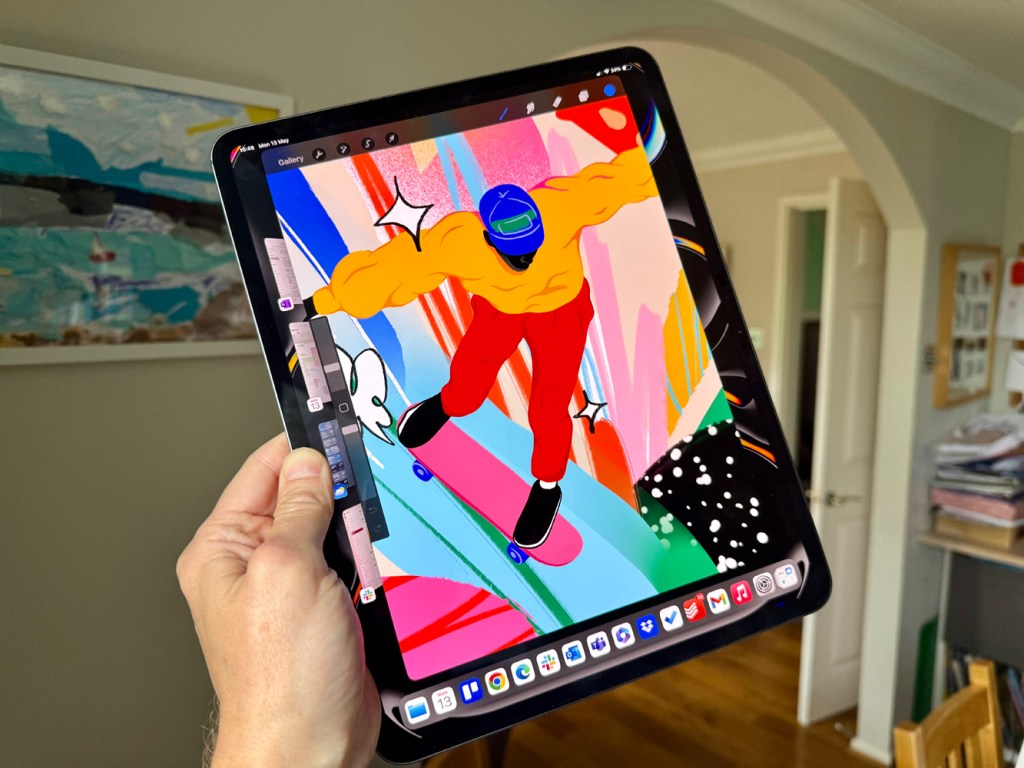
Apple’s iPad Pro (M4) isn’t just the company’s flagship tablet — it’s one of the most powerful portable devices you can buy, full stop. In testing, it chewed through everything we threw at it. We easily exported a 4K clip in Final Cut Pro while running Safari tabs, Slack, and Photoshop in the background. The new M4 chip pushes performance into proper laptop territory, easily handling 3D modelling and heavy multitasking without even warming up.
The OLED Ultra Retina XDR display is equally jaw-dropping. Watching Dune: Part Two on it felt cinematic, with true blacks and searing highlights that gave HDR content real punch. Editing photos in Lightroom, we could spot subtle tonal shifts that older LCD iPads simply blur. It’s also pin-sharp and bright enough to stay visible outdoors, even under direct sun.
At just 5.1mm thick, it’s Apple’s slimmest iPad yet, though it still feels reassuringly solid, with no creaks, no flex. The new Apple Pencil Pro adds haptics that make shading and brush strokes feel tactile; we spent an hour sketching, and it genuinely feels closer to drawing on paper.
It’s not flawless, though. iPadOS still puts limits on multitasking – Stage Manager helps, but it’s no macOS – and the Magic Keyboard, while excellent, remains eye-wateringly expensive. In our week-long test, battery life averaged around 8–9 hours of mixed use: solid, but not standout, given the power inside.
For pure performance and display quality, it wipes the floor with the iPad Air (M2 or even M3). But until Apple loosens the reins on iPadOS, it’s best seen as a phenomenal creative tool rather than a full laptop replacement. Starting at US$999 / £999, the iPad Pro M4 caters to professionals pushing tech to its limits – and it’s easily the best tablet we’ve ever tested.
3. Samsung Galaxy Tab S10 Ultra
| Samsung Galaxy Tab S10 Ultra specs | |
|---|---|
| Screen | 14.6in, 2960×1848, 210Hz AMOLED |
| CPU | MediaTek Dimensity 9300 Plus |
| Memory | 12/16GB |
| Cameras | 13MP + 8MP rear, 12MP+12MP front |
| Storage | 256GB/512GB/1TB, plus microSD expansion |
| Operating system | Android 14 w/ OneUI |
| Battery | 11,200mAh w/ 45W wired charging |
| Dimensions | 209x326x5.4mm |
| Weight | 718g |
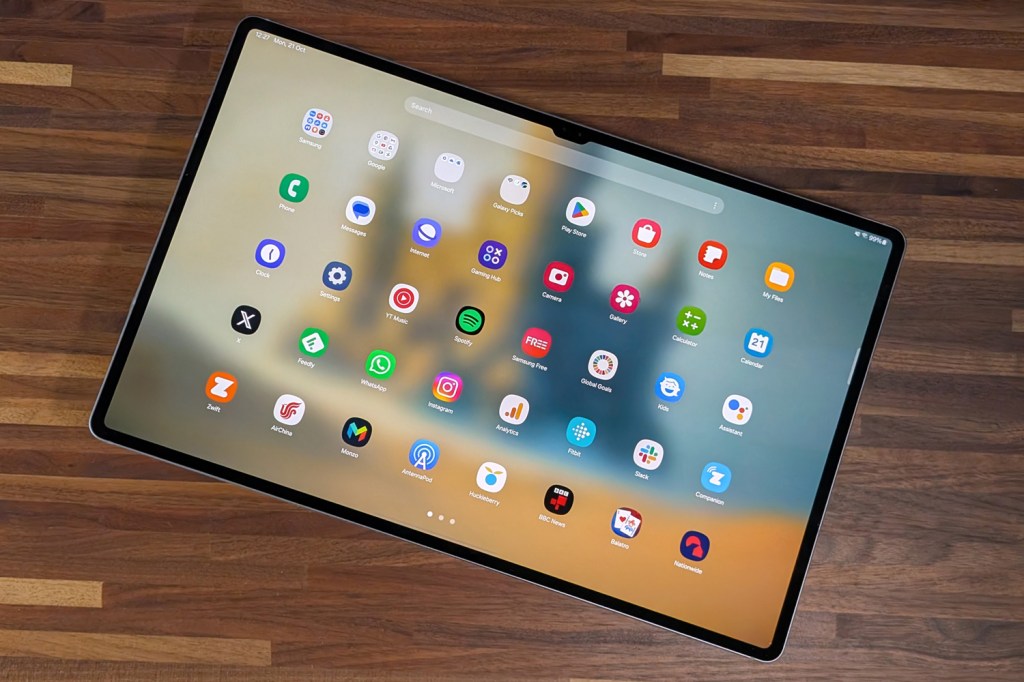
The Samsung Galaxy Tab S10 Ultra is a giant in every sense. Its 14.6in anti-reflective AMOLED display dominates your desk, making it perfect for creative multitasking or watching films without reaching for a laptop. In testing, we split the screen between a 4K YouTube video, Samsung Notes, and Chrome – all running smoothly with no hint of slowdown.
Colours are vivid, contrast is excellent, and brightness hit over 1000 nits in our real-world test, cutting through glare even when used outdoors. Samsung also bundles in the S Pen, which remains one of the best styluses around for note-taking, sketching, and editing. Writing in Samsung Notes feels fluid, and the pressure sensitivity makes shading feel natural. AI-powered tricks like object removal in photos and real-time transcription actually proved useful, not gimmicky – we used them to clean up images and turn lecture recordings into searchable notes with ease.
Performance is just as confident. With MediaTek’s Dimensity 9300 Plus chip, the Tab S10 Ultra comfortably handles tasks that used to demand a laptop. We played Genshin Impact at max settings without so much as a stutter. Battery life held up well, lasting around 11 hours in our test mix of streaming, note-taking, and video editing – though you’ll want a 45W charger if you need a quick top-up, as none is included in the box.
Apple’s iPad Pro still edges ahead on creative app support, and Samsung’s upgrades this year feel more evolutionary than revolutionary. But for Android users, this is the tablet to beat. The magnesium frame feels reassuringly premium, the IP68 rating means it’ll shrug off splashes, and with seven years of software updates promised, it’s built to last. Pricey, yes, but right now the Galaxy Tab S10 Ultra is the best Android tablet you can buy.
4. OnePlus Pad 3
| OnePlus Pad 3 specs | |
|---|---|
| Display | 13.2in, 3392×2400 LCD w/ 144Hz |
| Processor | Snapdragon 8 Elite |
| RAM | 12/16GB |
| Storage | 256/512GB on-board |
| Cameras | 13MP rear, 8MP front |
| Battery | 12,140mAh w/ 80W wired charging |
| Connectivity | Wi-fi, Bluetooth, USB-C |
| Software | Android 15 |
| Dimensions | 290x210x5.97mm, 675g |
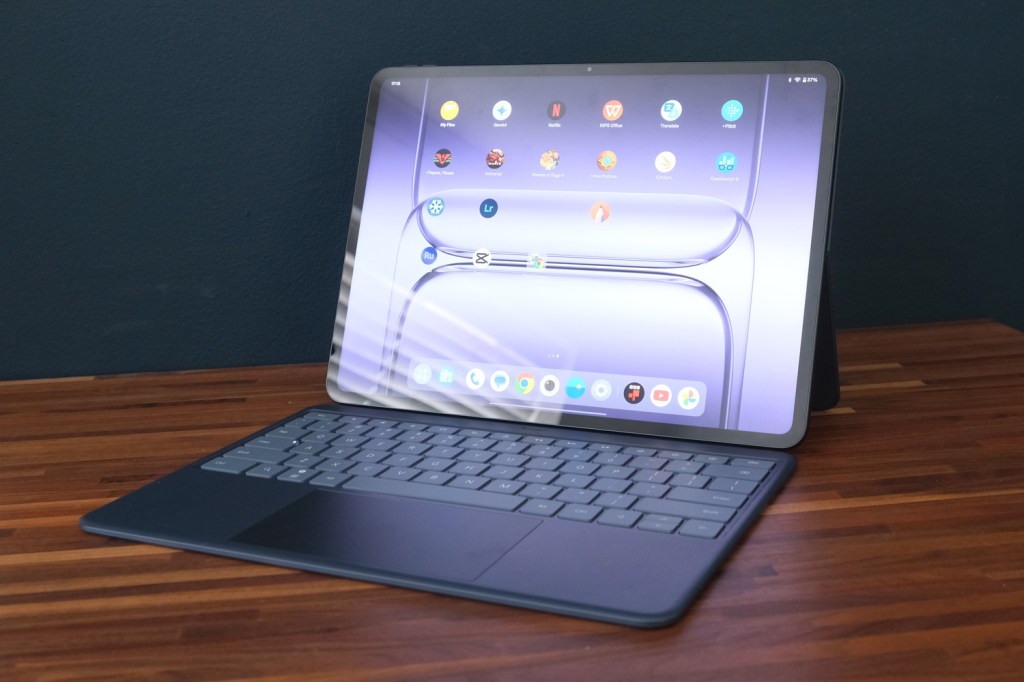
The OnePlus Pad 3 is one of the best all-around Android tablets we’ve tested and a great alternative to an iPad for Android users. It’s a proper powerhouse that nails productivity, gaming and entertainment without costing a fortune. It undercuts rivals like the Samsung Tab S10 FE+ and iPad Air, yet delivers a premium experience that rarely compromises.
It’s slim, sleek and solidly built, with a vibrant 13.2in LCD display that’s sharp, bright and colour-rich – we found it perfect for work and Netflix alike. There’s no OLED, but you won’t miss it. Eight speakers deliver impressive sound, and the 7:5 aspect ratio makes multitasking feel natural. OnePlus’ software polish shines too, especially Open Canvas, which handles multiple apps better than anything else on Android.
Performance is top tier, thanks to a Snapdragon 8 Gen 3 chip and up to 16GB of RAM. It flies through creative apps, games, and split-screen use. Battery life is class-leading, with its 12,140mAh cell lasting days on a charge, and 80W charging gets you topped up fast.
Accessories like the excellent Smart Keyboard and Stylo 2 stylus boost productivity but also push up the price. Cameras are forgettable, and you only get three years of major Android updates, not quite matching Samsung or Apple for longevity.
Still, for most people, this is everything a tablet should be: fast, versatile, and fun to use. If Android fits your workflow and you don’t want to spend iPad money, the OnePlus Pad 3 is an easy recommendation.
5. Apple iPad Mini (6th generation)
| Apple iPad Mini (6th generation) specs | |
|---|---|
| Display | 8.3in 2266×1488 LED IPS |
| Processor | Apple A15 Bionic |
| RAM | 4GB |
| Storage | 64/256GB |
| Cameras | 12MP (rear), 12MP (front) |
| Battery | 10 hours |
| Connectivity | 5G, Wi-Fi 6, Bluetooth 5.0, USB-C |
| Software | iPadOS 15 |
| Dimensions | 195.4×134.8×6.3mm, 297g |
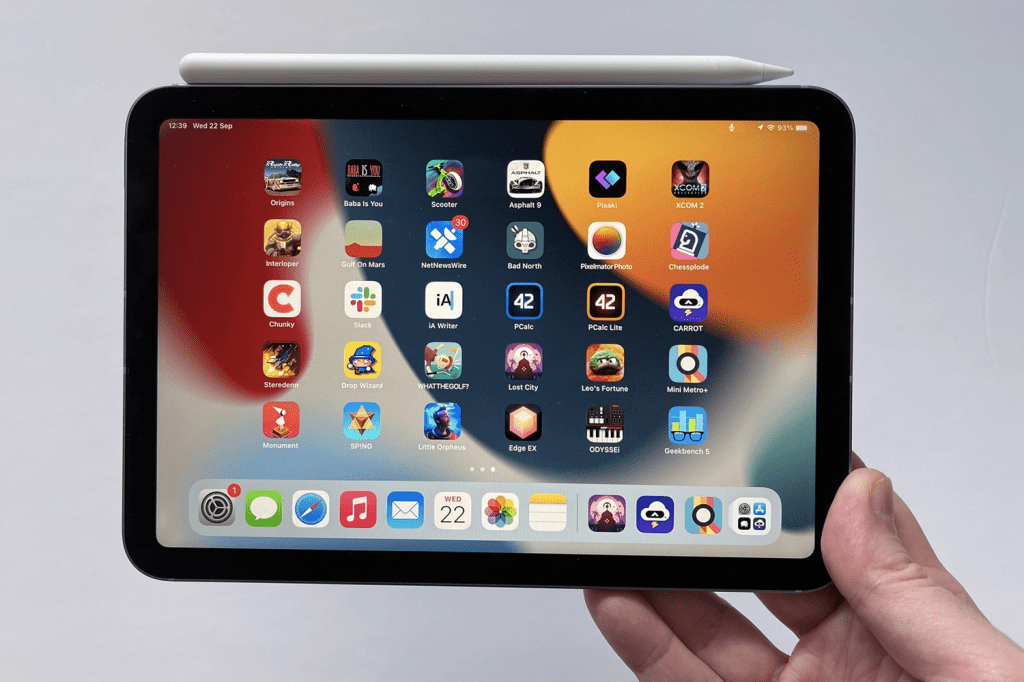
Styled like an iPad Air that’s shrunk in the wash, the revamped iPad Mini is all screen – and all the better for it. In hand, it feels like a proper premium gadget, not a cut-down compromise. At around 300g, it’s lighter than most paperbacks, and its smaller-than-A5 footprint slips easily into a jacket pocket or satchel. We carried it around for a week, using it on trains, planes, and café tables, and it never once felt awkward to hold or type on.
Despite its dinkier size, you still get the full iPad experience. The 8.3in Liquid Retina display doesn’t do 120Hz ProMotion, but it’s beautifully sharp at 326ppi – sharper, in fact, than any other iPad. Watching The Bear on Disney+ looked superb, with punchy colours and deep contrast. Reading comics in the Books app or sketching also felt natural, with no lag or ghosting. It matches the iPad Air for niceties like True Tone, Touch ID in the power button, USB-C connectivity, and a 12MP front camera with Centre Stage that kept us neatly framed on FaceTime calls.
Sure, the 14:9 aspect ratio means some apps leave slim black bars, but most of the time iPadOS feels slick and well-optimised for the smaller screen. Paired with the second-gen Apple Pencil, it’s brilliant for jotting down notes or marking up PDFs on the go. In testing, we managed almost 10 hours of mixed use (everything from streaming to sketching) before reaching for the charger.
If you want a capable, travel-friendly tablet that doesn’t feel like a compromise, the iPad Mini 6 deserves a spot at the top of your shortlist. It’s compact, powerful, and a joy to use – like a pocket-sized Air.
6. OnePlus Pad Lite
| OnePlus Pad Lite specs | |
|---|---|
| Display | 11in, 1920×1200 LCD w/ 90Hz |
| Processor | MediaTek Helio G100 |
| RAM | 6/8GB RAM |
| Storage | 128GB on-board |
| Cameras | 5MP rear 5MP front |
| Battery | 9340mAh w/ 33W wired charging |
| Connectivity | Wi-Fi, Bluetooth, USB-C |
| Software | Android 15 |
| Dimensions | 255x167x7.4mm, 530g |
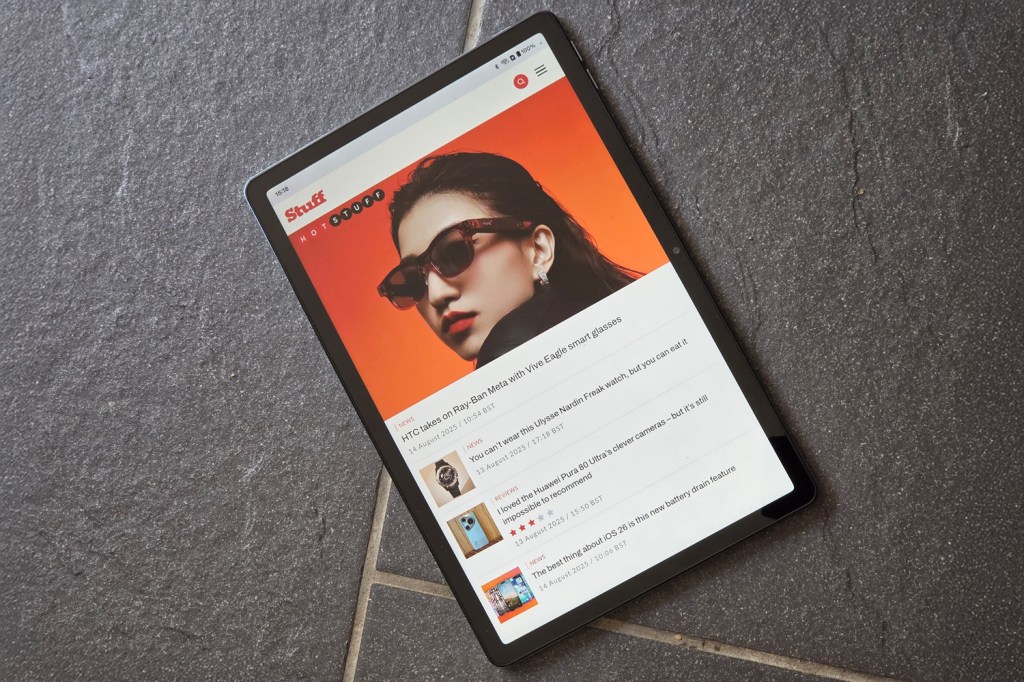
The OnePlus Pad Lite is exactly where I’d start if you’re shopping for a budget Android tablet. For the price, it undercuts most big-name rivals while still feeling anything but cheap. The all-metal body feels solid in hand, and the 11in 90Hz display gives it a surprisingly premium edge – scrolling through Chrome and Instagram felt smooth and responsive. In testing, we streamed two hours of Stranger Things on Netflix, played a few rounds of Asphalt 9, and browsed the web without a stutter.
The huge 9340mAh battery is a real highlight. After a full weekend of mixed use – YouTube, Spotify, some light gaming, and emails – it still had a decent amount left. Leave it on standby and it’ll comfortably tick along for a week without touching the charger, which is rare at this price. Performance from the MediaTek Helio G100 chip is modest, sure, but perfectly fine for browsing, streaming, and social apps. Try juggling several heavy apps or running 3D games, and you’ll notice it slows down, but that’s expected here.
The 5MP front and rear cameras are strictly functional – our test video calls were clear enough, but photos looked soft and noisy indoors. The real surprise is the software: OxygenOS feels clean and uncluttered, with split-screen multitasking that actually works well on a tablet. Kids Mode also impressed us, letting you safely hand it off to younger users without worry. And with four years of Android updates plus six years of security patches promised, longevity isn’t a concern.
At 530g it’s slightly chunky, and the LCD isn’t the brightest outdoors, but those are minor quibbles. For the money, it nails the basics. If you want a reliable family tablet or a simple everyday device that just works, the OnePlus Pad Lite is the one I’d pick.
7. Google Pixel Tablet
| Google Pixel Tablet specs | |
|---|---|
| Display | 10.95in, 2560×1600 LCD |
| CPU | Google Tensor G2 |
| Memory | 8GB RAM |
| Storage | 128/256GB on-board |
| Cameras | 8MP rear, 8MP front |
| Operating system | Android 13 |
| Battery | 12 hours |
| Dimensions | 258x169x8.1mm, 493g |
Is it an iPad rival? A smart display you can actually pick up and walk away with? Or Google’s latest attempt to make Android feel at home on a big screen? The Pixel Tablet is a bit of all three, and that’s exactly what makes it interesting.
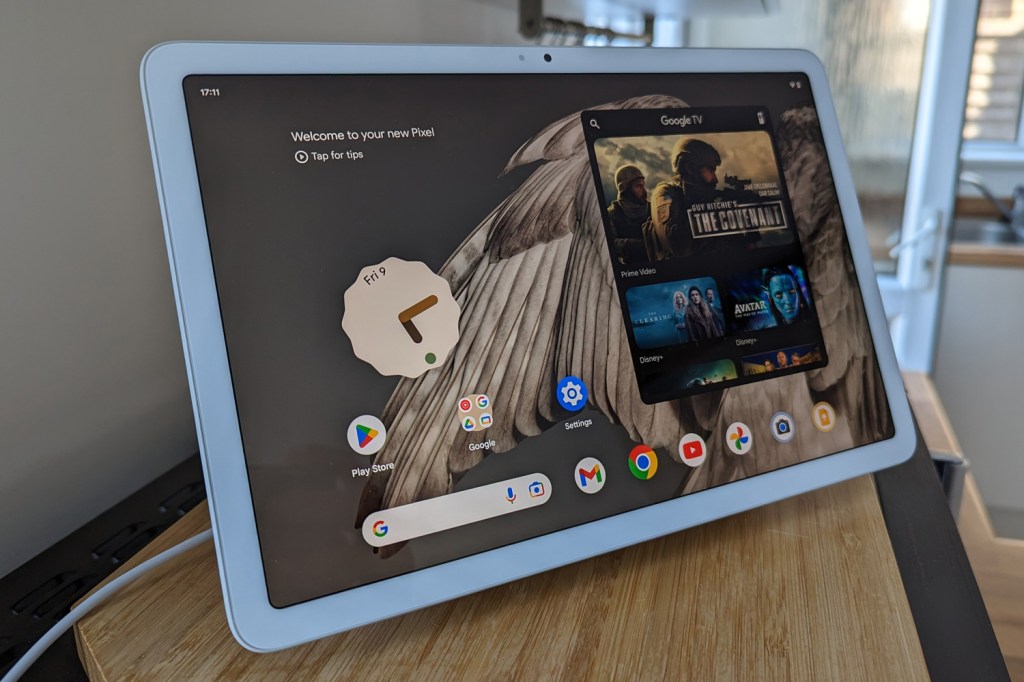
This is Google’s first in-house tablet in five years, and it shows a real shift in thinking. The bundled speaker dock is the secret sauce. Drop the tablet onto it and it becomes a Nest Hub-style smart display, complete with hands-free Google Assistant and rich sound that comfortably fills a room. In testing, we used it to control smart lights, check the weather, and play YouTube Music, all without lifting a finger. Pull it off the dock, and it instantly switches back to a regular tablet for browsing, Netflix, or browsing.
The 10.95in LCD screen is crisp and colourful, and the Tensor G2 chip delivers plenty of power for streaming, light gaming, and multitasking. We had half a dozen apps open, Chrome, Gmail, Music, and Docs among them, without any sluggishness. Android 13 (now properly optimised for tablets) feels smoother than earlier efforts, too. Split-screen finally works well, and apps like YouTube and Google Photos make smart use of the larger layout.
It’s not an iPad killer, and it doesn’t try to be. Apple’s tablets still win for creative apps and raw performance, but the Pixel Tablet nails everyday practicality. It’s a smart home display, a solid media device, and a well-made Android tablet all in one. For anyone already living in Google’s ecosystem, it’s a genuinely useful bit of kit, and one that’s far easier to justify than a tablet that just gathers dust.
8. Xiaomi Pad 7 Pro
| Xiaomi Pad 7 Pro specs | |
|---|---|
| Display | 11.2in, 3200×2136 LCD w/ 144Hz |
| CPU | Snapdragon 8s Gen 3 |
| Memory | 12GB RAM |
| Storage | 128/256/512GB |
| Cameras | 50MP rear 32MP front |
| Operating system | Android 15 w/ HyperOS 2 |
| Battery | 8850mAh w/ 67W wired charging |
| Dimensions | 251x173x6.2mm, 500g |
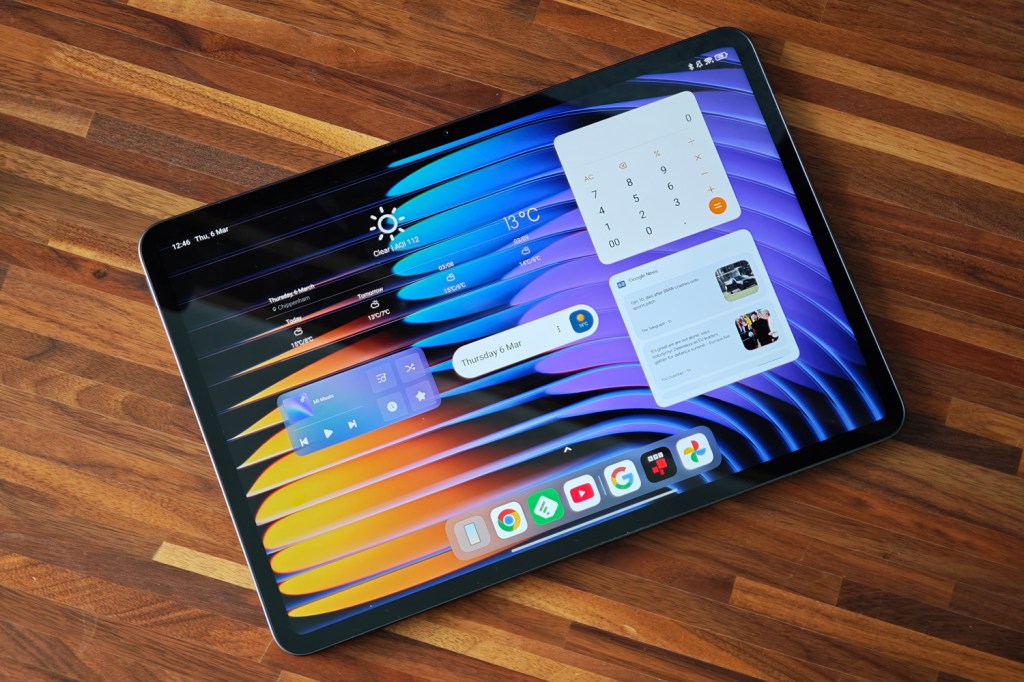
We’ve been crying out for an Android tablet that can genuinely rival the iPad Air – and the Xiaomi Pad 7 Pro gets surprisingly close. During testing, we found it handled everything from split-screen multitasking to 60fps gaming without breaking a sweat, thanks to its Snapdragon 8s Gen 3 chip and up to 12GB of RAM. Xiaomi’s HyperOS tweaks aren’t perfect – multitasking still lags behind Samsung – but we managed four apps at once without stuttering.
The 11.2in LCD isn’t OLED, but it’s pin-sharp (3200×2136) and refreshes at 144Hz. It’s brighter than many OLED rivals too, hitting 800 nits – ideal for outdoor use. Battery life was stellar: we squeezed several days out of its 8850mAh cell, and 30 minutes of Diablo Immortal only sapped 10%.
What surprised us most was how well the official Focus Keyboard transformed the Pad 7 Pro into a laptop replacement. Typing felt solid, the touchpad was slick, and we loved the stepless hinge. Just don’t forget to budget for it – the keyboard isn’t bundled.
No tablet is flawless – the LCD can’t match OLEDs for contrast, and you’ll need a Xiaomi phone to unlock its full ecosystem. But for not very much money at all, this thing is a steal. We’d happily use it every day.
What to look for when buying the best tablet
When choosing a tablet, it helps to start by thinking about what you’ll actually use it for. If it’s mainly for casual stuff – browsing the web, streaming films, or a bit of gaming – you don’t need to go overboard. A solid mid-range model with a reliable processor, at least 4GB of RAM, and a Full HD screen should do the job nicely.
But if you’re planning to use it for work that’s more demanding, stuff like creating digital artwork, video editing, or juggling several heavy apps at once, you’ll want something more powerful. In that case, look for a tablet with a top-tier chip (such as Apple’s M2 or Snapdragon 8 Gen 2), at least 8GB of memory. Plenty of storage is important as well – 256GB or higher is a good baseline, and expandable storage is worth looking for.
The operating system is also a crucial factor, with iOS and Android being the primary options. The Apple iPad with iOS offers a smooth, integrated experience with a vast app ecosystem optimised for tablets. It’s perfect if you already have other Apple devices.
Android tablets, on the other hand, provide more flexibility and customisation, with a wide range of models to suit various budgets.
We’ve touched on it before, but the display quality really is a key feature for tablets. Consider the display size, resolution, brightness, and colour accuracy, especially if the tablet will be used for media consumption or creative work.
If you plan on using your tablet mainly for reading e-books, consider getting one of the best e-readers instead. These have matt, paper-like e-ink displays which are much easier on the eyes.
While a tablet’s battery life is important, it’s not quite as vital as a smartphone’s battery life. This is because a good tablet should last at least 8-10 hours on a single charge, but tablets are generally used at home or near a charging outlet (not out and about like phones).
If you’re looking for something a little more affordable, check out the best cheap tablets, and, if you’re only interested in Apple tech, then check out our guide to the best iPad.
Finally, you’ll also want to consider additional features such as stylus support, keyboard compatibility, and connectivity options (like USB-C, HDMI, or 5G capability) depending on how you plan to use your tablet.
Wi-Fi-only vs. cellular tablet – which should you buy?
Choosing between a Wi-Fi-only and a cellular tablet depends on how and where you’ll use it. A Wi-Fi-only tablet is more affordable and ideal if you’re mostly at home, work, or places with reliable Wi-Fi. However, it becomes useless when you don’t have Wi-Fi.
A cellular tablet offers on-the-go connectivity via a SIM, making it perfect for frequent travellers or remote workers. It’s more expensive upfront and requires a data plan, but it provides more flexibility when you’re out and about.
If portability and always-on access matter, go cellular; otherwise, Wi-Fi is sufficient.
Can a tablet replace a laptop?
For light use, a tablet can often stand in for a laptop. With a decent processor, support for multitasking, and cloud storage, it’s fine for browsing, streaming, emails, note-taking, and even some light editing. Add a keyboard, and it starts to feel like a slim, ultra-portable laptop.
Tablets are versatile, but they do have limits. If you’re coding, editing large video projects, or working with big spreadsheets, you’ll likely hit roadblocks with app support and clunky file management. That’s where laptops take the lead. They give you full desktop software, smoother multitasking, and extra ports for hooking up the accessories you need.
So, if your needs are simple and portability matters most, a tablet will do the job. But if you’re after serious productivity, a laptop is still the safer bet.
Recent updates
- 19th September 2025: We added the OnePlus Pad Lite as our best cheap tablet model.
- 9th October 2025: We replaced the iPad Air M2 with the newer iPad Air M3 as the best tablet overall.
Read the full article here
