

Self-driving cars have felt like a technology that’s been “just around the corner” for the better part of a decade. Everyone from century-old car companies to seed-funded startups have tried to develop a truly autonomous taxi and, for now, only Google-sibling Waymo has made the tech a commercial reality.
Even for Tesla, with its Autopilot driver assistance system, the development of a driverless car took longer than expected. Elon Musk said back in 2019 that, by the following year, Tesla would be operating one million autonomous taxis on public roads. He believed Teslas already sold would be capable of acting as driverless cabs, earning their owner money while they worked or slept. This didn’t happen.
Here’s everything you need to know about Tesla’s Cybercab.
Cybercab design
Called Cybercab, the two-seat vehicle was revealed in October 2024 at an event where attendees were given short rides on private land.
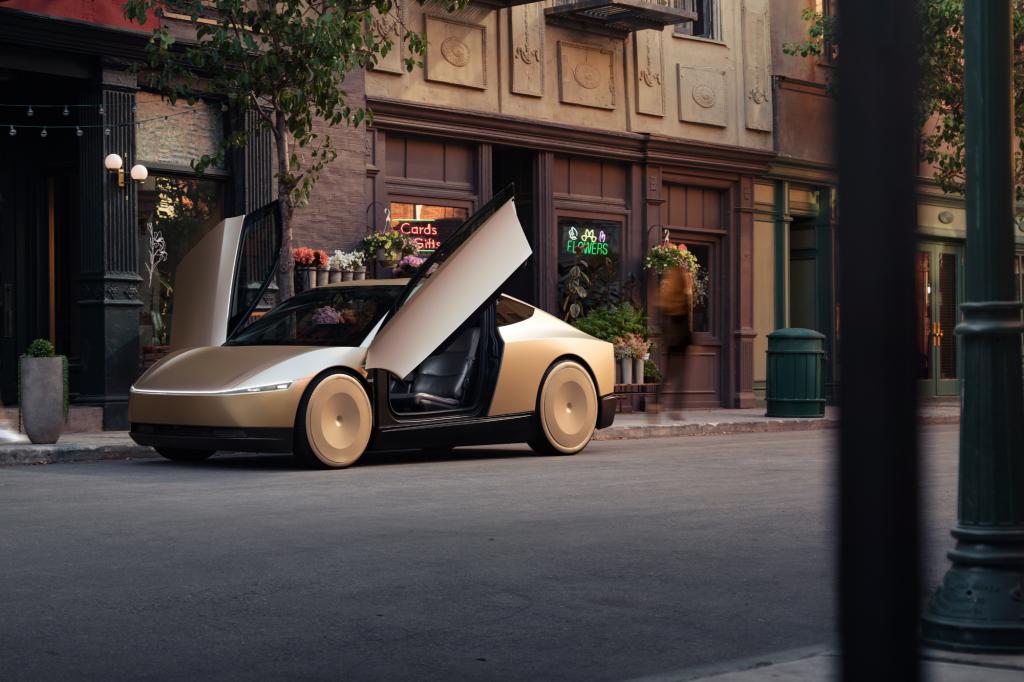
Complete with sleek, futuristic styling, vertically-hinged doors and glitzy gold paintwork, it was part-taxi, part-mini Cybertruck.
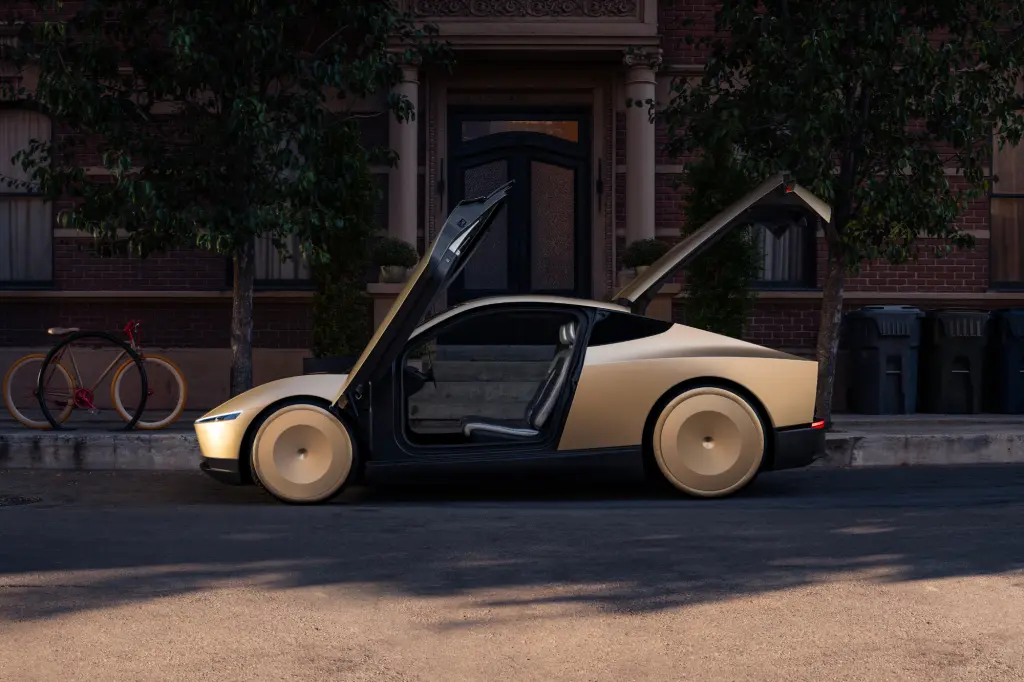
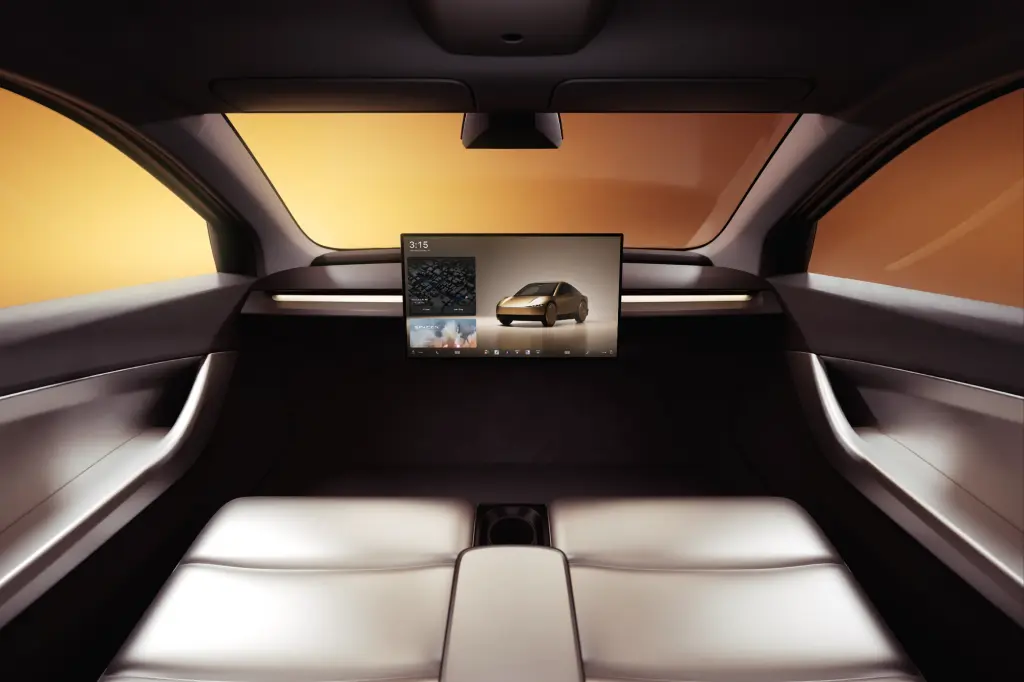
Inside, Tesla’s signature minimal interior design ethos is taken to a new level, since there’s no steering wheel or pedals – at least that’s the planning for production versions used by the public.
The two-seat cabin has a pair of cup holders in the centre console and a large display on the dashboard for informing passengers about their ride.
Cybercab specs
The final specification isn’t known, but Tesla has previously said the Cybercab has a 35 kWh battery – relatively small compared to those of its other cars – two seats, and a range of around 200 miles.
Tesla claims a target efficiency of 5.5 miles per kWh (higher than practically any EV on sale today), and the potential for inductive charging, where the cab would be charged wirelessly.
Another unknown is how the Cybercab will see the world around it. Tesla has rejected lidar technology for years now, instead saying its Autopilot system can perform better with cameras and artificial intelligence.
Waymo, which currently operates a truly driverless taxi service in pre-mapped areas of some US cities, uses cameras, plus radar and lidar.
Cybercab production & release date
Tesla said it planned to produce two million Cybercabs per year by the end of 2026, and in late-2025 Musk said production would begin in the first half of 2026.
As of April 2026, dozens of Cybercab prototypes have been produced. Photos posted to social media showed around 60 vehicles outside a Tesla factory – but since the Cybercab is still in its testing phase, steering wheels were spotted inside the vehicles and it isn’t clear how close these are to mass-production reality.
Cybercab: the case for two seats
Tesla was initially criticised for showing off a two-seat taxi, since this rules out use by families or groups larger than two. But you could also argue this gives the Cybercab an air of exclusivity, privacy and, if Tesla works out how to keep the interiors clean, luxury too.
Instead of cramming into a cab with three other people, this could be a private transport experience, where phone calls can’t be overheard.
It’s also a seating plan that makes the Cybercab smaller, lighter, more efficient and potentially cheaper to build, buy and operate than cars like the modified, five-seat Jaguar I-Pace currently used by Waymo.
According to Uber’s operating officer Andrew Macdonald, more than 90 percent of Uber rides today are for just one or two people. Transportation studies claim the average taxi occupancy in the UK is approximately 1.6 passengers per trip.
Cybercab concerns & unknowns
Tesla is yet to address accessibility concerns. It isn’t clear if any provisions have been made to assist disabled customers with entering and exiting a low-slung Cybercab.
Still unknown is what Tesla will charge, where its fleets of Cybercabs will operate, whether larger vehicles will join the two-seaters later, and what the business model is.
Will we be able to buy our own Cybercab? Will taxi companies be approached to buy entire fleets of them? Or will Tesla run the whole operation – including charging, cleaning, maintenance and assistance – itself?
An autonomous future?
With Waymo now completing more than 500,000 autonomous rides for paying customers every week – up 10-fold in just a couple of years – there’s clearly the technological ability and commercial appetite for self-driving taxis.
Hopefully, since dozens of test vehicles have now been produced and widespread testing on public roads could start in earnest, we’ll learn more about the Tesla Cybercab soon.
Liked this? All Tesla models ranked, from best to worst


Read the full article here
