

Introduction
As an action-oriented evolution of the tech seen in Meta’s earlier Ray Ban smart glasses, Oakley’s bike-friendly sun blockers are seriously smart.
Beyond simply streaming music from your smartphone to soundtrack your workouts, the Vanguard has a camera built into the bridge that can record whatever sports or activities you get up to from a true first person perspective. They’re also packing Meta’s AI smarts and tie in with big-name fitness apps like Strava and Garmin, for hands-free updates mid-exercise.
At $499/£499 they’re pricier than the Meta Ray Ban Gen 2 (and a fair bit more expensive than the Gen 1, which remain on sale). The distinctive looks also might put you off using them whenever you’re not dressed for the gym or running track. Does that make them worth the outlay for everyone, or just those with intimate knowledge of their VO2 max?
Design & build: all wrapped up
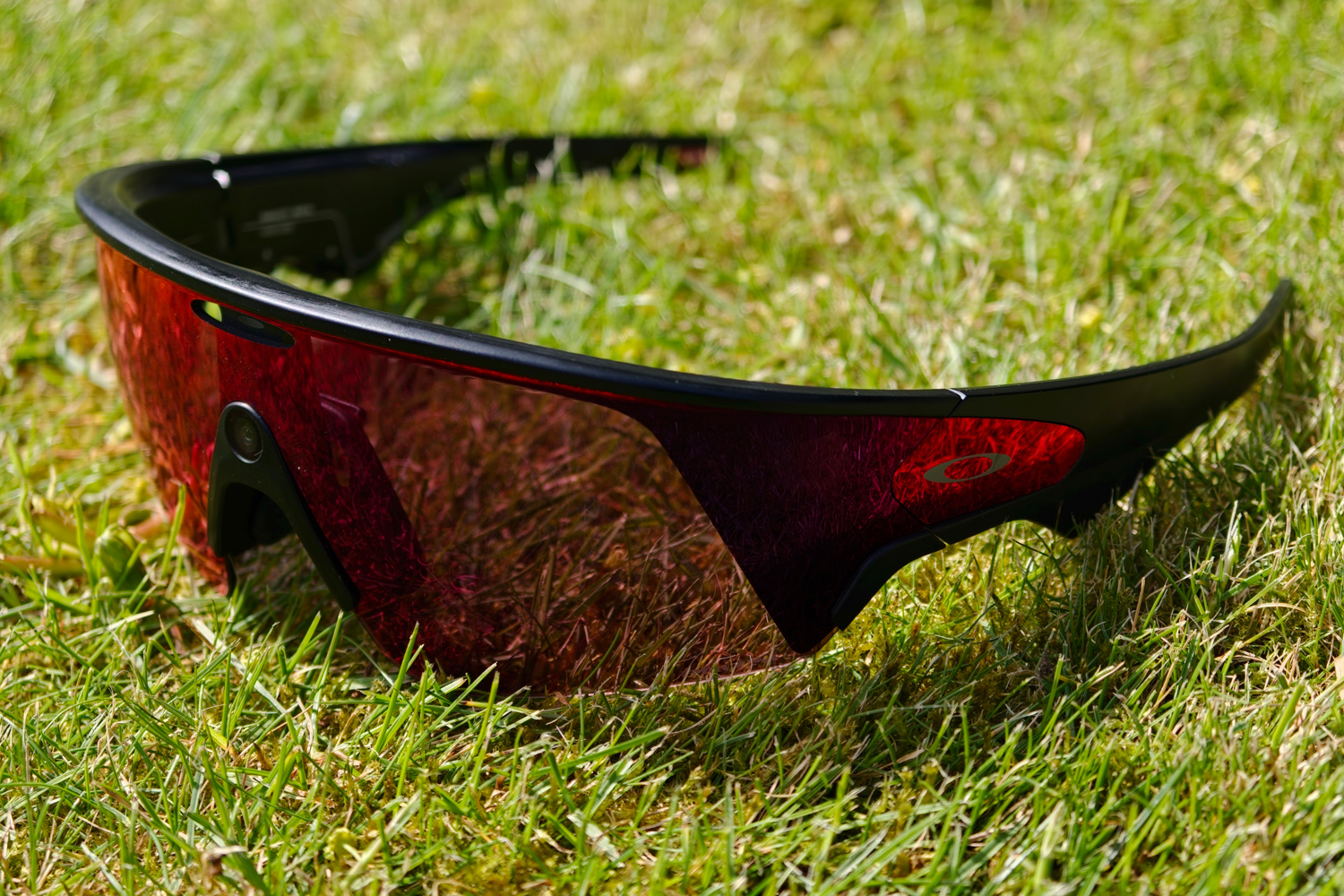
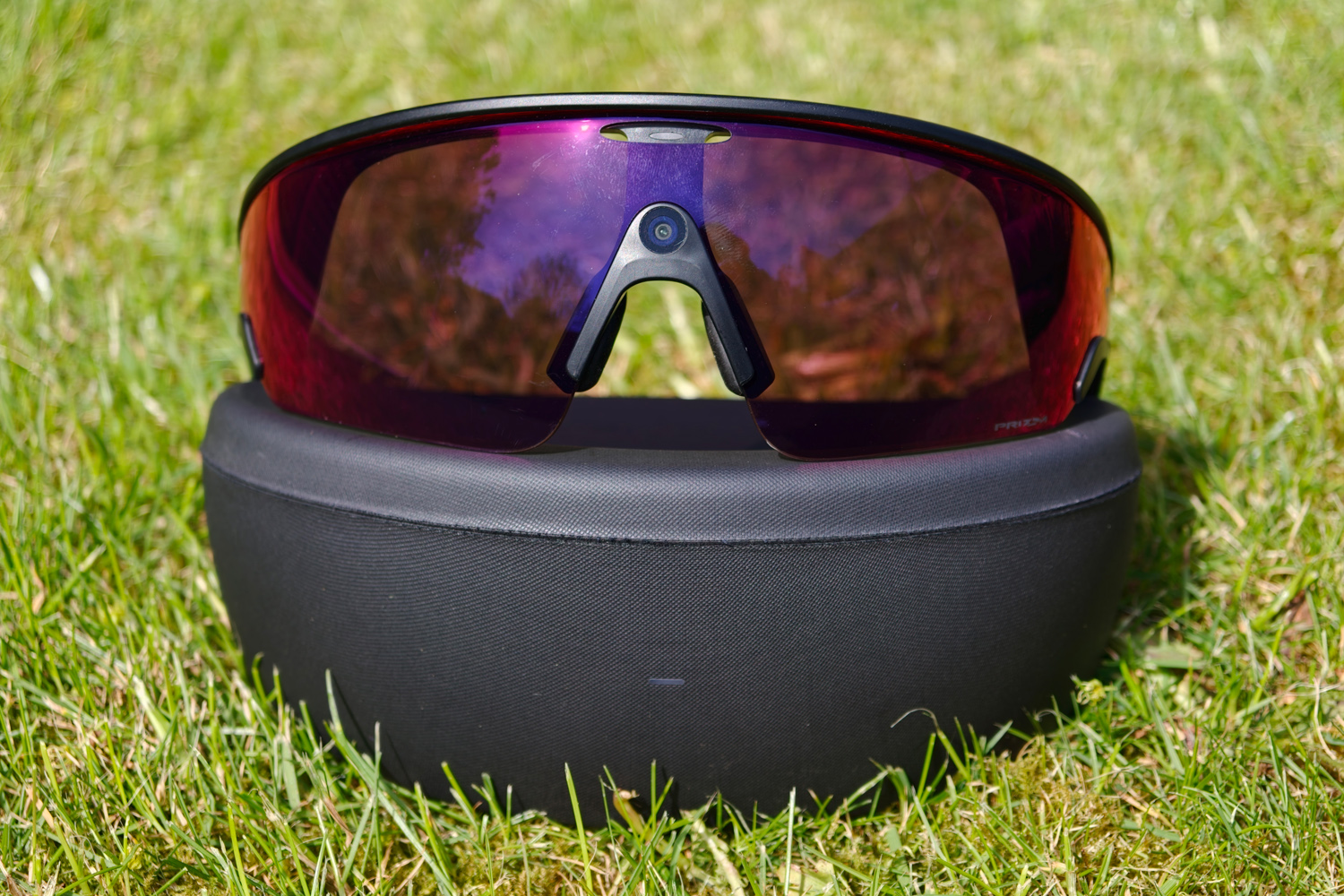
The Vanguard is essentially a smart take on the Oakley Sphaera, visor-style sunglasses that have long been a favourite with runners and cyclists. They’ve got the same wraparound lens that effectively deflects wind while travelling at speed, while all the electronic bits have been crammed into the nose bridge and glasses arms.
All things considered they’re pretty light at only 66g, with a good weight balance helping to minimise pressure on your nose. There are two extra nose pieces in the box if the pre-fitted one doesn’t suit your nose shape; swapping them out is easy enough. The arms sat snugly to my head but always felt comfortable, and softened just a small amount after a few weeks of wear. I didn’t find it at all uncomfortable to wear under a bike helmet.
Of the four colour combos to pick from I think a black lens on white frame plays it safest. If you want something more eye-catching go for the gold or red lens on the black frame, like my review unit. To be honest I don’t think I can pull off the visor styling as my solo set of sunglasses regardless of colour choice, making these quite the investment to just be used during exercise.
I loved how the Prizm lens massively reduces glare on even the sunniest of days. It was enough that cycling into the setting sun didn’t become a hazard, but equally you’re not thrown into total darkness when cycling through tunnels or the sun dips behind a cloud. The IP67 water resistance meant unexpected rain showers weren’t a cause for concern either, though you can’t use these for water sports.
While I tested the Vanguard exclusively wearing contact lenses, the Vanguard does support prescription inserts covering a wide -7 to +5 diopter range. You’ll have to get them separately via an optician or optometrist, which can add around $200/£200 to the cost depending on your prescription.
Features: get connected
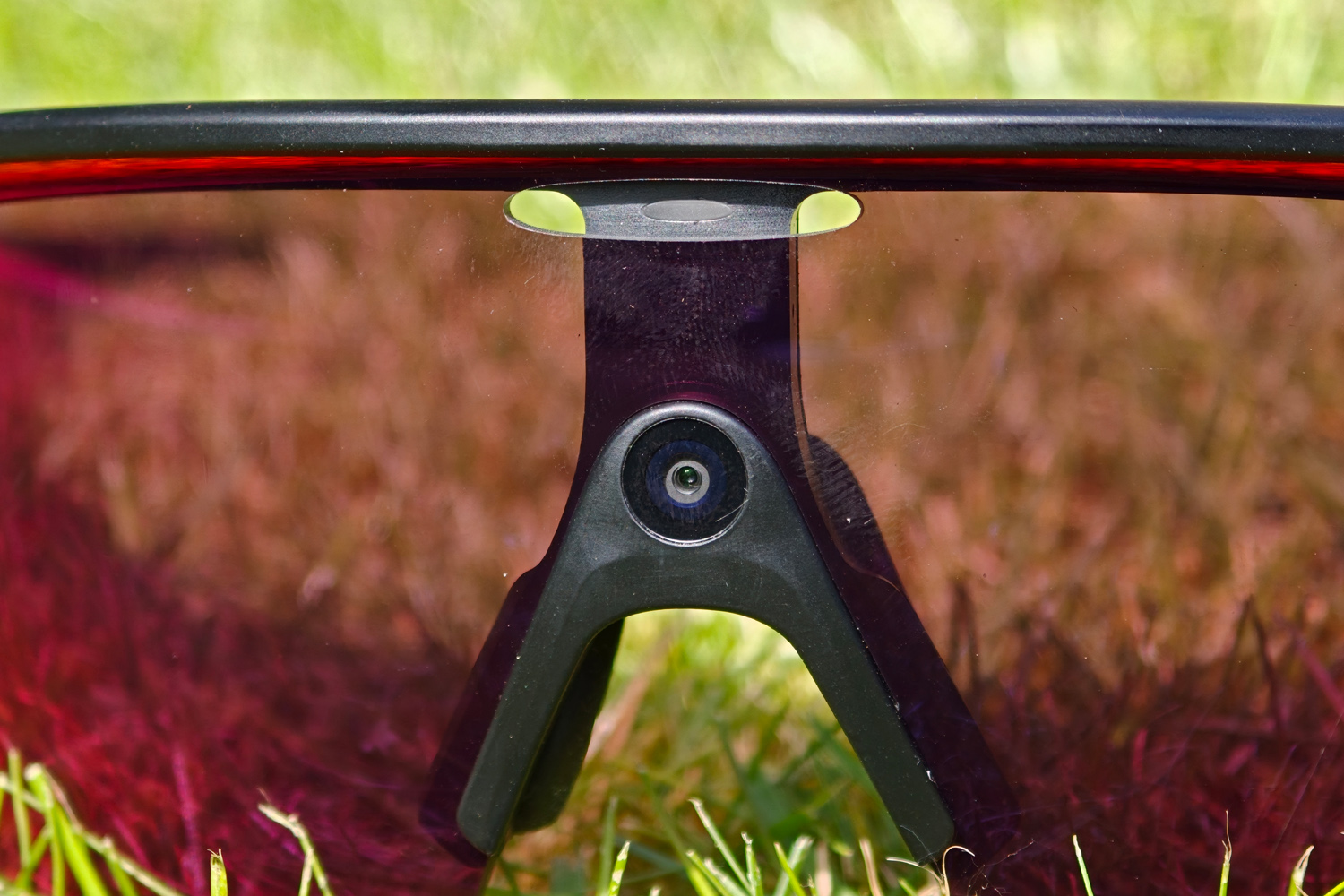
At first there might not seem much to separate the Vanguard from Meta’s Ray Ban smart glasses, but look closer and you’ll spot how the Oakley variant has been honed for sport.
That includes the physical controls: the touch sensitive strip that adjusts music playback is slightly recessed, making it easier to find than the flat Ray Bans. The button that takes a photo with a short press or records a video with a long one is usefully larger, and there’s now a second button that can be customised. It records a hyperlapse video by default but can be switched to shoot slow motion, play music, or activate foreign language translation. The visually impaired can use it to make a call with the Be My Eyes app, putting them in touch with volunteers who provide assistance via the glasses’ camera.
The camera sticks with a 12MP sensor and 122-degree ultra-wide lens, but moving it from the side of the frame to the bridge gives a proper first-person view. It makes lining up subjects a whole lot easier than with the Ray Bans, which always look just a little off-centre. Image stabilisation is effective, as long as you don’t mind dropping from the maximum 3K/30fps resolution. Hyperlapse and slo-mo recording are also on the cards at lower pixel counts, for adding some creative flair to your footage. Live streaming straight to Facebook or Instagram is still an option.
You’re still restricted to a few minutes of footage per clip, and the 32GB of on-board storage will fill up fast if you record a lot; you’ll want to offload everything to your phone whenever possible. That said, while 3K isn’t huge compared to a modern action camera, the clips I shot were small enough files that transferring them to my phone didn’t take an eternity. Colours are pleasantly punchy in both stills and video, with a respectable level of detail; everything was perfectly serviceable for social media.
The open-ear speaker driver built into each arm has seen its volume boosted, so you can hear music beamed from a paired smartphone better while bombing it at 20mph+ on a bicycle. Even on a particularly windy day, I was able to listen to a podcast without any issue. Overall the tone is well balanced, given the open nature; songs do sound a tad tinny, but don’t entirely skimp on bass. Just keep in mind anyone nearby will also be able to hear what you’re listening to once you crank the volume up a bit.
I found the built-in microphones just as effective, stripping out background noise and never struggling with wind, either while making calls or barking out voice commands for Meta AI.
Health & fitness: sharing is caring
Having Meta AI on board lets the Vanguard double as a travel guide: just ask it what you’re looking at to be filled in about nearby points of interest, plants or animals, though you do have to keep your phone handy to act as a go-between. A simple “Hey Meta” will wake it up. It’s not infallible, sometimes getting facts wrong, but is useful to have if your hands aren’t free to look something up on your phone.
Meta AI becomes a lot more useful once you’ve linked your Garmin and Strava accounts in the Meta AI app, at which point you can ask it about your stats such as heart rate while you’re mid-workout (assuming you’re also rocking a Garmin wearable or bike computer). An auto-capture mode records a video when you hit particular distance milestones, and the LED activity light inside the frame can light up if you’re falling behind on pace.
With Strava hooked up, you can then overlay exercise stats onto your footage for maximum social media bragging rights.
Neither addition feels like a gamechanger – I found it just as easy to raise my wrist and check my Fenix 8 Pro’s display as I did to ask Meta for my current pace and wait for it to reply audibly – but both are nice to have if you’re all about the social aspect of exercise.
Battery life: not a marathon man
Battery life has been boosted compared to the first-gen Meta Ray Bans, but not so much that you’ll be able to keep the Vanguard streaming music or recording mile markers for very long. I rarely got close to Meta’s nine hour claim, with a mix of music streaming, still photos and video recording normally delivering six hours per charge.
That’s perhaps not enough for a bikepacking adventure weekend, but it’ll last you through a marathon. For more casual fitness fans, it should be plenty.
The charging case is a bit of a chunk and not something to easily slip in a pocket, but it keeps the glasses well protected and holds enough juice for four separate refuels.
Oakley Meta Vanguard verdict
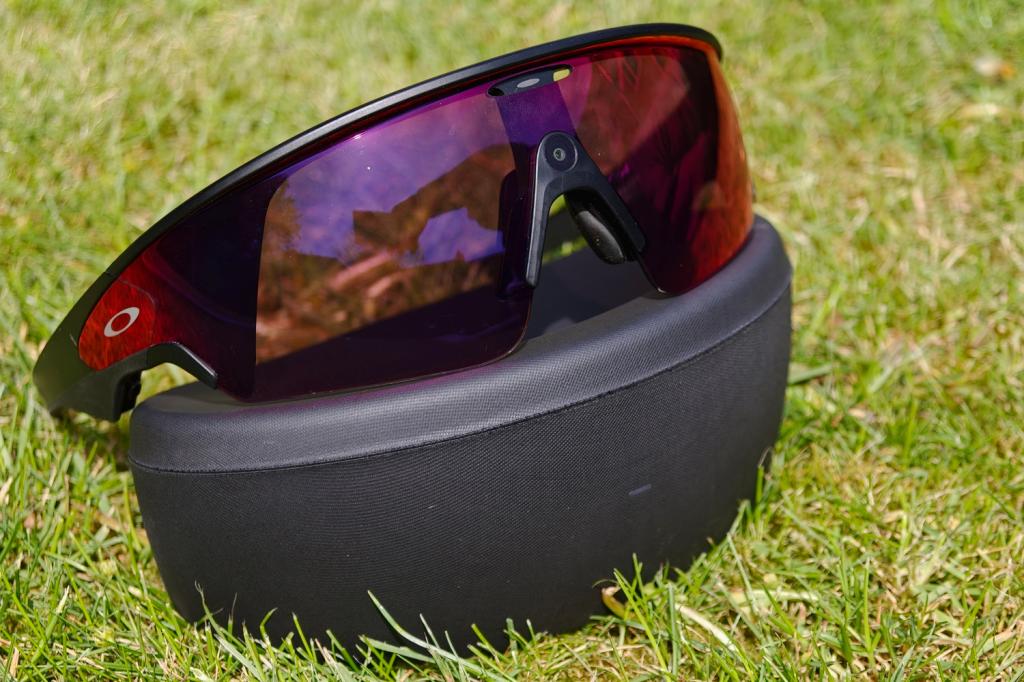
By combining an action camera, open-fit headphones and wind-cheating sunglasses into one bit of kit, the Oakley Meta Vanguard is an obvious pick for sporty types wanting to up their gadget game. It’s a comprehensive a pair of smart glasses that’s comfortable and has some neat added extras for Garmin smartwatch owners.
The battery life, while better than earlier Meta efforts, isn’t huge, and the design arguably won’t suit everyday wear. Video quality won’t replace a standalone action cam either, but for hands-free convenience it takes some beating.
Oakley Meta Vanguard technical specifications
| Camera | 12MP, ultra-wide |
| Speakers | 2x open-ear drivers |
| Connectivity | Wi-Fi, Bluetooth |
| Storage | 32GB on-board |
| Battery life | 9 hours |
| Durability | IP67 |
| Dimensions | 152x120x52mm, 66g |


Read the full article here
