

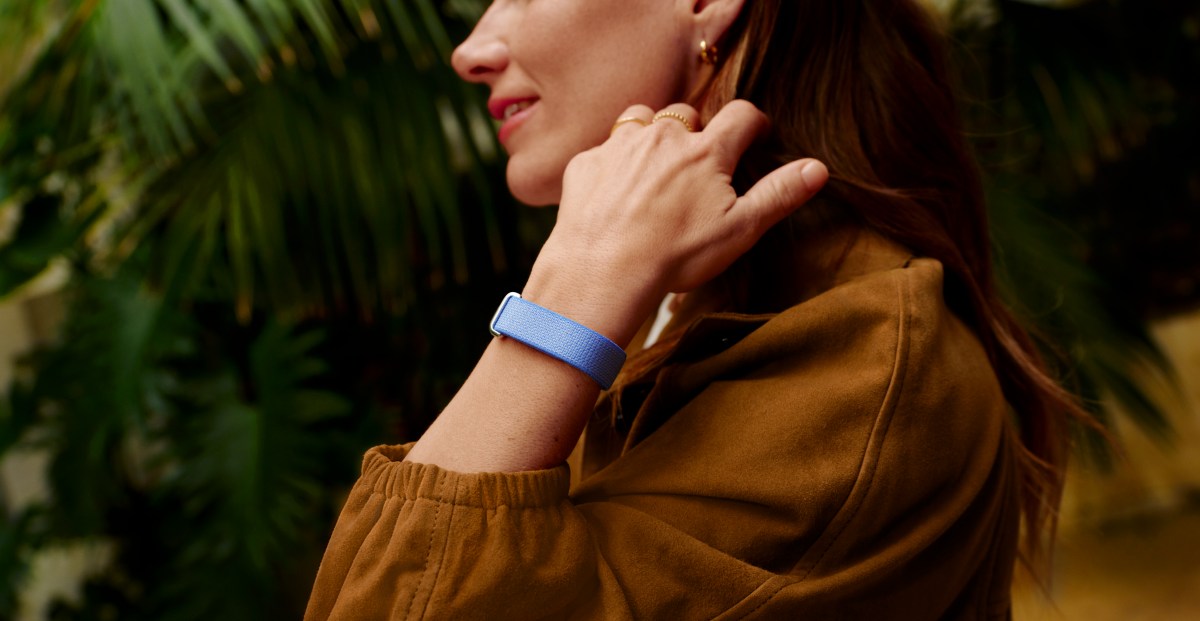
It’s a Whoop dupe. That was my first thought when I saw the new $99 Google Fitbit Air. You can hardly blame me. The band is screenless with a metallic fabric clasp. My eyes flickered between the Fitbit Air and my wrist, where I’m wearing a Whoop MG. Was I not seeing double?
But as my press briefing went on, my opinion started changing. The Air is sort of like the OG Fitbits that Whoop then duped once Fitbit went all in on smartwatches. Think back to 2012, when the Fitbit One could clip to your pants, be turned into a pendant, or dangle from a keychain. That device was mostly a pedometer, whereas the Air is more of a modern, modular sensor that can be popped out of one band and stuck into one of three others. But in many ways, this feels like a return to Fitbit’s roots — a simple band for casual tracking.
“The reality is right now, wearables have made huge advancements, but for a lot of people, they’re still either too complicated, too bulky, or too expensive,” Rishi Chandra, Google’s vice president of Health and Home, tells The Verge. “That’s where the Fitbit Air came in. We wanted something you could give to your kids and parents that they could just put on their arms. They don’t have to learn anything new.”
Compared to previous Fitbit trackers, the Air is 25 percent smaller than the Luxe and 50 percent smaller than the Inspire. It weighs a mere 12g with the band, and 5.2g without. There are no buttons, though there is an LED charging light and haptics for silent alarms. Sensor-wise, it’s not as high tech as the Pixel Watch, but it’s got the staples: an optical heart rate sensor, gyroscope, accelerometer, blood oxygen sensor, and skin temperature sensor for sleep tracking. You can dunk it in water up to 50 meters, and the battery lasts seven days on a single charge. That’s somewhat disappointing, but it was typical for old-school Fitbits, too. At least this one purportedly gets you one day of juice with a five-minute charge. It’ll also work concurrently with a Pixel Watch — meaning that if you’d prefer to wear the latter during the day and an Air for workouts and sleep, you can now. (Recently, Fitbit hasn’t supported multiple devices.)
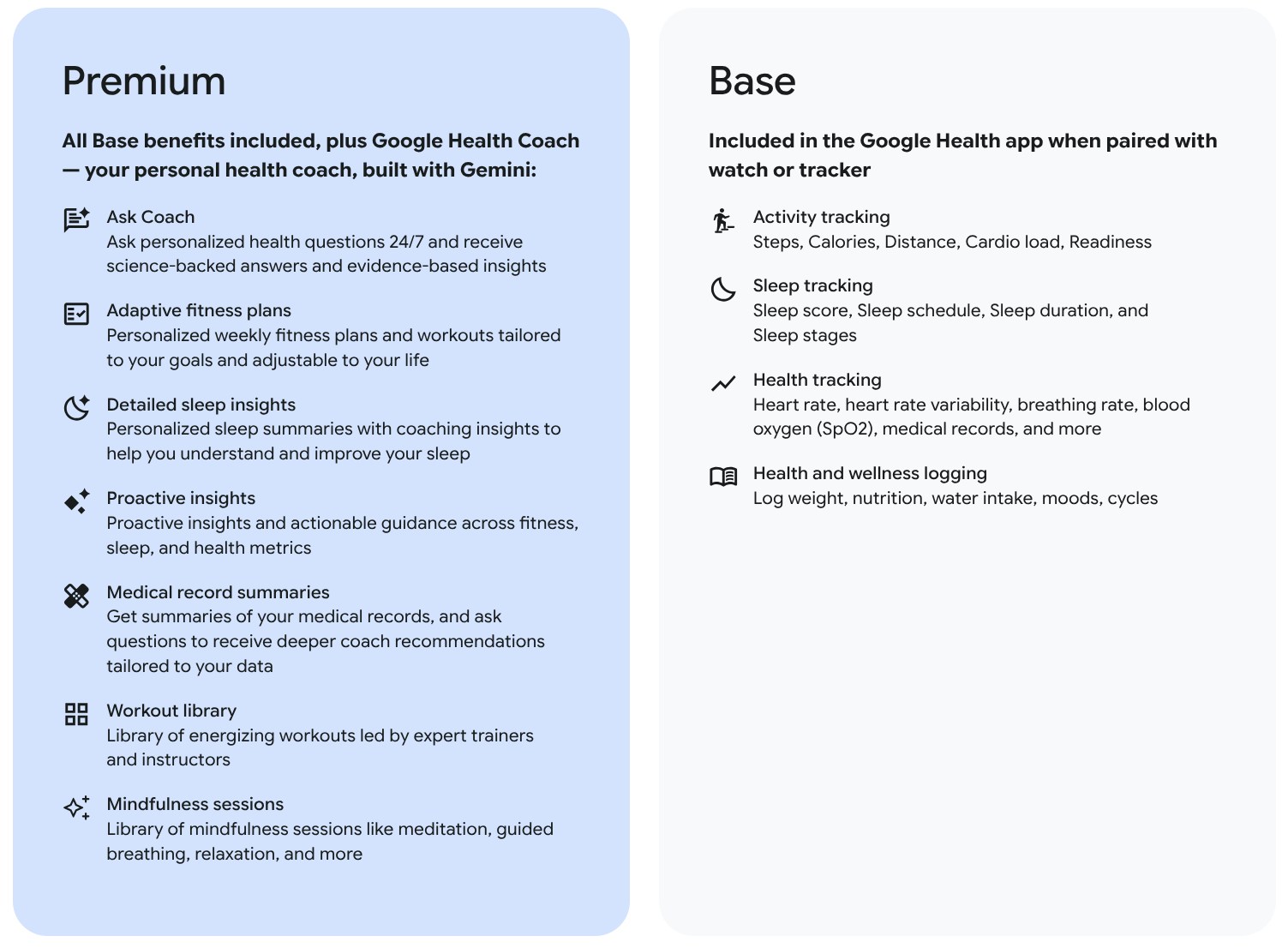
But the Air is not a signal that Google’s reviving Fitbit as it was. This is Fitbit’s first hardware product in nearly four years, but it comes alongside the death of the Fitbit app. Starting May 19th, the Fitbit app and Android’s Health Connect app will be consolidated into the single Google Health app. The Fitbit Premium subscription? That’s also being rebranded as Google Health Premium, though the price won’t change. To top it all off, its AI-powered Health Coach is leaving beta and rolling out to the public.
This is hardly surprising. Since Google acquired Fitbit for $2.1 billion in 2021, it’s been slowly but surely integrating Fitbit into the overarching Google umbrella, much as it did with Nest. The transition hasn’t always been smooth. Longtime Fitbit users were enraged by multiple widespread outages, deprecated features like challenges, and a confused wearable lineup once the Pixel Watch was introduced. Then, in early 2024, Fitbit’s original leadership was laid off.
“I know it will be hard for people. It was hard for us internally,” says Chandra, referring to the rebrand. “But as we think about the future, where the health app needs to go, the health app is not going to be specific to Fitbit hardware … We want to be a health coach to an Apple Watch user, too. That’s why we had to make the brand change.”
Another reason, Chandra says, is that the current health data market is entirely too fragmented. Before now, Google itself had two separate apps: Fitbit and Health Connect. Before that, it was the Google Fit app. Many wearable users have their data stored across a hodgepodge of apps, including Strava, Garmin, Peloton, etc. Their medical records are often stored on other systems. In some cases, health app data can be siloed depending on your phone’s operating system. Which is why, Chandra says, Google Health will be iOS compatible and eventually work with third-party wearables like Garmins, Whoops, and Oura. (To start, however, it’ll be limited to Pixel and Fitbit devices.) This platform-agnostic approach also harkens back to the Fitbit of yore. It’s just that this time, it’s under Google’s name.
Even so, the Google Health app won’t come as a shock to many Fitbit users. There’s been a public preview beta since October. In a briefing, Google said nearly 500,000 users had participated in the beta, and the company received over a million bits of feedback. Based on that feedback, Google says the final version will add back missing features (the preview did not include cycle tracking, for instance), more flexibility with the fitness coaching, a more customizable interface for highlighting metrics, a more accurate sleep algorithm, and a less chatty AI coach.
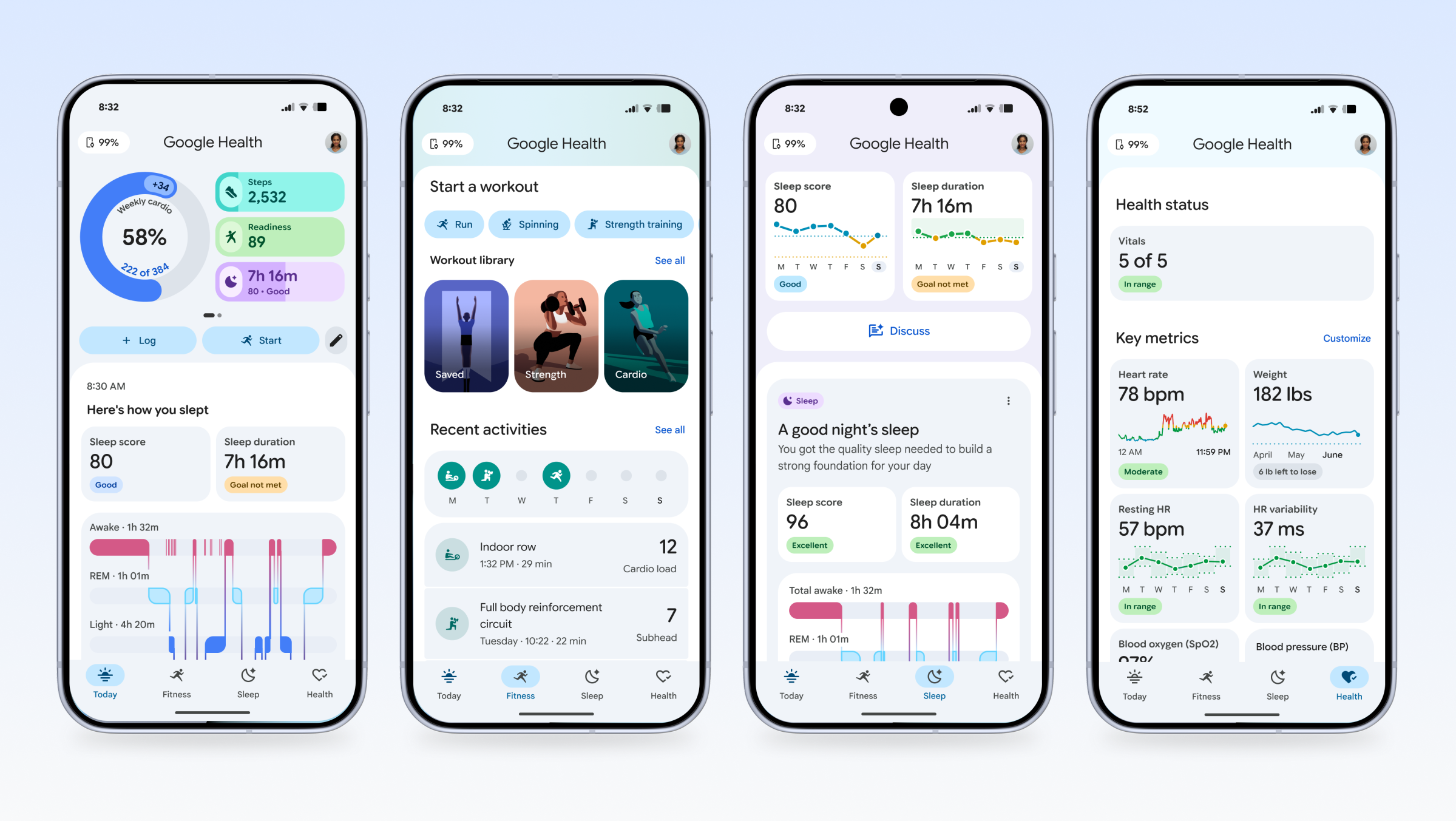
“For us, this is not a ‘We’re launching this and see you in six months or a year, then hopefully we’ll update it,” Chandra says, emphasizing that the plan is to continue pushing out frequent updates based on feedback.
By bundling these three announcements, Chandra says Google is trying to write a distinct narrative. In a nutshell: Here’s a simple, affordable device for the average person that pairs with a consolidated health data platform, complete with a built-in AI coach. Buy in, and you’ll get the most streamlined, low-effort way to get personalized insights and take control of your health. In this case, you can get adaptive fitness plans, chat with the AI about your medical records, use your phone camera to log meals, and ask how your various health metrics relate to each other.
Google is far from the only wearable maker attempting this — and in a parallel universe, I’d bet that an independent Fitbit would be embarking on this road too. But, like Apple, Google is one of the only players that could make good on the data consolidation part of the equation. But the part that everyone’s currently stumbling on is the AI. I’ve tested nearly all the major AI health, fitness, and nutrition coaches. They are either hallucinatory dogshit or useless book reports. That’s not to mention data privacy fears regarding sensitive health information. (On that front, Google says it will continue to keep Fitbit data siloed from its ad business; AI model training is opt-in and turned off by default.)
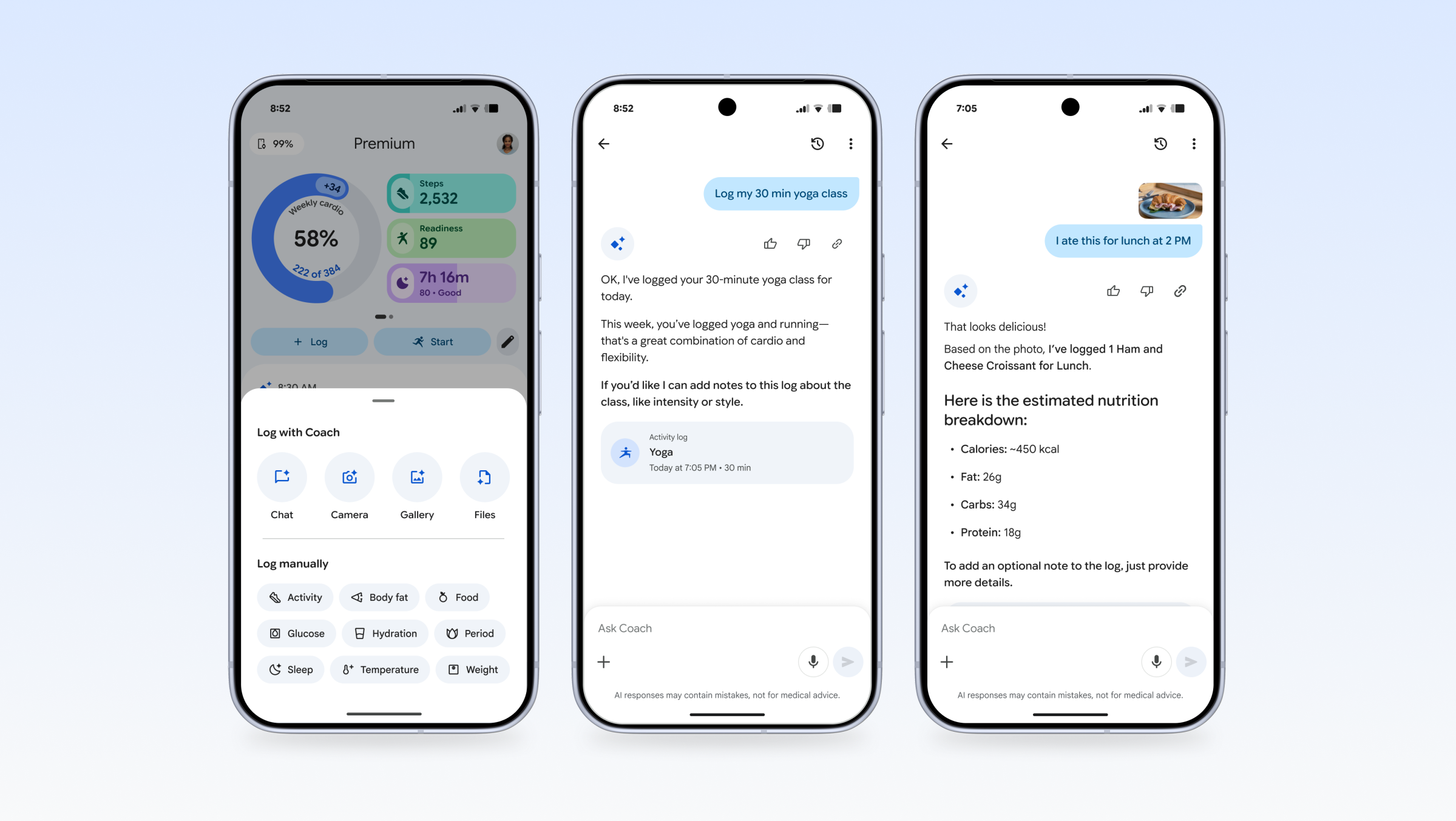
“This is a very hard problem,” concedes Chandra when pushed on this. “The reason why we did the public preview is that we need to make sure we didn’t make big mistakes. The rigor here is absolutely critical … but we are going to make mistakes. We’ll try to clarify those mistakes when we can, and we’ll try to own up to them and keep improving the product as we go.”
It’s a big swing. Personalized health is the holy grail of the wearable and health industry right now. Every new wearable launch, optimized metric, and AI feature is hurtling toward this goal. I’m no fortune teller. I don’t know how Google’s health gambits will play out. What I do know — and Google will likely disagree with me — is that the old Fitbit era is definitely over.
Read the full article here
