

Hello! Do you know your sweat score? No? Don’t worry! There’s a non-zero chance that your next smartwatch or fitness tracker will try to calculate it for you.
You see, after years of conquering heart-rate zones, sleep scores, recovery metrics, and blood oxygen levels, wearable makers have found a new source of health data – sweat.
The idea makes sense. Blood remains the gold standard for measuring many health biomarkers, but it’s hardly practical to prick your finger every time you go for a run. Sweat is much easier to collect continuously, and while it can’t reveal everything blood can, it contains valuable clues about how your body is responding to exercise, heat and stress.
The challenge is turning those clues into information that’s actually useful. Let the learning begin!
What is a sweat score?
Despite the name, there isn’t one recognised “sweat score”. Instead, it’s become a catch-all marketing term for the different ways wearable companies measure, estimate or interpret information linked to your sweat.
Some devices estimate how much fluid you’ve lost during a run. Others physically collect sweat to analyse what’s in it. Others don’t analyse sweat at all, instead monitoring the activity of your sweat glands to infer what’s happening elsewhere in your body.
The end result might be a simple score, recommendation or hydration plan, but the technology behind it can be completely different.
How wearables are turning sweat into data
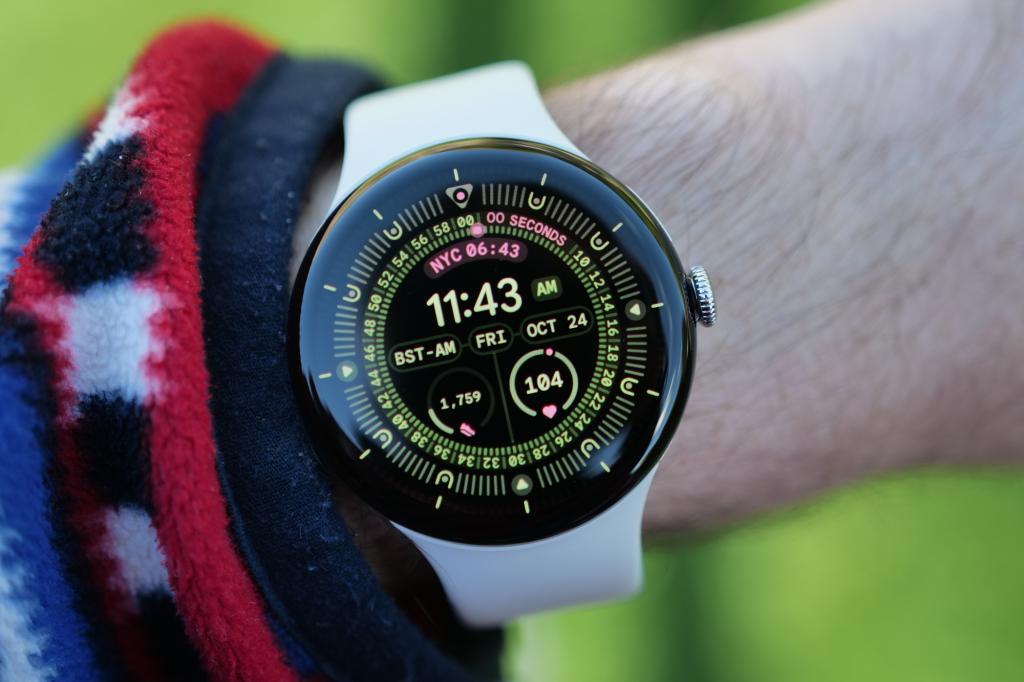
Although manufacturers often lump everything together under the banner of sweat sensing, today’s gadgets generally fall into four distinct camps. The most familiar example is probably already on your wrist. Google’s Fitbit Sense and recent Pixel Watches include electrodermal activity (EDA) sensors. Rather than measuring how much you’ve sweated, they detect tiny changes in your skin’s electrical conductivity caused by activity in your sweat glands.
Combined with heart rate and other signals, those readings help estimate how your body is responding to stress or emotional arousal. We’re not interested in hydration here – it’s using sweat gland activity as another window into your nervous system.
Elsewhere, recent Samsung Galaxy Watches can estimate how much sweat you’ve lost during a workout, helping runners gauge how much fluid they may need to replace afterwards. It combines workout data with readings from its sensors, and uses algorithms to estimate your likely sweat loss, much like a smartwatch estimates calories burned.
And if you want to dive deeper, dedicated hydration gadgets come into their own. Products like the Nix Biosensor, Flowbio Sensor, Hdrop and Gatorade’s Gx Sweat Patch hone in on sweat as it leaves your skin – most using microscopic channels that draw perspiration through the sensor, or reusable electronic sensors that continuously sample sweat during exercise.
Depending on the product, they measure sweat rate, sodium concentration or both. Those readings are then combined with information such as your body size, workout intensity and the weather, with machine-learning models estimating whole-body fluid and electrolyte losses before generating personalised hydration advice.
Why sodium? Because it’s the main electrolyte lost through sweat and plays a vital role in regulating fluid balance, muscle contractions and nerve signalling. Knowing how much sodium you’re losing can, therefore, be more useful than simply knowing you’ve sweated a lot.
Some devices present those results once you’ve finished exercising. Others stream live estimates to your phone, smartwatch or bike computer while you’re still training.
Feeling nervous
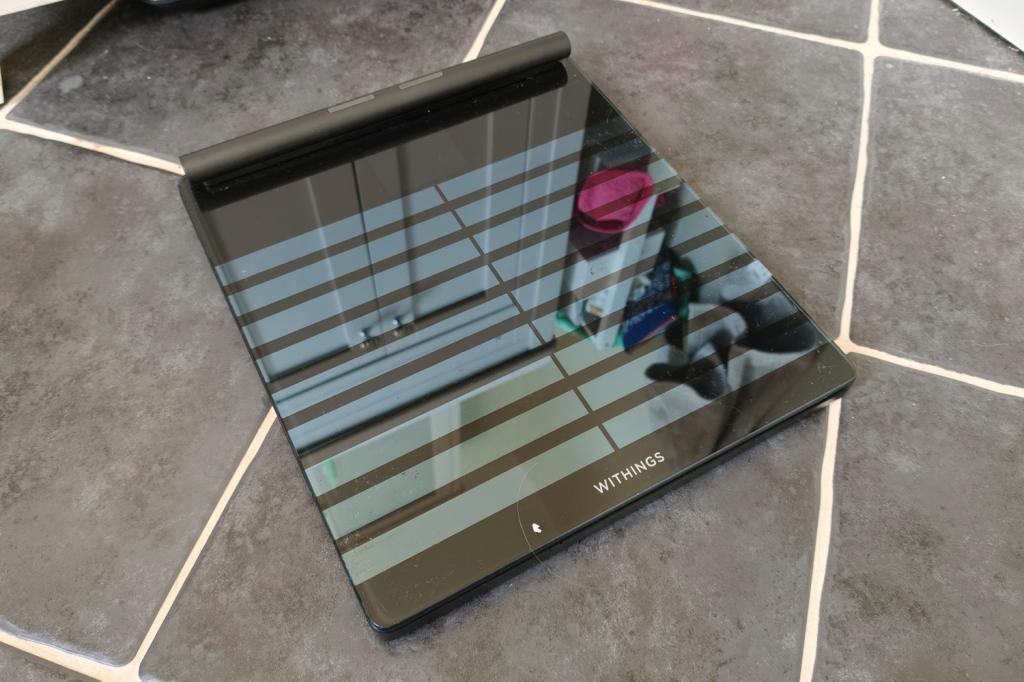
Perhaps the most surprising application has nothing to do with hydration at all – Withings’ Body Scan 2 smart scale uses electrodermal activity in your feet to generate a Nerve Health Score.
When you stand barefoot on the scale, harmless electrical signals stimulate the sweat glands in the soles of your feet. By measuring how those glands respond, the scale can assess how well the small nerves controlling them are functioning.
Reduced electrodermal activity can be associated with peripheral autonomic neuropathy – a type of nerve damage commonly linked with diabetes. The scale doesn’t diagnose the condition, but it can highlight changes that may warrant further investigation by a healthcare professional.
It’s a good illustration of where this technology appears to be heading. Companies including Samsung, Fitbit and Withings are already using sweat or sweat gland activity in very different ways, while Apple has filed patents that suggest it’s investigating the area too. Researchers are also exploring whether future sensors could monitor everything from hormones and glucose to medication levels and signs of illness.
Whether sweat stats become the next heart rate race remains to be seen. But after years of tracking our pulse, sleep and stress, it’s clear that wearable makers think that perspiration could be the next valuable source of health data.
Liked this? Can the Apple Watch Ultra 3 actually make you fitter? I wore one for a month to find out


Read the full article here
