

There’s no shortage of smart rings now – Oura, Ultrahuman, Amazfit, Samsung, Ringconn – they are all at it. They used to be niche wearables worn by the kind of person who talks about their HRV at a party (don’t do this), but you’ll spot them everywhere these days. I’ve had so many conversations about them in the last few months – what they actually do, whether to wear one instead of a smartwatch or alongside one, and which is the best – that I might as well be holding a smart ring information board at this point.
Two of the biggest names in the ring battle for your finger are Oura and Ultrahuman, and they’ve both just launched new flagship rings: the Oura Ring 5 and the Ultrahuman Ring Pro.
I’ve been wearing both for the past month (yes, I am that person) to find out which is better, what each tracks, and which you should put on your finger.
Price and release date
The Oura Ring 5 is now available, having launched on 4 June. It starts at $399/£399 for Silver or Black, and climbs to $499/£499 for Gold, Deep Rose, Stealth or Brushed Silver. Basically, the more expensive it looks, the more expensive it is, coming as a surprise to no one. It comes in sizes 6 to 13, with a free sizing kit available so you can check rather than guess (don’t guess; it is not big and it’s not clever).
The Ultrahuman Ring Pro costs $479/£429, making it one of the pricier smart rings on the market. It ships from 15 September and is available for pre-order in Bionic Gold, Space Silver, Aster Black and Raw Titanium. Sizes range from 5 to 14, and again, there’s a free sizing kit if you don’t already know your size. Ultrahuman also offers trade-in options, so if you’ve already got a smart ring – Ultrahuman, Oura, Samsung or Ringconn – you can knock some money off, provided you’re willing to say a fond farewell to your old finger companion.
In terms of subscriptions, Ultrahuman charges no subscription for its core data but optional PowerPlugs for some specific data cost extra. Oura, by contrast, asks you to pay $5.99 / £5.99 a month for access to all data.
Design and build
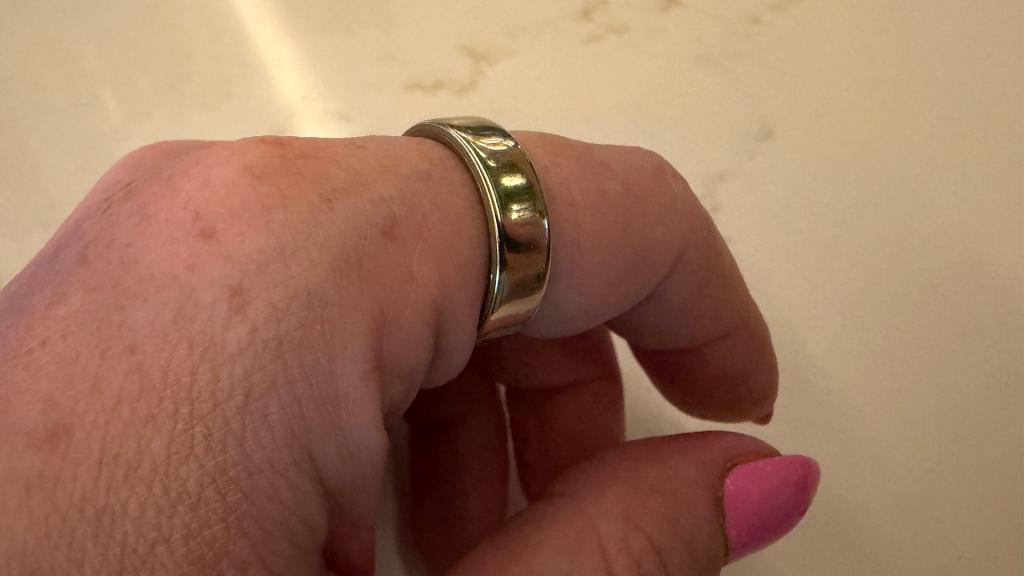
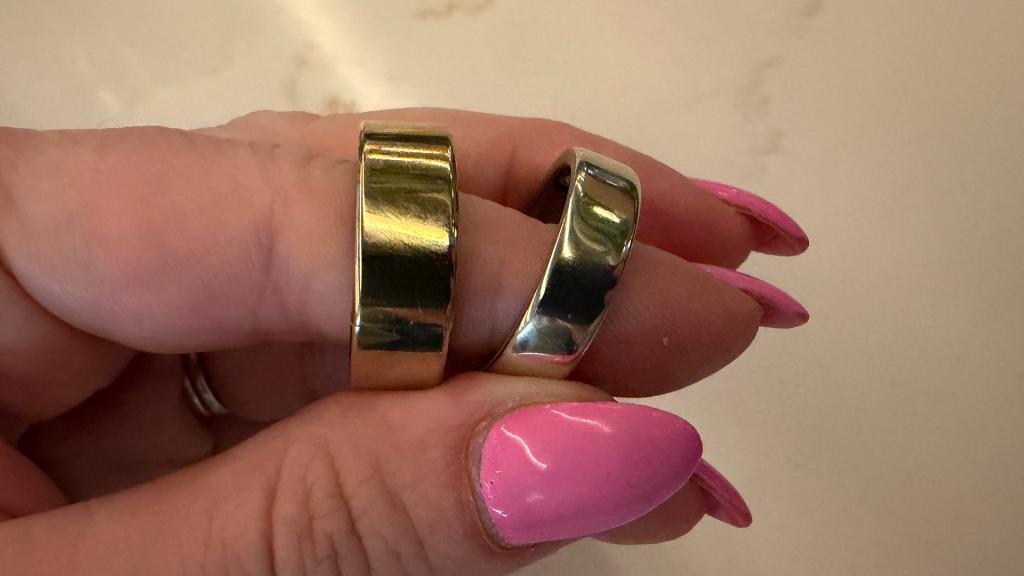
If I were talking about the Oura Ring 4 and the Ultrahuman Ring Pro, there wouldn’t have been much to say about their design differences – they are both plain circular bands with nothing particularly eye-catching about either. But we’re talking about the Oura Ring 5 and the Ultrahuman Ring Pro instead, and the gap between these two is substantial. One (the Ultrahuman) looks like a typical smart ring; the other (the Oura) looks like jewellery and could easily be mistaken for it.
The Oura Ring 5 is now 40 per cent smaller than its predecessor and noticeably lighter. It’s a lovely, slim, seamless titanium band measuring just 2.28mm thick and 6.09mm wide, starting at a featherlight 2 grams. I forget it’s on my finger most of the time. Oura’s Gold, Deep Rose and Stealth finishes look like they belong in a jewellery box rather than a gym bag, so if you’re after a smart ring that doesn’t look like one, the Ring 5 is unmatched.
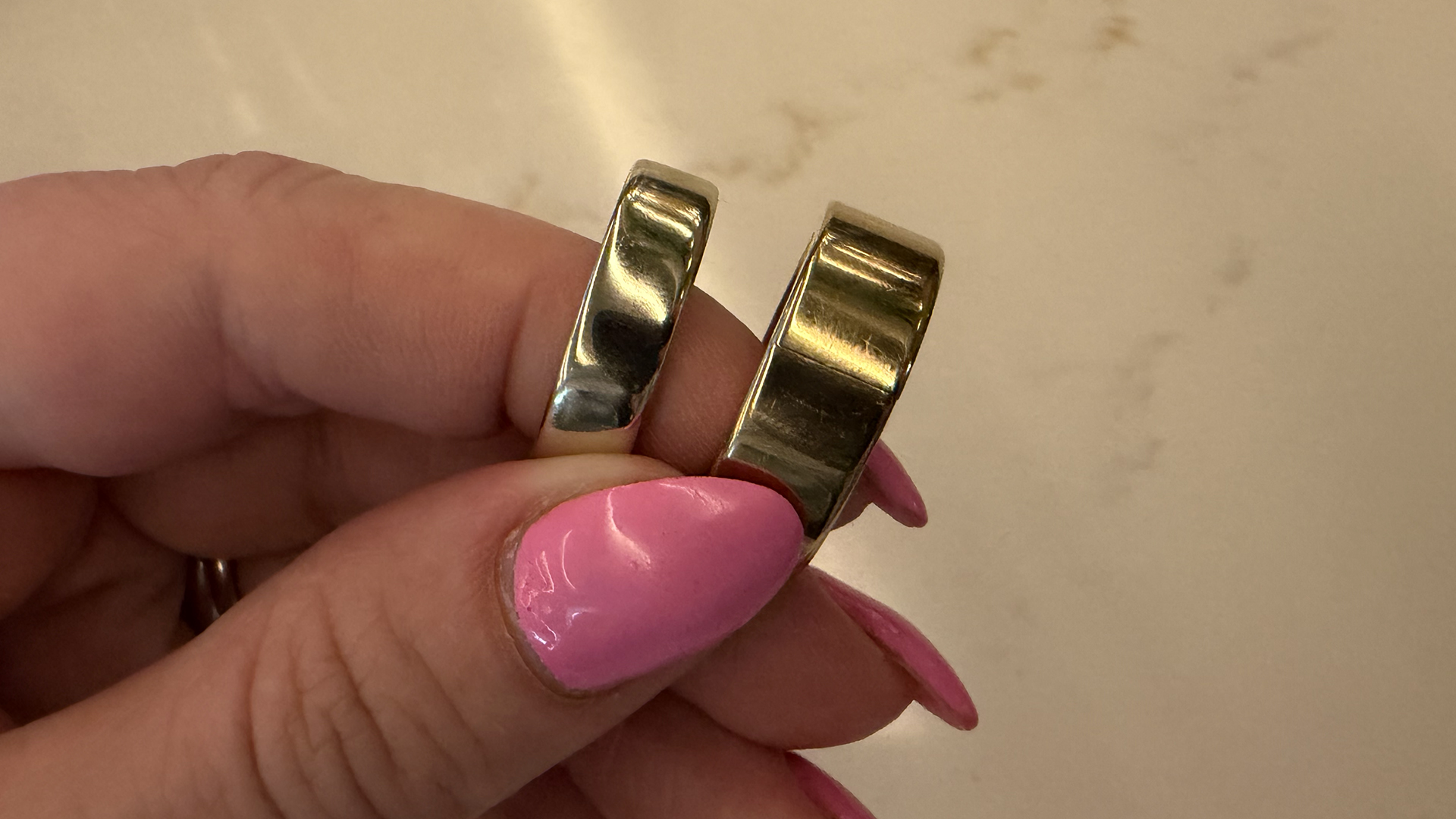
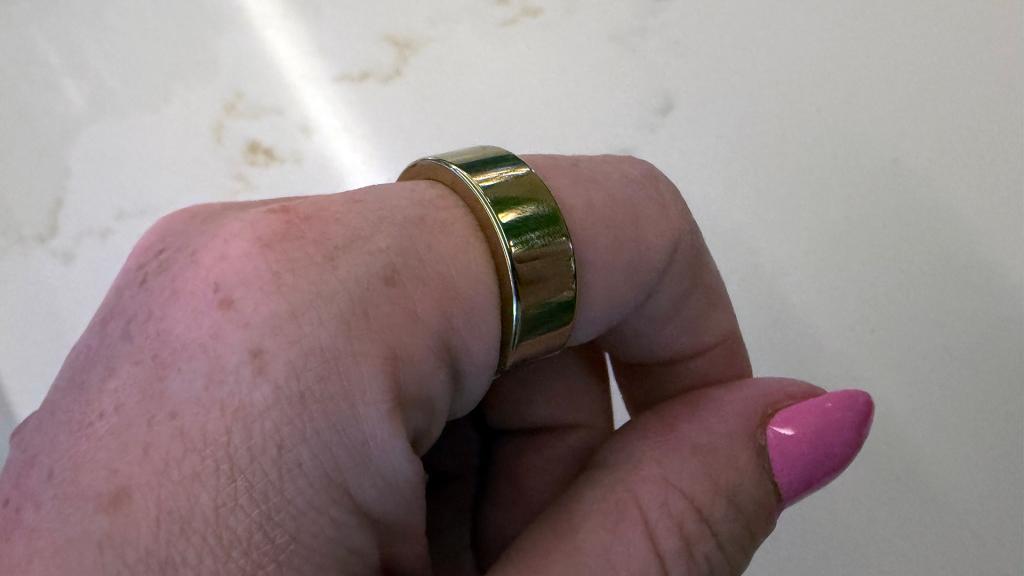
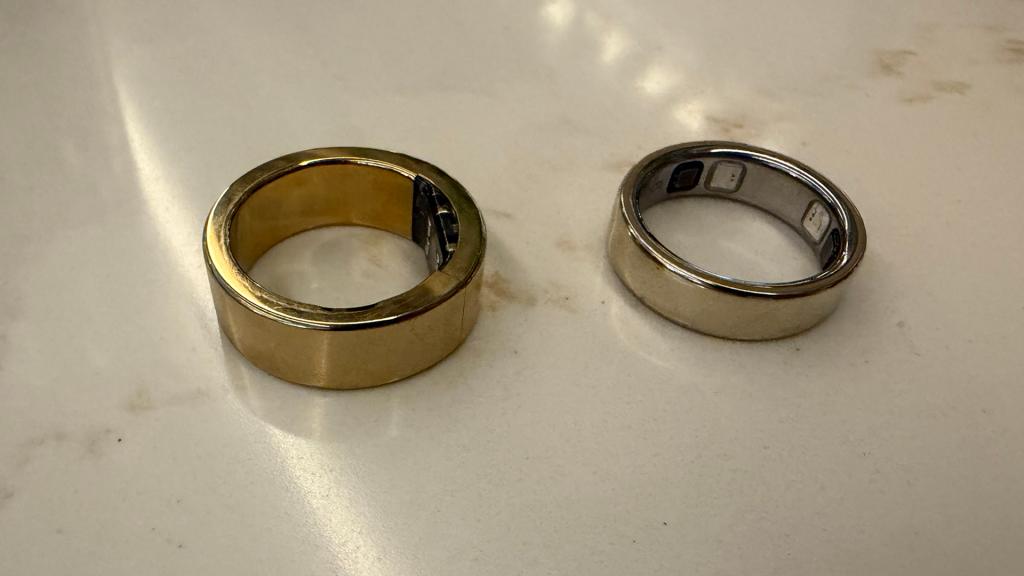
The Ultrahuman Ring Pro, meanwhile, is a chunkier unit at 2.65mm thick and up to 4.8 grams (Ultrahuman doesn’t publish an exact width, but trust me when I say it’s significantly wider than Oura). It’s still comfortable, but it’s noticeably more present than the Ring 5, both in how it feels and how it looks. The Bionic Gold finish isn’t as subtle as Oura’s Gold either, though there’ll be a contingent who prefer the punchier, brassier tone.
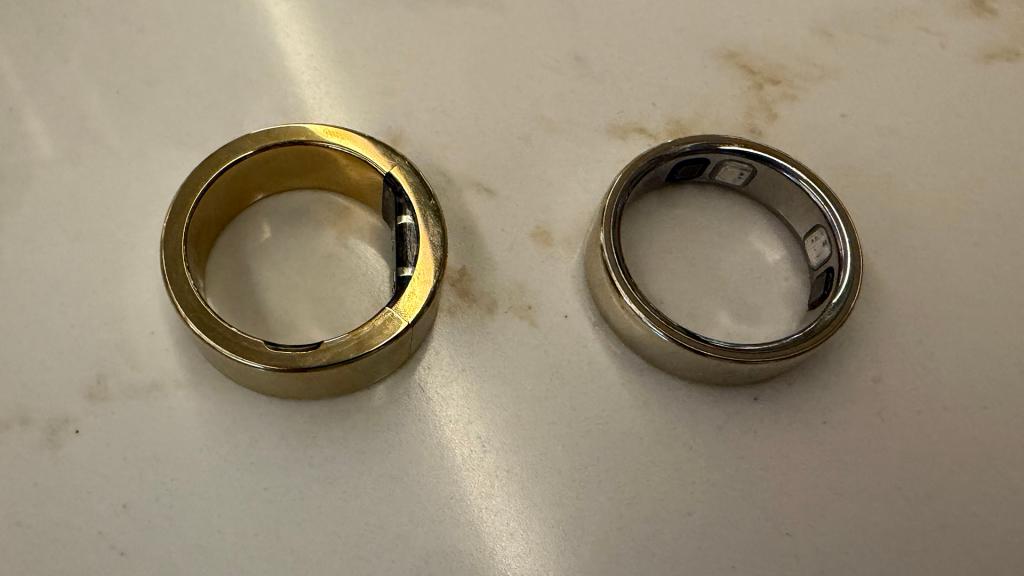
Both rings are titanium, as mentioned, but the Ultrahuman includes ProRelease Technology. This results in a couple of small, visible joins on the underside of the ring, giving a finish that’s not quite as seamless as the Oura’s, but the tech means it can be cut off more easily if your finger swells up or gets injured – reassuring, if not exactly the romantic image you had in mind while ring shopping. The inside of the Ultrahuman is flat at the base, whereas the Oura is circular all the way round. I haven’t found this to be noticeable in wear, but it’s a design distinction worth flagging nonetheless.
Features
Both rings are packed with sensors tracking the same holy trinity: sleep, recovery and heart health, so the basics are covered whichever one you pick. Where they differ is in how they present that data, and in the extras each brand has bolted on, right down to their own AI assistants for when you can’t be bothered to read and interpret the data yourself.
Oura tracks 50-plus metrics, including sleep staging, blood oxygen, 24/7 heart rate, stress, cardiovascular age, and cycle, ovulation and menopause insights for women. It’s all wrapped up in an app that’s superb at turning that mountain of data into something digestible, and it’s head and shoulders above every other smart ring app I’ve tried. Daily scores for Readiness, Sleep and Activity make spotting trends simple, while a Vitals tab gives you a quick snapshot of Sleep Debt, Stress and Resilience, alongside a Symptom Radar that flags when your biometrics start to suggest a suspicious cold could be coming on.
Ultrahuman’s own arsenal is headlined by a new AI assistant called Jade, which you can interrogate about your data – similar in spirit to Oura’s Advisor, though arguably more useful here, given how much denser and harder to parse the wider Ultrahuman app can be. Everything for the Ring Pro sits on a single continuously scrolling screen (the other tabs in the app are for the company’s other products), from a snapshot of metrics like HRV and steps to your core movement, sleep and recovery stats. This is set to change but it hasn’t yet.
Ultrahuman uses a traffic-light system to flag whether things are heading in the right direction (the red is a little much for a Monday morning, but perhaps that’s just me), and there’s plenty more to dig into with features like Brain Wastage Clearance, Sleep Debt and Stress Rhythm. On top of those, there are optional PowerPlugs covering everything from AFib detection to Caffeine Windows, Vitamin D tracking and GLP-1 insights – some free, some paid, all slightly overwhelming if you just wanted to know how you slept.
Battery life
Despite its considerably slim and lightweight design for a smart ring, the Oura Ring 5 manages between six and nine days on a single charge, though I get closer to six, especially now that I’m several charging cycles deep having had the ring since it launched. It comes with a standard charging dock, but there’s also an optional charging case (an extra $99/£99, because of course it’s not included) that holds around five charges – roughly a month’s worth – and is much easier to sling in a bag when you’re away.
The Ultrahuman Ring Pro, meanwhile, claims up to 15 days on a single charge, though that’s in Chill Mode. In Turbo mode, which is what I use, it’s closer to 12 days, and that’s been an accurate estimate throughout my testing. The battery life is superb for a smart ring, comfortably better than anything else on the market. You also get the Pro Charging Case included as standard (take note, Oura), which is good for roughly another two full top-ups of the ring in addition to its own charge. Like Oura, it’s around a month before you need to plug the case in.
Oura Ring 5 vs Ultrahuman Ring Pro: which should you choose?
Both the Oura Ring 5 and the Ultrahuman Ring Pro are excellent smart rings. I prefer the Oura Ring 5’s slimmer, lighter design – it’s considerably more subtle, and if you want a smart ring that doesn’t look like one, there’s no competition. It tracks plenty, and the Oura app presents that data in a simpler, more digestible way than Ultrahuman’s. You do have to pay that monthly subscription, though, and the battery life won’t see you through a week’s holiday without the charger in your washbag.
If you’re happy with a slightly bulkier design (even by smart ring standards, not just compared with Oura), Ultrahuman’s Ring Pro offers more data than you’ll probably know what to do with, paired with battery life that will last pretty much a fortnight. There’s no mandatory monthly subscription either, though some features will cost extra. The app isn’t as clean as Oura’s, and the Ring Pro is pricier too, though at least that price includes the charging case.
The decision here comes down to what you actually want from your smart ring, but simply put: pick the Oura for design and effortless data; pick the Ultrahuman for battery life and deeper, nerdier stats.
Read more: A month with the Oura Ring 5 – this is the iPhone moment for smart rings


Read the full article here
