

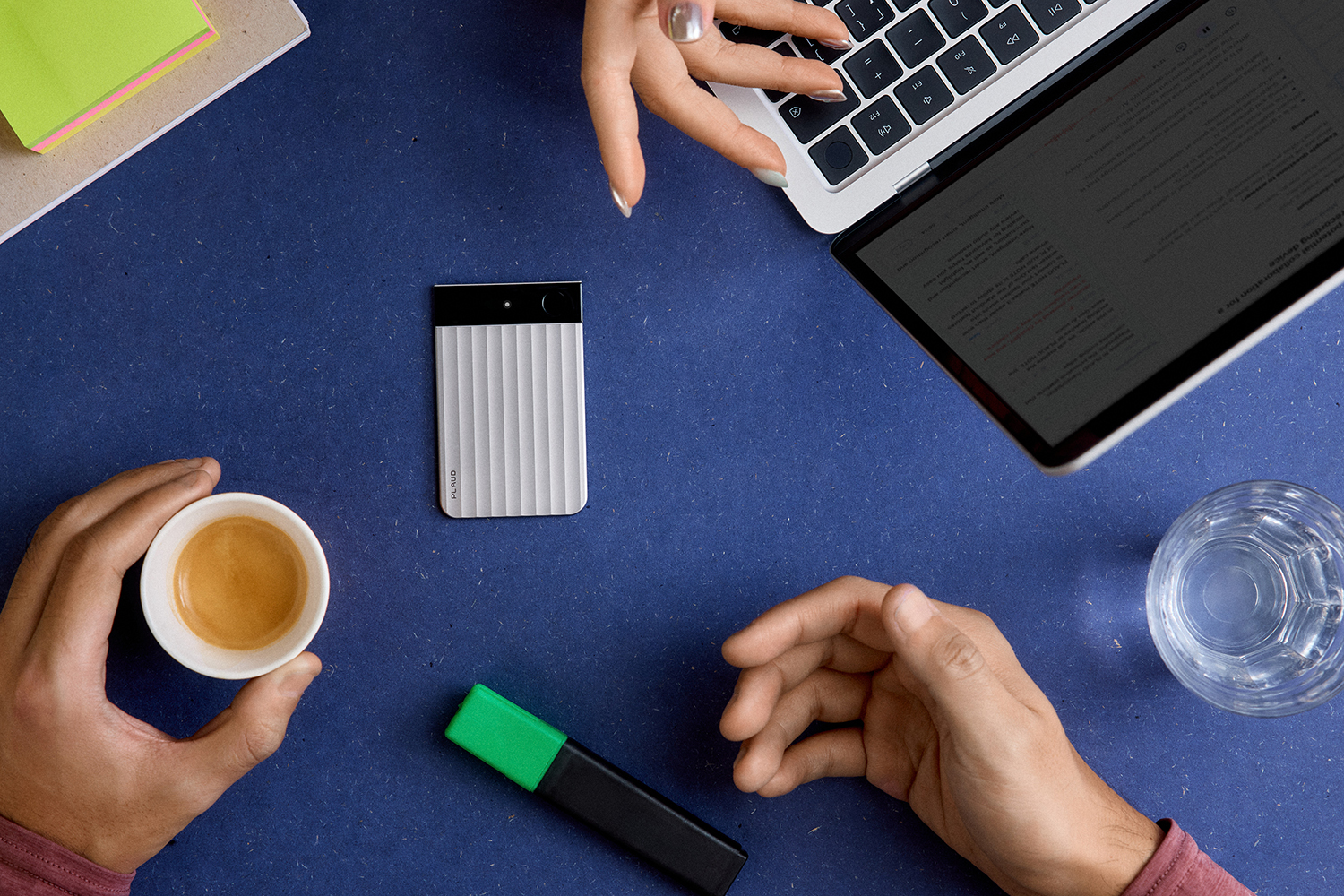
Recording a meeting on your phone is easy. Turning an hour of mind-numbing corporate chat filled with nonsense phrases like “circling back”, “moving the needle” and *shudders* “cadence” into a useful set of notes – complete with decisions, deadlines and jobs for everyone involved – is considerably less appealing. And that’s where AI notetakers come in.
Most look like unusually slim voice recorders, wearable pins, or even wireless earbuds, and come with an app where the magic happens – AI can transcribe the conversation, identify speakers, and turn everything into a structured summary.
Some AI notetakers can also extract action points, create mind maps, translate conversations, or answer questions about previous recordings. In theory, that leaves you free to pay attention to the people in front of you, rather than attempting to write down everything they say. Again – in theory.
Your phone can already record audio, of course, but a dedicated device provides its own microphones, battery, storage, and physical recording controls. So with all that in mind, here are some of the best AI Notetakers to help navigate the ever-confusing minefield of corporate meetings, family planning sessions, and everything in between.
Plaud Note Pro and NotePin S
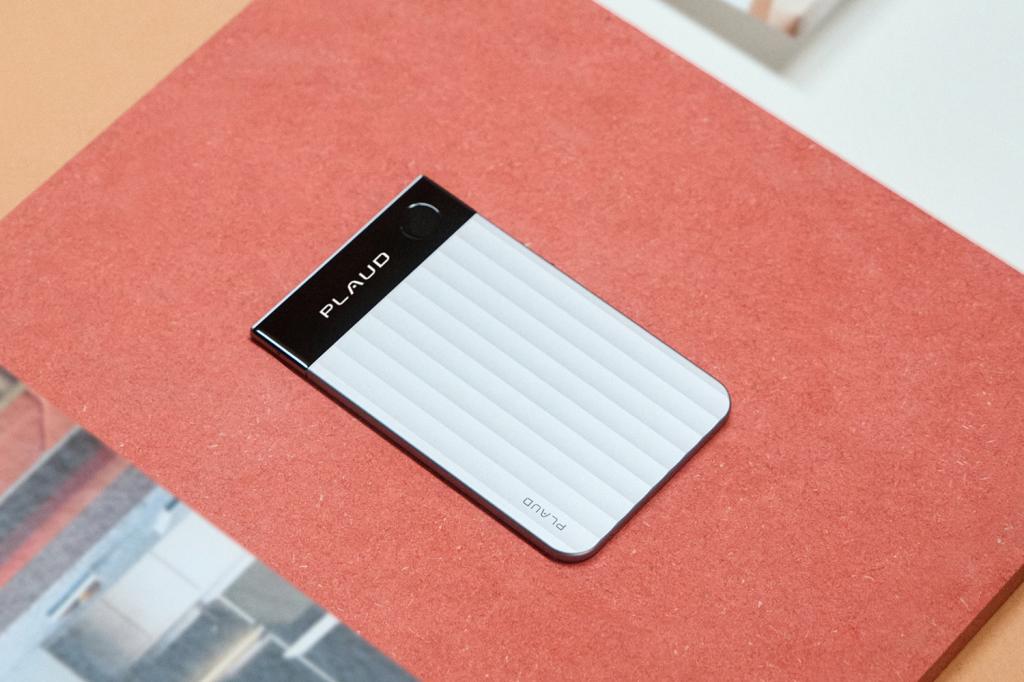
Plaud offers two quite different takes on AI note-taking. The Plaud Note Pro is a card-shaped recorder that can attach magnetically to the back of a phone, while the smaller NotePin S can be worn using a clip, magnetic pin, wristband, or lanyard.
The Note Pro is the more versatile of the pair, with four conventional microphones and a vibration pickup unit that lets it record both meetings and phone calls, automatically switching between the two modes. It has a small AMOLED display showing its battery level and recording status, while a button lets you mark important moments for the AI to prioritise later. Plaud claims up to 30 hours of recording in its standard mode, rising to 50 hours in a lower-range endurance mode.
The NotePin S is more clearly intended for face-to-face conversations. Its physical button replaces the squeeze control found on the original NotePin and can also highlight part of a recording. It’s considerably easier to wear, but its two-microphone system and shorter claimed pickup distance make it less suitable for a large meeting room than the Note Pro. Plaud claims 20 hours of continuous recording, 40 days of standby time, and 64GB of storage.
Both use the same Plaud app, which can generate transcripts, summaries, mind maps, and action points, as well as answer questions through Ask Plaud. Each includes 300 transcription minutes per month, with heavier use requiring additional minutes or a paid plan.
Notta Memo
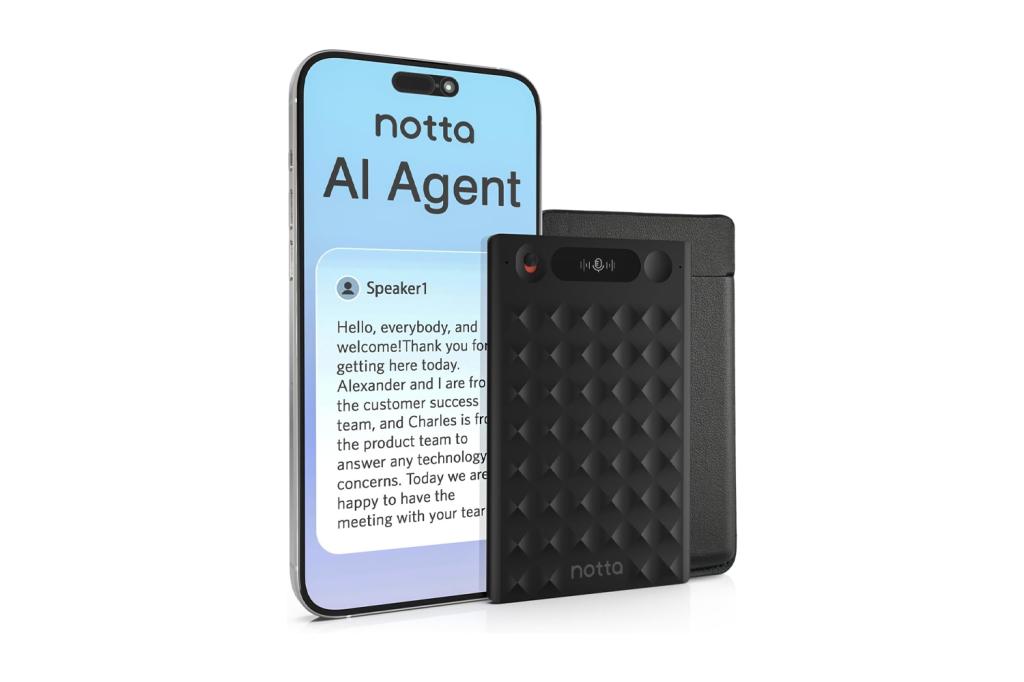
The Notta Memo follows a similar card-shaped formula to the Plaud Note Pro, attaching to a phone using MagSafe or an adhesive magnetic ring. It combines four mics with a vibration sensor, allowing it to record conversations in a room as well as calls made through a phone’s earpiece.
Its 32GB of storage and claimed 30-hour recording time should also comfortably cover even the most meeting-heavy working day. Recordings are transferred to the established Notta transcription service, which can identify speakers, create summaries, extract action points, and produce mind maps. Translation and bilingual transcription are available too, although their allowances depend on the chosen plan.
Unsurprisingly, as with most cases, it’s worth noting that the AI functionality requires registration and an internet connection – you can capture audio offline, of course, but it can’t produce the finished notes by itself.
The Memo also includes a hardware-specific Starter plan with 300 transcription minutes each month. Paid Notta plans add larger allowances and fewer restrictions, so it’s worth distinguishing the Memo’s included plan from the company’s more limited standard free account.
Anker Soundcore Work and Liberty 5 Pro Max
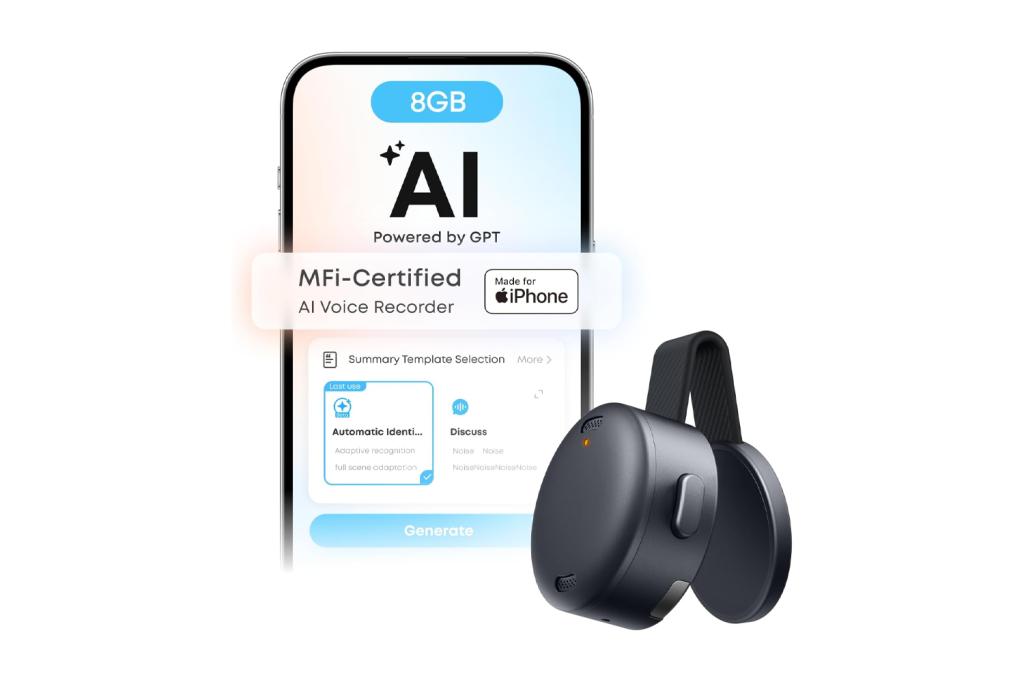
Anker’s Soundcore Work shrinks the recorder down to a miniscule puck weighing just under 10g, and it can clip onto clothing, hang from a lanyard, or attach magnetically to a phone.
Pressing its button begins recording, while a double tap marks something important. Its two microphones have a claimed pickup range of up to five metres, and the device can record for approximately eight hours by itself. The bundled charging case increases that figure to a claimed 32 hours.
The Soundcore Work app provides speaker-labelled transcripts, summaries, topic organisation, and action points, and Anker says it supports more than 100 languages. The included plan provides 300 transcription minutes each month – Pro and Unlimited subscriptions increase the allowance and unlock additional AI features.
Anker has also crammed similar tech inside the newer Soundcore Liberty 5 Pro Max. Its charging case has a 1.78in AMOLED screen, a built-in microphone, and AI note-taking mode, allowing it to record in-person meetings before producing transcripts, summaries, and action points in the Soundcore app.
The case can store around 12 hours of audio, with individual recordings limited to three hours. Unlike the Viaim earbuds, however, its note-taking mode only captures sound in the room. It doesn’t record phone calls, video calls, or online meetings. With that in mind, the Liberty 5 Pro Max makes the most sense for someone who wants premium earbuds and occasional in-person meeting notes in the same device. It also includes 120 transcription minutes per month for the first 24 months.
Comu Action Pro and Comulytic Note Pro
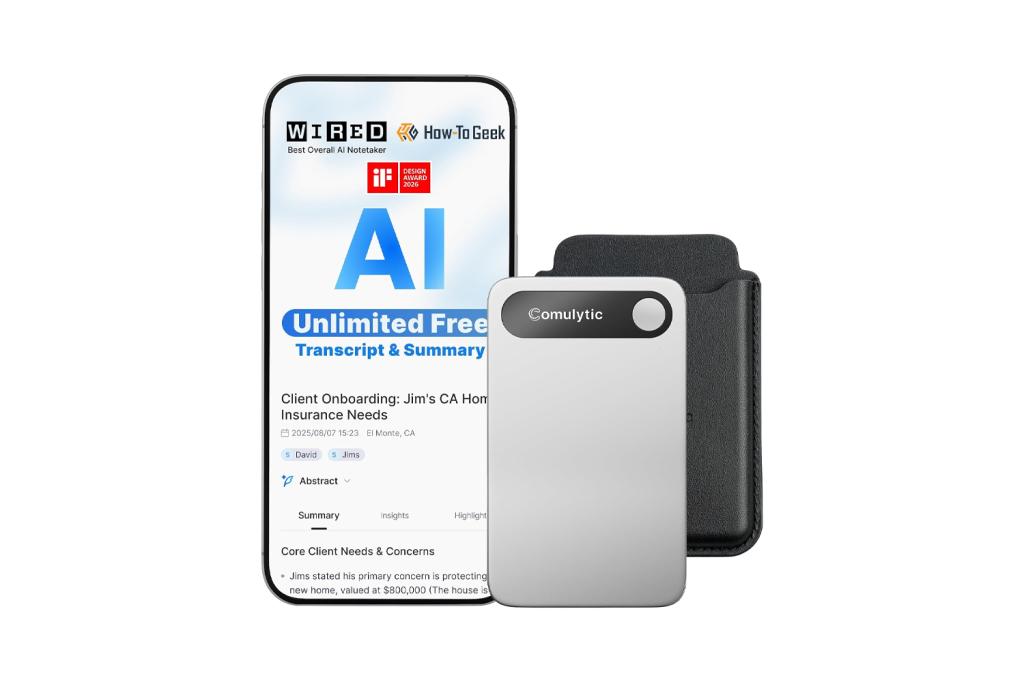
Comu offers two card-shaped AI recorders – the Comulytic Note Pro and the Comu Action Pro. The latter’s six-microphone system has a claimed seven-metre pickup range, while Comu says its battery can provide up to 70 hours of recording. A display shows the recording status and duration, and a dedicated AI button lets you ask it to create an email, document, or presentation from what it’s captured.
The Comulytic Note Pro remains a more straightforward alternative. It has 64GB of internal storage, a status display, and a claimed 45 hours of continuous recording. It can also attach magnetically to your phone, and record both room audio and calls.
Both devices feed into Comu’s accompanying service, whose free starter plan includes unlimited transcription and basic summaries. Some of the more advanced analysis, templates, automatic organisation, and AI-generated documents require a paid plan.
Viaim OpenNote and RecDot
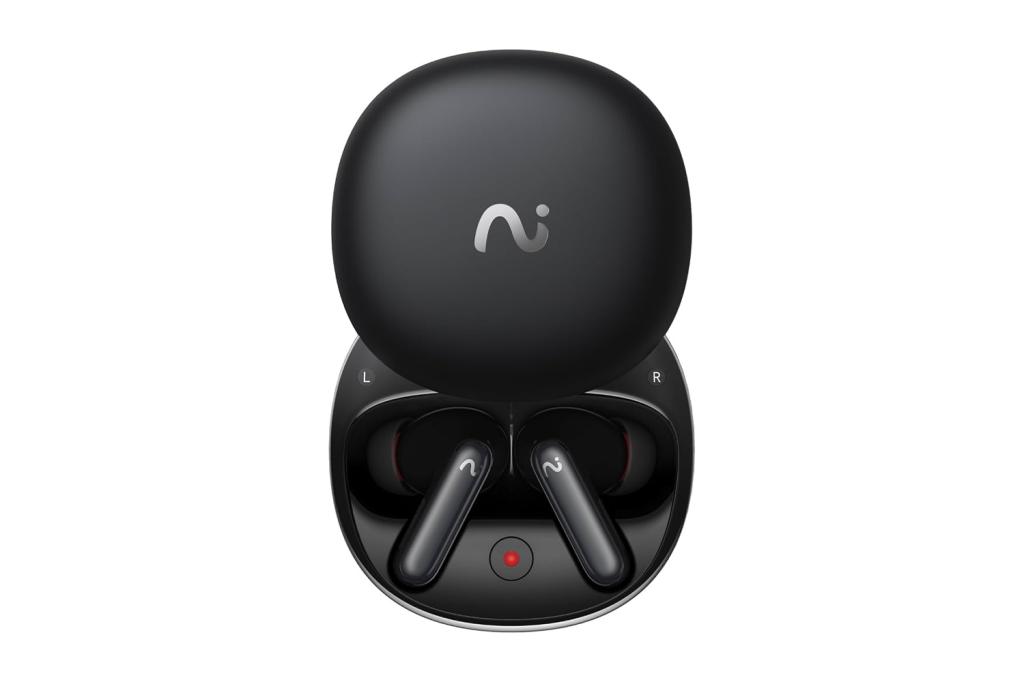
The Viaim OpenNote is different from most, cramming an AI notetaker inside a pair of open-ear wireless earphones. Instead of blocking the ear canal, they sit outside it, allowing you to hear what’s happening around you during meetings and conversations.
OpenNote can record phone and internet calls, in-person discussions, videos, and other audio playing through a connected device. Its FlashRecord feature also starts a recording directly from the earphones without requiring you to open the app first. Once synchronised, Viaim’s software can generate transcripts, summaries, action points, and mind maps, with real-time transcription and translation available in 78 languages.
Viaim claims up to 19 hours of use from the earphones and 53 hours with their charging case, and each OpenNote also includes 600 transcription minutes per month.
Elsewhere, Viaim’s RecDot is also available for anyone who would rather have an in-ear fit and active noise cancellation. Its charging case has a physical recording button, while the earbuds can capture calls and online meetings. Its in-ear design provides greater isolation, although speaker identification and transcription can still be affected by overlapping voices, background noise and unclear speech. Both models use the same underlying AI platform and include the same monthly transcription allowance.
Mobvoi TicNote
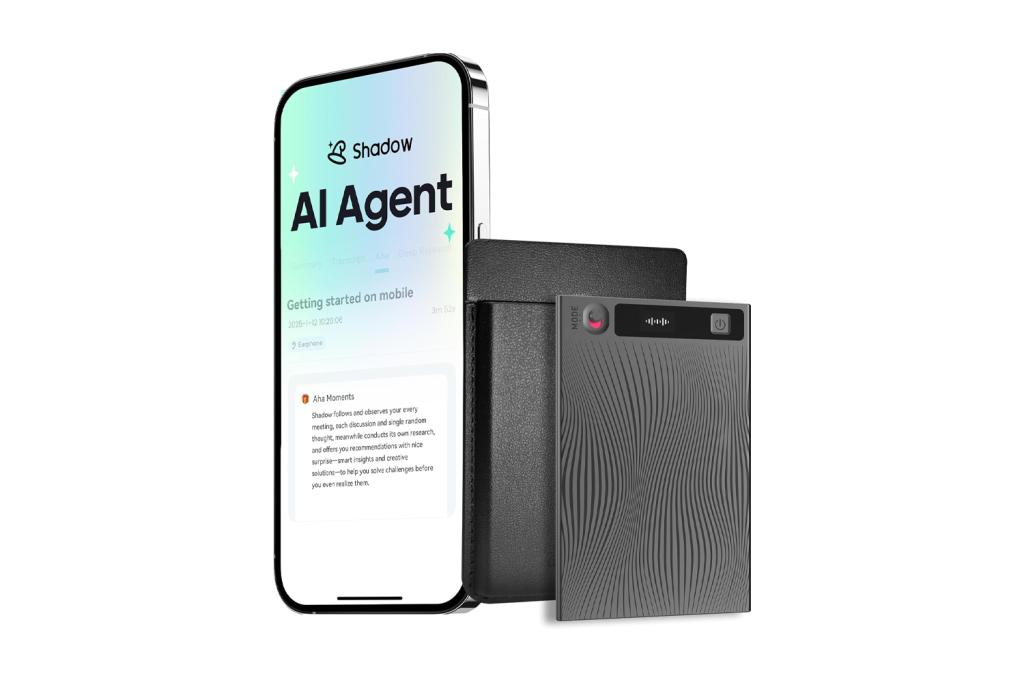
Mobvoi’s TicNote is another slim recorder designed for phone calls, meetings, interviews, and lectures. Unlike many of its rivals, it can provide real-time transcription through its associated app, rather than making you wait until the conversation has ended. A nice touch, depending on your needs.
A small screen on the recorder also confirms its battery level, storage, and current operating mode. That might not sound especially exciting, but it’s useful when most rivals rely on a collection of coloured lights and vibrations. Its three-microphone system has a claimed pickup range of up to 10 metres, while Mobvoi claims around 25 hours of continuous recording and 64GB of internal storage.
TicNote’s Shadow AI can also turn recordings into summaries, action points, and mind maps. It can even create a condensed, podcast-like audio programme from recorded material, giving you an alternative to reading through a long transcript. Transcription and translation support more than 100 languages, although performance will inevitably vary with the language, accent, and recording conditions. Better yet, the TicNote currently includes 600 transcription minutes per month.
AI notetaker do’s and don’ts
Buying the hardware is only part of the puzzle. Before choosing a device, double-check how many transcription minutes are included, whether unused minutes carry over, and the maximum length of an individual recording.
Find out which summaries, translations, and AI queries require payment, whether recordings and transcripts can be exported, how long they remain in the cloud, and what happens to them if you cancel your subscription. A recorder can quickly become an expensive choice if its free allowance doesn’t cover your meetings.
Also, don’t assume that more microphones or a longer advertised range guarantees a perfect transcript. Distance, echo, background noise, accents, and overlapping voices can all affect accuracy, while speaker identification may assign comments to the wrong person. AI summaries aren’t perfect either, so always check anything important against the transcript or original recording before sharing it.
Finally, make sure everyone knows when the device is listening. Recording can capture personal data and confidential information, and the relevant laws vary between countries. Yes, it’s boring, but the legal stuff always is.


Read the full article here
