

Humanoid robots have become almost ridiculously impressive over the past few years. We’ve seen them running, dancing, doing backflips, folding clothes, making drinks, and performing all sorts of tasks that would have seemed impossible not that long ago. Tesla is developing Optimus, Boston Dynamics has completely reinvented Atlas, and companies including Figure, Agility Robotics, 1X, and Unitree are all pushing ahead with their own increasingly capable machines. The humble smartphone is beyond dull, in comparison. Sorry, phone.
But I’ve always wondered how much any of this really matters outside a carefully controlled demo. Watching a robot fold a T-shirt is impressive, but that doesn’t necessarily mean it can spend eight hours doing useful work without someone stepping in when things inevitably go wrong.
That’s starting to change. Humanoid robots are now working in real factories and warehouses, and some have racked up surprisingly impressive numbers along the way. We’re still a long way from the general-purpose robot helpers we’ve been promised, though, especially if you want one in your home. Here’s where we’re at so far.
Humanoid robots already have real jobs
It’s true! Agility Robotics’ Digit is one of the best examples of a humanoid robot that’s moved beyond the humble tech demo. It’s been working at a GXO logistics facility in Georgia under a multi-year commercial agreement since 2024, moving plastic totes from autonomous mobile robots onto a conveyor.
Granted, it’s hardly the most exciting job in the world, but it’s for a robot! Agility says that Digit has now moved more than 100,000 totes at the facility. That’s arguably a more useful measure of where humanoid robotics is today than watching one perform an elaborate dance routine. Though that’s not a knock against the arts.
Agility’s training process includes teleoperated demonstrations, where a human demonstrates tasks for the robot, along with reinforcement learning and simulation. Once those behaviours have been trained and validated, Digit can use them as part of its normal work, rather than having a remote puppet master control its every movement.
Elsewhere, Figure recently went considerably further in trying to prove that its own robots can keep working. In May, what began as an eight-hour livestream of Figure 03 robots handling packages eventually ran for 200 hours. Their job was to pick up packages, find the barcode, and put them onto a conveyor with the barcode facing down. By the end, Figure says its robots had handled 249,560 packages without a robot failure.
The livestream was particularly interesting because the robots weren’t just repeating a pre-programmed movement. Figure says they were running autonomously using its Helix 02 AI system, with multiple Figure 03 robots swapping in when one needed to recharge. It became a surprisingly popular thing to watch online, too, despite essentially being eight days of robots turning parcels over.
Figure even put one of its robots up against a human intern for ten hours. The human still won, but only just, sorting 12,924 packages against the robot’s 12,732. Obviously this was Figure’s own test rather than an independent warehouse trial, but it’s a pretty striking indication of how quickly these things are improving.
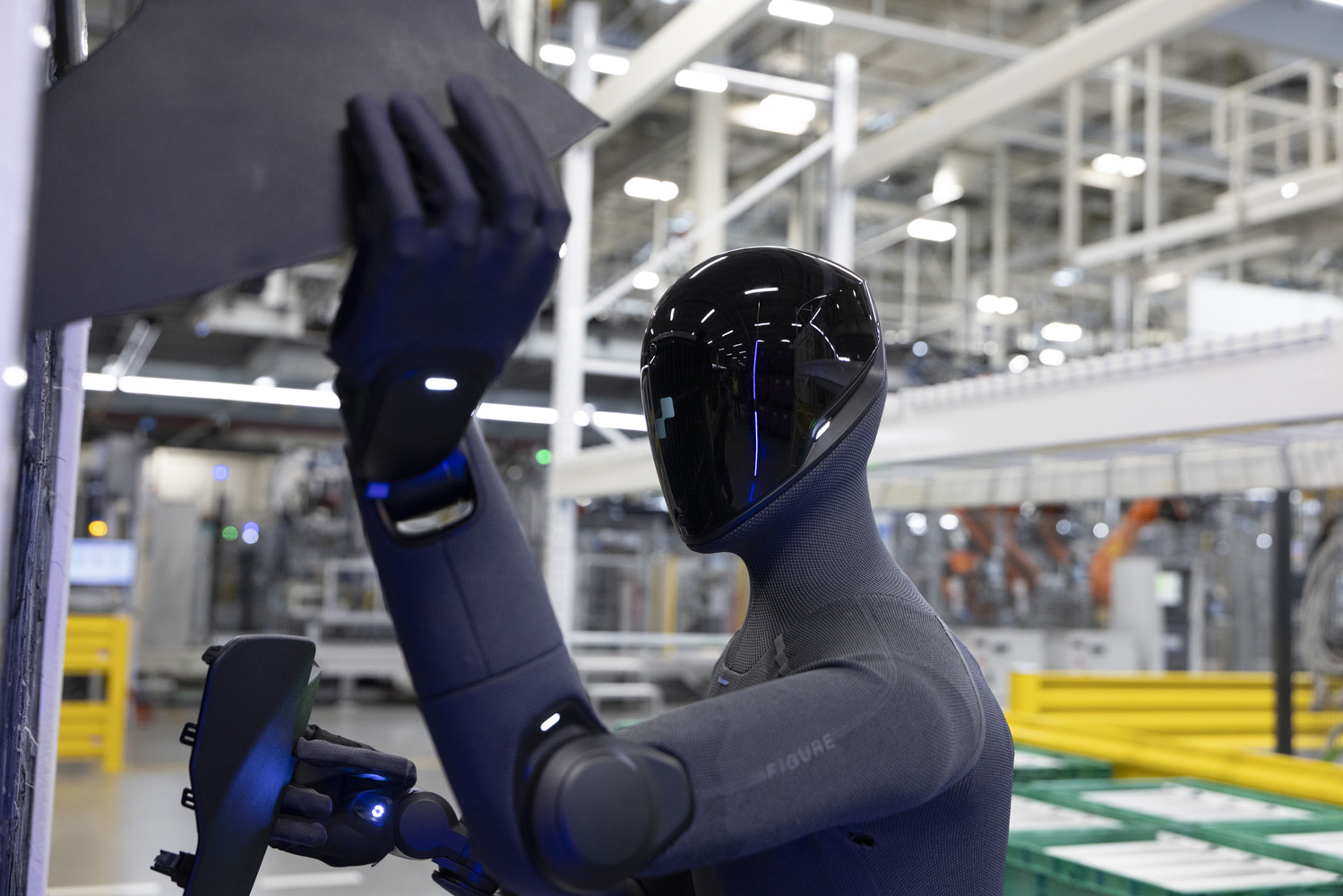
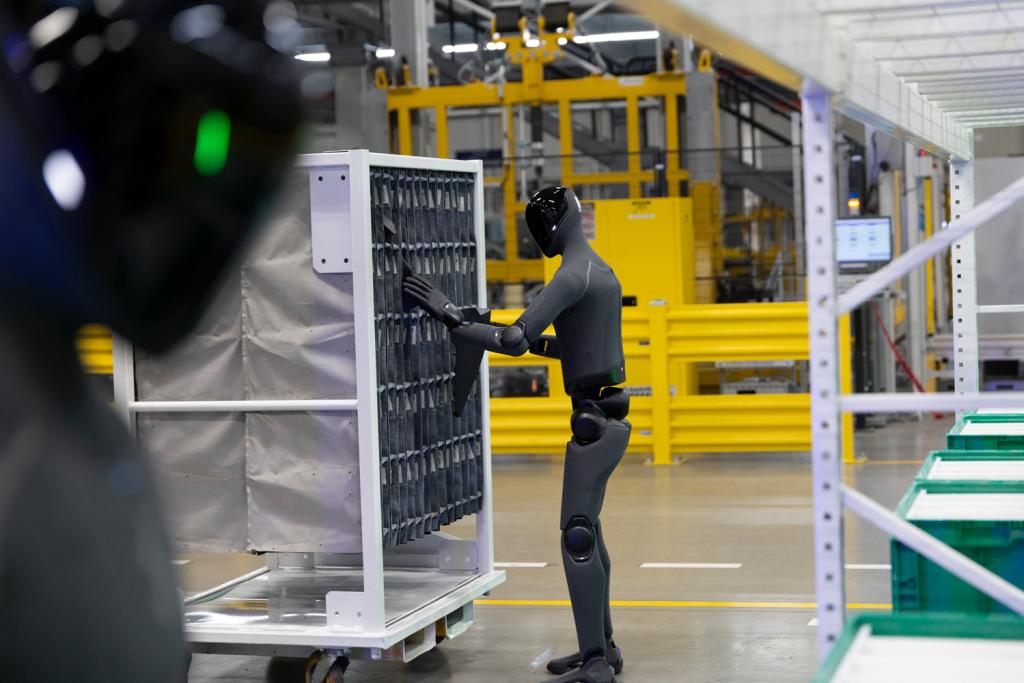
More importantly, Figure has also been doing actual production work with BMW. Its previous-generation Figure 02 spent around ten months working at BMW’s Spartanburg factory in South Carolina, where it removed and positioned sheet-metal parts for welding. According to BMW, it worked 10-hour shifts, five days a week, clocking around 1,250 operating hours, handling more than 90,000 components, and taking roughly 1.2 million steps. BMW says it contributed to the production of more than 30,000 X3s in the process.
Figure 02 has since been retired, but Figure 03 arrived at the same factory this summer. Figure says that the newer robot is taking on a more complicated sequencing job, which involves manipulating differently positioned components, moving around, and pulling a wheeled cart. These are still very specific jobs in controlled environments, of course, but still quite different from a few minutes in a shaky stage demo.
Humanoid robots have their limits
It’s one thing to get a robot to perform a task successfully once, but quite another to have it repeat that task thousands of times without damaging anything, falling over, or needing constant human intervention.
Boston Dynamics is a good example of the difference, and arguably one of the most famous. The company’s Atlas robot has been doing extraordinary things for years, including parkour and backflips, but the company unveiled the production version of its completely redesigned electric Atlas in January 2026 with much more practical work in mind.
It’s still an incredibly advanced machine. Atlas has 56 degrees of freedom, can lift up to 50kg, and can autonomously swap its own battery when it needs more power. Boston Dynamics is already working with Hyundai on manufacturing applications, but Hyundai’s planned large-scale rollout at its Georgia factory isn’t due to begin until 2028, initially with parts sequencing before potentially expanding into more complicated jobs.
Tesla is facing the same fundamental challenge with Optimus. During Tesla’s Q2 2026 earnings call, Elon Musk acknowledged that nobody has yet created a humanoid capable of performing genuinely generalised tasks. In other words, you can’t simply give today’s robots an unfamiliar job and expect them to understand what you want and work out how to do it.
Musk also pointed out that many of the impressive robot demonstrations we see online are pre-programmed or remotely controlled. That doesn’t make those demonstrations worthless, and teleoperation is also used to teach robots new skills, but it does make it difficult to judge how autonomous a robot really is from a short video.
The successful commercial examples still tend to involve tightly defined tasks. A robot can learn what objects it’s dealing with, where they’re likely to be, and exactly what it needs to do with them. Throw it into an unfamiliar environment and ask it to work things out as it goes along, though, and there’s plenty of room for improvement. I could say the same about myself as well, to be fair.
There’s a robot in your house!
Factories and warehouses are one thing, but I imagine you’re not waiting for a humanoid robot because you desperately need help positioning sheet metal. The really exciting prospect for the rest of us, is having a robot that can take care of boring jobs around the house. And we’re well past robot vacuum ambitions at this point.
Take 1X’s NEO – a soft-bodied humanoid designed specifically for domestic environments, and it’s being developed to do things including tidying, fetching objects, putting away dishes, and helping with laundry.
It’s not just a concept, either. The company is taking orders for an Early Access version costing $20000, with US deliveries due to start in 2026. There’s also a $499-per-month subscription option listed, because of course there is.
The catch is that NEO won’t arrive knowing how to deal with everything in your house. 1X describes its initial capabilities as basic autonomy, and for more complicated tasks, there’s an Expert Mode that allows a human 1X expert to remotely supervise the robot’s actions at a scheduled time.
That might sound slightly less futuristic than having a completely autonomous robot wandering around your home, but it highlights just how difficult domestic robots are to build. A factory can be designed around predictable processes and objects. Homes are full of things that move, clutter that shouldn’t be there – different layouts, pets, stairs, cupboards, clothes – it’s a wonder our brains can cope.
Ultimately, while being able to pick up a particular component from the same place thousands of times is an impressive engineering achievement, knowing that the jumper lying on a chair needs to go upstairs, while the phone sitting next to it probably shouldn’t, requires a much broader understanding of the world.
Why make robots humanoid in the first place?
There’s also the question of whether two arms and two legs are actually the best way to build a useful robot. In plenty of situations, they aren’t.
If you want to move heavy objects across a flat warehouse, wheels make far more sense. If you need something to perform the same precise movement all day, conventional industrial robot arms have been doing that successfully for decades. Even Boston Dynamics’ Stretch warehouse robot uses wheels rather than legs, because its job doesn’t require them.
The advantage of a humanoid form, though, is that almost everything around us has already been designed for humans. Stairs, doors, shelves, tools, vehicles, and factory workstations all assume the person using them will have roughly our proportions, with two arms and two legs. A sufficiently capable humanoid could therefore work in environments designed for people without those environments having to be completely rebuilt.
The real appeal is versatility. A purpose-built robot might be much better at one particular task, while a humanoid could theoretically be useful for lots of different ones. The problem is that today’s deployments aren’t really demonstrating that versatility yet. Digit and Figure are doing useful work, but they’re still doing particular jobs they’ve been trained to perform.
So with all that said, humanoid robots are useful already, just in a much narrower way than some of the incredible videos might suggest. Right now, their biggest successes involve doing repetitive, carefully defined jobs in environments where most of the variables can be controlled.
But if you’re waiting for one that can empty your dishwasher, groom the cat, and file our taxes – you’ll want to get comfy.


Read the full article here
