







Introduction
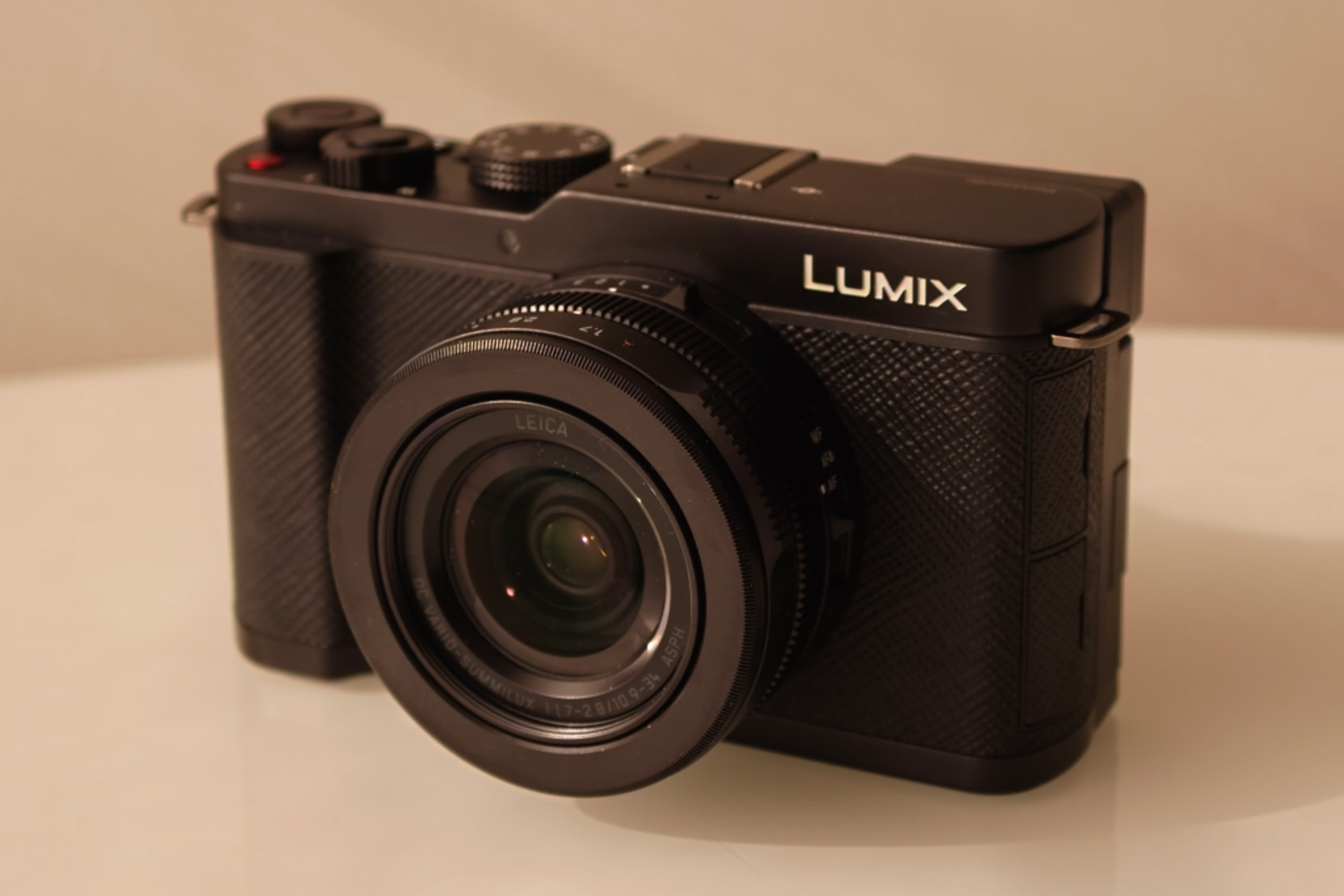
When your biggest rival is the TikTok darling that kick-started the recent compact camera resurgence, you’ve got to do something different in order to stand out – which is why the Lumix L10 has one thing that Fujifilm’s X100VI doesn’t: a telephoto lens. With a Leica-approved 24-75mm power zoom, the Micro Four-Thirds snapper aims to get you closer to the action while staying as pocket-friendly as possible.
The spiritual successor to the LX100 II also brings a new sensor, new image processor and faster autofocus system, without letting go of Panasonic’s video-first features. It even takes on the X100VI‘s beloved film simulations with social media-friendly custom LUTs.
Undercutting the Fuji (which remains both expensive and elusive two years after launch) is already a win, even if the L10 is still very much in premium territory. At $1499/£1299, there are interchangeable lens alternatives to consider – not least Panasonic’s own Lumix S9, which has a full-frame sensor – but for compact convenience there’s plenty here that could earn it a place in your camera bag.
After spending several weeks with one, covering a trade show and exploring Taipei on a work trip, here’s where the Lumix L10 stands out – and might even teach the X100VI a thing or two.
Design & build: a familiar face
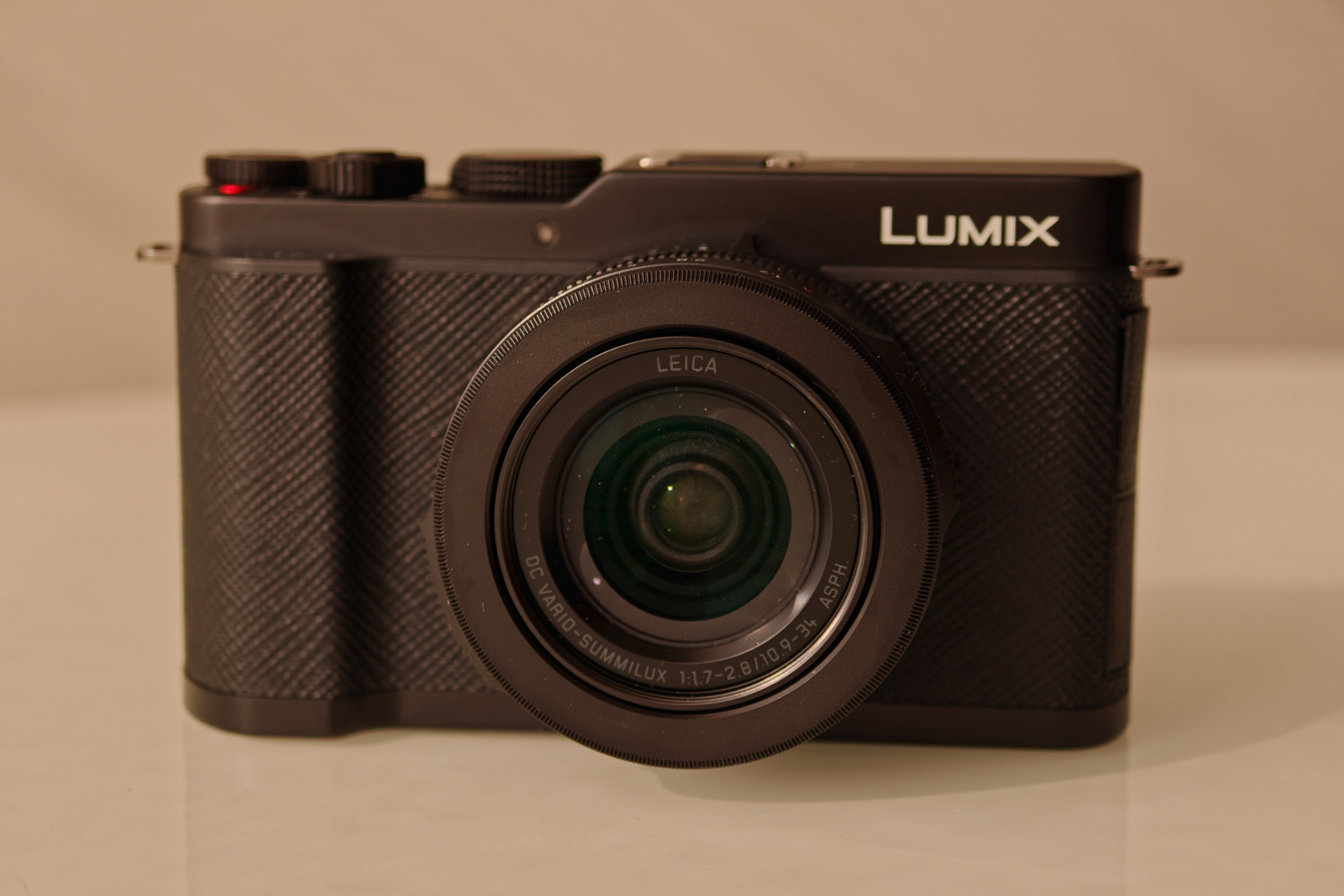
That the Lumix L10 is such a close match for the X100VI, both in dimensions and weight, can hardly be a coincidence. With the zoom lens fully retracted the two are almost interchangeable. Both are classic rangefinders with retro looks and electronic viewfinders; each can be had in two-tone silver or black; and both have their fair share of physical dials and buttons on their respective top plates.
Materials don’t feel quite as high-end here though, and the body isn’t weather sealed. The growth spurt also means the L10 is now a fair bit bigger than the LX100 II it effectively replaces. I couldn’t fit this camera into my trouser pocket, but appreciate the fact Panasonic has made room inside for a bigger battery.
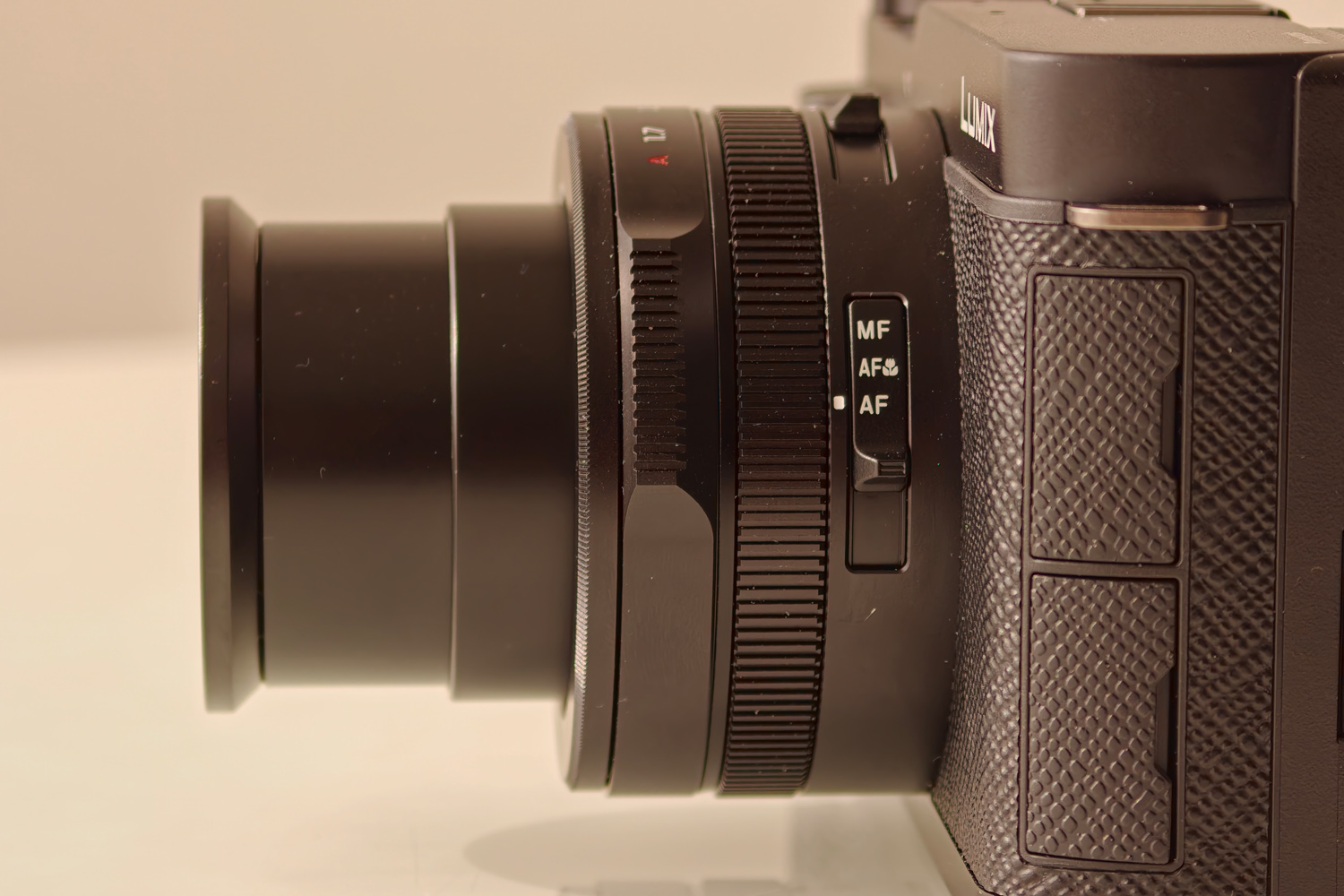
Like its predecessor, the Leica Vario-Summilux power zoom lens is the star of the show. It has the same 24-75mm equivalent zoom range and f/1.7-f/2.8 aperture, but Panasonic has boosted dust resistance – a common complaint from LX100 II owners. I had zero issues with dust during my testing. As well as manual zoom and aperture dials, there’s an auto/macro/manual focus switch at the side of the lens barrel and an aspect ratio slider on the top. This can be swapped for other functions if you largely stick to one ratio.
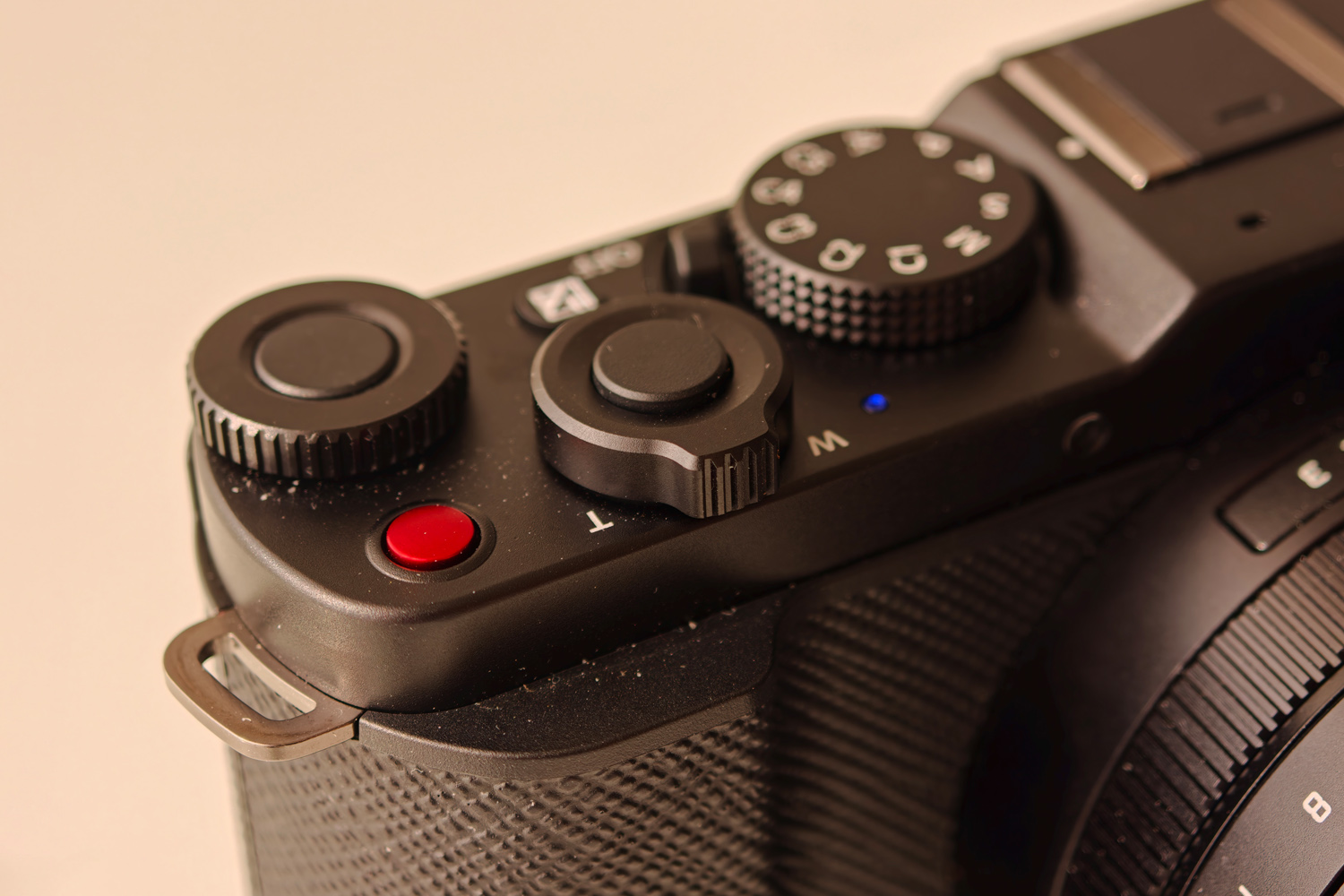
Elsewhere the shallow hand grip doesn’t give you a whole lot to hold onto, but the various controls have been sensibly laid out to always be within reach of your right thumb and forefinger. You don’t get dedicated shutter speed and exposure compensation dials up top like your did on the LX100 II, but the multifunction dial is customisable enough that I never missed them.
For something so relatively compact, the Lumix L10’s ergonomics really are first class.
It’s just a shame the auto lens cap and threaded shutter button are reserved for the special Titanium Gold version, which carries a price premium over the silver and black variants; the former saves you from having to pocket the lens cap every time you want to take a photo, while the latter has been exchanged for a basic button, meaning you can’t fit a soft release.
Features & battery life: oh so flexible
After taking some flak (justifiably so, in my view) for not giving the full-frame Lumix S9 an electronic viewfinder, I was very glad to see one here. It’s a good’un as well, with a fairly sharp 2.36m-dot resolution and enough brightness from the OLED that I could frame subjects easily in bright sunshine. That said, I still missed the X100VI’s hybrid optical viewfinder, which lets you glimpse the area around your shot too.
Panasonic earns praise for the 3.0in vari-angle touchscreen, though. It’s so much more versatile than Fuji’s tilting display, being able to flip forwards for selfies and vlogging as well as tilt up and down for high- and low-angle shooting. It has a higher resolution, gets usefully bright and was very handy for adjusting the focus point, seeing as there’s no joystick.
You won’t find a built-in flash here, but you do get a hot shoe for attaching an external one. Also absent is any kind of integrated ND filter, meaning photographers that like to play with shutter speed may be better served by the Fuji.
The single UHS-II SD card slot is par for the compact camera course, but I like that it gets its own compartment separate from the battery bay; swapping cards on the fly was a breeze. Tiny doors at the side of the camera hide the USB-C and 3.5mm microphone ports. That there’s no separate port for sound monitoring or any sort of HDMI output hardly feel like dealbreakers given the modest dimensions. Wi-Fi and Bluetooth 5.0 take care of wireless connectivity, with both coming in handy for the brilliant Lumix Lab companion app.
This is where you’ll download Panasonic’s real-time LUT profiles and beam them to the camera, letting you experiment quickly with user-created colour presets that can give your photos dramatically different looks. There are loads to try and the one-touch install is a thousand times better than Fuji’s fiddly custom film simulation recipes.
Performance: fast in all the right places
With a 779-point phase hybrid autofocus system now calling the shots, the Lumix L10 is slightly faster but crucially much more accurate to lock onto subjects than the LX100 II ever was. It can recognise people, animals, vehicles and even sports motion now. Canon and Sony still lead the way here but the Panasonic is competitive with Fujifilm’s latest effort, while also being quieter when focusing.
That was true for both stills and video. The latter has been a strong point for lots of recent Panasonic cameras, so it’s great to see that it hasn’t been ignored here in favour of a stills-centric approach. You even get a dedicated video record button on the top plate. The L10 can shoot 5.6K resolution video at up to 60fps – double the frame rate of the Fujifilm X100VI – in 10-bit colour, as well as 240fps slow motion. It’s enough to make this my top choice for vloggers and social creators that don’t need interchangeable lenses.
Close focusing felt like a weak point, though. The claimed 3cm distance for the shortest end of the zoom range seemed ambitious when I attempted to shoot insects, while 30cm distance at the long end is very large.
While the zoom isn’t quite strong enough to make this a sports photographer’s pocket pal, burst speeds are very respectable. The L10 can manage 11fps using the mechanical leaf shutter or 30fps using the electronic one. My issue was that the lens itself takes a few seconds to fully extend, making you wait before being able to rattle off shots from a powered off state. It doesn’t help that the camera likes to enter power saving mode pretty quickly by default, retracting the lens in the process.
This does help maximise lifespan, though, and the bigger battery has brilliant endurance. The L10 can last for up to 420 shots per charge, which for me covered an entire day spent shooting products at a trade show, and an evening exploring Taiwan’s famous night markets. That’s very competitive with the Panasonic’s major rivals.
Image quality: LUTs to like
Panasonic has given the Lumix L10 a new backside-illuminated (BSI) Micro Four-Thirds sensor, which has larger individual pixels than even the Fuji X100VI’s APS-C setup – although it does have fewer of them. It’s a multi-aspect sensor, but one where you’re never getting the full 26.5MP in any aspect ratio; stick with 4:3 and your resulting snaps will max out at 20.4MP.
Fixed-lens rivals have the edge on pixel count and clarity at native zoom, but combined with the Leica-approved lens, the L10 can produce wonderfully sharp and detailed snaps at either end of its magnification range. Things only taper off at the extreme edges of the frame, or when using the crop zoom to get even closer digitally.
This camera isn’t the king of depth blur, but 75mm f/2.8 portraits still show a nice bit of bokeh. The zoom range really does give you a lot of flexibility in framing, too. At 75mm it has a clear advantage over the Fuji, which has to rely on digital cropping to get as close.
The firm’s stock colour science has plenty of character right out of the camera, while staying true to life. Daytime photos show great dynamic range, with lots of details preserved in shadows when shooting in RAW.
There’s an argument that rivals put a little more punch in their JPEGs, but that’s where real-time LUTs come in. These exist separately from Panasonic’s Photo Styles (which include the moody Leica Monochrome) and can massively change up a given scene.
Some can be quite heavy-handed, so there’s some trial and error while you download, use and then reject LUTs that don’t match your vibe. Fuji’s film simulations arguably hit more than they miss, but there are only so many of them (unless you’re prepared to get your hands dirty). Because it’s so easy to download new LUTs to the camera, I was constantly experimenting with new ones.

Low light is where the Lumix L10 is at its weakest, but not to the point it drags the rest of the experience down.
The smaller sensor creates more noise than APS-C rivals, but only really at higher ISO values. The noise reduction processing also softens things up a little, but not to the point I thought my shots were unusable – or that I felt the need to stick to RAW shooting and process my pics later.

There’s no in-body stabilisation here, just lens-based OIS, so you need a steady hand (or a tripod) to get the sharpest results. Focus locking was just that little bit less consistent at night too. The f/1.7 aperture helps maximise your available light, though, and I found the moodier real-time LUTs could give some scenes presence that would’ve otherwise been missing had I shot them ‘straight’.
Panasonic Lumix L10 verdict

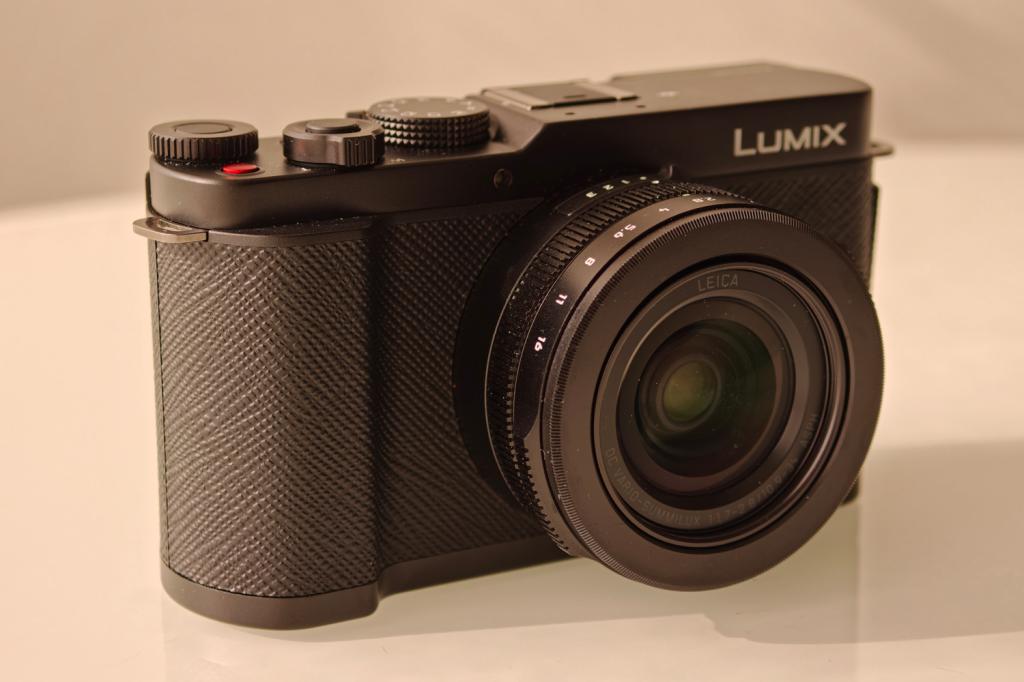
As a stills-first shooter with style in mind, the Lumix L10 is a real gem. It takes clean, colourful images and its zoom lens gets you usefully closer to your subjects. You’re not pigeonholed into a smaller mix of shooting scenarios as a result, making it a fantastic travel camera. Panasonic’s custom LUTs are then a great way to add creative flair to your pics without reaching for Lightroom, and it’s hard to complain about the ergonomics.
I don’t think Panasonic has quite managed to dethrone the compact camera king; Fuji’s faster starting X100VI is the better street photography choice. It also has the edge on retro looks and premium materials, while also beating the Lumix on native image quality. That hybrid viewfinder is almost impossible not to love too.
Using optics rather than sensor cropping helps the L10 pull it back at maximum zoom, though. Having a flip-out touchscreen is then just one of the factors that make it a better choice for vloggers and videographers. This flexibility is something the pricier Leica D-Lux 8 (which bleeds Panasonic when you cut it) can’t match, while the built-in EVF is enough to earn the L10 my vote over the full-frame, interchangeable lens Lumix S9.
The fixed lens rivals might make you think more carefully about composition, but there’s a lot to be said for having broader appeal.
Panasonic Lumix L10 technical specifications
Scroll to see more →
| Specifications | Panasonic Lumix L10 |
|---|---|
| Sensor | 20.4MP Micro-Four Thirds |
| Lens mount | 24-75mm f/1.7-2.8 fixed |
| ISO sensitivity | ISO 50-25,600 (extended) |
| Continuous shooting | 11fps (mechanical) / 30fps (electronic) |
| Video recording | 5.6K/60 |
| Screen | 3.0in free-angle LCD |
| Viewfinder | 0.39in OLED EVF |
| Storage support | SDXC |
| Connectivity | USB-C, mic in, Wi-Fi, Bluetooth |
| Dimensions | 127x74x67mm |
| Weight | 508g (body, battery and SD card) |




Read the full article here


