

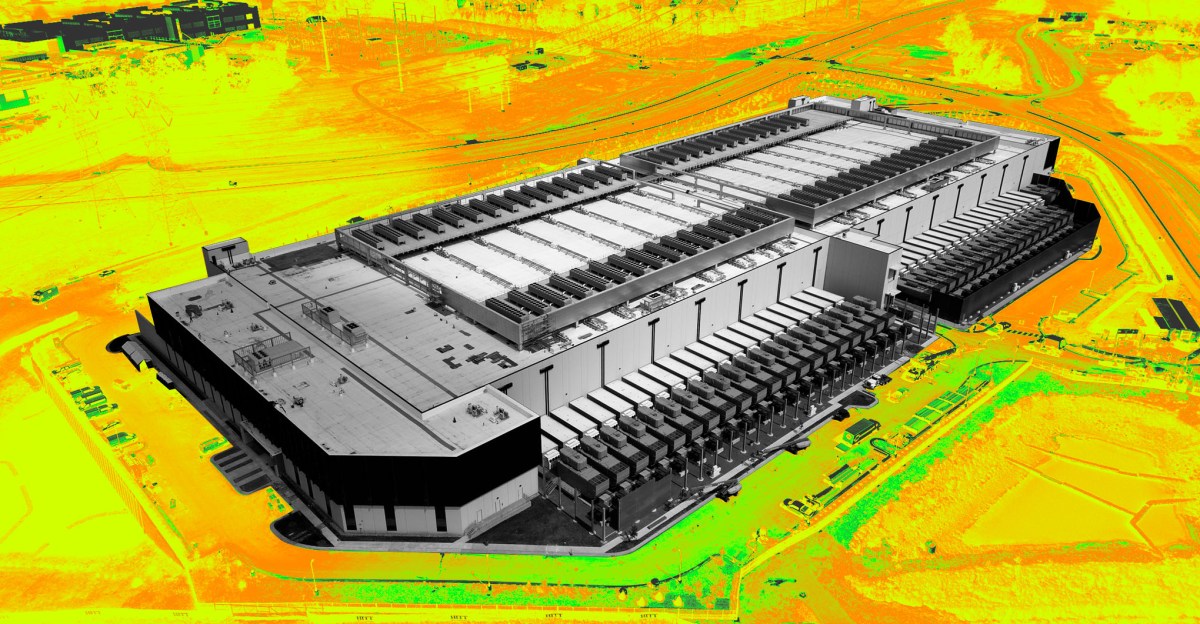
On Tuesday, the Seattle City Council will vote on whether to enact a one-year moratorium on new data centers — just two months after several companies proposed building five large-scale centers in the city. Among the moratorium’s fiercest supporters are current employees from the city’s biggest tech giant, Amazon, who joined others to testify in support of the policy last week.
Data centers have sparked protests across the country over concerns about water consumption, local electricity prices, and noise. In Seattle and the surrounding King County, the issue is coming to a head. If the city council votes in favor of a moratorium on June 9th, any new large-scale data center proposals in Seattle will be tabled for one year, during which it can consider legislation to figuratively (and perhaps literally) take power back.
At two city council hearings, residents spoke overwhelmingly in favor of the move — including engineers, software developers, and other industry insiders. “In my job, I see the consequences of the all-costs-justified AI buildout,” testified Liesl Wigand, an Amazon senior software engineer, at a Seattle Land Use and Sustainability committee hearing last Wednesday. “The biggest issue is a belief that AI should be how we solve everything, while ignoring the resources that it costs. This culture is omnipresent across tech.”
Wigand is a member of Amazon Employees for Climate Justice, a group of current and former employees dedicated to the climate crisis. Last year, more than 1,000 Amazon employees signed an open letter accusing Amazon of “casting aside its climate goals to build AI,” calling for the company to power all its data centers with 100 percent additional, local renewable energy. Sarah Tracy, a former Amazon software engineer who’s also a member of the group, says they’ve been waiting for an opportunity like the moratorium to speak out.
The new data centers in Seattle were proposed by four companies, the names of which remain under wraps, and they would have a combined maximum demand of 369 megawatts — about one-third of Seattle’s average electricity use on any given day — and lead to 10 times more power consumption than the city’s existing 30 data centers, per The Seattle Times.
After saying she was proud to live in a city that legally protects employees against employer retaliation when they speak out politically, Wigand pressed lawmakers to take initiative in “setting the terms” for data centers in Seattle. She said she and other tech workers had seen examples of data centers built responsibly, with protections like climate mitigation and AI safety committees. But Seattle doesn’t yet hold tech companies to those types of standards. “Let’s not let Big Tech burn Seattle to win the AI race,” Wigand said.
The proposed emergency moratorium comes alongside a resolution asking for more research on the effects of data centers on city infrastructure, utility rates, water and land use, jobs, and public health. But to some, the plan doesn’t go far enough. One problem, according to local news outlets, is that if all paperwork is submitted for a new data center in Seattle before the moratorium is voted on, then construction can move forward anyway.
Patrick Schloesser, a software engineer at Amazon, asked the committee to consider mandating that developers not hide behind NDAs and shell companies, which can make it nearly impossible to figure out who’s behind a given data center. He said each developer should provide 100 percent additional renewable energy to the area’s grid and be taxed each time they conduct a layoff. He also called for worker-led safety committees that report to the city, “so that if any AI developed in your facilities is becoming a risk to the city, the city can prepare and intervene if necessary.”
At a separate Parks and City Light committee hearing, Darius Irani, a software engineer at Amazon, called for companies to also provide additional energy transmission and storage capacity and for public reporting of water and electricity usage. “We can’t rely on these companies to regulate themselves — Seattle needs to set the terms so the way any new data centers get built here actually moves us closer to the future we want,” he said.
Dozens of other people also spoke out in favor of the moratorium, including electrical engineers and tech workers at other companies, some of whom said they had lost their jobs due to AI. One speaker cited the housing affordability crisis in Seattle and a marked increase since 2024 in the number of locals experiencing homelessness. Others brought up data center-related increases in their electricity bills in recent years, talked about the number of single-family homes that a data center in Seattle may displace, and played recordings of the sounds of data centers heard from miles away.
Some comments echoed a broader backlash against the AI industry. One speaker, who said he worked on AI at a startup, said data centers largely benefit corporations and that when it comes to AI, “I don’t think it’s going to help us that much.” Another speaker said that AI “doesn’t need more megawatts — it needs more mega-resolution.” (That elicited a “Dang!” from the audience.)
Others expressed disillusionment. “If you’d asked me a year ago if I supported a data center moratorium, I would’ve said no,” said one speaker. “At that time, the tech companies were telling us they were planning to power them with a massive buildout of renewables — with utility-scale battery storage, and with demand-response capability that would help stabilize the grid. They said they’d use closed-loop cooling systems that limited water use and would provide free heating to nearby buildings. But is that what they did? No.”
A former software engineer at Amazon who spent years living in Seattle — and requested anonymity due to fear of retaliation — told The Verge that companies are “barrel[ing] ahead” with data center buildout without any input from workers or the communities they’re building in.
“We have a real opportunity here to use the pause, the moratorium, to say ‘Okay, if this is a technology that we’re gonna live with, how can we really make it so that the infrastructure and the technology itself are benefiting people rather than just consolidating wealth in the hands of some tech billionaires?’” the former employee said.
And despite the size of the opposition, supporters of the moratorium may not be powerless. Individual data center plans have been canceled or downscaled after local protest, and moratoriums have been proposed at all levels of government. New York’s state legislature just voted for a one-year ban on new large-scale data centers, which has now passed to the governor’s desk.
Schloesser cited reports in his testimony that Amazon is spending $200 billion on capital this year, and Microsoft spending $190 billion, with much of that money earmarked for AI and data centers. At the same time, he said, Amazon has laid off 30,000 employees at its corporate offices in the past eight months.
“What that tells me is that Big Tech is desperate to build as much compute capacity as it can, as fast as it can,” Schloesser said. “That desperation gives our city leverage.”
Read the full article here
