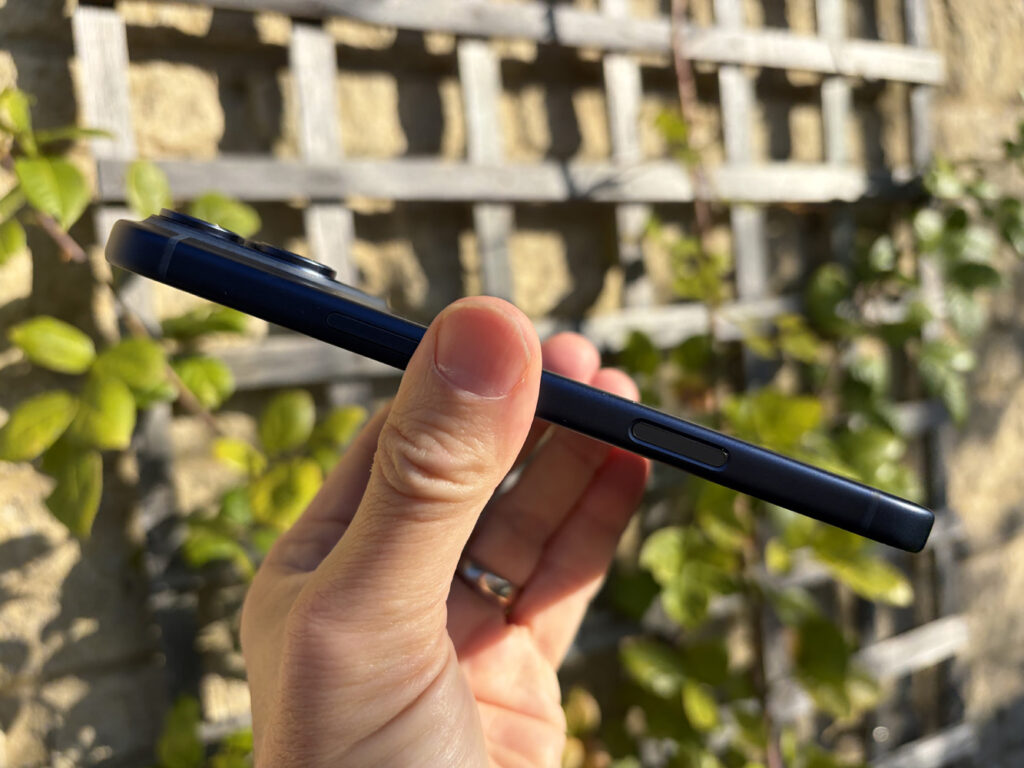
Remember when Apple celebrated the iPhone’s 10th anniversary by launching the iPhone X and ditching the home button? Now, if the rumours are true, it appears that the tech giant is preparing for another major overhaul for the iPhone’s 20th anniversary in 2027.
From a wraparound screen, to new battery tech and more, here’s everything we know about Apple’s rumoured 20th anniversary iPhone.
Price and release date
Current reports point to an autumn 2027 announcement as part of Apple’s usual September flagship launch, where we’re also expected to see the rumoured iPhone 18 Pro and 18 Pro Max.
Given that it doesn’t officially exist, there’s no price information for the rumoured iPhone anniversary model yet. Given, also, the potentially fancy new design and rising component costs thanks to the AI boom (which has caused Apple and others to raise prices), we’d confidently predict that this will be the most expensive non-folding iPhone to date.
Design and build: under pressure
The 20th anniversary iPhone is expected to introduce Apple’s biggest hardware redesign since the iPhone X. Reliable analyst Bloomberg’s Mark Gurman has reported that Apple is working on a mostly glass design with a nearly edge-to-edge screen, and glass wrapping around the sides.
The Information has also separately reported that Apple is developing a curved-glass iPhone for autumn 2027, while South Korean reports have pointed to a display that curves gently along all four edges.
Apple is also, apparently, testing touch-sensitive replacements for the volume, side, Action and Camera Control buttons. Pressure sensors could detect a press, while haptic motors could recreate the sensation of clicking a mechanical button. Apple already uses a similar trick with its MacBook trackpads, and previously fitted a solid-state home button to the iPhone 7 and iPhone 8.
Screen: it’s a wrap

The headline upgrade is expected to be a nearly uninterrupted OLED display that extends much closer to the edges of the phone.
Apple’s ultimate goal is reportedly an iPhone with no visible cutouts, which would require both the Face ID sensors and front-facing camera to sit beneath the screen. Infrared light would need to pass through a specially engineered part of the OLED panel so that Face ID could continue scanning the user while its hardware remained hidden.
Moving the selfie camera beneath the panel would remove the final visible hole, allowing photos, videos and games to fill the entire front of the phone without a notch or Dynamic Island getting in the way.
Whether Apple can achieve all of that by 2027 remains uncertain. Display analyst Ross Young believes fully under-display Face ID may not be ready in time, meaning the finished iPhone could retain a considerably smaller Dynamic Island instead. A completely cutout-free screen appears to be Apple’s ambition, rather than a feature that can currently be considered certain.
The display itself may also be thinner, brighter and more efficient. ETNews reports that Apple is considering an OLED technology known as Color Filter on Encapsulation, or CoE, for the anniversary iPhone.
Conventional OLED screens use a polarising layer to reduce reflections and improve contrast, but that layer also absorbs some of the light produced by the panel. CoE replaces it with colour filters incorporated into the display’s encapsulation structure.
Removing the polariser could make the overall display assembly thinner while allowing more light through. In practical terms, Apple could increase brightness without using as much additional power, or maintain similar brightness while reducing the screen’s energy consumption.
Samsung has already used versions of CoE technology in its foldable phones, while The Korea Herald reports that Samsung Display is likely to supply the anniversary iPhone’s specialised OLED panels. Glare and reflections will still need to be carefully controlled, however, particularly on a screen that could curve around several edges of the device.
Battery: solid

Apple is reportedly exploring new battery tech, and recent reports have linked the anniversary iPhone with a pure-silicon anode. Silicon can store considerably more lithium than the graphite predominantly used in conventional smartphone battery anodes, potentially allowing manufacturers to increase capacity without making the battery physically larger. Apple could use that additional energy density to provide longer battery life, create a thinner phone without reducing its runtime, or find a compromise between the two.
The problem is that silicon expands considerably during charging. Repeated expansion and contraction can damage the anode and reduce its useful lifespan, making durability one of the biggest obstacles to increasing the amount of silicon used.
Several Android manufacturers already use silicon-carbon batteries to squeeze larger capacities into relatively slim phones, although these generally combine silicon with graphite rather than relying on a pure-silicon anode. Whether Apple can make the more ambitious reported technology ready for mass production by 2027, remains to be seen.
No dependable capacity figure has emerged, so claims that the anniversary iPhone will contain a particular battery size should be ignored for now. The more interesting possibility is that new battery chemistry, a more efficient OLED screen and a new processor could deliver longer battery life without producing a substantially thicker device.
Power and performance: mean machine

The anniversary iPhone model is reportedly being developed around an A21 chip manufactured using a 2nm process. Naturally, it’s expected to be one of the most powerful phone processors released to date. This should, of course, bring the usual welcome improvements to performance and energy efficiency. Hooray!
Apple is also said to be considering mobile high-bandwidth memory (HBM), and has reportedly discussed the tech with Samsung and SK Hynix. If true, we could see much larger amounts of data moving more quickly between the memory and processor. This could be particularly useful as Apple attempts to run more demanding generative AI models directly on the iPhone. If Apple does adopt the tech, greater memory bandwidth could make on-device Apple Intelligence features faster and reduce how often they need to send information to cloud servers.
Processing more requests locally could also improve privacy and allow certain features to work without a reliable mobile or Wi-Fi connection. However, mobile HBM is still reportedly under consideration, and there’s no confirmation that it has been selected for the finished phones.
Having said all that, the A21 processor is much firmer, according to the current reports. Combined with the possible display and battery improvements, it could give Apple enough room to make its anniversary iPhone noticeably thinner without compromising performance or everyday battery life.
That’s everything we know for the time being, but we’ll be sure to update this feature with more news and rumours as they come in, so stay tuned.
Read the full article here