Close Menu
Gadget Guide News
  • Home
  • News
  • Features
  • Reviews
  • Best Stuff
  • Buying Guides
  • Deals
  • More Articles

Subscribe to Updates

Get the latest tech news and updates directly to your inbox.

Trending

The 7 biggest announcements of Google’s Pixel 11 launch

August 12, 2026

Google’s Pixel 11 series pairs a little new hardware with a lot of new software

August 12, 2026

The Pixel 11 Pro’s HiLight feature will only please Google Gemini die-hards. Here’s why I’m sceptical

August 12, 2026
Facebook X (Twitter) Instagram
Gadget Guide News
Subscribe
  • Home
  • News
  • Features
  • Reviews
  • Best Stuff
  • Buying Guides
  • Deals
  • More Articles
Gadget Guide News
  • Best Stuff
  • Buying Guides
  • Reviews
  • Deals
  • Features
Home»Features»How accurate are sleep trackers? Here’s what your Oura Ring and Apple Watch (and others) aren’t telling you at breakfast
Features

How accurate are sleep trackers? Here’s what your Oura Ring and Apple Watch (and others) aren’t telling you at breakfast

News RoomBy News RoomAugust 12, 2026016 Mins Read
Share Facebook Twitter Pinterest Copy Link LinkedIn Tumblr Email Telegram WhatsApp
Follow Us
Google News Flipboard
Share
Facebook Twitter LinkedIn Pinterest Email Copy Link

It’s been nearly twenty years since Fitbit first announced sleep tracking on the Fitbit Classic. I don’t remember that tracker, but I do remember the Jawbone Up, which launched two years later, in 2011, and was among the first wrist-worn wearables to popularise the very idea of sleep tracking – back when “sleep hygiene” still sounded like something to do with a flannel and a bar of soap.

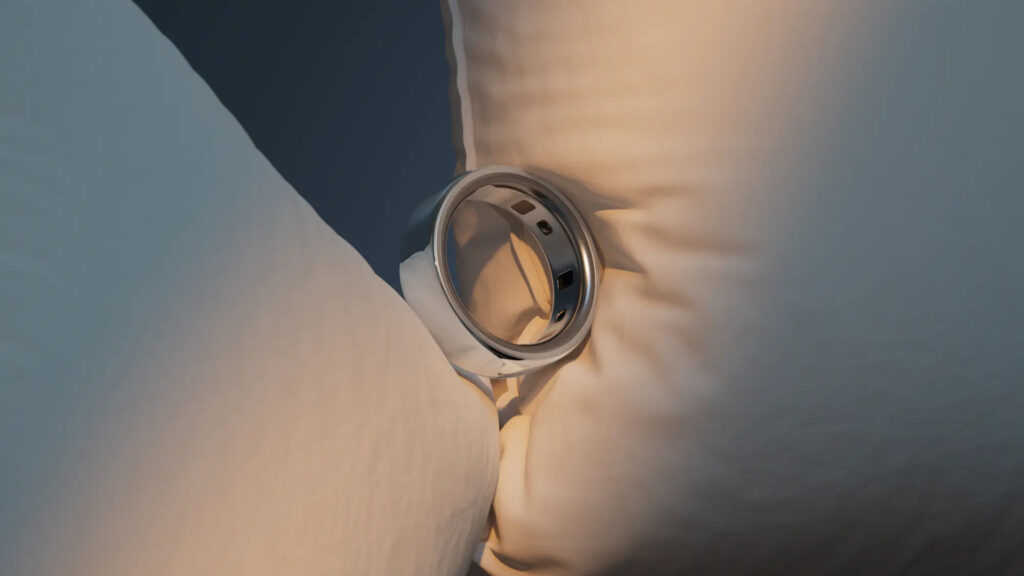
A lot’s changed since. Jawbone no longer exists, Fitbit is now owned by Google, and sleep trackers are absolutely everywhere. Every gadget you own suddenly fancies itself a bit of a sleep doctor: the smart ring on your finger, the smartwatch on your wrist, the mat lurking under your mattress, even the smart speaker on your bedside table and the apps on your phone, all desperate to hand you a tidy little score each morning for how well (or badly) you did.

Sleep, in other words, has become the new step count — the metric we’re all quietly obsessed with optimising, even though most of us couldn’t explain what “sleep efficiency” actually means. But how much of that data can you trust?

Working with what they’ve got

Every sleep tracker is marked against the same test: polysomnography (PSG), the lab-based clinical gold standard for measuring sleep and the same test used to diagnose sleep disorders. It wires you up with electrodes that record brain waves, eye movements, muscle activity, heart rate, and breathing, and it’s the only setup that can actually tell you which stage of sleep you’re in.

Consumer trackers work rather differently, as an Oxford Neuroscience article set out in 2021. Most rely on movement and, increasingly, heart rate, because that’s all a watch or ring worn on your body can detect. Nobody wired me up to a rig of electrodes last night, yet my Oura Ring still cheerfully informed me I’d scored an 81. Make of that confidence what you will.

That difference in measurement matters quite a bit, though. We move throughout every stage of sleep, not just when we’re restless, so motion alone is a fairly blunt instrument for working out which stage you’re in. You’ll get roughly the right ballpark, but you shouldn’t be betting your house on the specifics.

Good intentions, shaky on the details

The research on sleep trackers paints a fairly consistent picture: trackers nail the basics, but they get a bit wobbly the deeper they dig. That same Oxford piece I mentioned above cites older research that puts sleep-versus-wake accuracy at around 78 per cent, a figure that drops when you ask a tracker something trickier, like how long it actually took you to nod off (also known by many trackers as sleep latency).

More recent studies support this, but they also show that fitness trackers have made significant progress over the last five years. Reassuringly, that progress holds up even on older hardware, which bodes well for whatever’s strapped to your wrist right now. A 2024 Sensors study led by Brigham and Women’s Hospital in Boston put the Oura Ring Gen 3, Fitbit Sense 2, and Apple Watch Series 8 through an overnight PSG showdown. All three achieved a sensitivity of 95 per cent or higher in distinguishing between sleep and wake — a solid pass mark for devices that, in wearable years, are now pushing pension age.

Sleep staging was where things got messier. Sensitivity for correctly identifying light, deep, and REM sleep ranged from around 50 per cent to the high 80s, depending on device and stage. Oura achieved a sensitivity of 76 to 79.5 per cent with precision matching; Fitbit’s sensitivity was between 61.7 and 78, with precision between 72.8 and 73.2 per cent; while Apple Watch had a sensitivity between 50.5 and 86.1 per cent and a precision between 72.7 and 87.8 per cent.

Oura came closest to matching PSG overall – though it’s worth noting that Oura funded this particular study, which is a bit like marking your own homework and giving yourself a gold star. The study found that Fitbit overestimated light sleep and underestimated deep sleep, while Apple underestimated wake and deep sleep but overestimated light sleep.

A separate, independently funded 2025 trial in Sleep Advances put six wearables — the Apple Watch Series 8, Whoop 4.0, two Fitbits, a Garmin, and a Withings ScanWatch — through the same overnight test on 62 adults. All six were reliably good at spotting sleep itself (92 to 96 per cent of the time), rather rubbish at spotting when someone was actually awake (just a 29 to 52 per cent success rate here), and reasonably solid at flagging deep and REM sleep. Full four-stage agreement with PSG landed somewhere between “fair” and “moderate”, which is sleep tracker code for ‘we’re trying our best’.

Then a 2025 meta-analysis in the Journal of Clinical Sleep Medicine, pooling 24 studies and nearly 800 wearers, found things even gloomier. Even total sleep time – the one number you’d assume any tracker could nail in its sleep, pun very much intended — showed an average gap of around 17 minutes against PSG, alongside similarly wonky sleep efficiency and sleep-latency figures. The conclusion was that wrist-worn trackers “are not as reliable as polysomnography” for these core measures. Handy for spotting trends over a few weeks, but not something to treat as gospel.

Whoop doesn’t entirely escape either. A PubMed-listed validation study found that its strap overestimated total sleep time by roughly eight minutes on average, yielding about 64 per cent agreement with PSG across four sleep stages. Trend-spotter? Yes. Substitute for a sleep lab? Not quite, it seems.

Why bother with sleep trackers at all, then?

So sleep trackers aren’t as accurate as a night spent hooked up to a hospital’s finest electrodes. Shocking news, I know, truly stop-the-press stuff. But does it actually matter? Only if you’re after clinically precise data, in which case no tracker, however shiny, is likely to deliver that, nor were they built to.

For spotting patterns, though, such as whether a stressful month is affecting how quickly you fall asleep, sleep trackers earn their keep. Just remember they’re estimating, using clever-but-imperfect proxies, and getting better as heart-rate sensing and machine learning improve, but they’re not a substitute for a medical test.

It’s also worth asking yourself why you’re tracking sleep at all. That Oxford research also highlights a 2018 Oxford-led study in which people were shown fake sleep scores, regardless of how they’d actually slept. Those who were told they’d had a rubbish night reported worse mood and concentration the next day, even though nothing about their actual sleep had changed. If you’re already a fretful sleeper, staring anxiously at a number generated by an app might do more harm than the extra ten minutes of shut-eye it’s nudging you towards.

So the moral of this story is to use sleep tracking data as a guide rather than a given, and if you wake up feeling rested, trust your body rather than whatever smug little number is waiting for you on your phone.

Read more: How I use sleep tracking tech without letting it ruin my sleep

google preferred source

Apple News

Read the full article here

Follow on Google News Follow on Flipboard
Share. Facebook Twitter Pinterest LinkedIn Tumblr Email Copy Link
News Room
  • Website

Related Posts

Tesla’s hidden door handles need a redesign before I buy one, and they’re not alone

August 11, 2026

How to take amazing solar eclipse photos without damaging your phone or camera

August 11, 2026

Apple’s Screen Time will get big updates in iOS 27 – these are the settings to change before your kids find a way around them

August 11, 2026
Add A Comment
Leave A Reply Cancel Reply

Top Articles

You can now try Apple’s all-new Siri AI yourself on your iPhone, iPad or Mac – here’s how

July 13, 2026

I asked Apple’s new Siri AI and Google Gemini the same 10 questions – here’s how they responded

June 19, 2026

Swatch posts the correct answers to the MoonSwatch Mission to Moon 1969 ESTA quiz – did you pass?

July 23, 2026
Latest Reviews

Google’s Pixel 11 series pairs a little new hardware with a lot of new software

News RoomAugust 12, 2026

Google’s Pixel Watch 5 dives deeper into AI and health

News RoomAugust 12, 2026

Honor’s Robot Phone is better than a gimbal in a phone has any right to be

News RoomAugust 12, 2026

Subscribe to Updates

Get the latest tech news and updates directly to your inbox.

Demo
Most Popular

What to expect from Apple’s September event: iPhone Fold, iPhone 18 Pro, Apple Watch Ultra 4 and more

July 4, 2026

You can now try Apple’s all-new Siri AI yourself on your iPhone, iPad or Mac – here’s how

July 13, 2026

I asked Apple’s new Siri AI and Google Gemini the same 10 questions – here’s how they responded

June 19, 2026
Our Picks

Google aims for influencers with the Pixel 11 Creator Suite

August 12, 2026

Google’s Pixel Watch 5 dives deeper into AI and health

August 12, 2026

Google Pixel Watch 5 announced with breathing emergency detection and faster GPS – here are 9 thing you need to know

August 12, 2026

Subscribe to Updates

Get the latest tech news and updates directly to your inbox.

Facebook X (Twitter) Instagram Pinterest
  • Home
  • Privacy Policy
  • Terms of use
  • For Advertisers
  • Contact
2026 © Prices.com LLC. All Rights Reserved.

Type above and press Enter to search. Press Esc to cancel.