Close Menu
Gadget Guide News
  • Home
  • News
  • Features
  • Reviews
  • Best Stuff
  • Buying Guides
  • Deals
  • More Articles

Subscribe to Updates

Get the latest tech news and updates directly to your inbox.

Trending

Retro tech is trendy again! Here are 3 things I want to bring back and 3 things I don’t

August 21, 2026

Tesla sunsets its Solar Roof tiles

August 21, 2026

New Apple TV 4K could upgrade one of the weakest parts of the current Apple TV experience

August 21, 2026
Facebook X (Twitter) Instagram
Gadget Guide News
Subscribe
  • Home
  • News
  • Features
  • Reviews
  • Best Stuff
  • Buying Guides
  • Deals
  • More Articles
Gadget Guide News
  • Best Stuff
  • Buying Guides
  • Reviews
  • Deals
  • Features
Home»Features»How much does air travel dehydrate your body – and the tips to avoid it
Features

How much does air travel dehydrate your body – and the tips to avoid it

News RoomBy News RoomAugust 21, 2026017 Mins Read
Share Facebook Twitter Pinterest Copy Link LinkedIn Tumblr Email Telegram WhatsApp
Follow Us
Google News Flipboard
Share
Facebook Twitter LinkedIn Pinterest Email Copy Link

If you’ve ever flown business class, you may have been pleasantly surprised by the little tube of lip balm tucked into the amenity kit. But it’s not as random as it might first seem. It’s a pre-warning of the fate your lips will face on a long-haul flight, when you start to resemble a piece of biltong.

Your lips crack, your eyeballs feel as if they’ve been sandblasted, your skin has the texture of a cracker left out overnight, and you’re fairly sure your tongue has taken up permanent residence on the roof of your mouth. It doesn’t matter where you sit on the plane, whether in the back of economy or up front in 1A; the consequences of air travel are coming for you (even if the balm isn’t).

Naturally, you blame dehydration. It’s the villain of air travel, right up there with the people who recline their seats the second the seatbelt sign switches off. But the science behind cabin dehydration is more complicated than the idea that cabin air is bad and that drinking water fixes it.

Desert in the sky

Let’s start with the fact that aircraft cabins are horribly dry. Within about two hours of take-off, relative humidity inside the cabin plummets to below 10 per cent and remains there for the rest of the flight, according to research published in Skin Research and Technology that measured skin hydration on long-haul flights. For comparison, most homes have humidity between 30 and 50 per cent, while the Sahara’s average relative humidity is around 25 per cent, so you are, quite literally, flying in conditions drier than a desert.

A review published in the journal Nutrients also found that resting water loss through breathing more than doubles, from about 5oz / 160ml an hour to 12oz / 360ml an hour, when humidity drops from a comfortable 60 per cent to the 12 per cent typical of a cabin. The same review flags the cabin environment as actively promoting fluid loss and increasing the risk of dehydration, particularly on longer flights when you’re sitting still for hours on end.

On top of that, you have the issue that roughly half the air pumped into the cabin is drawn from outside the aircraft, and at 35,000 feet the atmosphere holds almost no moisture, Dr Matthew Goldman from the Cleveland Clinic explains. Add cabin pressurisation, which is around 75 per cent of what you’re used to on the ground and mimics an altitude of around 6000 to 8000 feet (essentially the same air as Mexico City, which sits more than 2200 metres above sea level), and you have perfect recipe for everything feeling parched.

You might not be as dehydrated as you think (but it’s not nothing)

Here’s where it gets a little more interesting, though. The UK Civil Aviation Authority says the widely held belief that low cabin humidity causes dehydration is largely a myth. Its guidance for health professionals notes that the extra fluid lost over an eight-hour flight amounts to roughly 5oz / 150ml, with no measurable change in the concentration of salts in your blood. Your kidneys, in other words, are probably doing just fine after your jaunt to New York, blissfully unaware of the fight that happened two rows back over the armrest.

But that’s not quite the full picture. In one trial cited in the Nutrients review mentioned above, 40 healthy men were tracked during a nine-hour flight while drinking either water or an electrolyte drink at set intervals. Both groups lost fluid over the course of the flight, though the electrolyte group retained more of it, with less coming straight back out as urine and a smaller rise in blood viscosity than in the water-only group. That said, other studies in the same review found blood concentration markers moving in inconsistent directions among passengers. Ultimately, the research suggests a modest, inconsistently measured fluid deficit, probably nowhere near ultra-marathon levels of water loss, but not nothing either.

Man and woman standing by the sea wearing a travel backpack

So why do you still land feeling like you’ve just taken part in the Marathon des Sables? A study published in the journal Indoor Air offers a clue to why the evidence on this topic is a bit of a mixed bag by separating out humidity and air pressure to see which was actually to blame. For six hours, 14 men sat in a chamber under different combinations of low humidity (10 per cent) and low pressure (equivalent to roughly 2000 metres altitude, in the same ballpark as a pressurised cabin). Low pressure on its own increased both body fluid loss and blood viscosity, but low humidity on its own didn’t affect blood viscosity at all. 

It could be that the thinner air, not the dry air, is doing most of the work on your blood. The dryness, meanwhile, seems to be doing its damage elsewhere. The skin hydration study mentioned earlier found cabin air measurably drying out skin within hours of take-off (outrageously 37 per cent for your cheeks), the UK Civil Aviation Authority notes that the same low humidity dries out your lips and tongue and can leave contact lens wearers dealing with corneal drying, and the respiratory water loss mentioned above is water your airways lose humidifying every breath you take in, then carry back out when you exhale.

The sensation of your mouth feeling like carpet and your eyes feeling like they’ve been in a staring contest for ten hours is clearly real, then, but it may not be medically classified as dehydration, since much of the drama seems to occur at the surface rather than in your blood.

How to beat dehydration when travelling

Poco F8 Ultra camera samples plane

None of this means you should shrug and let your lips flake off over the Pacific, though. The US Federal Aviation Administration (FAA)’s guidance for pilots warns them not to rely on thirst as an early warning system, because by the time you feel thirsty you’re already running a fluid deficit of around two per cent of your body weight, and a sip of water is enough to switch the thirst signal back off long before you’ve replaced what you lost. 

If the person flying the plane is told to drink on a schedule rather than wait to feel parched, it’s probably not terrible advice for those in row 34 either. So if you’re flying soon, here’s what helps with dehydration, or at least the feeling of it:

1. Drink before you’re thirsty

By the time you feel thirsty, the drying-out process is already underway. According to Conde Nast Traveller, the Aerospace Medical Association’s baseline recommendation is about 240ml of water an hour in the air, sipped steadily rather than chugged at the gate before you board. The electrolyte-drink trial above found that passengers retained noticeably more of what they drank and lost less back out as urine compared with plain water, so if you’re bringing your own bottle, a pinch of electrolytes isn’t just for marathon runners, but as the FAA suggests, “never pass up an opportunity to have a fresh glass of water”.

2. Skip the extra glass of wine

Alcohol, and to a lesser extent caffeine, increases urine output, which works against you when the air is already stealing moisture. A glass with dinner is fine; treating the drinks cart like a personal open bar is probably best avoided.

3. Bring backups for your face

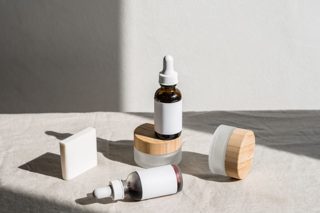
A basic moisturiser, lip balm and saline nasal spray might do more for that sandpaper skin feeling than an extra litre of water so do both just to be sure.

4. Ditch the contacts

Glasses for the flight could save your eyes a lot of grief so save the contacts for your destination.

5. Get up and move

It won’t fix the humidity, but walking the aisle every hour or two helps circulation and gives you an excuse to escape the middle seat for a bit.

Read more: Hacking your body clock: what circadian research says about jet lag – and the tech to help you beat it

google preferred source

Apple News

Read the full article here

Follow on Google News Follow on Flipboard
Share. Facebook Twitter Pinterest LinkedIn Tumblr Email Copy Link
News Room
  • Website

Related Posts

Retro tech is trendy again! Here are 3 things I want to bring back and 3 things I don’t

August 21, 2026

Can AI replace a travel agent? I booked a family holiday to Disneyland to find out

August 21, 2026

6 reasons I still use wired Apple CarPlay, even though all the car brands are pushing wireless

August 20, 2026
Add A Comment
Leave A Reply Cancel Reply

Top Articles

What to expect from Apple’s September event: iPhone Fold, iPhone 18 Pro, Apple Watch Ultra 4 and more

July 4, 2026

Swatch posts the correct answers to the MoonSwatch Mission to Moon 1969 ESTA quiz – did you pass?

July 23, 2026

Listening to this $1 million stereo system is an experience every music fan should have

June 29, 2026
Latest Reviews

This tiny guitar amp is the most unhinged distortion pedal ever

News RoomAugust 20, 2026

DJI Osmo fans are breaking the shackles of its closed-source camera app

News RoomAugust 20, 2026

The Pixel 11 Pro is a great phone, no thanks to its flashiest new features

News RoomAugust 19, 2026

Subscribe to Updates

Get the latest tech news and updates directly to your inbox.

Demo
Most Popular

You can now try Apple’s all-new Siri AI yourself on your iPhone, iPad or Mac – here’s how

July 13, 2026

What to expect from Apple’s September event: iPhone Fold, iPhone 18 Pro, Apple Watch Ultra 4 and more

July 4, 2026

Swatch posts the correct answers to the MoonSwatch Mission to Moon 1969 ESTA quiz – did you pass?

July 23, 2026
Our Picks

Can AI replace a travel agent? I booked a family holiday to Disneyland to find out

August 21, 2026

Patreon’s algorithm is changing to help smaller creators get discovered

August 21, 2026

How much does air travel dehydrate your body – and the tips to avoid it

August 21, 2026

Subscribe to Updates

Get the latest tech news and updates directly to your inbox.

Facebook X (Twitter) Instagram Pinterest
  • Home
  • Privacy Policy
  • Terms of use
  • For Advertisers
  • Contact
2026 © Prices.com LLC. All Rights Reserved.

Type above and press Enter to search. Press Esc to cancel.