

Stuff Verdict
The Luna Ring Gen 2 packs plenty of wellness smarts into a stylish package, but its bulky design and flashing sensors prevent it from feeling truly premium.
Pros
- Comprehensive wellness tracking with no subscription fees
- Excellent app experience with detailed insights
- Great value and clever charging solution
Cons
- Bulky and less comfortable than some rivals
- Lacks premium fit and finish
- AI assistant not the smartest
The second-generation Luna Ring joins a growing list of shiny, metallic objects that are designed to be worn as daily jewellery but, in fact, smuggle some serious wellness smarts within their Magpie-attracting casings (also known as smart rings).
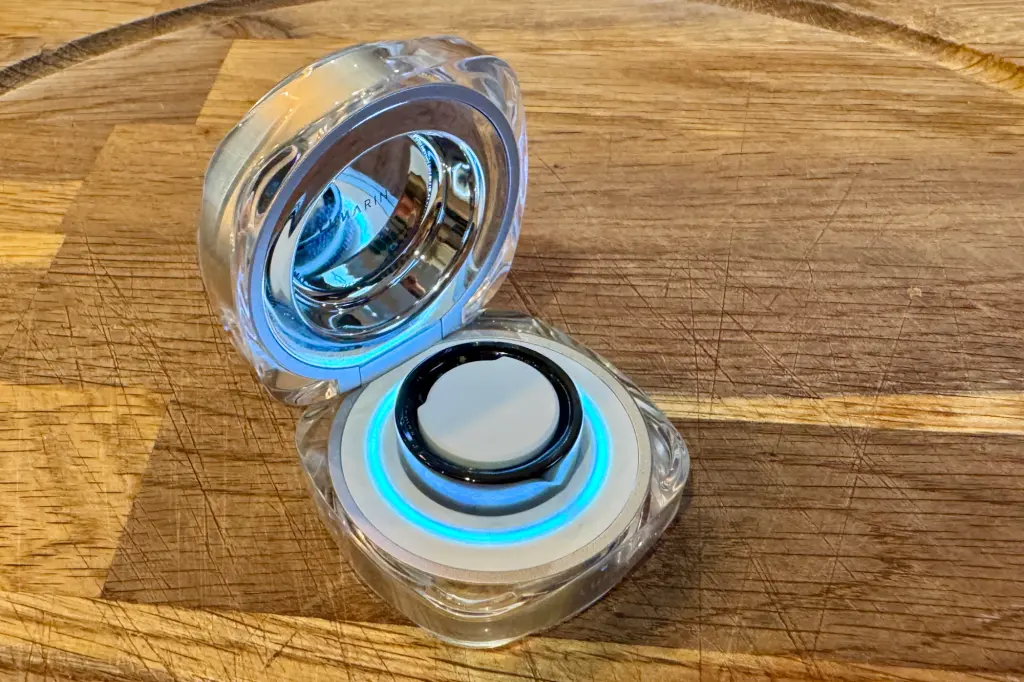
Delivered in a chic glass-effect carry and charging case, the Lung Ring 2 feels very much like a special delivery when it arrives, but when worn on a regular basis, it gets to work constantly monitoring a number of key metrics and biomarkers to keep your health and fitness on track.
At £329/$329, it is marginally cheaper than rivals from Oura and Ultrahuman, yet the company offers all of its AI-driven features as part of the overall price, rather than burying things behind a paywall.
However, there is a compromise on the overall size and form factor, which just isn’t as comfortable or as handsome as those previously mentioned rings.
But for those keen on tracking steps, improving sleep and having stress-relieving recommendations delivered to a user-friendly smartphone app, the Luna Ring 2 is a worthy addition to the shopping list.
Luna Ring Gen 2 design
Weighing in at 3.5g, the Luna Ring is in a similar ballpark to the fourth-generation Oura Ring, itself one of the best-selling smart rings on the market.
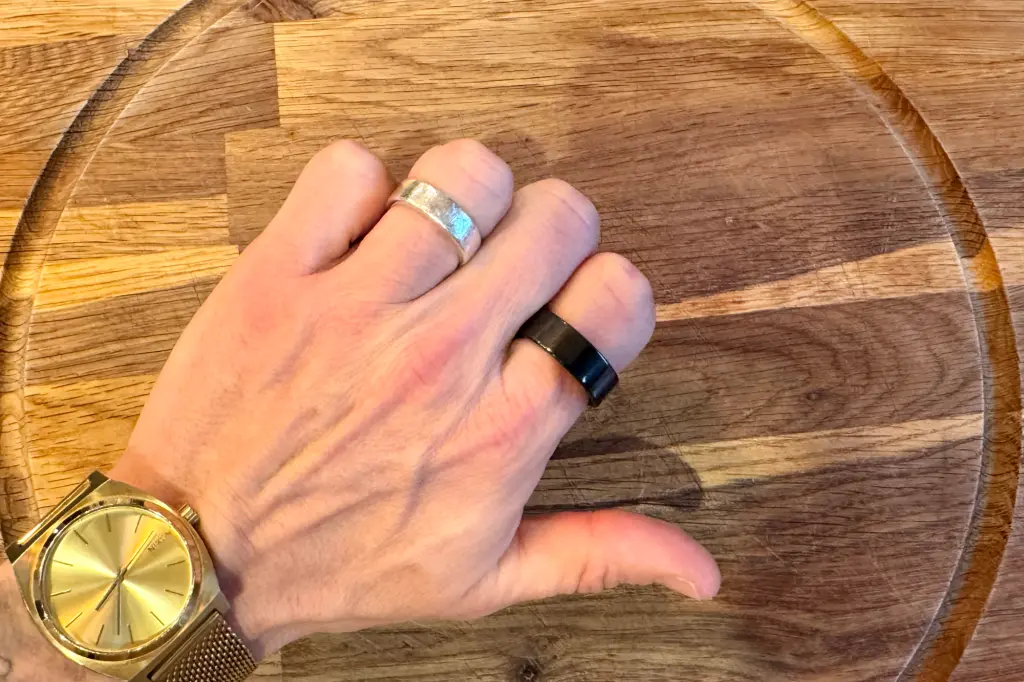
However, the overall form factor is bulkier than both Oura Ring 4 and the Ultrahuman Ring Air, with much of the electrical gubbins on the inside of the ring visible even when wearing it.
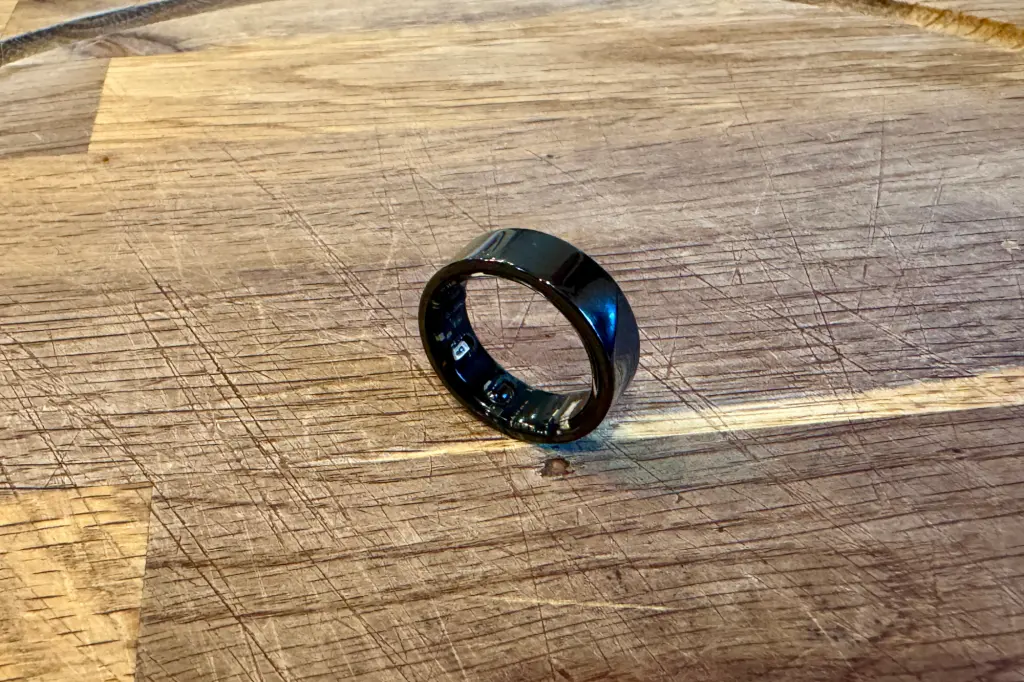
This is due to the fact that some of the sensors protrude from the ring, so they remain in constant contact with the skin. Clearly, an advantage when it comes to harvesting reliable data, but both Oura and Ultrahuman have engineered this out of their products.
Not only is the Luna Ring slightly more uncomfortable to wear on a regular basis, but it can also be a distraction at night, as the green LEDs of the optical heart rate sensor sporadically flash on and off… and they are clearly visible.
The ring is, well, very ring-like, as it comes in things like ‘Stardust Silver’, ‘Sunlit Gold’ and ‘Midnight Black’. The presentation box it comes delivered in feels very much like a piece of premium jewellery, while the stylish but a little chintzy Surge Charger is designed in such a way that it too feels a bit special.
Luna Ring is also the only major smart ring manufacturer to offer this separate charging case (a la Apple AirPods), which can effectively increase the battery life of the ring to around 30 days, without the need for a power source.
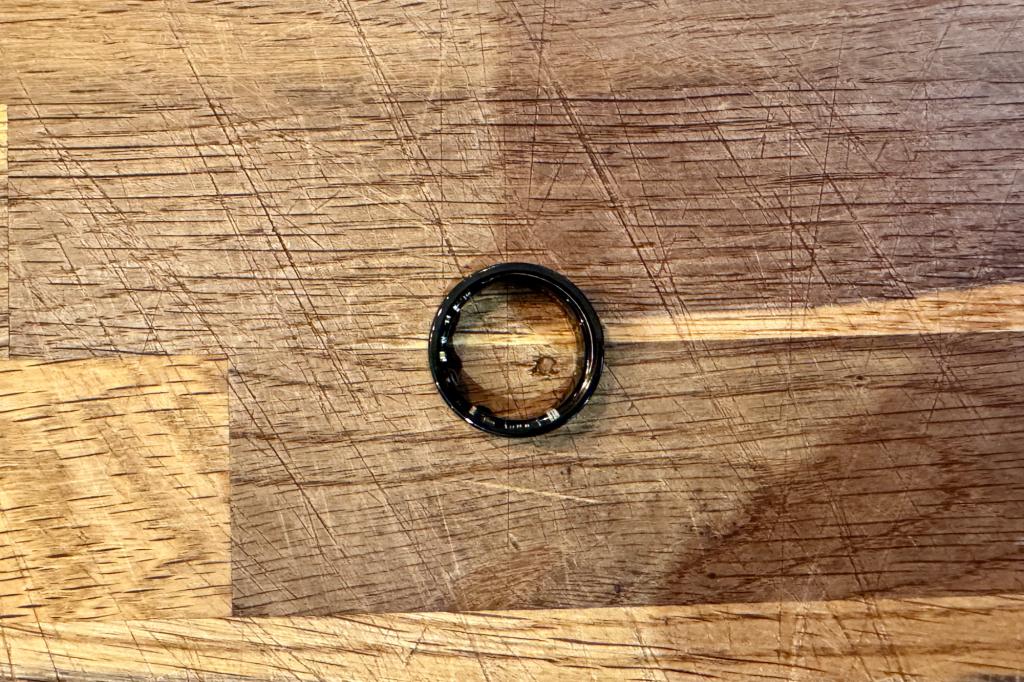
The final design element to note is the slight crease on the exterior of the ring. This is a Luna staple, as it allows you to quickly determine dead south on the ring, which helps when placing it into the charging case.
Luna Ring Gen 2 features
There really isn’t much to separate smart rings these days, with seemingly all of them sporting an optical heart rate sensor, a blood oxygen sensor, a Photoplethysmography (PPG) sensor and an accelerometer of some description to detect movement.
The Luna Ring only boasts a three-axis accelerometer, compared to the six-axis unit found in the Ultrahuman Ring Air, which theoretically should arguably make it less capable of automatically detecting activities and counting steps – but I didn’t find that to be the case.
There is also a body temperature sensor, which is great for women’s health and fertility tracking, as well as a built-in battery that’s good for between four and seven days on a single charge – arguably the industry standard.
As previously mentioned, Luna doesn’t bury its features behind pricey paywalls or command a monthly subscription package to use the services, so once you’ve bought the ring, you gain access to all of the wellness features, ranging from sleep analysis to AI-infused meal planners and reminders to drink more water.
The only downside is that it doesn’t sync up with other fitness and wellness apps like much of the competition does, with only Apple Health integration offered on the ring that I tested.
So forget logging Strava runs or sharing data with dedicated women’s health and fertility apps. You’ll need an Oura Ring for that.
Luna Ring Gen 2 performance
The ring itself is a little bulkier than the competition, and I personally found the dimpled interior sensors to be more uncomfortable than those models that manage to discreetly house all of the sensors in a flat surface.
It’s nothing major, but it was particularly obvious when wearing the ring at night, where the green LEDs of the heart rate sensor would sporadically flash wildly and brightly for everyone to see.
Despite this, the ring proved excellent at tracking key metrics, with its step count not only closely matching that of rival rings, but also sitting well within an acceptable range compared to a Garmin Enduro 3 – my personal fitness tracker of choice.
The heart rate analysis was a little off, but then I found that to be the case with all smart rings. It’s just not as accurate or reliable as wearing a dedicated chest strap, but it gives a good indication of calorie burn and effort.
Luna Ring also proved very good at automatically detecting a variety of obvious daily activities, such as morning walks or local jogs. It found it harder to pick up things like indoor cycling (a lack of upper body movement probably doesn’t help) and more niche endeavours, such as paddle-boarding.
And, like most options on the market, you have to physically confirm activities within the app at the end of the day, which means spending some time scrolling through the provided data and checking things off.
Smart rings are fantastic for tracking general wellness and sleep, with the Luna Ring doing a sterling job of determining my various sleep cycles and suggesting ways to improve sleep quality, but they probably won’t replace your dedicated fitness trackers just yet.
I found that I had to take Luna off in the gym due to it proving uncomfortable during any exercise that required grip, and through fear of scratching it up on knurled barbells.
While it is perfect for those who simply indulge in cardio activities (although the heart rate read-outs aren’t 100% reliable), it’s not so good for anything that involves throwing around weights.
Luna Ring Gen 2 smartphone app
Luna’s smartphone app is impressive, with every conceivable health and wellness feature included from the get-go. This includes things like a personalised caffeine window, women’s health tracking and even a handy way to manually track hydration.
But as previously touched upon, it does require a fair amount of time spent within the app, as not only will you want to check sleep quality and readiness for exercise first thing in the morning, you’ll also have to manually log water consumption in the hydration tracker or record a workout if you think Luna’s systems won’t automatically detect it.
Surely the way to relieve stress and improve sleep is not to look at your phone late at night and first thing in the morning?
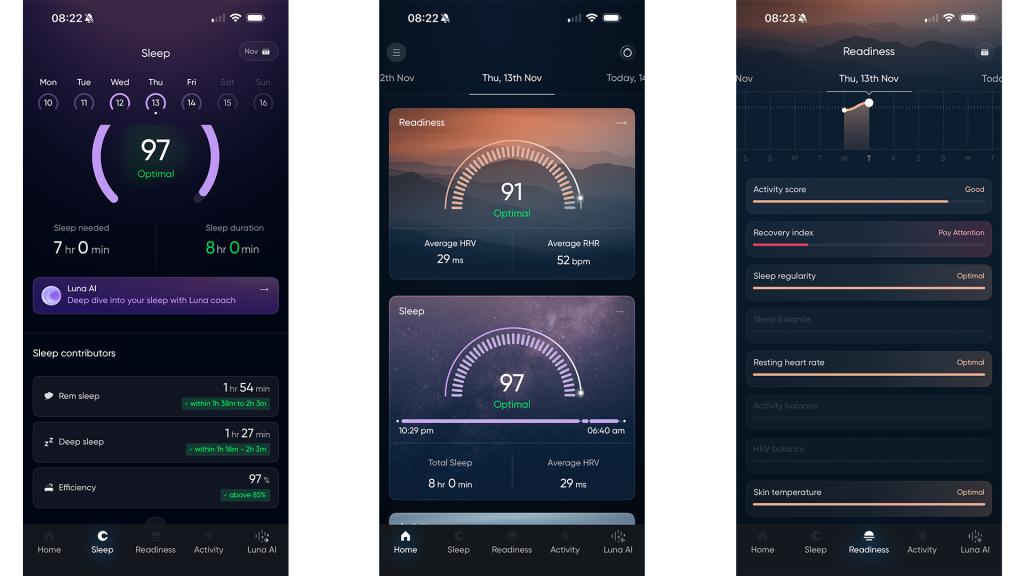
Thankfully, everything is displayed logically within the app, and data is very easy to read thanks to colour-coded graphs and other visualisations. Plus, Luna AI is also always on hand to explain anything further.
It’s possible to have the company’s own language model set up a diet plan or come up with a suitable workout programme, depending on goals. It works well at explaining some of the more complex subjects touched upon in the app, such as sleep latency, but proves slow and pretty basic for anything more bespoke.
The workout plans, for example, were simple, lacked detailed form advice and forgot to suggest an appropriate weight range, while including things like back squats and deadlifts, which aren’t exactly the easiest moves for newcomers. Obviously, you can refine it, but Luna’s AI is slow and can go awry.
What’s more, it feels like you could easily achieve the same thing by punching some simple prompts into ChatGPT.
Luna Ring Gen 2 verdict
As a method to manage stress and track factors that impact sleep quality, Luna is excellent and performs as well as the similarly priced competition.
When paired with the app, which offers genuinely useful insights into how to generally improve overall wellness and reduce daily stress, it proves a powerful tool in the overall health and fitness armoury, and one that only gets better the longer you wear it.
Its design isn’t quite as neat, compact or jewel-like as rivals from Oura and Ultrahuman, but the Surge charging case is a boon for anyone frequently travelling, as it offers an additional 30 days of battery life.
Stuff Says…
The Luna Ring Gen 2 packs plenty of wellness smarts into a stylish package, but its bulky design and flashing sensors prevent it from feeling truly premium.
Pros
Comprehensive wellness tracking with no subscription fees
Excellent app experience with detailed insights
Great value and clever charging solution
Cons
Bulky and less comfortable than some rivals
Lacks premium fit and finish
AI assistant not the smartest
Luna Ring Gen 2 Technical Specifications
| Materials | Titanium body with PVD coating (available in multiple finishes) |
| Sensors | Heart-rate (optical PPG), blood-oxygen (SpO₂), skin-temperature sensor, accelerometer / motion sensor |
| Connectivity | Bluetooth low energy |
| Battery | Up to five days, 30 days with charging case |
| Dimensions | Width: 8mm Thickness: 2.9mm |
| Weight | 3 to 5 grams |
Read the full article here
