Close Menu
Gadget Guide News
  • Home
  • News
  • Features
  • Reviews
  • Best Stuff
  • Buying Guides
  • Deals
  • More Articles

Subscribe to Updates

Get the latest tech news and updates directly to your inbox.

Trending

New York sues Kalshi for allegedly running an ‘illegal gambling operation’

July 31, 2026

The phone setting most parents don’t know is switched on – and it could cost you big money this summer

July 31, 2026

Moonphase, chronograph, GMT and more: what do these watch complications actually do?

July 31, 2026
Facebook X (Twitter) Instagram
Gadget Guide News
Subscribe
  • Home
  • News
  • Features
  • Reviews
  • Best Stuff
  • Buying Guides
  • Deals
  • More Articles
Gadget Guide News
  • Best Stuff
  • Buying Guides
  • Reviews
  • Deals
  • Features
Home»Features»Moonphase, chronograph, GMT and more: what do these watch complications actually do?
Features

Moonphase, chronograph, GMT and more: what do these watch complications actually do?

News RoomBy News RoomJuly 31, 2026006 Mins Read
Share Facebook Twitter Pinterest Copy Link LinkedIn Tumblr Email Telegram WhatsApp
Follow Us
Google News Flipboard
Share
Facebook Twitter LinkedIn Pinterest Email Copy Link

Pop open any watch buying guide or news story (like the brilliant ones on our site) and you’ll be hit with a wall of jargon you’re expected to just… know. Tourbillon, perpetual calendar, minute repeater – it sounds like a foreign language, because in a lot of ways, it is.

A “complication” is watch-speak for any function beyond simply telling the time. Some are genuinely useful, while some are showing off. Most are a bit of both.

Here’s what each watch complication actually does, and why it costs what it costs.

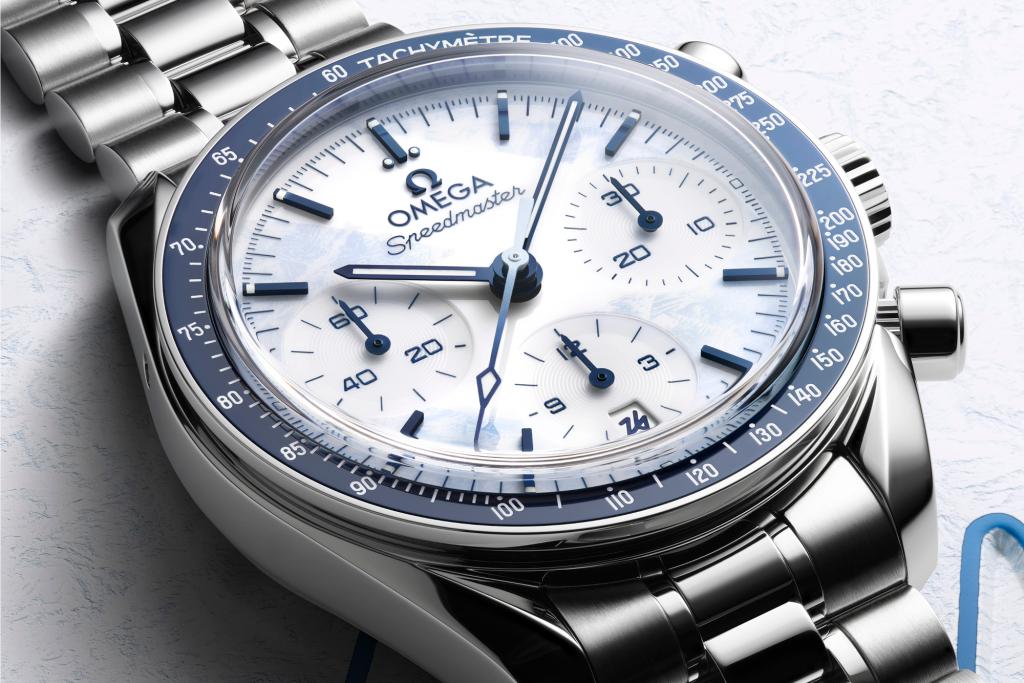
Chronograph

The chronograph is the complication you’ve almost certainly seen before, even if you didn’t know its name. It’s basically a built-in stopwatch, usually operated by two pushers either side of the crown: one to start/stop, the other to reset.

Under the dial, it’s mechanically very intricate. Pressing the pusher engages a column wheel or cam that connects the chronograph gear train, which is precisely why chronographs are harder (and pricier) to make than a simple time-only watch.

Most chronographs track elapsed seconds and minutes, some add hours, and a few, like the Zenith Chronomaster, can measure 1/10th of a second.

There are a few different types of chronograph, worth mentioning. A monopusher chronograph does start, stop and reset through a single pusher, a flyback chronograph lets you reset and immediately restart the stopwatch with a single press, rather than having to stop, reset and start as three separate actions.

The most complex chronograph is a rattrapante, or split-seconds chronograph, which adds a second overlapping chronograph hand that can be stopped independently of the first to capture a split time, then snapped back into sync with a press of a third pusher.

Tudor Black Bay GMT on passport and camera

GMT

A GMT watch lets you track a second time zone via an extra hand that makes one full rotation every 24 hours. It’s read using a fixed or rotating bezel marked 0 to 24.

The most useful version is a “True GMT” where you can adjust the local hour hand independently in one-hour jumps without disturbing the minute hand or the 24-hour GMT hand. That makes it a proper frequent-flyer’s tool.

An ‘Office’ or ‘Caller’ GMT lets you independently adjust the 24-hour GMT hand, while the main 12-hour time hand stays where it is. These are better for tracking a remote time zone while staying at home.

If you’re a true citizen of the world, you might opt for a ‘Worldtimer’, instead. This features a rotating outer ring containing major global cities, allowing you to read all 24 major world time zones simultaneously.

JLC Master Control Moonphase

Moonphase

Arguably the most romantic complication on this list… and, also the least useful. A moonphase display shows the current phase of the moon on a rotating disc, usually via an aperture near six o’clock.

The mechanism itself is a slow-turning wheel with 59 teeth, geared to complete one full rotation every two lunar months (59 days), because a lunar cycle is actually 29.53 days.

Most moonphases drift by a day roughly every two and a half years and need manual correction. The best ones (often billed as “astronomical” moonphases) use more sophisticated gearing to stay accurate for well over 100 years.

Calendar complications: from date to perpetual

This is where things get properly really interesting (and useful).

Date is the simplest version: a small window showing the date, corrected manually at month-end for months shorter than 31 days.

Day-date adds the day of the week alongside it, usually as two windows or a single wider one, most famously on the Rolex Day-Date.

Annual calendar is the clever middle ground. It knows the difference between 30 and 31-day months automatically and only needs correcting once a year, at the end of February.

Perpetual calendar is the grail. It accounts for months of varying length and leap years, meaning it won’t need correcting until the year 2100, when the Gregorian calendar skips a leap year. That’s achieved through a stack of cams and levers that effectively “remember” the length of the previous 48 months. It’s a super-impressive feat of mechanical memory, and it’s why perpetual calendars sit near the top of most brands’ price lists.

JLC Power Reserve

Power reserve indicator

A power reserve indicator is a small sub-dial or linear scale showing how much wound-up energy is left in the mainspring, usually expressed in hours.

It sounds like a minor convenience, and mostly it is, but it useful on manually wound watches especially. Rather than guessing whether your watch is about to stop, you get a direct readout, similar to the fuel gauge on your car or battery indicator on your smartphone.

Tourbillon

The tourbillon is the complication most likely to get name-dropped without anyone explaining what it does, so here goes: it’s a rotating cage that houses the escapement and balance wheel, typically completing one rotation per minute.

Its original purpose was to counter the effect of gravity in pocket watches, which spent most of their life sitting vertically in a waistcoat pocket.

Of course, wristwatches move through far more positions than a stationary pocket watch, so tourbillons aren’t the necessity they once were.

They are, however, great for showing off your watchmaking prowess. A tourbillon cage is often built from dozens of hand-finished parts weighing a fraction of a gram, which is a large part of why it remains one of the most expensive complications to produce.

Minute repeater

The minute repeater is the most theatrical complication on this list. Push a button and the watch chimes the time out loud, hours, quarter-hours and minutes, each on a different pitch, struck by tiny hammers against gongs coiled inside the case.

It’s a complication born of necessity – before electric light and lume, it let someone tell the time in the dark. Today, just like the Tourbillon, it survives as a display of watchmaking artistry, because tuning those gongs to strike cleanly and in tune is one of the hardest things a watchmaker can do by hand.

Liked this? 7 reasons we still need mechanical watches in the age of the Apple Watch

google preferred source

Apple News

Read the full article here

Follow on Google News Follow on Flipboard
Share. Facebook Twitter Pinterest LinkedIn Tumblr Email Copy Link
News Room
  • Website

Related Posts

The phone setting most parents don’t know is switched on – and it could cost you big money this summer

July 31, 2026

No, you don’t actually need fitness trackers, gadgets, or apps to lose weight. But they sure can help. Here’s how

July 31, 2026

E-cars: what are they, when might they arrive, and could they be the future of EVs?

July 31, 2026
Add A Comment
Leave A Reply Cancel Reply

Top Articles

The best paid-for iPhone and iPad apps money can buy

June 1, 2026

Best flip phones in 2026: top clamshell foldables for every budget 

June 11, 2026

Apple CarPlay Ultra compatibility list: every car that has, and is getting, Apple’s next-gen UI

June 12, 2026
Latest Reviews

Razer’s new keyboards drop the price on powerful gaming features

News RoomJuly 30, 2026

A second lens makes DJI’s Osmo Pocket 4P my new favorite video camera

News RoomJuly 30, 2026

This Alienware ultrawide monitor is so good I didn’t want to give it back – could it be the best upgrade you’ll make in 2026?

News RoomJuly 29, 2026

Subscribe to Updates

Get the latest tech news and updates directly to your inbox.

Demo
Most Popular

I think the BYD Ti7 offers way better value than a Land Rover Defender – but is it as good as one?

June 2, 2026

The best paid-for iPhone and iPad apps money can buy

June 1, 2026

Best flip phones in 2026: top clamshell foldables for every budget 

June 11, 2026
Our Picks

Anthropic says Claude accidentally hacked real companies too

July 31, 2026

Apple TV’s Cape Fear remake turns it into a paranoid tech thriller

July 31, 2026

This tattoo is permanent, pain-free, and maybe delivered in the mail

July 31, 2026

Subscribe to Updates

Get the latest tech news and updates directly to your inbox.

Facebook X (Twitter) Instagram Pinterest
  • Home
  • Privacy Policy
  • Terms of use
  • For Advertisers
  • Contact
2026 © Prices.com LLC. All Rights Reserved.

Type above and press Enter to search. Press Esc to cancel.