

For years, Motorola has flirted with the premium end of the smartphone market. It’s made beautiful devices, experimented with bold materials, and delivered strong cameras. But it’s rarely planted a clear flag in true ultra-premium territory – the kind dominated by Apple and Samsung. The Motorola Signature is meant to change that.
This isn’t just another flagship. It’s the debut of an entirely new ‘Signature’ series, positioned as Motorola’s most refined and complete phone yet. The promises are big: four 50MP cameras, DXOMARK-recognised imaging excellence, a Snapdragon 8 Gen 5 chip, a huge battery in a sub-7mm body, and seven years of Android updates.
Motorola is also leaning heavily into luxury, with curated Pantone colours, bespoke materials, and even “white-glove” concierge-style services.
On paper, it sounds like Motorola finally taking the fight to the very top tier – not just matching rivals on specs, but trying to outclass them on design, longevity and experience.
I’ve been using the Motorola Signature for the past week. I’ve tested its cameras in daylight and low light, pushed its performance with demanding apps, and lived with it day to day. The question is simple: does this new ultra-premium Motorola actually live up to its promises – or is it aiming higher than it can realistically reach?
Design: a tale of two halves
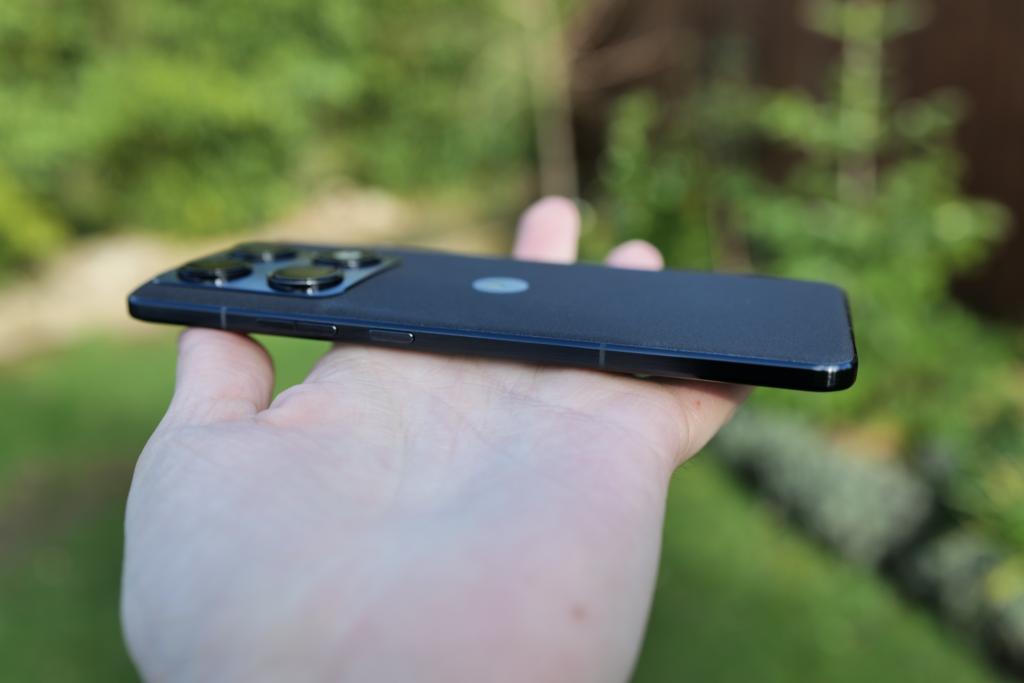
The first thing you notice about the Motorola Signature is just how thin it is. At 6.99mm, it feels almost improbably slim for a phone with this size battery and camera setup – although interestingly, Motorola’s own Edge 70 is technically even thinner. Still, that thinness, combined with the gently curved metal frame, makes it sit comfortably in your hand and slide easily into a pocket. It’s a genuinely elegant design, and from a distance, it absolutely looks like a top-tier flagship.
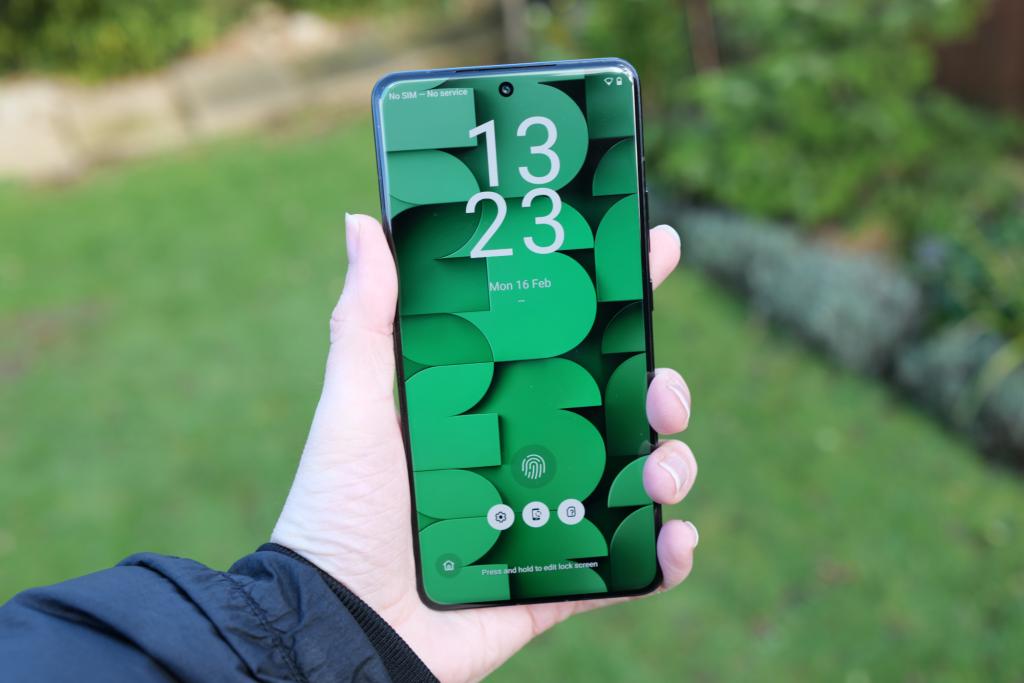
The aluminium frame does a lot of the heavy lifting here. It feels solid, cool to the touch, and properly premium. The front is equally impressive. The large display stretches close to every edge, with minimal bezels and subtle curves that make content look fantastic.
But then you turn it over…
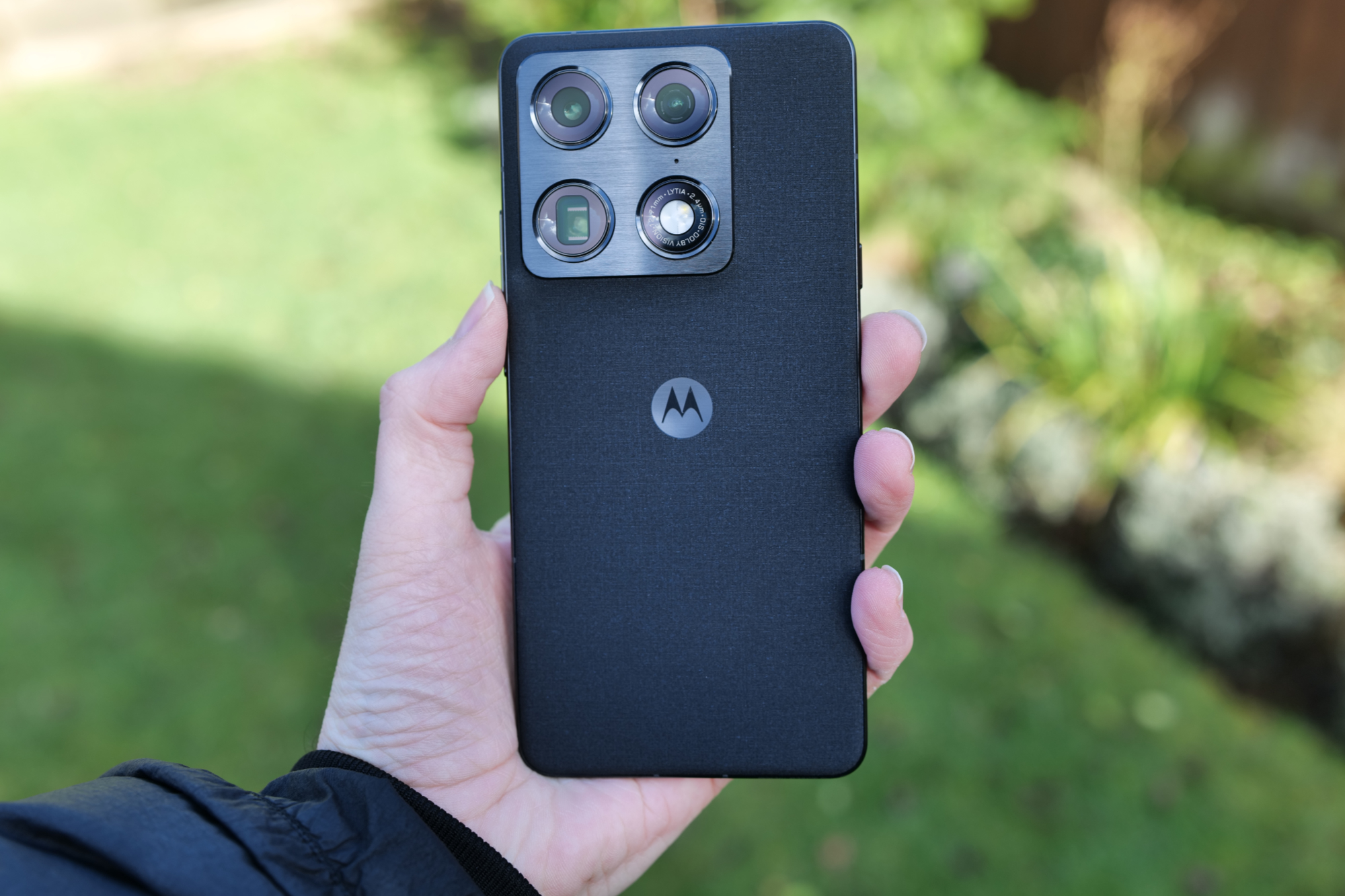
The textured case back is designed to resemble a linen weave, but to me, it feels like a bit of a fad. Give me proper glass or metal any day of the week. Despite Motorola’s luxury ambitions, it doesn’t quite match the rest of the device. It feels lighter and cheaper than expected, lacking the reassuring density and finish you’d want at this level. I also found it surprisingly slippery. This isn’t a phone I’d trust naked for long – I’d put a case on it immediately, which somewhat defeats the point of that carefully designed rear finish.
My review unit came in the Pantone-certified ‘Carbon Shadow’ finish. Motorola describes it as a dark blue, but for all intents and purposes, it looks black. It’s understated, though arguably a bit safe compared to more adventurous colourways.
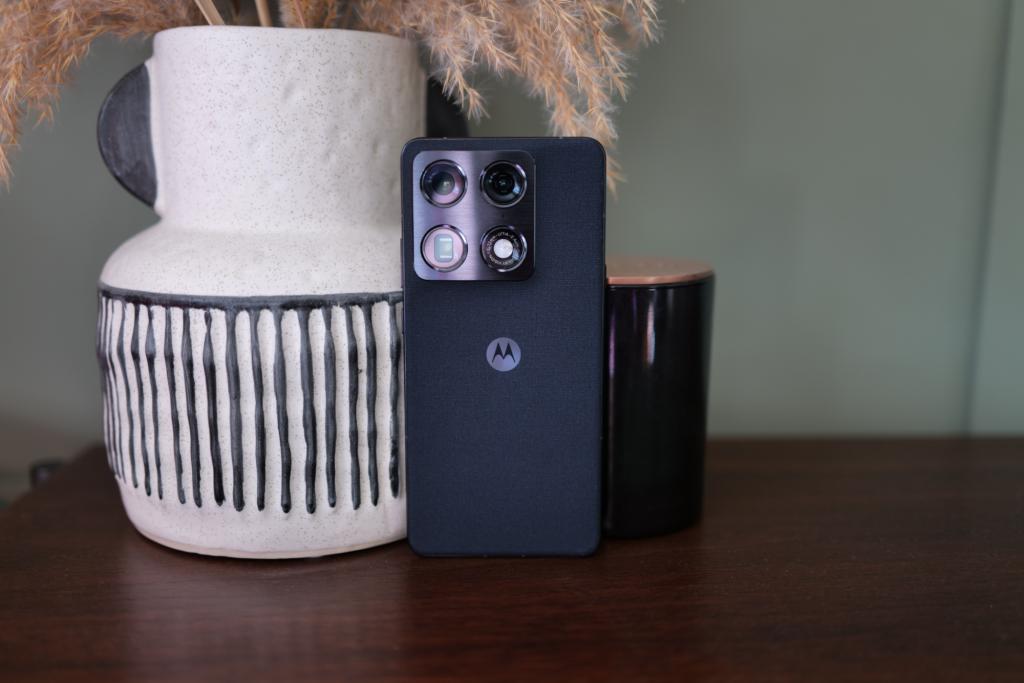
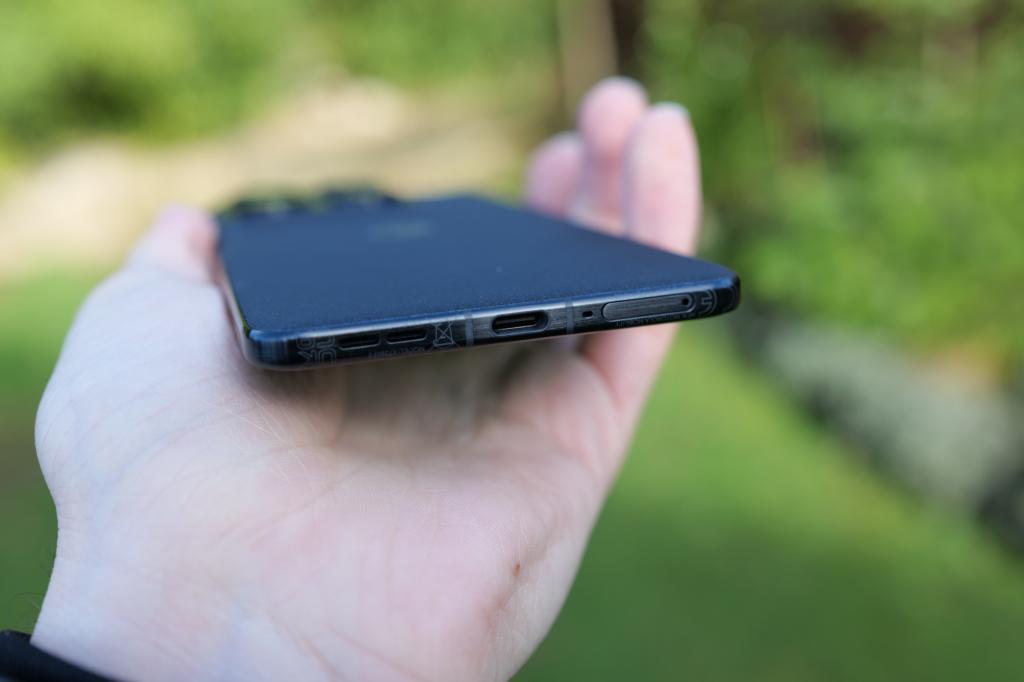
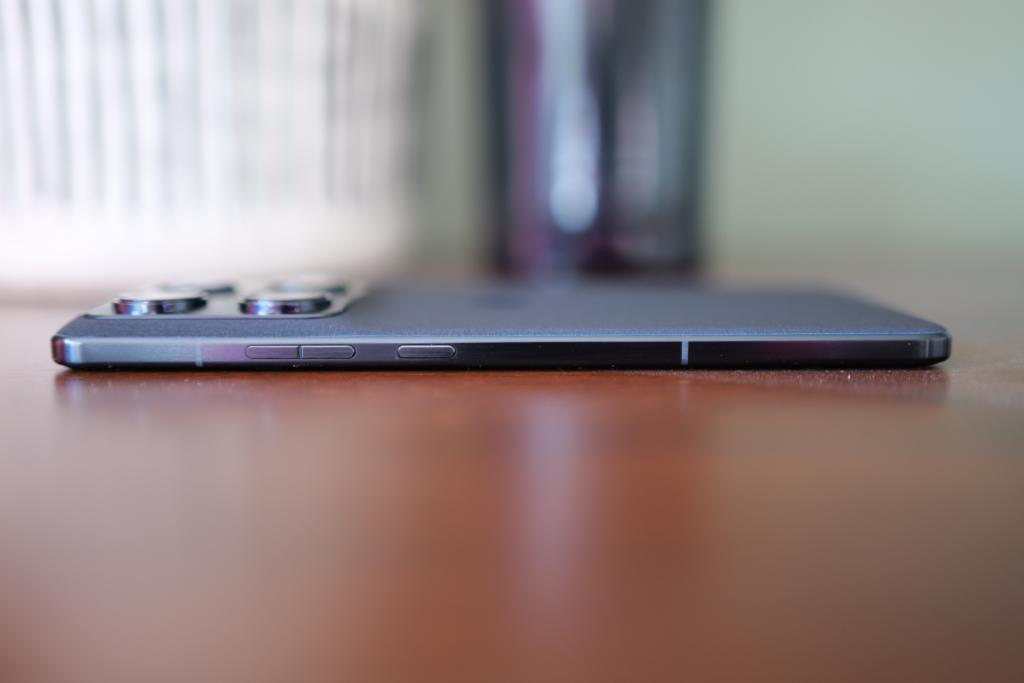
The camera bump is refreshingly restrained, barely protruding at all. That keeps the profile clean, though its off-centre placement does cause the phone to rock slightly on a table. Button placement is sensible, with power and volume on the right, a programmable action button on the left, and speakers, SIM tray and USB-C along the bottom edge, plus a second speaker up top.
Durability credentials are also strong. Alongside the Gorilla Glass Victus 2 screen, the phone is certified to MIL-STD-810H standards and offers both IP68 and IP69 protection, meaning it’s well equipped to handle dust, drops and water exposure.
Screen & sound: truly premium
The Motorola Signature has a 6.8in Extreme AMOLED display, and it’s easily one of the phone’s highlights. It’s big, bold, and properly immersive. The near edge-to-edge design, with very slim bezels and gently curved sides, makes everything feel more expansive. Whether you’re scrolling, gaming or watching video, it draws you in.
It’s sharp, too. The Super HD resolution packs more pixels than standard Full HD panels, and it shows. Fine text looks crisp, and detailed scenes hold together beautifully. Colours are vibrant without looking artificial, helped by Pantone-validated calibration, and contrast is excellent thanks to the OLED panel. Motorola has also pushed the refresh rate up to 165Hz, which makes scrolling feel exceptionally smooth.
Brightness is another strong point. With a peak of up to 6200 nits, it cuts through glare with ease. Even on bright days, the screen stays clear and readable – not that we’re seeing much harsh sunlight in the UK right now. Watching content is where it really shines. Fallout Season 2 looked fantastic, with rich colours, deep blacks and plenty of punch. The size makes it feel closer to a small tablet than a typical phone.
Audio is strong overall. The dual stereo speakers, tuned with Sound by Bose and supporting Dolby Atmos, get impressively loud without turning harsh. Charli XCX’s Chains of Love sounded clear and energetic even at higher volumes. There’s good separation and detail, too.
What’s missing is a bit of low-end weight. Tracks like Jenny on Holiday’s Good Intentions lacked the bass presence you’d ideally want. That’s likely the trade-off for such a thin chassis. Still, clarity is excellent, and for casual listening, video and calls, the speakers perform very well.
Software: a little bloated
The Motorola Signature runs Android 16, and for the most part, Motorola has taken a refreshingly light-touch approach. The core Android experience remains intact, which is good news if you prefer Google’s clean, simple interface over heavily customised skins. Menus are where you expect them to be, settings are easy to navigate, and everything feels fast and responsive.
Motorola’s own additions are mostly sensible. The Moto app bundles together useful extras like custom gestures, display tweaks, and personalisation options. You can assign shortcuts to the programmable action button, adjust always-on display behaviour, or enable quick gestures like twisting the phone to open the camera.
Moto AI is also more deeply integrated here, with built-in support for Microsoft’s Copilot and Perplexity Pro. Motorola even includes a free six-month Perplexity Pro subscription, and you can switch between assistants easily depending on what you need. It’s a genuinely useful approach, letting you tap into multiple LLMs rather than being locked into just one.
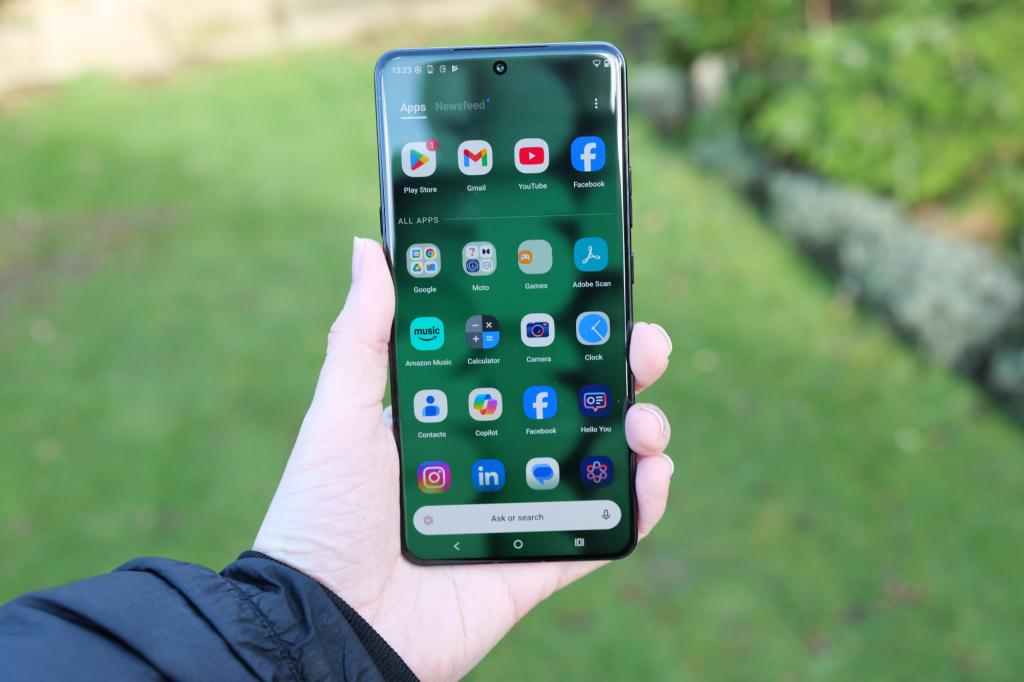
One element that’s supposed to separate the Signature from other Motorola phones is the ‘Signature Club’ app, which promises a “white glove experience” with access to exclusive experiences, travel perks and restaurants. The problem? It’s not actually ready yet, so it’s hard to judge how valuable it’ll be in practice.
What’s less welcome is the amount of pre-installed bloatware. Apps like Amazon Music, Facebook, Copilot, Opera, Perplexity and LinkedIn come loaded out of the box, alongside several Motorola apps. Worse, many of these can’t be fully uninstalled. You can disable them, but they still clutter the app drawer and storage.
That’s frustrating on a phone positioned as ultra-premium. The clean core Android experience is excellent, and the seven-year software support guarantee matches the Google Pixel 10 Pro and Samsung, but the unnecessary extras undermine what would otherwise be a great software implementation.
Performance and battery life: proper flagship
Performance is exactly what you’d expect from a 2026 flagship. The Motorola Signature runs on Qualcomm’s Snapdragon 8 Gen 5, built on a 3nm process and paired with a dedicated AI engine. In daily use, it’s effortlessly fast. Apps open instantly, multitasking is smooth, and there’s no hesitation when switching between demanding tasks.
I pushed it with heavy workloads – jumping between Lightroom edits, dozens of Chrome tabs, and video streaming – and it never slowed down. Gaming performance is equally strong. Graphically intensive titles run smoothly, and the 165Hz display helps everything feel extra fluid. Motorola has also included a copper mesh liquid metal cooling system, which seems to do its job. Even under sustained load, the phone stayed warm rather than uncomfortably hot.
Battery life is another standout. Despite the slim 6.99mm body, the signature packs a 5200mAh silicon-carbon battery, which is larger than most rivals. In real-world use, it comfortably lasted a full day. With mixed use – camera, streaming, messaging and social media – I regularly ended the day with 30% or more remaining.
Charging is equally strong. 90W wired charging gets you back up quickly, while 50W wireless charging adds convenience. Just be aware you’ll need a Motorola TurboCharge brick to hit the full 90W speeds – and it doesn’t come in the box.
Camera: sharp and saturated
The Motorola Signature doesn’t hold back on camera hardware. It packs four 50MP cameras: a main Sony LYTIA 828 sensor, a 50MP ultrawide with a 122° field of view, a 50MP periscope telephoto with 3x optical zoom, and a 50MP front camera. It also supports 8K video recording and Dolby Vision capture.

The main sensor is definitely the star of the show. It delivers excellent-quality images with strong detail, solid exposure, and a wide dynamic range, even in challenging conditions. Motorola’s Signature Style mode boosts contrast and vibrancy further, producing punchy, saturated shots that really stand out on social media. Personally, I prefer slightly more natural-looking images, but there’s no denying the results look striking.

Portrait mode is particularly impressive. Edge detection is clean, depth looks convincing, and the overall effect feels natural and premium rather than overly processed.
The ultrawide and telephoto cameras keep up nicely. There’s good consistency between lenses, and the 3x optical zoom is genuinely useful. Detail holds up well, and images don’t fall apart when zooming moderately.
The 100x Super Zoom Pro, however, feels more like a spec sheet exercise. At extreme ranges, images look artificial and overly processed. It’s not as convincing as rivals like the Google Pixel 10 Pro. That said, most people won’t use 100x zoom regularly, so it’s not a major drawback.
For everyday photography, the Motorola Signature performs very well, led by an excellent main camera and strong portrait performance.
Motorola Signature verdict
The Motorola Signature is Motorola’s most ambitious phone in years, and in many ways, it delivers. It’s incredibly thin, looks elegant from the front, and has one of the best displays you’ll find on any phone right now. Performance is flawless thanks to the Snapdragon 8 Gen 5, battery life is genuinely impressive, and the main camera in particular produces excellent results. The clean Android experience and seven-year software support promise add long-term appeal too.
But it doesn’t quite nail the ultra-premium brief.
The biggest letdown is the rear finish. It simply doesn’t feel as premium as the rest of the hardware, and the slippery texture means you’ll probably want to hide it in a case anyway. The software, while mostly excellent, is dragged down by unnecessary pre-installed apps and unfinished Signature Club features. And while the camera system is strong, only the main sensor truly stands out.
None of these are dealbreakers on their own. But together, they stop the Motorola Signature from feeling like the definitive ultra-premium Android phone Motorola is aiming for.
This is still an excellent flagship. It’s fast, thin, long-lasting, and great to use every day. But true ultra-premium phones need to get every detail right. The Motorola Signature gets close, but doesn’t quite finish the job.
Motorola Signature tech specs
| Screen | AMOLED 6.8in, 1264×2780, 165Hz |
| CPU | Qualcomm Snapdragon 8 Gen 5 |
| Memory | 12/16GB RAM |
| Cameras | 50MP + 50MP ultrawide rear + 50MP 3X zoom 50MP front |
| Storage | 256/512GB/1TB on-board |
| Operating system | Android 16 |
| Battery | 5200mAh w/ 90W wired charging |
| Dimensions | 162x76x7mm, 186 g |
Read the full article here
