Close Menu
Gadget Guide News
  • Home
  • News
  • Features
  • Reviews
  • Best Stuff
  • Buying Guides
  • Deals
  • More Articles

Subscribe to Updates

Get the latest tech news and updates directly to your inbox.

Trending

The cost of leaving Earth: space tourism’s ticket prices and the impact on the planet you’re off to see

August 19, 2026

Framework gave its 12-inch laptop some hardware upgrades

August 19, 2026

I debated Gemini Live on whether in-car tech is too distracting – while behind the wheel of a 510bhp Volvo

August 19, 2026
Facebook X (Twitter) Instagram
Gadget Guide News
Subscribe
  • Home
  • News
  • Features
  • Reviews
  • Best Stuff
  • Buying Guides
  • Deals
  • More Articles
Gadget Guide News
  • Best Stuff
  • Buying Guides
  • Reviews
  • Deals
  • Features
Home»Features»The cost of leaving Earth: space tourism’s ticket prices and the impact on the planet you’re off to see
Features

The cost of leaving Earth: space tourism’s ticket prices and the impact on the planet you’re off to see

News RoomBy News RoomAugust 19, 2026007 Mins Read
Share Facebook Twitter Pinterest Copy Link LinkedIn Tumblr Email Telegram WhatsApp
Follow Us
Google News Flipboard
Share
Facebook Twitter LinkedIn Pinterest Email Copy Link

There was a time when holiday dreams meant scoring an upgrade at the gate or securing an exit-row seat on your 12-hour flight to palm trees and sunshine. Well, forget that. In 2026, the truly loaded aren’t queuing for lounge access; they’re queuing to leave the planet altogether. 

Space tourism has evolved from a billionaire vanity project into a bookable (if bank-breaking) reality, complete with waiting lists and astronaut training camps.

So, how much does it cost to swap your car park view for a view of the entire planet? And what impact does that have on the planet you’re heading off to see?

What’s the damage to your wallet?

Image credit: Air Zero G

Let’s start with the cheapest, because someone’s got to be sensible about this.

Air Zero G conducts parabolic flights aboard a modified Airbus from France, operated by Novespace (a subsidiary of the French space agency CNES), while its American cousin, Zero-G Corporation, does the same on a converted Boeing 727 officially (and rather humorously) nicknamed “G-Force One”. Tickets cost around €8000 (roughly $9300/£6800) in Europe and roughly $9000 (roughly £6700) in the States, which is pocket change by this article’s standards. 

The catch is that you won’t get anywhere near space. Instead, the aircrafts fly a series of steep climbs and dives, giving you between 20 and 30 seconds of weightlessness per arc, roughly 5.5 minutes total for Air Zero G across the entire flight and 7.5 minutes with Zero-G Corporation.

No astronaut training required, just a light breakfast and a strong stomach to join previous flyers such as Buzz Aldrin and Stephen Hawking.

Zephalto
Inage credit: Zephalto

France’s Zephalto is targeting the luxury end of the near-space market, promising Michelin-calibre dining with a view of Earth’s curvature for around €180,000 (around $210,000/£155,000). The whole affair will take about six hours: a 90-minute balloon ascent to 25km above Earth, three hours hovering at altitude while you eat, then 90 minutes back down. No weightlessness on offer here, though, just a very long, extremely expensive lunch with an unbeatable view. Very best of luck getting this one through expenses.

Then you have Blue Origin, Jeff Bezos’s rocket venture, which is more like a thrill ride, albeit a very short and pricey one. The company doesn’t publicly disclose fixed prices, but a $150,000 refundable deposit was required just to join the queue, while a seat on the first crewed flight back in 2021 was auctioned for $28 million, so the bracket here is anything but small. Estimates put ordinary prices between $200,000 and $1 million per seat, depending on how far in advance you booked, and that gets you around 10 minutes of total flight time, crossing the Kármán line (the start of outer space) and delivering a few minutes of weightlessness, alongside the largest windows ever flown in a crewed spacecraft. There’s no pilot, and beyond a single day of prep, no real training is required either.

Blue Origin has flown around 90 tourists since 2021, including celebrities such as William Shatner and Katy Perry. However, it announced a pause in January for at least two years to focus on building Moon landers rather than ferrying celebrities to the edge of space and back. The moral of this story, for now, is that even if you had $28 million burning a hole in your pocket, there’s no seat here to buy.

Virgin Galactic
Virgin Galactic

Virgin Galactic is your next-best bet, though it, too, has paused flights while it finishes building its next-generation Delta-class spaceplane after the original VSS Unity was retired, presumably to a very nice hangar somewhere. Richard Branson’s outfit is expected to resume commercial flights in February 2027, but you’ll need to register your interest for the next booking release, as “spaceflight expeditions are currently all fully booked”. The price is a cool $750,000, almost double the $450,000 it charged when it reopened to the public in 2022 and almost four times the original launch price. Inflation, it turns out, is even worse above the stratosphere.

Still, if you have a spare million dollars, the experience itself lasts about 90 minutes door-to-door, with a handful of minutes of weightlessness at the top, though getting there involves three days of prior training: a day of classroom work, a day in simulators, and a final prep day before the flight itself. Branson was aboard the first crewed test flight back in 2021, but unlike Blue Origin, no celebrities have flown with Virgin Galactic yet so if you were hoping to bump into Katy Perry at 280,000 feet, you are with the wrong company.

Fancy going properly into orbit, rather than just grazing its edge? That’s where SpaceX comes in. Elon Musk’s rocket company doesn’t sell tourist seats off the shelf, but its Crew Dragon capsule is the vehicle behind a number of private orbital missions, including Jared Isaacman’s self-funded Inspiration4 and Polaris Dawn trips. The latter made history in September 2024 when Isaacman and engineer Sarah Gillis each spent around 12 minutes outside the capsule some 1,400km up, marking the first-ever commercial spacewalk and the highest altitude any human had reached since the Apollo era.

Vast
Image credit: Vast

Axiom Space uses those same SpaceX Dragon capsules to run private missions to the International Space Station, at a cost of around $70 million per seat. That buys you around two weeks living up there with astronauts rather than just popping up and coming straight back down. Trips are said to be open to countries, researchers and individuals, but the cost is determined on a case-by-case basis, and applicants must align with the company’s mission and objectives, so it’s not quite a case of just turning up with your AMEX. 

Alongside a spare $70 million, you will need to undergo months of training. CEO Tejpaul Bhatia told Business Insider back in 2025 that the ticket doesn’t just cover the trip but also a year-long programme to become a trained astronaut. 

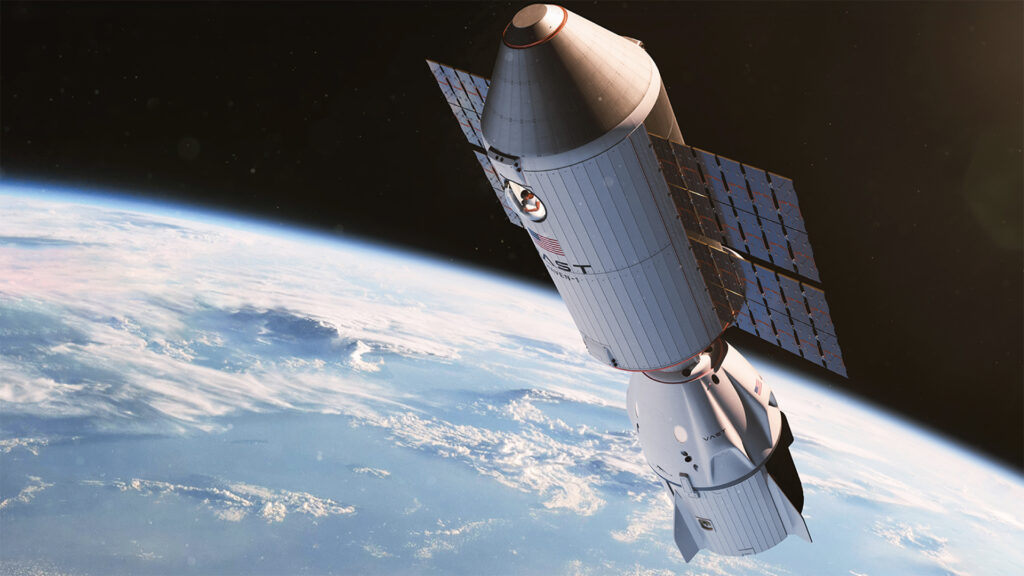
At the very top of the price ladder (yes, somehow we weren’t there yet), a company called Vast is building Haven-1, which it’s billing as the world’s first fully independent commercial space station, set to launch on a SpaceX Falcon 9. Once it’s operational, private stays are planned to run for about two weeks at a time, but there will be only four missions in total during the life of Haven-1, with four crew on board each mission. With a total of 16 spots, we can’t imagine they will be cheap, and prices have unsurprisingly not been disclosed.

What’s the damage to the environment?

It’s not just a dent in your wallet to consider, though. There’s also the small matter of the planet you’re leaving to admire from a distance. Rocket engines don’t just burn fuel; they scatter black soot and other pollutants directly into the upper atmosphere, where they do far more damage than the same muck released by a plane at cruising altitude. 

Research published in the journal Earth’s Future and reported by Time in 2023 found that soot dumped at this altitude can trap heat roughly 500 times more effectively than soot from ordinary aircraft, and warned that a sustained run of tourist launches could undo a meaningful chunk of the ozone layer’s recovery since the Montreal Protocol. Blue Origin argued that its hydrogen-fuelled engines emit only water vapour, though even that isn’t entirely consequence-free for the climate. Turns out, there’s no such thing as a free lunch, even in space.

Meanwhile, critics, including the UN Secretary-General back in 2021 when Jeff Bezos and Richard Branson both took flights into space on their respective spacecrafts, pointed out that people see “billionaires joyriding to space while millions go hungry on Earth”, noting a “malady of mistrust”. Even Bill Gates, someone who could probably afford to do one of these trips, said to James Corden when asked about his thoughts on space travel: “Space? We have a lot to do here on Earth.”

Unfortunately, space tourism for now, is happening regardless of the criticism or environmental impact. One thing is certain, though. Unless you’ve got a spare six or seven figures lying around, your own trip to space will likely remain a very pricey pipe dream.

Read next: Supersonic travel is back: the problems that killed Concorde – and how new tech is solving them

google preferred source

Apple News

Read the full article here

Follow on Google News Follow on Flipboard
Share. Facebook Twitter Pinterest LinkedIn Tumblr Email Copy Link
News Room
  • Website

Related Posts

I debated Gemini Live on whether in-car tech is too distracting – while behind the wheel of a 510bhp Volvo

August 19, 2026

Driven: I think long range and Scandinavian style make the Volvo EX60 an alternative electric SUV to watch out for

August 19, 2026

The best AI notetakers for meetings – so you never have to ask what corporate jargon you’re circling back to

August 18, 2026
Add A Comment
Leave A Reply Cancel Reply

Top Articles

What to expect from Apple’s September event: iPhone Fold, iPhone 18 Pro, Apple Watch Ultra 4 and more

July 4, 2026

Swatch posts the correct answers to the MoonSwatch Mission to Moon 1969 ESTA quiz – did you pass?

July 23, 2026

Upcoming Apple products guide – here’s everything we expect in 2026 and beyond

July 10, 2026
Latest Reviews

I’m hooked on Peak Design’s new City bags

News RoomAugust 17, 2026

I finally found a magnetic phone grip I never want to remove

News RoomAugust 15, 2026

Xteink’s tiny e-readers are getting access to free books through Libby

News RoomAugust 15, 2026

Subscribe to Updates

Get the latest tech news and updates directly to your inbox.

Demo
Most Popular

You can now try Apple’s all-new Siri AI yourself on your iPhone, iPad or Mac – here’s how

July 13, 2026

What to expect from Apple’s September event: iPhone Fold, iPhone 18 Pro, Apple Watch Ultra 4 and more

July 4, 2026

Swatch posts the correct answers to the MoonSwatch Mission to Moon 1969 ESTA quiz – did you pass?

July 23, 2026
Our Picks

Driven: I think long range and Scandinavian style make the Volvo EX60 an alternative electric SUV to watch out for

August 19, 2026

OpenAI lays out new security changes after its AI hacked Hugging Face

August 18, 2026

Robin Williams’ Instagram account brought back to fight ‘AI abuse’

August 18, 2026

Subscribe to Updates

Get the latest tech news and updates directly to your inbox.

Facebook X (Twitter) Instagram Pinterest
  • Home
  • Privacy Policy
  • Terms of use
  • For Advertisers
  • Contact
2026 © Prices.com LLC. All Rights Reserved.

Type above and press Enter to search. Press Esc to cancel.