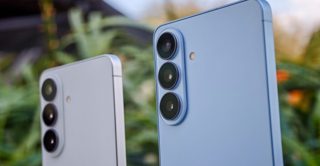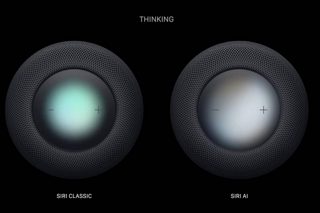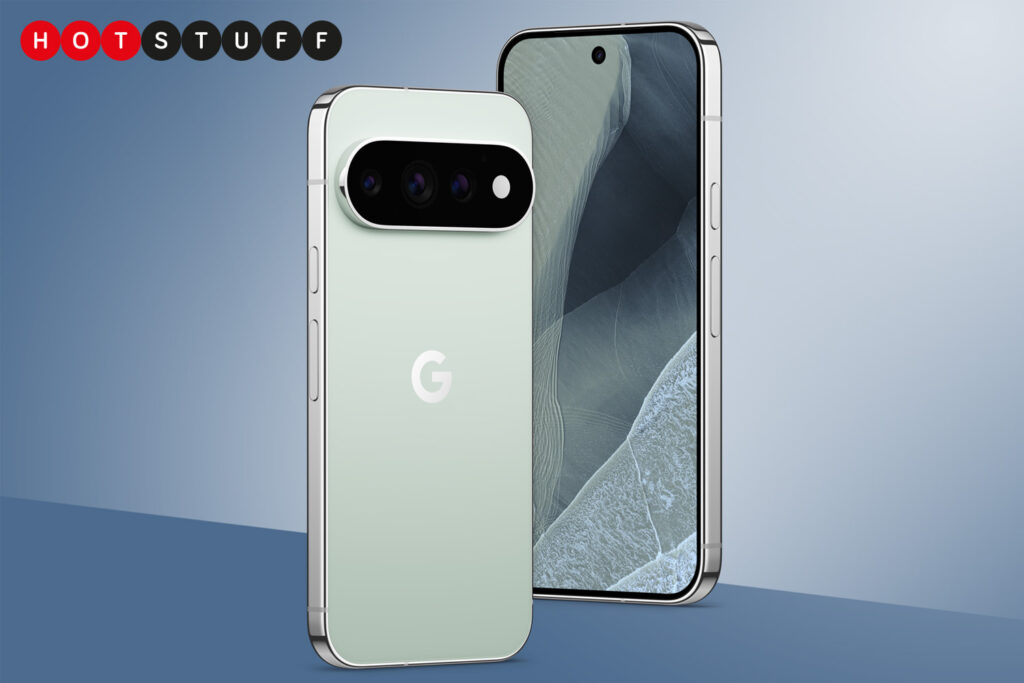
Google is really courting fans of its Gemini voice assistant with the new Pixel 11 Pro. The latest iteration of the firm’s flagship phone (which arrives in two sizes and is joined by a Pixel 11 baby brother) marks the debut of HiLight, a more visual way to let you know your phone’s AI brain is listening or thinking when you’re not actually holding the thing.
It repurposes the LED flash inside the Pixel 11 Pro and Pixel 11 Pro XL’s rear camera bar, glowing blue while Gemini is responding and purple while it’s processing a request. You’ll also be able to assign specific colours to indicate calls from certain contacts, with Google aiming to bring the same functionality for messages at a later date.
Attention-grabbing LEDs used to be the norm for phones a decade or so back, but have become something of a speciality for upstart British brand Nothing in recent years. Google’s implementation sounds a lot more subtle – but arguably less useful too.
If HiLight doesn’t sound particularly thrilling, you’re probably not a regular Gemini user. Don’t worry, though – the Pixel 11 and Pixel 11 Pro also bring some welcome hardware upgrades.
Once again available in your choice of 6.3in and 6.8in sizes, it’s only battery life where the Pixel 11 Pro and Pixel 11 Pro XL differ. Both have what Google reckons is the brightest display of any phone in its class – though the fine print will show the firm is only talking about North America – and get edge-to-edge glass that’s apparently twice as scratch resistant as the last-gen models.
You’ll be able to snag one in Canyon, Fog, Olive or Obsidian colours, with the latter ditching the polished (but fingerprint prone) metal frame for a matte finish.
Both phones are powered by Google’s latest-gen Tensor G6 chipset, which the firm says brings 25% faster web browsing and 15% app loading versus last year’s phones. 50% more compute performance should speed up on-device AI. They get 16GB of RAM and include 256GB of storage for the base model, with 512GB and 1TB variants also on offer.
Battery capacity measures in at 5115mAh for the Pro XL and 4850mAh for the Pro, or roughy similar to last year’s efforts. Google claims “30+ hours” of life between charges for both models. It’s also great to see faster 25W Qi2.2 wireless charging here, complete with integrated Pixelsnap magnets. It’s one area Android rivals still have yet to really get on board with.
The Pixel 11 series arrives with Android 17. While not a big departure from last year’s effort in either design or features, it has seen some updates to how Gemini deals with ums and ahs – now even a jumbled voice request should be understood.
It’s photography that sees the biggest change, with the 5x zoom telephoto lens upgraded to a much larger 1/1.95in sensor. The 48MP pixel count remains unchanged but it should handle low light a lot better now. Google is also claiming ‘lossless’ 10x zoom using sensor cropping, and a whopping 120x Pro Zoom if you don’t mind generative AI being brought into the mix. Otherwise you’re looking at a familiar 50MP main snapper and 48MP ultrawide at the rear, along with a 42MP selfie cam up front.
An all-new ISP and a year of software improvements bring Night Sight low light shooting that’s 4.5x faster than the previous generation, while a Creator suite adds social media-friendly guidelines to your viewfinder when shooting video. There’s even a teleprompter inside the camera app and your footage is organised into project folders automatically. Camera Looks are more for stills shooters, giving drastically different vibes at the push of a button – think film simulations on Fujifilm digital cameras, or the analogue-inspired colour modes many smartphone rivals are already rocking.
Magic Capture could be the standout. It analyses hundreds of frames from a short video clip and automatically saves the best results as stills, with automatic cropping and unblurring thrown in for good measure.
The Google Pixel 11 Pro starts at £1079/€1199, while the Pixel 11 Pro XL climbs to £1279/E1399. Both will be up for pre-order straight away and start shipping on August 20.

The vanilla Pixel 11, meanwhile, launches in Frost, Hibiscus, Pistachio and Obsidian colours. It keeps the fingerprint-resistant matt finish of the outgoing phone, but its rear camera bar is now an all-glass affair that’s 40% thinner than before. Slap the phone into one of Google’s official cases and the bump disappears entirely. HiLight doesn’t make the grade here.
It keeps the same 6.3in OLED display as the Pixel 10, complete with 120Hz refresh rate, 3000 nits peak brightness and Gorilla Glass Victus 2 protection. The 48MP main camera, 10.8MP telephoto with 5x optical zoom and 13MP ultrawide also return unchanged, as does the 10.5MP selfie cam.
A Tensor G6 provides the performance, along with 12GB RAM and 256GB of starting storage. Battery life is a promised 30 hours, with up to 45W wired charging speeds and 25W Qi2.2 wireless refuels.
It goes on sale for £879/€999 and will also hit stores on August 20.
Read the full article here