







Samsung officially announced its Galaxy Z TriFold smartphone just over a month ago, and I have been lucky enough to get up close with the handset during CES 2026.
Samsung isn’t the first to do a triple-section phone, but it will be the first to launch one more widely.
Mind you, we don’t really know where it will launch eventually (it is coming to the US, China, Taiwan, Singapore and the UAE for sure and has already launched in Korea), nor how much it will launch for. Rumors suggest a price around the $2500 mark, but one analyst I spoke to at the show expects a price that could be as much as $3000. Yep, really.
The key thing to note is that it doesn’t have a triple fold at all – it’s actually got two folds and three ‘sections’ which fold nicely in on themselves.
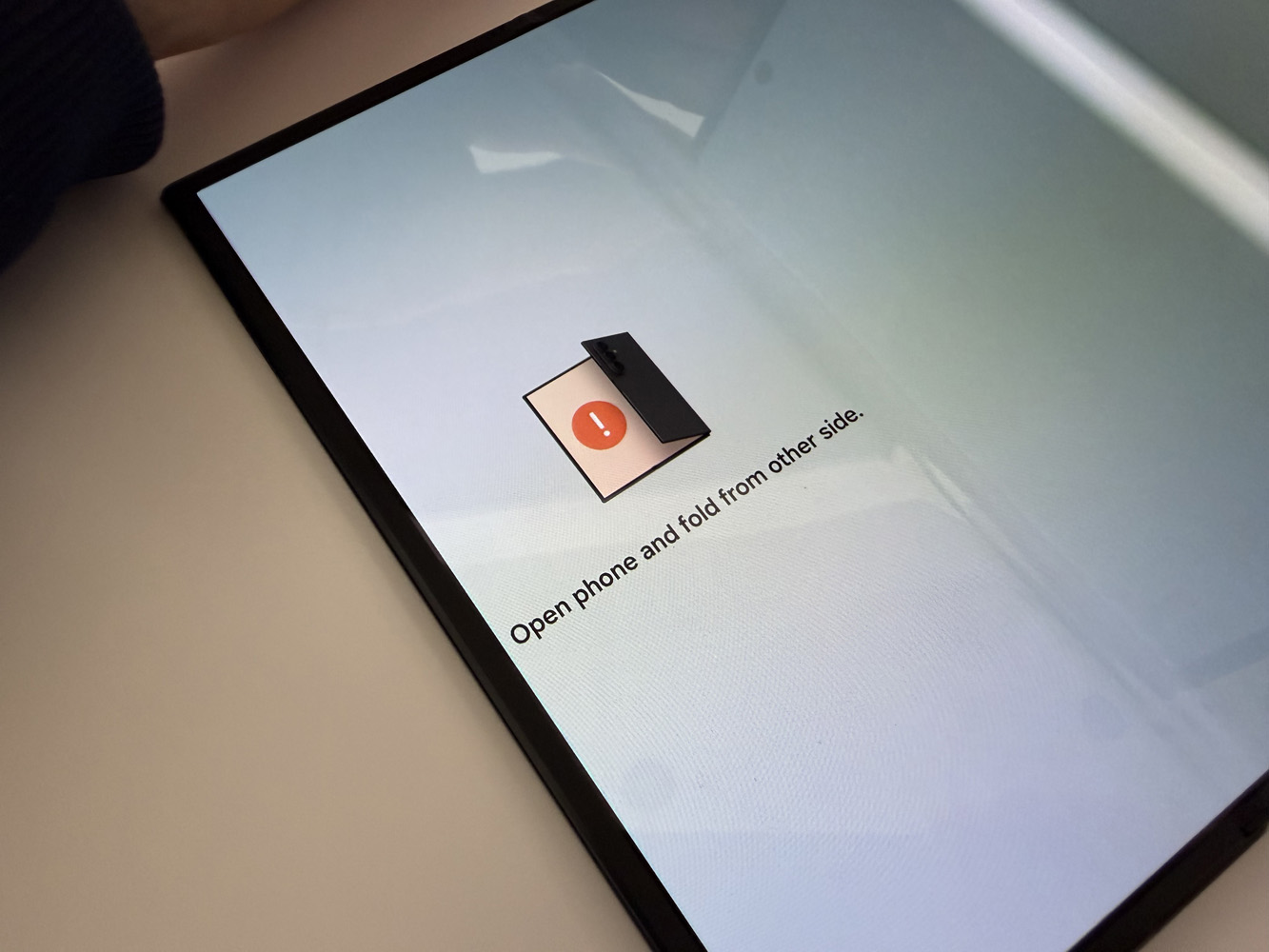
Try and fold it the wrong way and an alert will appear on the display alongside a keen vibration to warn you you’re doing it wrong.
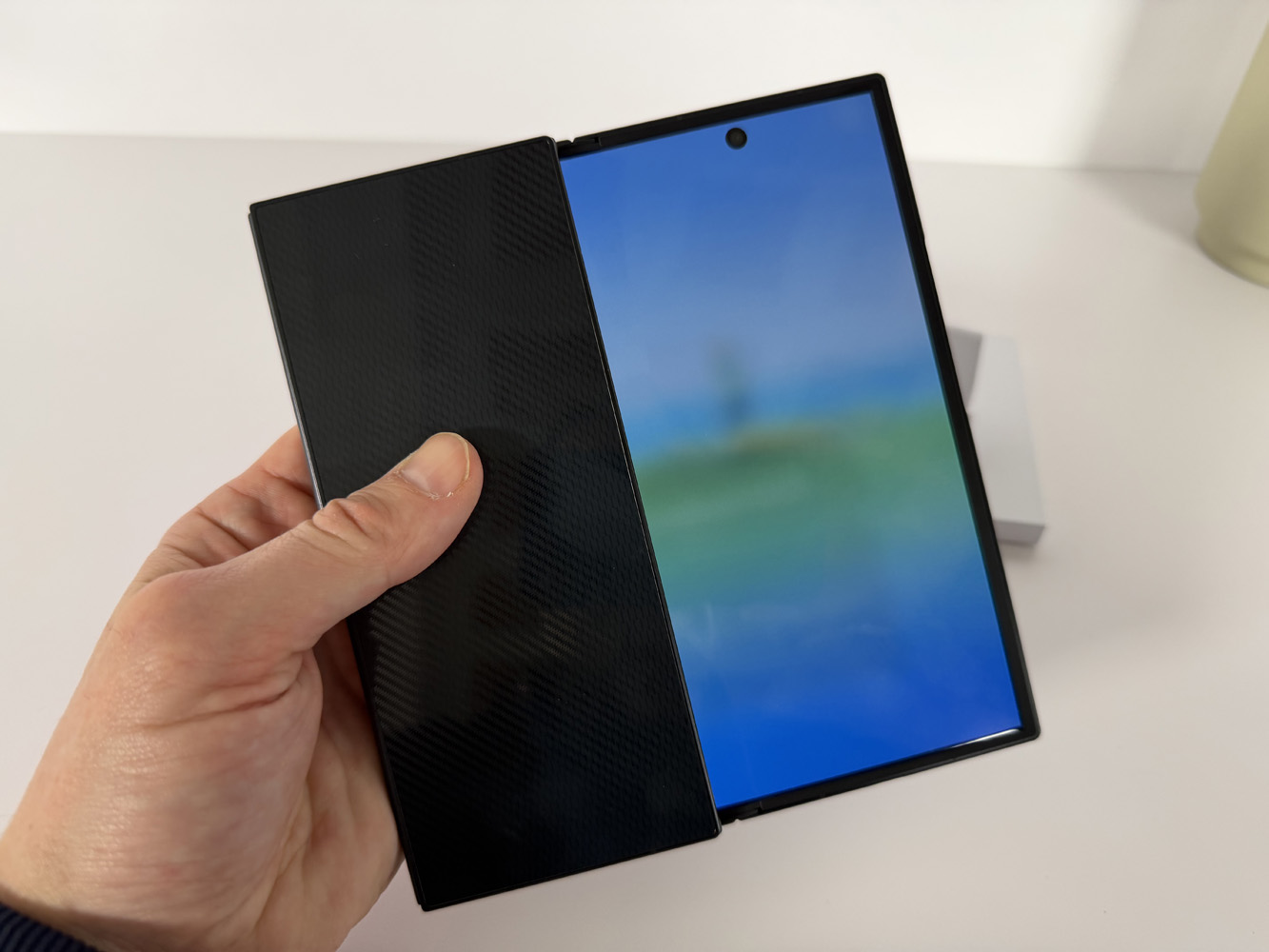
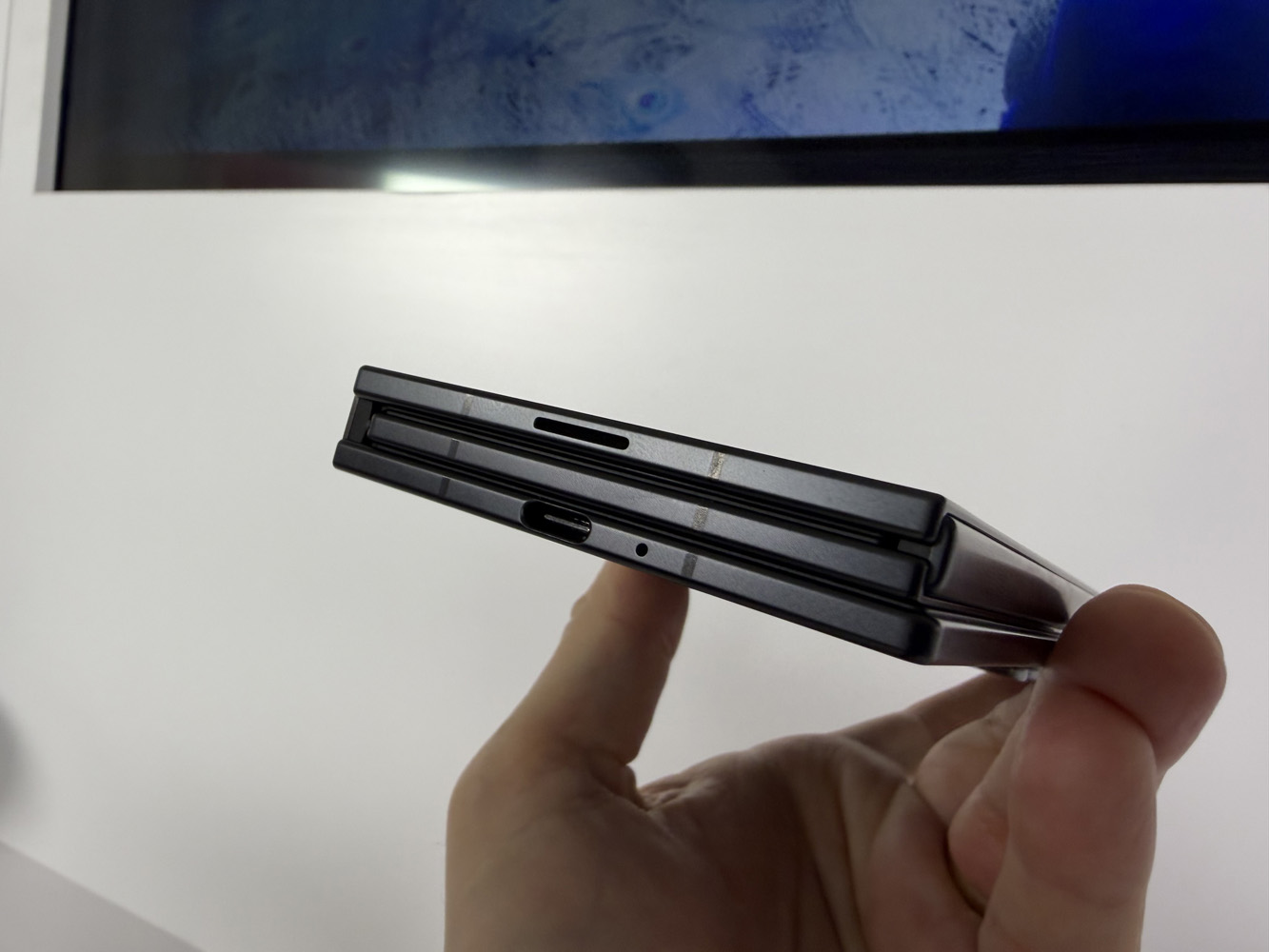
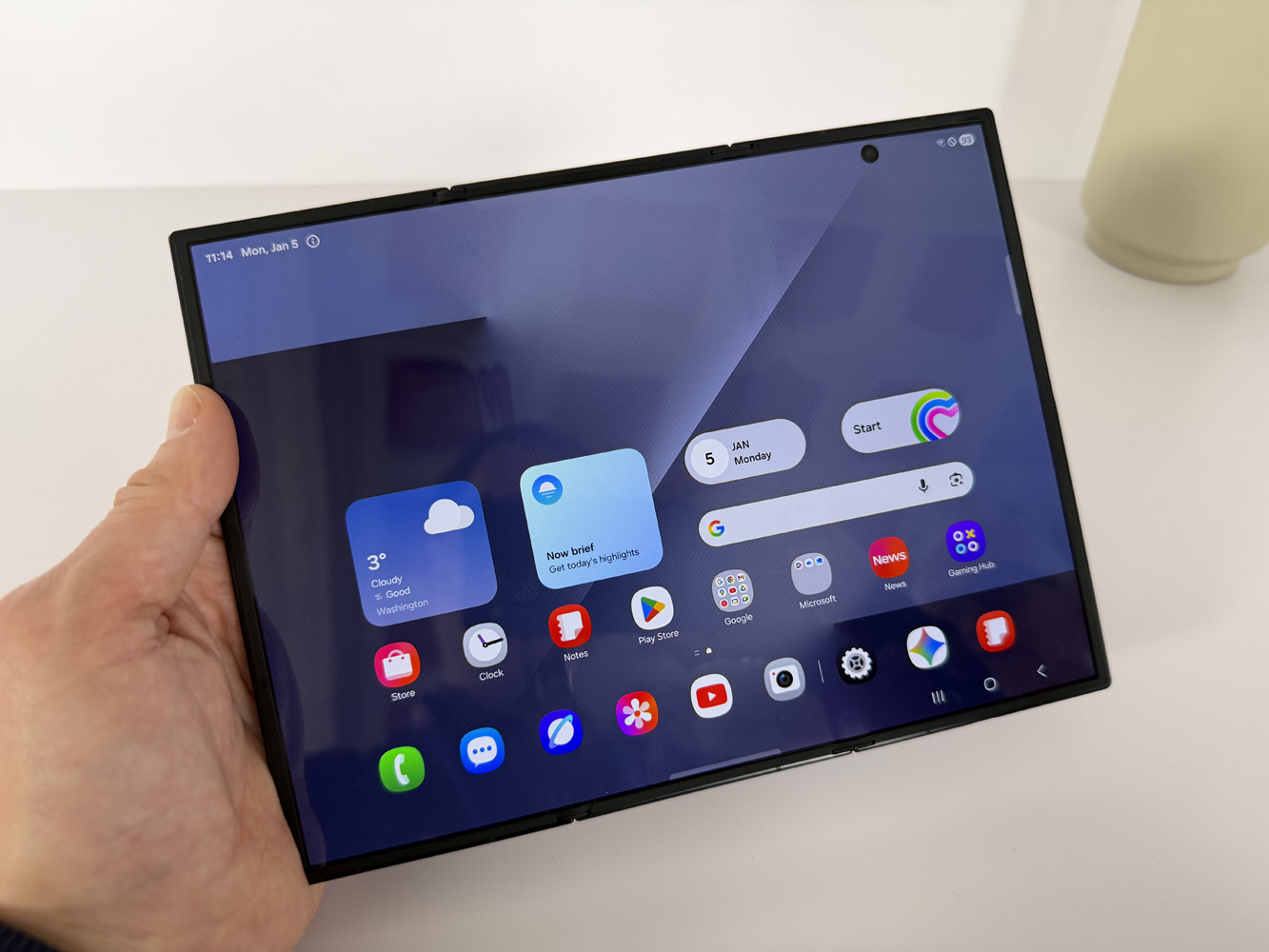
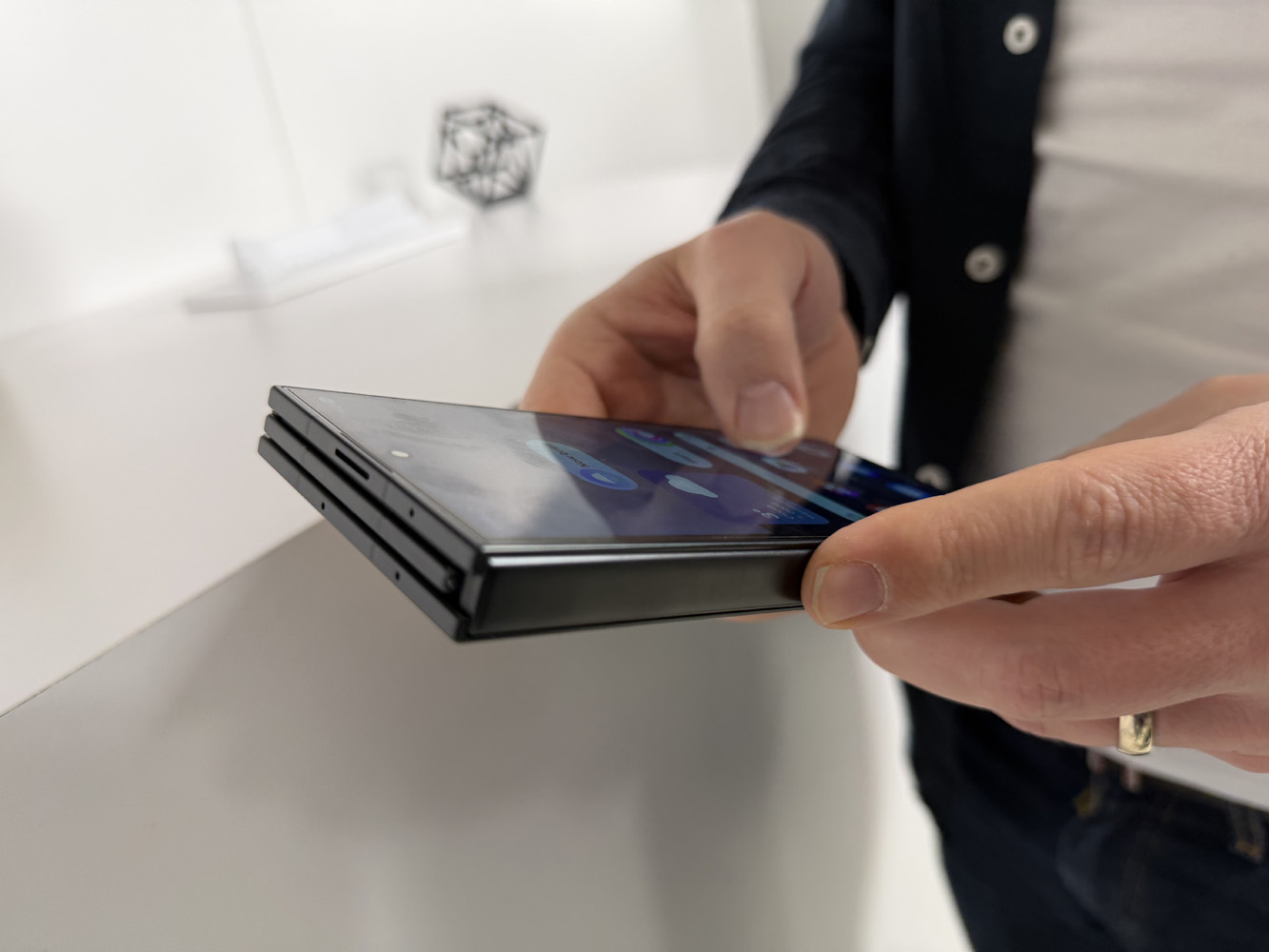
There’s a lot of tech at play here and it is creditable that it actually feels pretty light in the hand compared to a lot of larger or Pro phones. It’s 309g, which is almost as much as two Galaxy S25s. More impressive is the thickness, or rather the lack of it; Galaxy Z TriFold is just 3.9mm at its thinnest point.
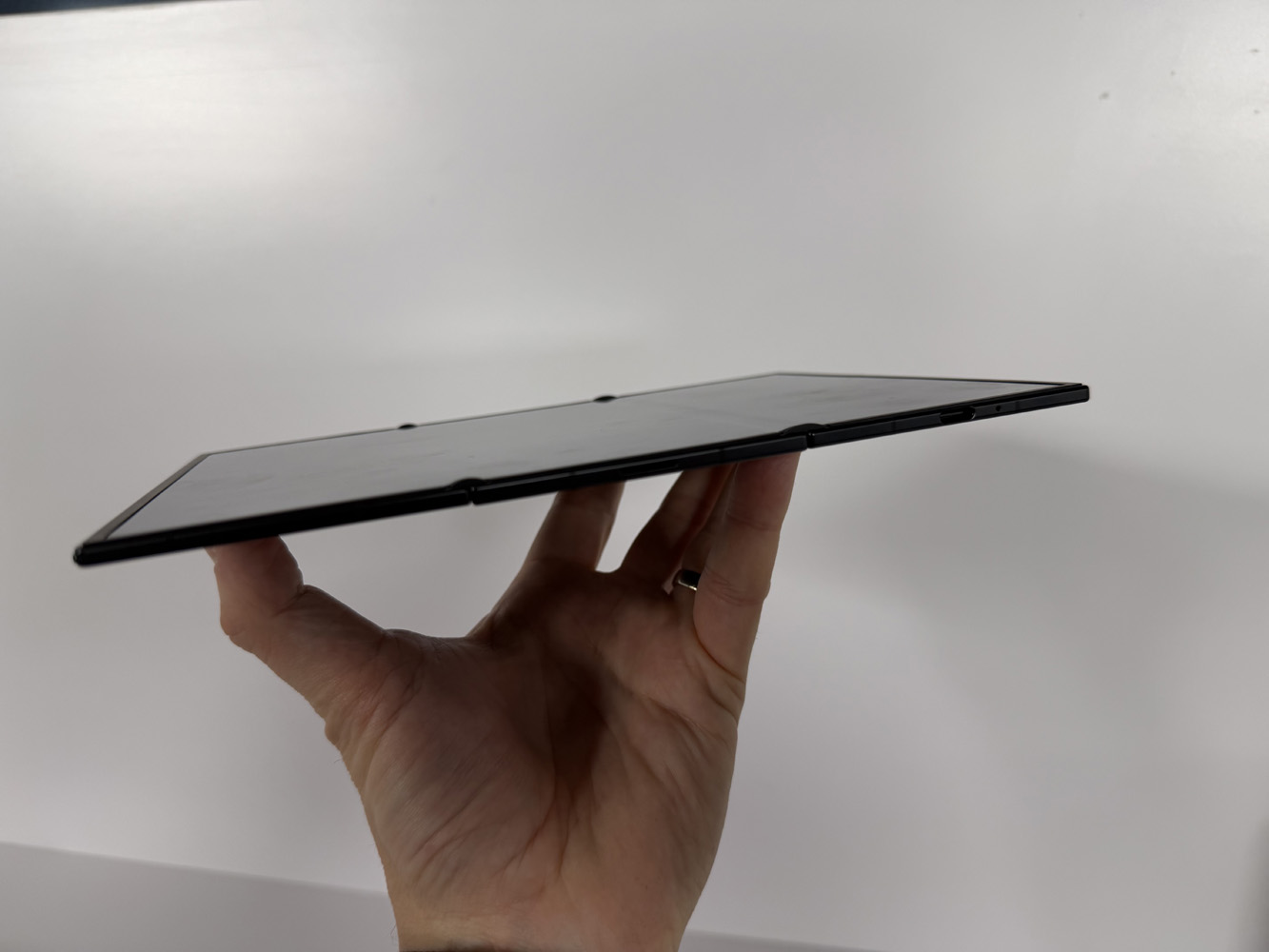
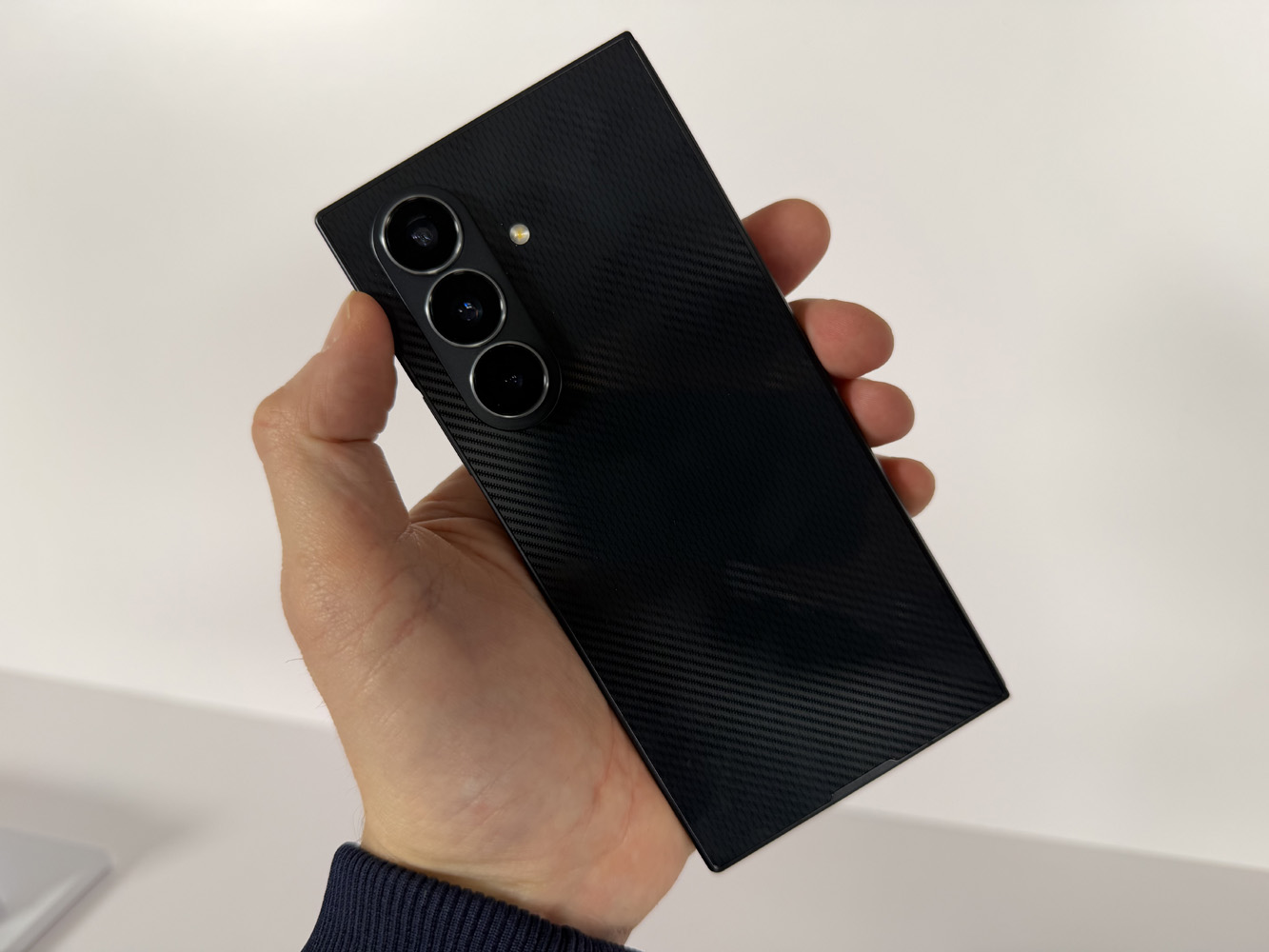
The design of the rear does leave a bit of be desired in my opinion – the back of the phone is ceramic-glass fiber-reinforced polymer rather than glass to keep the weight down, but it doesn’t give off a premium look and gets covered by fingerprints when you’ve been using it for a while.
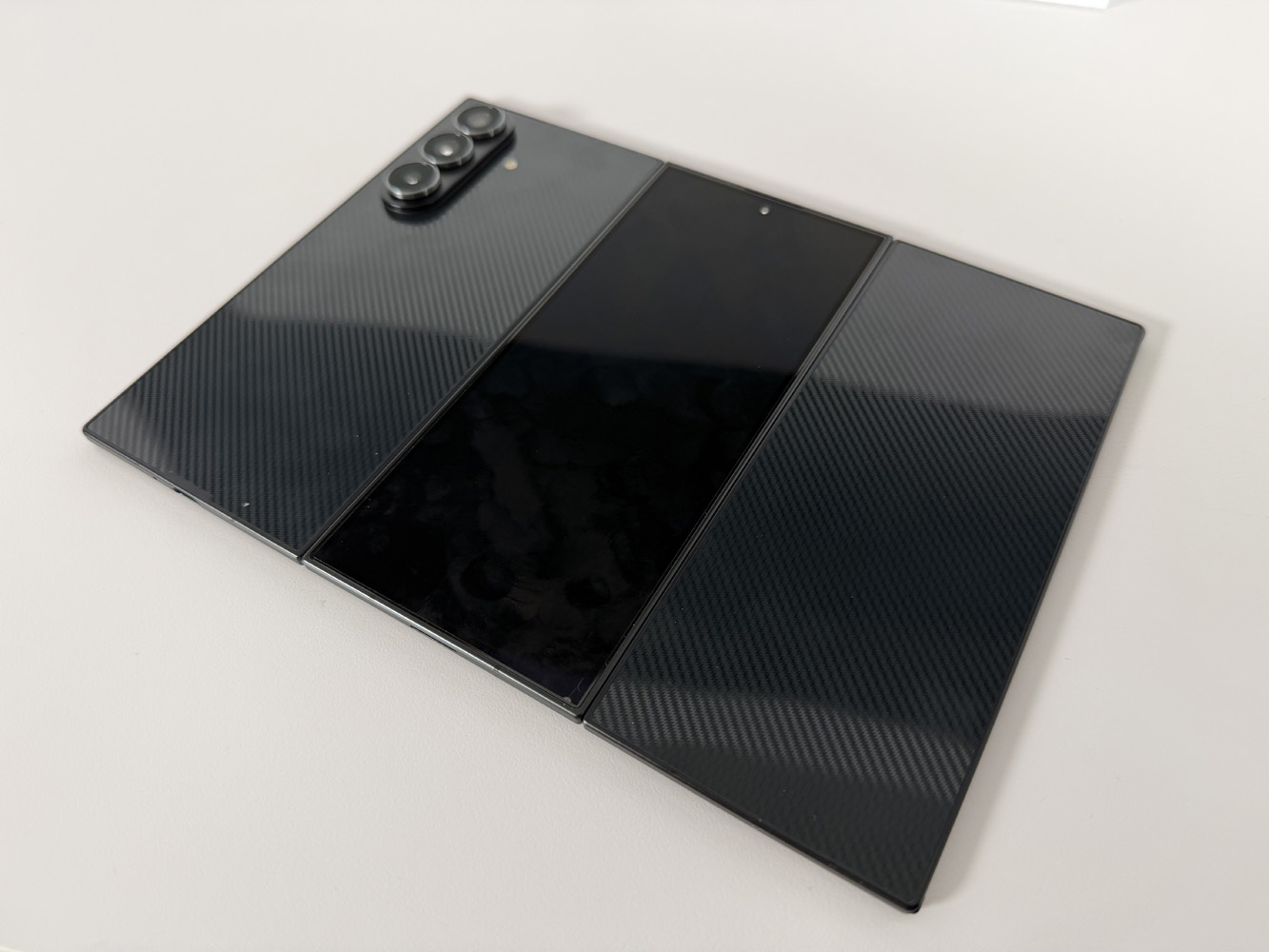
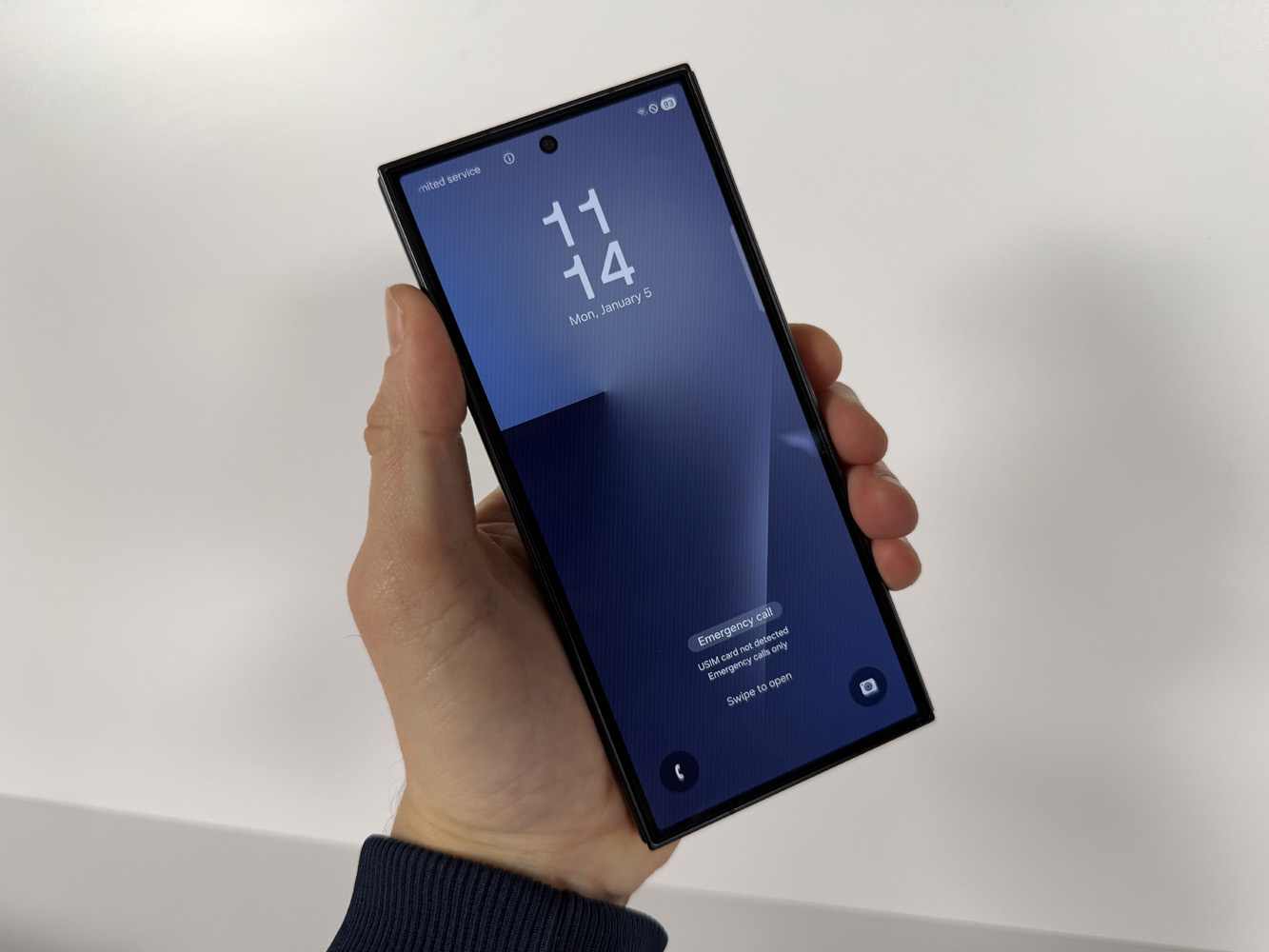
There are more regular top-end smartphone materials used elsewhere – the frame is made from Samsung’s Advanced Armor Aluminum alloy, while the ingenious hinge design is made from titanium. It’s quite a feat that the phone doesn’t feel too thick when folded. There is a bit of a gap between the sections when it’s folded up (unlike on the Galaxy Z Fold 7), but this isn’t really an issue in my book.
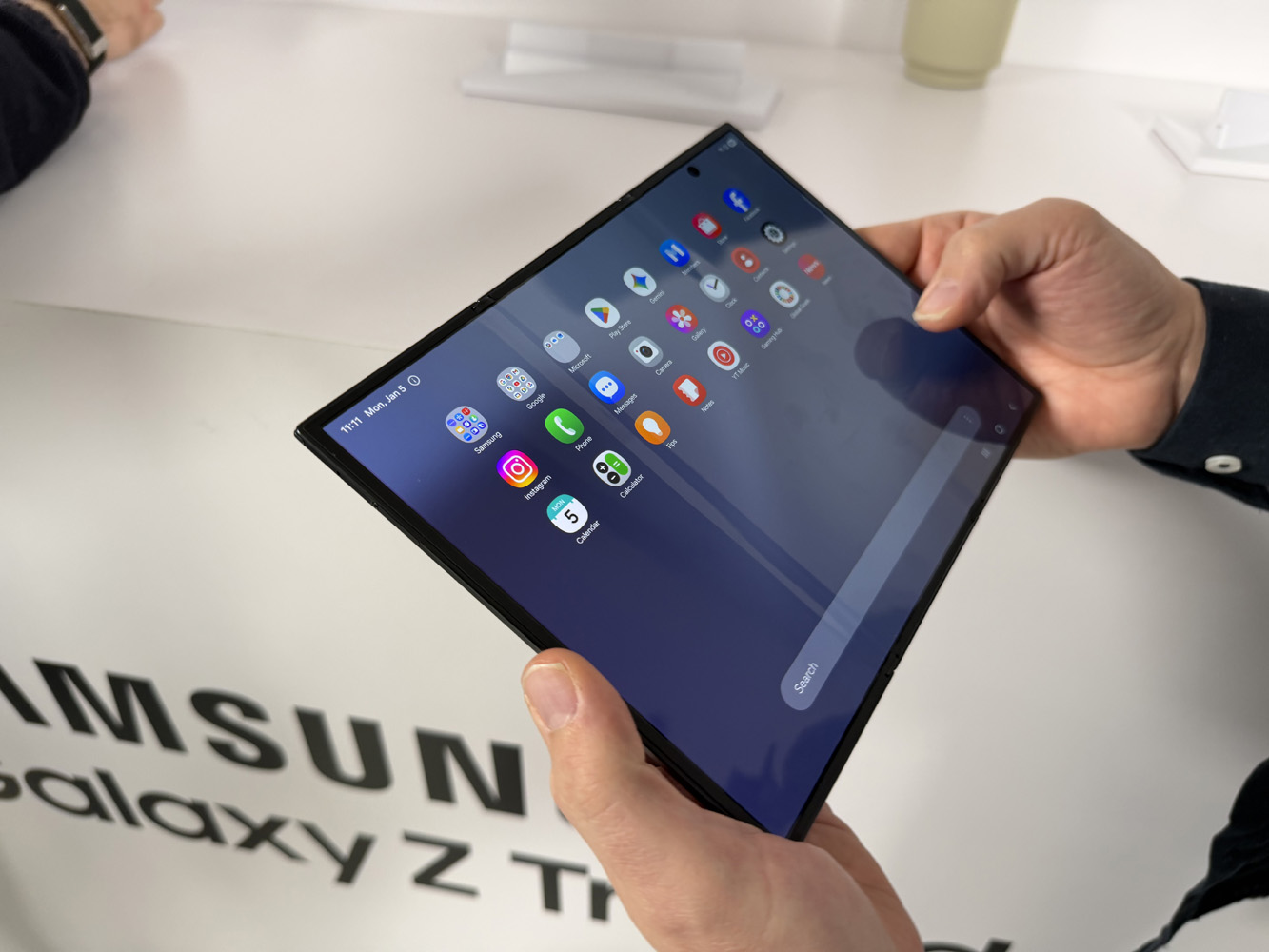
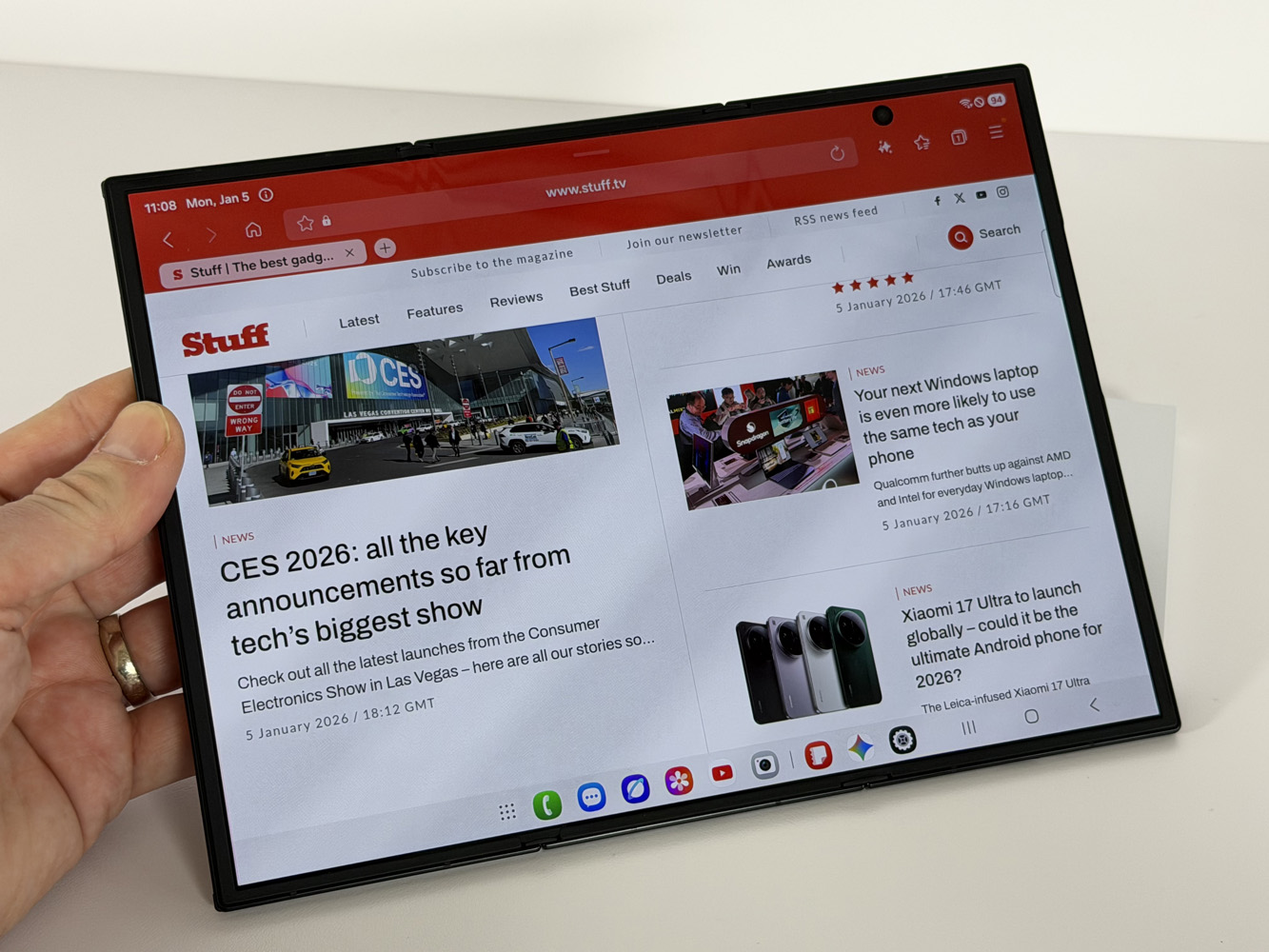
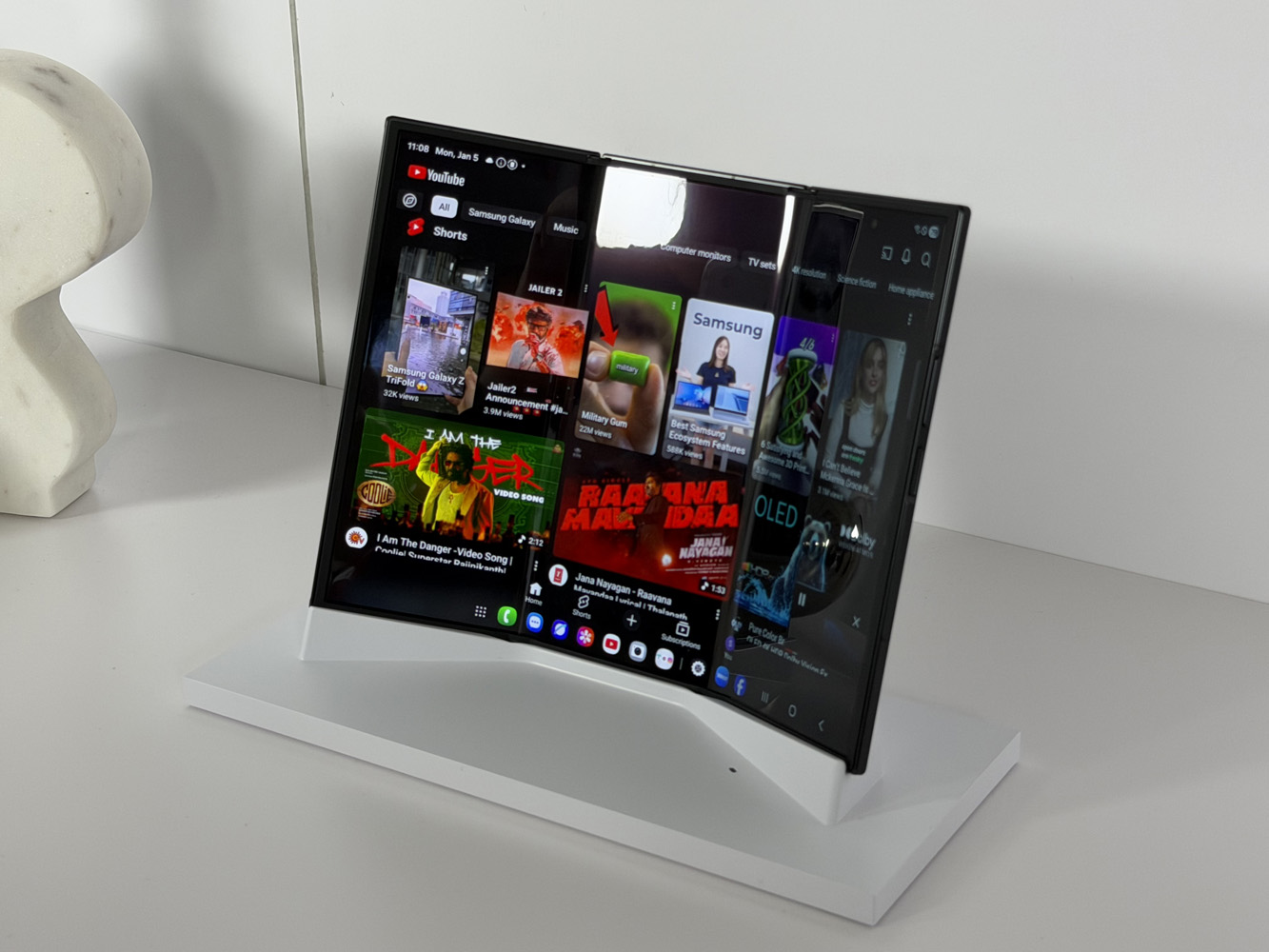
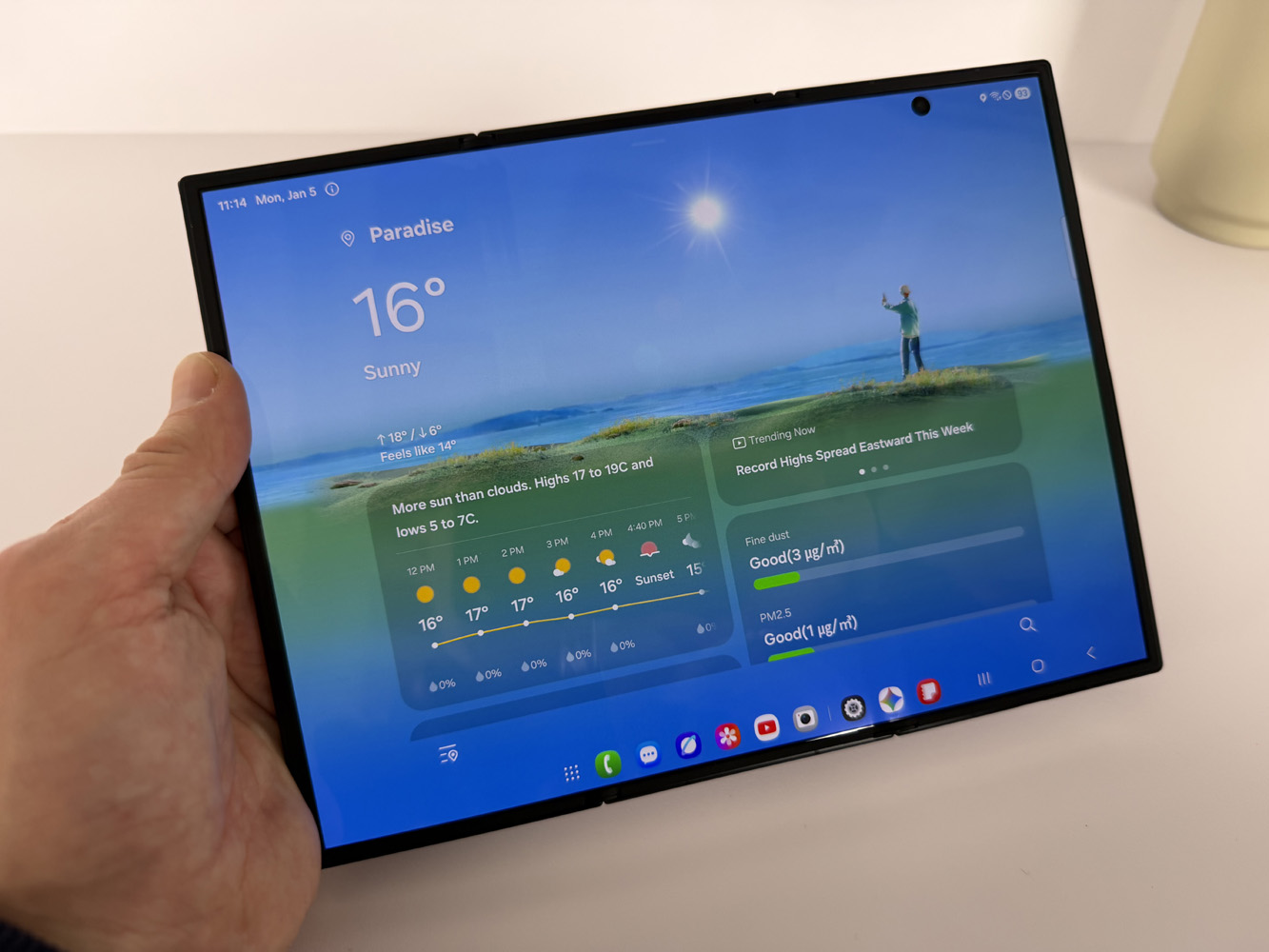
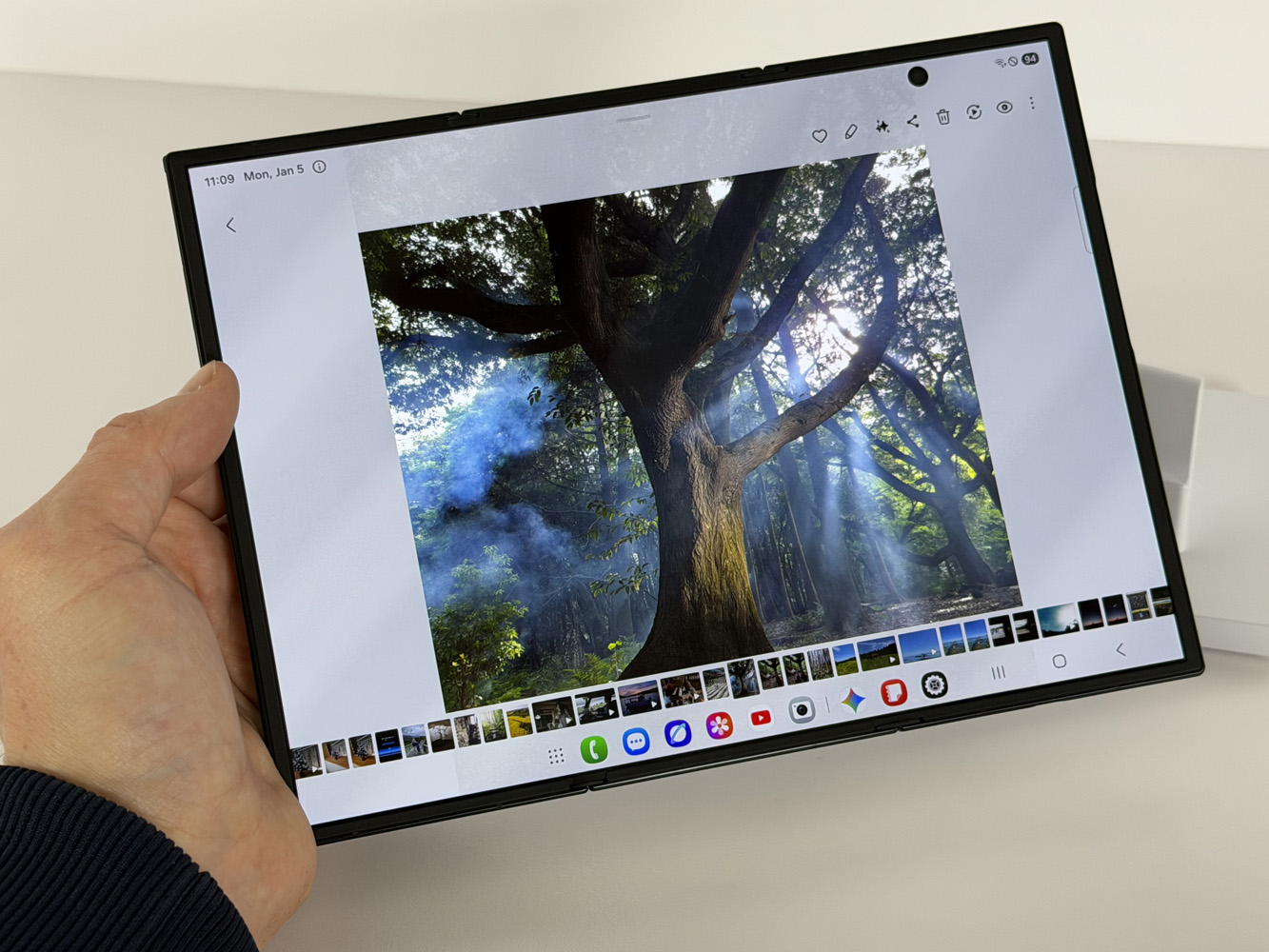
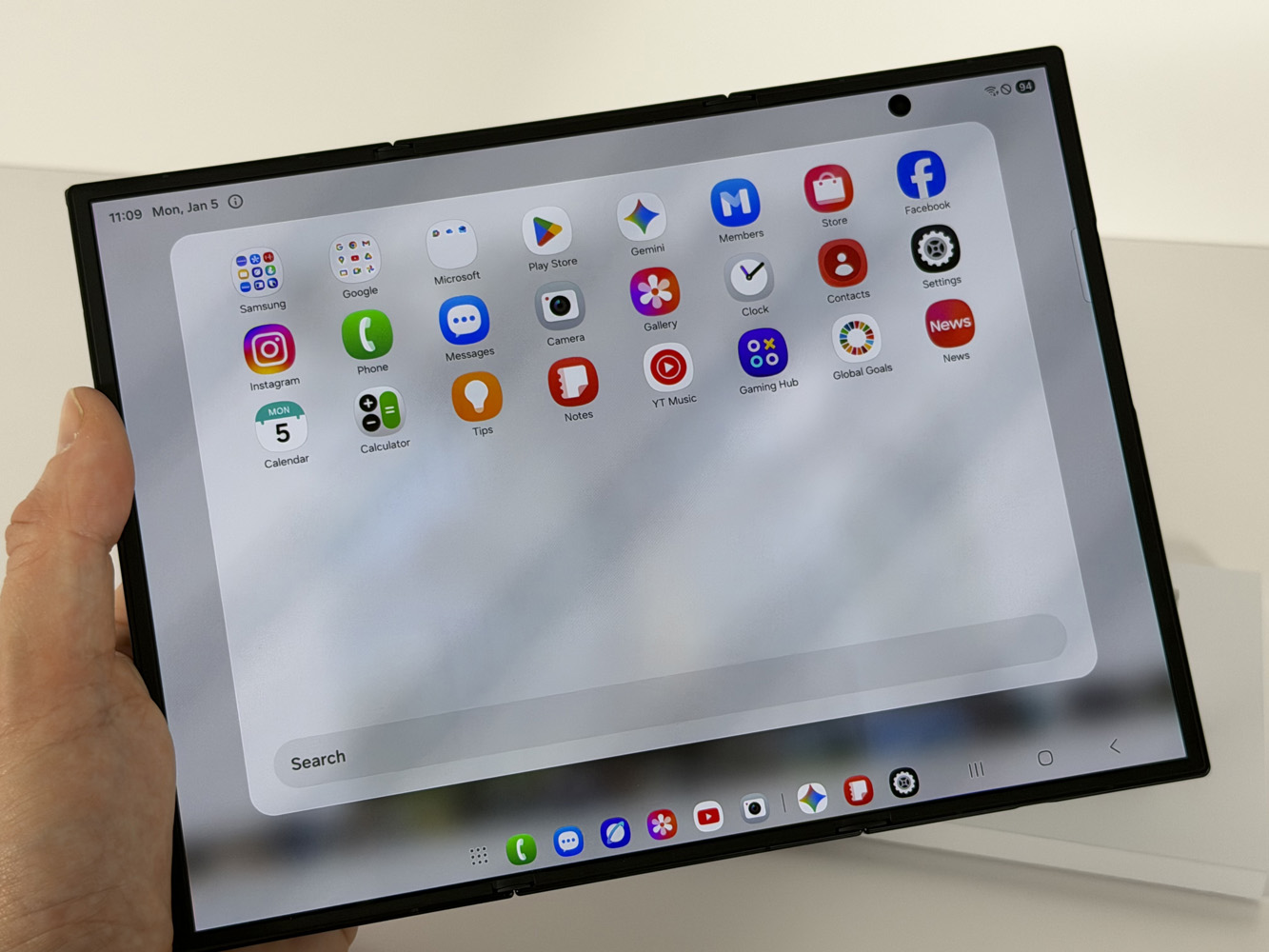
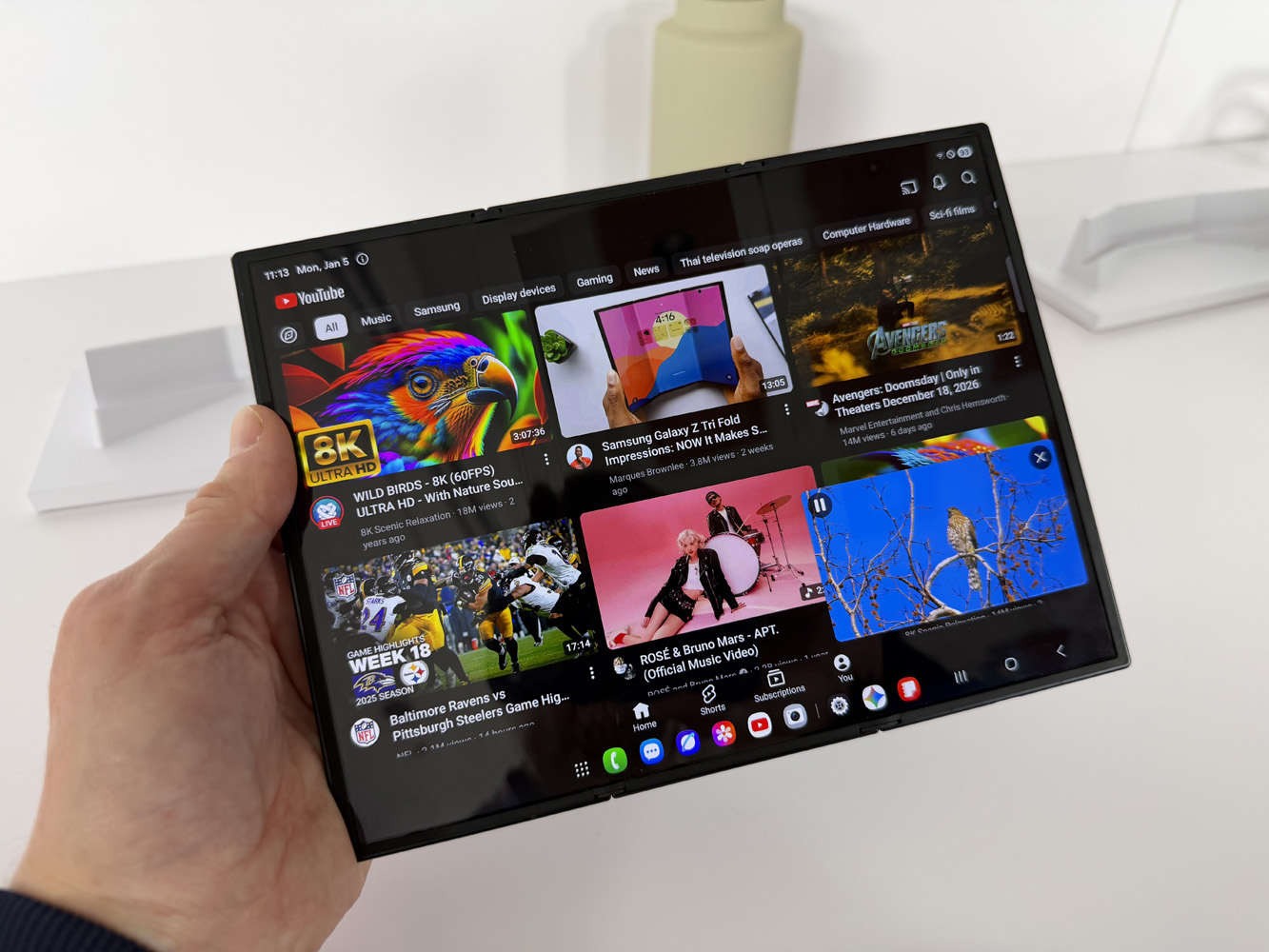
Power comes from Qualcomm’s Snapdragon 8 Elite teamed with 16GB of RAM, and you can buy it with either 512GB or1TB of storage. That should be more than enough to run three apps side by side when you’re using the 10in inner screen, plus you’ll get the full desktop version of DeX for laptop-like working.
Both the 10in inner and the 6.5in outer screen are AMOLEDs with 120Hz refresh rates. You get 2520×1080 resolution up front, and 2160×1584 unfolded. The inner screen peaks at 1600 nits, while the outer one can shine more brightly at up to 2600 nits.
Given all those pixels that need to be powered, you might think it would be packing a pretty hefty battery, but there’s only 5600mAh on offer and so longevity could be an issue when it comes to review time – 45W is the maximum for charging, too.
The rear camera trio is also decent, consisting of a 200MP main snapper, 12MP ultrawide and 10MP telephoto with 3x optical zoom. There’s also a pair of 10MP selfie cams, too.
Given what’s been achieved here, the Galazy Z TriFold feels a triumph – it doesn’t feel very first-gen at all. But the high pricing and lack of distinctive design for the rear will be surely be a challenge. Regardless, the Galazy Z TriFold is perhaps the best look yet at what our smartphones will evolve to become in the years ahead.
A new chapter – Stuff’s CES 2026 coverage powered by Acer
A new chapter of Acer performance is here. Sleek. Intelligent. Powerful. Checj Check out Acer’s laptop announcements and gaming tech from CES 2026.
Read the full article here


