






As long as people have been travelling to space, wristwatches have also been travelling to space. Yep, space missions have resulted in some of the most iconic watches around, including the Omega Speedmaster Moonwatch, a timepiece so synonymous with lunar exploration that it pretty much defines the genre.
Space watches were one of the biggest trends at Watches and Wonders this year, with a number of brands reaching for the stars.
Here we’ve collected six watches that have either been in space, are inspired by space travel, or are destined for space in the near future.
With only six watches on this list, I’ve not been able to include amazing watches from Glycine, Fortis, all of the Soviet watches and even G-Shock – we’ll save those for list number two.

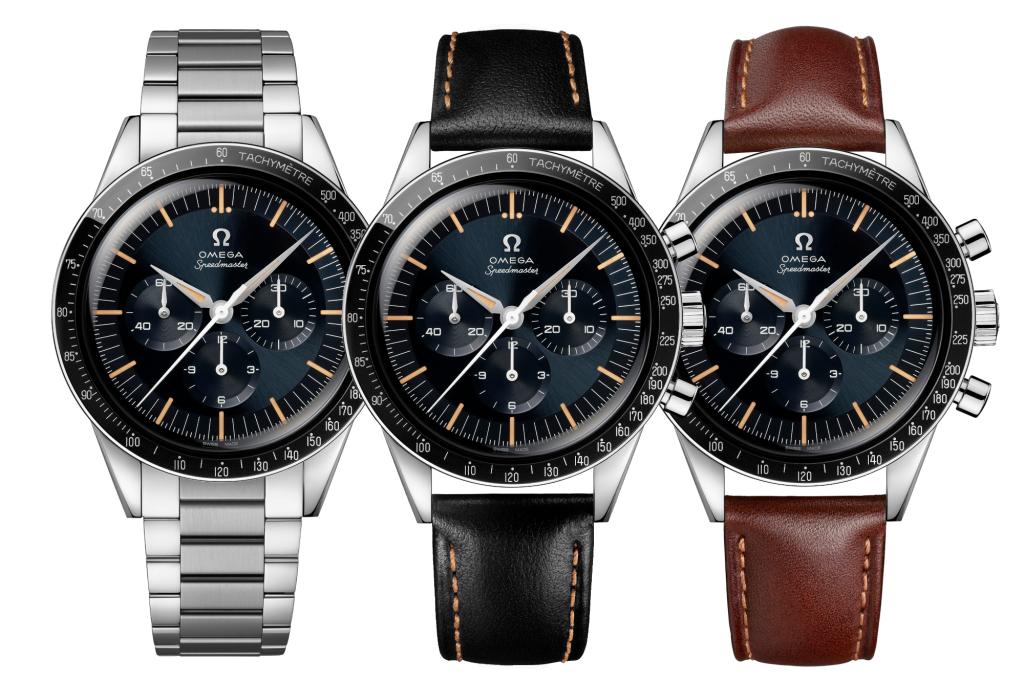
1. Omega Speedmaster FOiS
The name says it all. FOiS stands for ‘First Omega in Space’, and this watch pays homage to the watch that Wally Schirra wore on his October 1962 flight aboard the Sigma 7 spacecraft. It was the watch that started it all for Omega in space – three years before the Speedmaster Professional was officially approved by NASA for the Apollo programme.
The newest generation FOiS (pictured above) is a masterclass in restraint. Omega introduced a grey sunburst dial with a delicate radial brushing that catches the light beautifully, nodding to the blued metallic sheen seen on aged vintage examples.
The stepped dial profile, applied vintage Omega logo, and elegant alpha hands all are all borrowed from the original reference CK2998.
One of the most welcome updates is the new domed sapphire crystal, which has been shaped to closely mimic the look of the original Hesalite, giving it wonderful vintage charm without sacrificing scratch resistance.
Inside beats Omega’s Co-Axial Master Chronometer Calibre 3861, the same movement that powers the current Moonwatch, bringing METAS certification and anti-magnetic resistance up to 15,000 gauss.
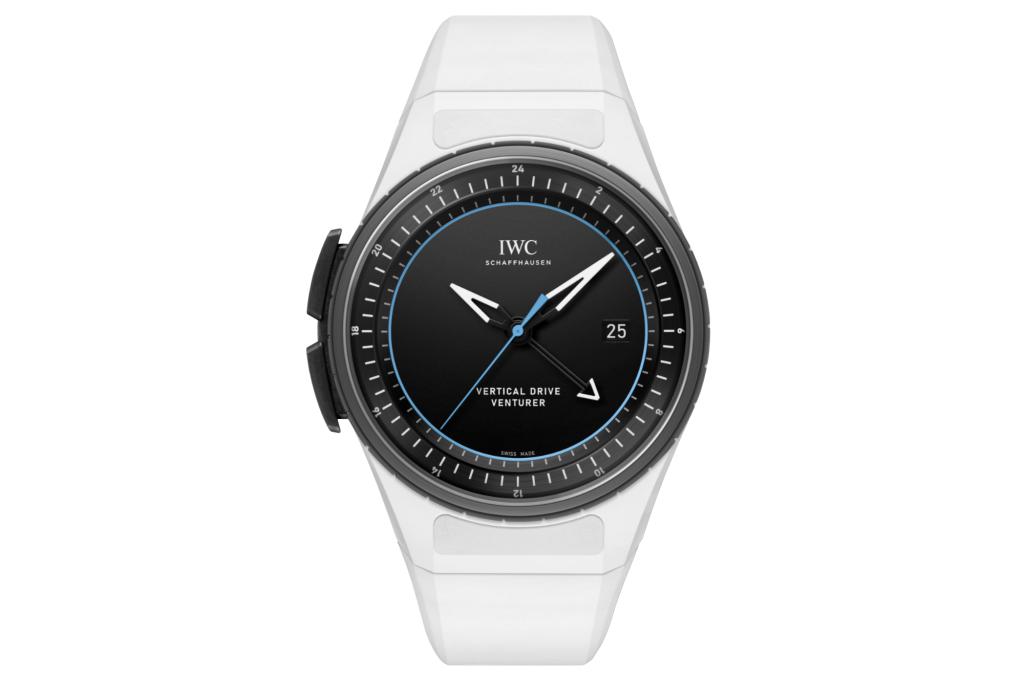
2. IWC Pilot’s Venturer Vertical Drive
If the Omega FOiS looks to the past, the IWC Pilot’s Venturer Vertical Drive looks firmly into the future. Unveiled at Watches and Wonders 2026 in partnership with space habitation company Vast, this is the first mechanical wristwatch engineered and certified from the ground up specifically for human spaceflight (not an adapted aviation watch).
IWC’s engineering division XPL spent years working directly with Vast’s team of NASA veterans to define exactly what a tool watch for astronauts needs to do. The result is a 44.3mm case in white zirconium oxide ceramic, with the bezel, caseback, and rocker switch in the brand’s signature Ceratanium.
The watch has been tested against the brutal realities of spaceflight, including rapid temperature fluctuations (from +100°C in direct sunlight to -150°C in shade), sustained vibrations, pressure changes, and off-gassing requirements critical in confined crew quarters.
The headline innovation is the Vertical Drive system, a patent-pending clutch that transmits the movement of the external bezel directly to the winding stem inside the watch. This means the watch has no crown – designed for astronauts wearing thick pressurised gloves during EVA (extravehicular activity).
The new Calibre 32722 is automatic (the oscillating rotor works perfectly well in microgravity, relying on inertia rather than gravity) and delivers an impressive 120-hour power reserve.
The Venturer is purpose-built for Vast’s Haven-1 space station, due for launch in early 2027.

3. Breitling Navitimer B02 Cosmonaute Artemis II
When NASA astronaut Reid Wiseman, Commander of the Artemis II mission, specifically requested a Cosmonaute for his lunar flyby mission, he was channelling the watch’s origin story. In 1962, Scott Carpenter had similarly approached Willy Breitling asking for a modified Navitimer with a 24-hour dial (a necessity when you experience sunrises every 90 minutes in orbit). Breitling obliged, and on 24 May 1962, that watch became the first Swiss timepiece ever worn in space.
Now, over 60 years later, Wiseman and his three crewmates wore new Cosmonautes aboard the most significant crewed mission since Apollo 17.
The watch itself is stunning. The 41mm stainless steel case houses Breitling’s in-house manual-wind Calibre B02 – a COSC-certified movement with a column wheel, vertical clutch, and approximately 70-hour power reserve. The 24-hour display remains, but the real showstopper is the dial: a galaxy-blue meteorite, cut from genuine extraterrestrial material and acid-etched to reveal its natural Widmanstätten crystalline pattern.


4. Bremont Supernova Chronograph
Bremont has always traded on real-world toughness, from testing its watches with the SAS to Martin-Baker ejection seats, and the Supernova Chronograph takes that ethos to its logical extreme. Later in 2026, a Bremont Supernova Chronograph will be attached to the chassis of Astrolab’s FLIP rover and launched as part of Astrobotic’s Griffin Mission One.
It will travel to the lunar south pole, where it will tick away in the silence until its mainspring runs down and it becomes a permanent artifact of human exploration. This makes Bremont the first British watch brand to reach the Moon, and the Supernova the first mechanical watch to remain there indefinitely.
To earn its passage, the watch underwent the same rigorous Protoflight Qualification testing as the rover itself: vibration, acoustics, thermal vacuum cycling, electromagnetic interference, and shock testing.
The 41mm case is crafted from 904L stainless steel, with a distinctive ten-sided black ceramic bezel and a black DLC-coated case middle. The three-dimensional dial is inspired by spacecraft solar arrays, with every single geometric element painted in blue-emission Super-LumiNova.
The BC77 automatic movement, a COSC-certified Sellita SW500-based calibre, provides a 62-hour power reserve and is visible through an exhibition caseback.

5. Seiko Pogue Speedtimer
On 16 November 1973, NASA astronaut Colonel William Pogue boarded a Saturn IB rocket bound for Skylab 4 with a Seiko 6139 Speed-Timer tucked into the pocket of his space suit. He had bought it for just $71 at the Ellington Air Force Base exchange store and, having worn it throughout flight training, simply couldn’t leave it behind.
NASA had not approved the watch. All astronauts were officially required to wear the Omega Speedmaster. So Pogue discreetly stowed his Seiko in his suit and wore it alongside his official watch throughout an 84-day mission. In doing so, the 6139 became the first automatic chronograph ever worn in space. Its Calibre 6139 was remarkable: an automatic movement with a column wheel and vertical clutch, launched simultaneously with Zenith’s El Primero in 1969.
Seiko’s 2024 Prospex ‘Pogue’ Speedtimer pays tribute to that storied original with the unmistakable yellow dial and red-and-blue ‘Pepsi’ aluminium tachymeter bezel. The modern interpretation uses solar power rather than an automatic movement, and the tri-compax subdial layout differs from the original’s single sub-register, but for everyday wearability and value, the Pogue Speedtimer is hard to beat.
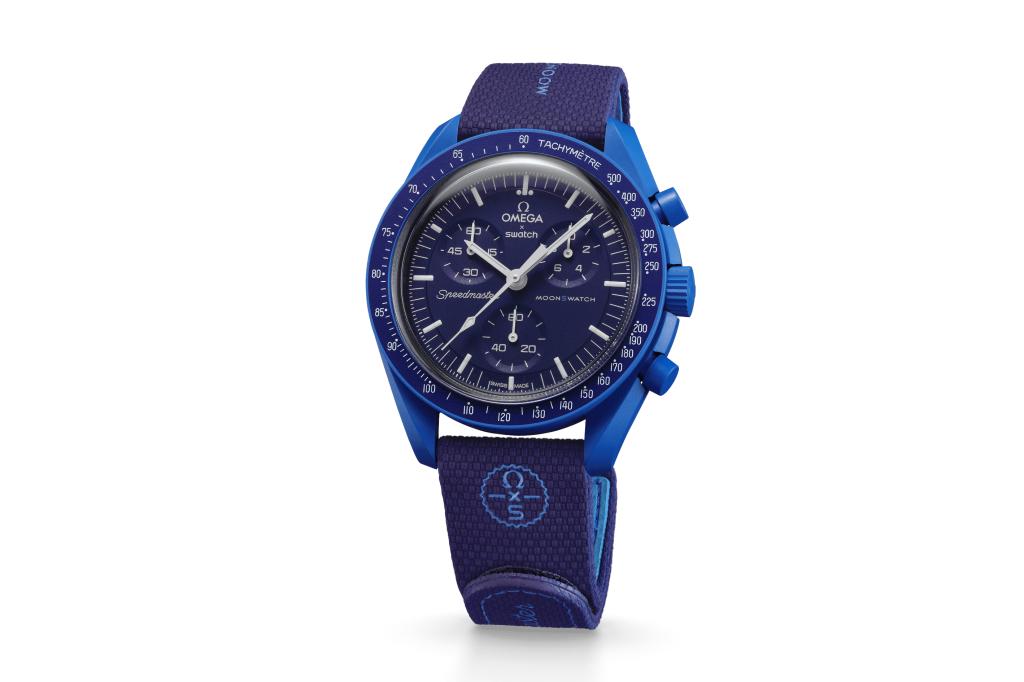
6. Omega x Swatch MoonSwatch
When the Omega x Swatch MoonSwatch first launched in March 2022, the queues stretched around entire city blocks. The concept was simple and brilliant: take the design DNA of the most iconic space watch ever made, the Omega Speedmaster Moonwatch, and render it in Swatch’s innovative Bioceramic material at a fraction of the price. The collection’s original eleven models were each named after planets in the solar system, with the Mission to the Moon being the closest to the real Moonwatch in appearance.
In the years since, the collaboration has expanded dramatically, and arguably the most exciting developments have been the MoonSwatch Mission to the Moonphase models, which added a moonphase complication with Snoopy on the dial.
The Bioceramic case measures 42mm across and is available with either Velcro or rubber straps. Yes, the movement is quartz, and yes, this is a Swatch rather than an Omega, but the MoonSwatch carries genuine Speedmaster Moonwatch lineage at a very affordable entry price.
Liked this? Swatch teases at a new watch collab – will this be the biggest launch since the MoonSwatch?




Read the full article here


