


The best smartphones are probably running at least one of Meta’s apps. Now, the company is trying to get ahead of growing concerns around teens and Meta AI by giving parents a clearer window into what’s actually being asked behind the scenes.
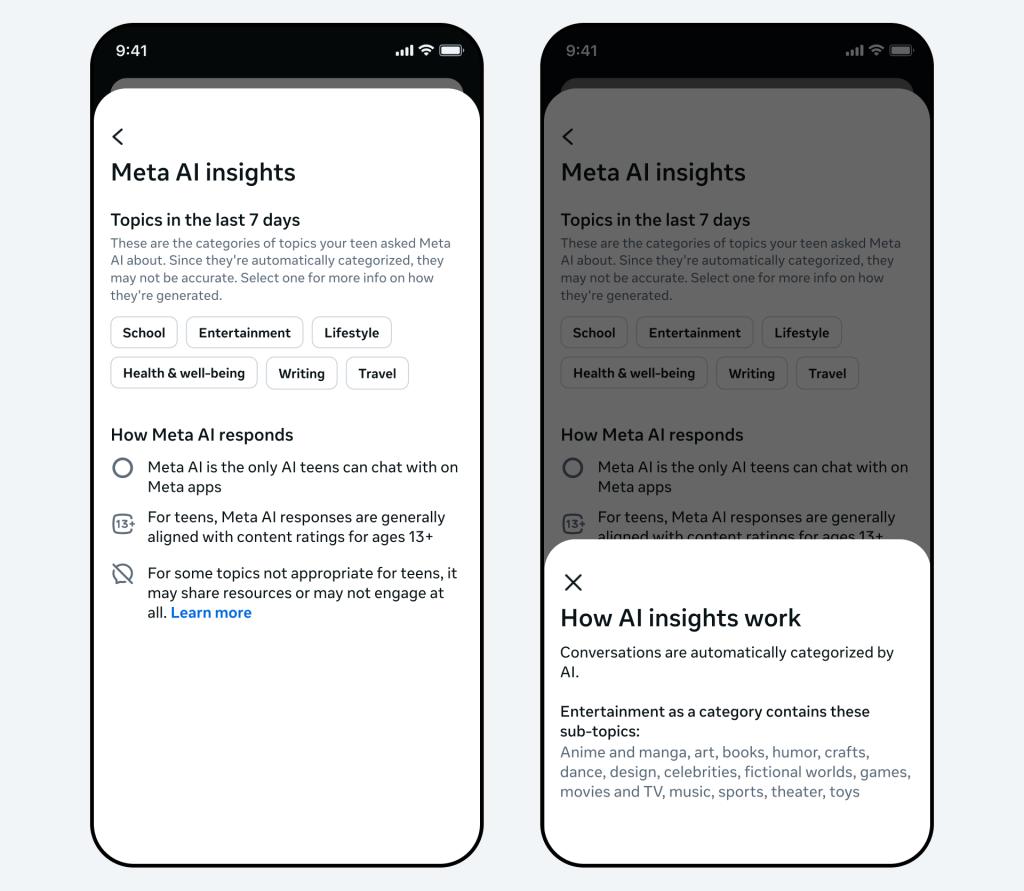
In a newly announced update, Meta will let parents see the topics their teens have discussed with its AI assistant over the past seven days – for teens using supervised accounts. The feature is available now in regions including the UK, US and several others, and sits inside a new Insights tab within parental supervision tools on Facebook, Instagram and Messenger.
The key detail lies in what parents can actually see. Rather than full chat logs, Meta is surfacing broad categories like School, Entertainment, Health and Wellbeing, or Lifestyle. Tap one, and you’ll get more granular sub-topics like fitness, fashion, or travel.
That means parents won’t be reading conversations word-for-word, but they will get a reasonably clear sense of what their teen is using AI for. Topics are shown within each individual app, rather than as one combined feed.
Meta says this is intentional. The company frames it as a balance between visibility and privacy – giving parents insight without exposing every message. Even if the AI refuses to answer something (for example, if it’s deemed inappropriate), the topic itself can still show up in the dashboard.
There’s also a more serious layer being worked on. Meta says it’s developing alerts for conversations related to suicide or self-harm, which would notify parents more directly if a teen tries to engage with those topics.
This builds on a wider push to make its AI tools feel safer for younger users. Meta says its assistant is inspired by 13+ film rating guidelines, meaning it may refuse certain queries or redirect users to support resources instead.
Alongside the tracking tools, Meta is also trying to shape how parents respond. It’s partnered with the Cyberbullying Research Center to create “conversation starters” – essentially prompts designed to help parents talk to teens about their AI use without turning it into an interrogation.
Whether this all feels like reassurance or overreach will depend on where you sit. For some, a weekly snapshot of AI topics might sound like a useful safety net. For others, it edges uncomfortably close to surveillance – even if the actual conversations stay hidden.


Read the full article here
