

Introduction
Small gimbal-mounted cameras have long been DJI’s territory: the Osmo Pocket series essentially invented the category as we know it. So when Insta360, best known for its Emmy-winning 360-degree cameras and excellent action cams, announced it was taking a run at the segment with the Luna Ultra, eyebrows were raised. Could a newcomer really shake things up?
The Luna Ultra costs $770 in the States and £649 in the UK, putting it notably above the entry-level DJI Osmo Pocket 4. A more direct comparison would be DJI’s forthcoming dual-lens Osmo Pocket 4P, which costs costs ¥3,799 in China (roughly £425/US$562 at current exchange rates) – suggesting the Luna Ultra could end up being the pricier option when the two finally go head-to-head.
For now the competition is academic – and will remain so in the US. DJI’s ongoing regulatory difficulties have effectively barred the company from launching new products in the American market, meaning the Luna Ultra is currently the only dual-lens gimbal camera US buyers can easily get their hands on.
But Insta360 hasn’t simply rushed something to market to fill a gap. Co-engineered with Leica, the company says the Luna Ultra is the most technically ambitious product the company has ever made. I’ve spent time shooting with it in a range of conditions. Here’s what I found.
Why Wall-E would approve of the Insta360 Luna Ultra’s design
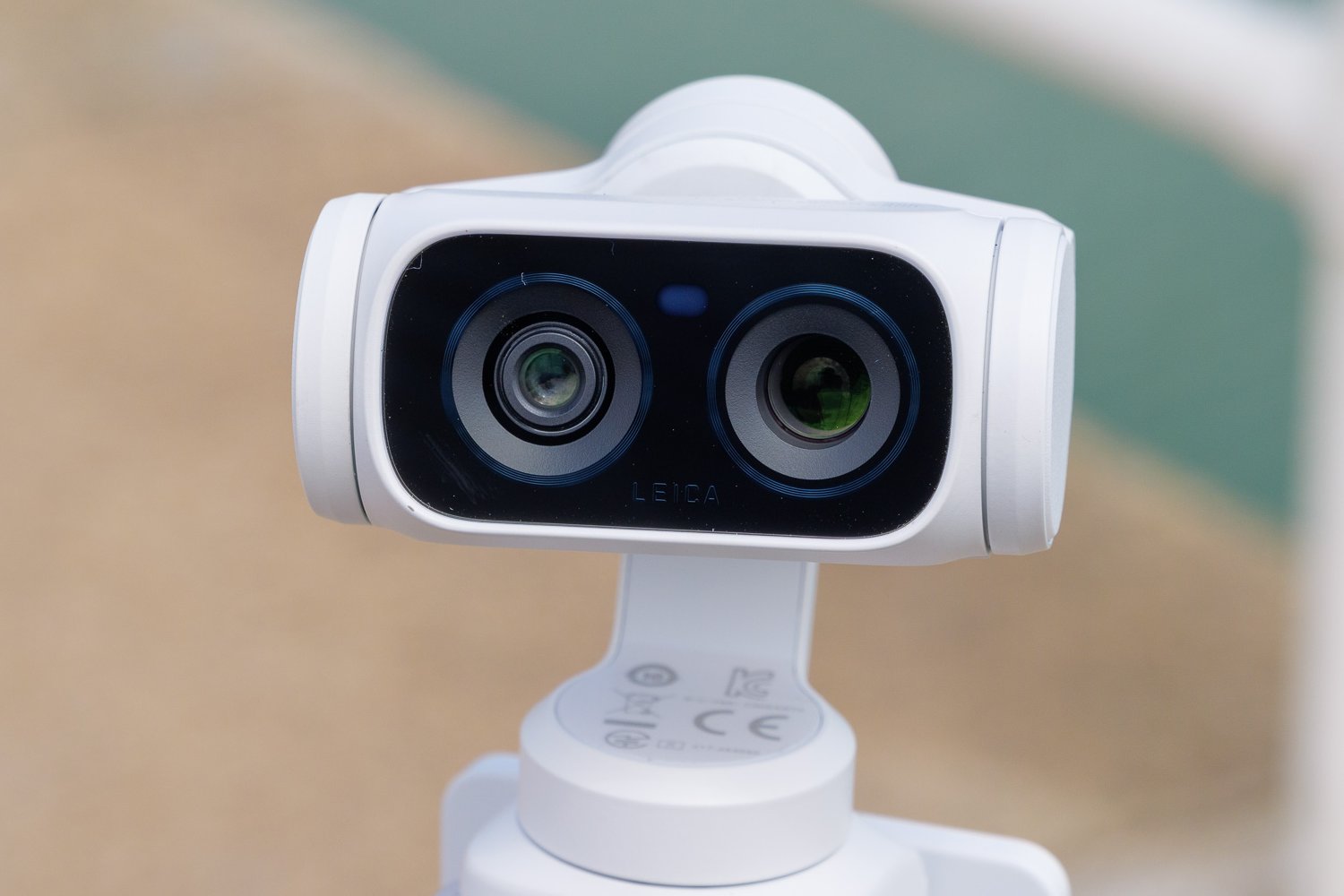
The Luna Ultra is a handsome thing. It’s compact, lightweight and feels good in your hand, with a build quality that inspires confidence. The dual-lens array on the front gives it a vaguely robotic character: think Wall-E, or perhaps Johnny 5 if you’re of a certain vintage.
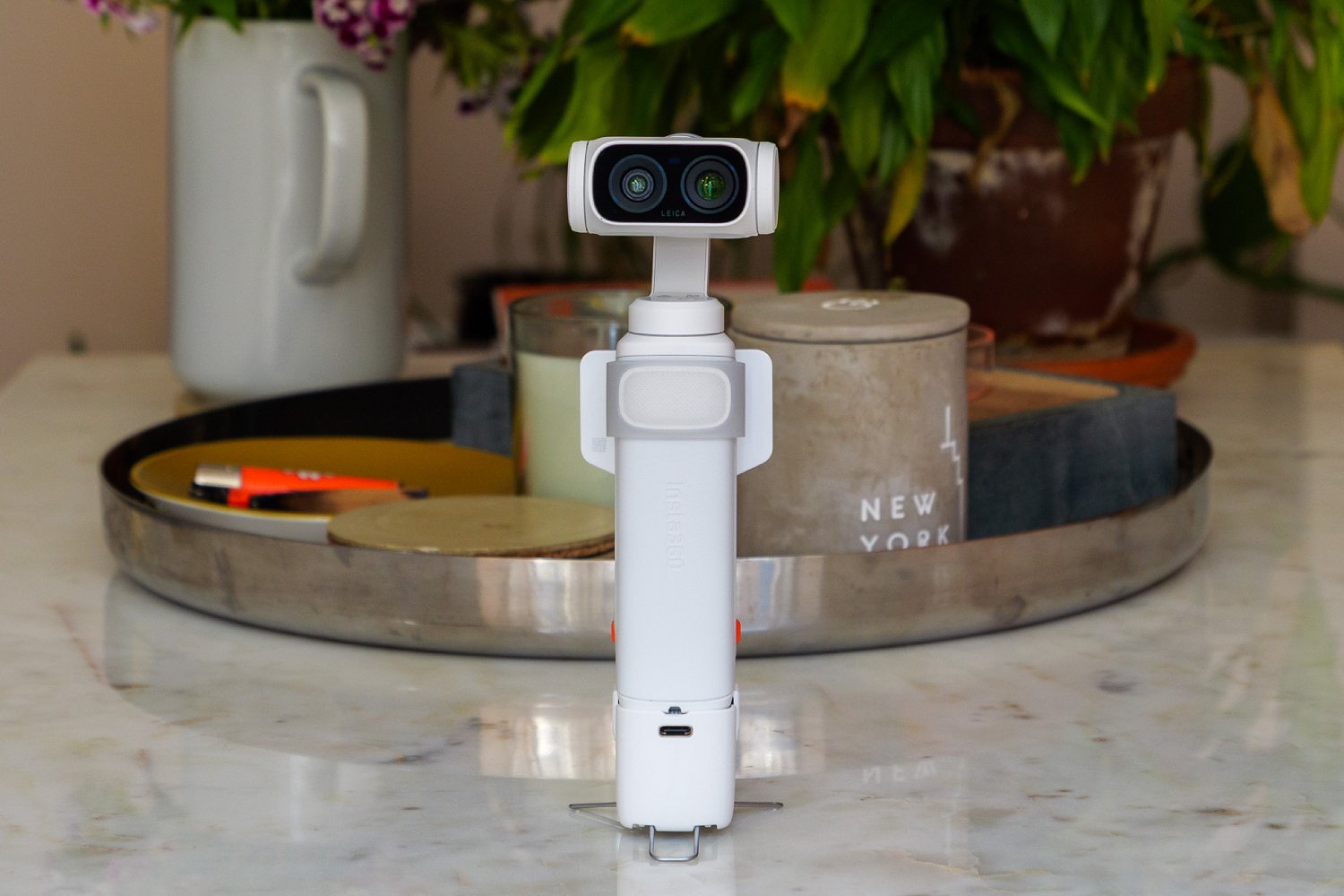
The handle is shorter than you might expect. I found myself more comfortable using it with one of the included handle extensions fitted. These are more useful than they might sound: each one features a pull-out wire stand that keeps the Luna Ultra upright on a flat surface – handy for vlogging or solo shooting – and both have a standard tripod mount for attaching a proper mini tripod when the terrain gets tricky. Notably, the camera body itself doesn’t have a tripod mount, so adding one of the extensions feels essential.
Powering on the camera is satisfying: a 90-degree flick of the 2-inch OLED touchscreen brings it to life, though you can also hold the record button for a couple of seconds if you’re boring. The screen itself is bright, sharp and responsive.
Practical touches abound. The microSD card slot sits just below a rubber flap – easy to access without tools or faff. The 47GB of built-in storage should get you started, but given 8K video’s appetite for space (at 120Mbps, that 47GB disappears faster than you’d like), a high-speed microSD is a sensible investment early on. The slot supports up to 1TB.
The Luna Ultra’s hardware party piece is its detachable screen, which pops off the camera body to function as a standalone wireless remote control, transmitting a live HD feed from up to 20m away. It’s a first in the category, and it works exactly as advertised: I was able to frame shots, control zoom and pan, adjust settings and trigger recording without needing to touch the camera.
Will most users detach it regularly? Probably not – I certainly didn’t. And it’s worth noting that Insta360’s own smartphone app replicates much of its functionality. But having a dedicated remote with its own screen and microphone is a handy option to have in the bag, particularly for solo creators who want to shoot from unusual angles. Calling it a gimmick feels unfair; it does what it says it does, and it does it well.
How easy is the Insta360 Luna Ultra to use?
Let’s deal with the areas where the Luna Ultra doesn’t fully satisfy before getting to the good bits. Operated via a thumb stick, the gimbal’s manual panning and tilting is a bit too jerky for my liking: not quite smooth enough for the kind of deliberate, cinematic camera moves you might want to pull off in a polished video. It also doesn’t spin a full 360 degrees, which limits certain creative angles.
In every other respect, the gimbal hardware is superb. When tracking subjects automatically, the movement is beautifully fluid – silky smooth in a way that manual control isn’t. And even at full zoom while shooting handheld, the combination of 3-axis mechanical stabilisation and electronic image stabilisation eliminates camera shake almost entirely. It’s genuinely impressive.
Deep Track 5.0, Insta360’s subject tracking system, is among the best I’ve tested. Point it at a face, a pet, a vehicle (or frankly anything you can tap on the touchscreen) and it grabs on like a limpet, re-acquiring the subject even when they duck briefly out of frame. The only slight limitation is, again, that lack of full 360-degree rotation. It’s a minor gripe, but worth knowing about.
Battery life is a highlight. Recording 8K 30fps continuously, my review sample managed 110 minutes before the low battery warning appeared, which is a strong result for a camera this size. Record in 4K and you’ll get even longer. Charging is rapid too, going from near-zero to approximately 80% in around 23 minutes when I used a fast charger.
One practical caveat: like a lot of cameras, the Luna Ultra gets rather warm during extended 8K recording. It didn’t shut down quickly, recording over an hour of footage before stopping to cool off in my endurance test, but it’s something to be aware of if you plan to run it flat-out for long stretches.
Does the Insta360 Luna Ultra have better image quality than DJI?
This is where the Luna Ultra really earns its premium pricing. Video quality from the 1in 8K sensor is stunning. 8K at 30fps is arguably overkill for most use cases, and the 30fps ceiling isn’t ideal for action footage, but the level of visual detail and colour rendition in the 10-bit footage is breathtaking for a camera of this size. It’s better than any smartphone footage I’ve seen, in fact.
More practically, 4K at 60fps (and up to 120fps if you need it) is excellent, and will be the sweet spot for most users. File sizes are far more manageable than 8K, and the image quality remains outstanding.
The default colour profiles – which include Leica-tuned Natural, Vivid and Chrome – are worth exploring. For those who prefer to work in post, I-Log capture preserves the maximum colour information for grading later, and there’s Dolby Vision HDR too.
PureVideo – Insta360’s AI-assisted low-light mode – is available up to 4K on the Luna Ultra, and the results are markedly better than on Insta360’s action and 360 cameras. In typical urban night conditions (streetlamps, ambient light from shops and traffic), the footage is sharp, clean and genuinely usable. Even in very low ambient light, the results are impressive enough to be worth keeping, even if they might not make the cut in a professional production.
Still photo quality is equally impressive. Selfies taken through the Leica lens are sharp, detailed and flattering – genuinely among the best I’ve seen from a dedicated compact camera.
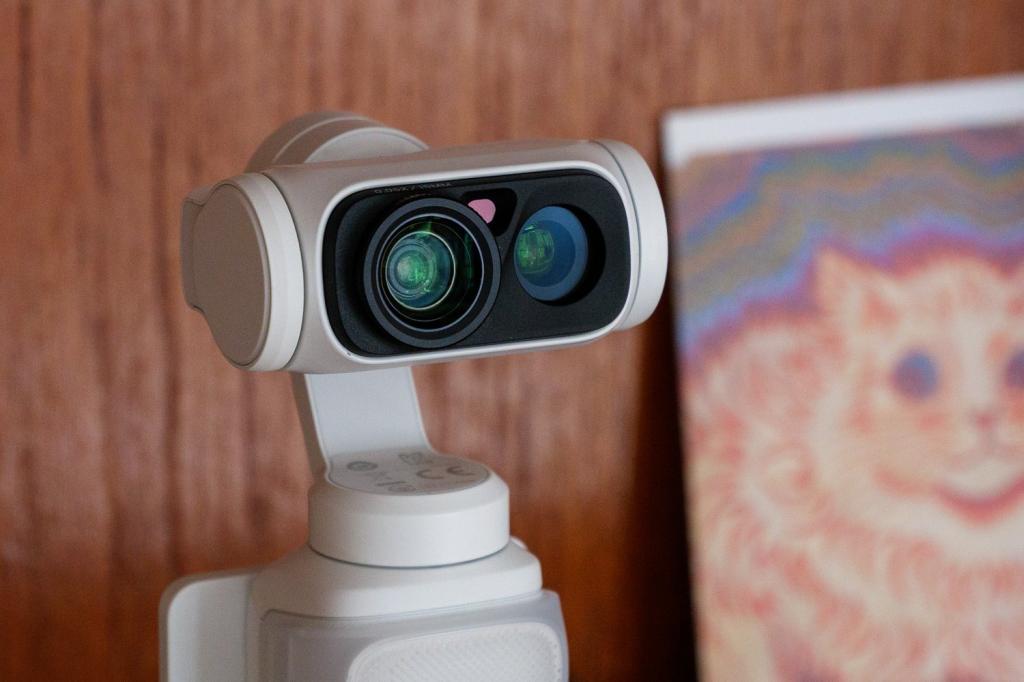
The zoom system, which works with both video and stills, is capable, offering up to 12x total magnification between the two lenses. The 6x lossless zoom is very usable, though you will notice the moment the camera switches between its two lenses – a brief but not quite seamless transition in video. Beyond 6x, digital zoom takes over, and quality drops noticeably at the extreme end, so I’d treat 12x as an emergency option rather than a primary tool.
I do need to flag a significant issue, however. I found the 200MP Scenic Panorama mode – one of the Luna Ultra’s headline photo features to be non-functional. Files captured in this mode appeared blank both in the Insta360 app and when transferred to my MacBook Air, indicating the problem is with the camera rather than the app. This is a notable omission at launch, and one that Insta360 will need to address via firmware update promptly.
The built-in microphones perform adequately indoors, but the Luna Ultra’s built-in wind guard isn’t up to the job in breezy outdoor conditions – wind noise creeps in and degrades the audio noticeably. For casual indoor shooting, the built-in array is fine. For anything outdoors, or any content where audio quality matters, I’d strongly recommend pairing it with an Insta360 Mic Pro.
The Mic Pro has a furry windshield and two levels of active noise cancellation to handle wind superbly, and the baseline audio quality is in a different league entirely. The Luna Ultra supports single and dual-transmitter Insta360 Mic setups natively. If you’re buying this camera for vlogging or content creation, the Creator Kit bundle – which includes the Mic Pro among other extras – is certainly worth the outlay.
Is the Insta360 Luna Ultra worth buying in 2026?
The gimbal camera category has been all DJI’s for years – but not anymore. The Luna Ultra makes a strong case that Insta360 is ready to compete with, and in some respects surpass, its entrenched competition.
Its core imaging performance is outstanding. The dual lenses produce beautiful results, the PureVideo night mode is excellent, and the detachable remote screen is a clever piece of hardware innovation. Battery life is better than expected, charging is fast, and Deep Track 5.0 subject tracking is among the finest around.
As with any first-gen product, there are imperfections: manual gimbal movement is a bit clunky, the built-in mics aren’t great outdoors, and the broken Scenic Panorama mode is a black mark. The Luna Ultra is also a lot pricier than a DJI Osmo Pocket 4 though the dual-lens system and superior resolution make that gap easier to justify.
But here’s the thing: if you want a dual-lens gimbal camera right now – especially if you’re in the US, where DJI’s new products aren’t available – the Luna Ultra is the only game in town. And it’s a very good game indeed.
What are the Insta360 Luna Ultra’s technical specifications?
Scroll to see more →
| Specifications | Insta360 Luna Ultra |
|---|---|
| Main sensor | 1-inch 8K, F1.8 (20mm equivalent) |
| Secondary sensor | 1/1.3-inch F2.0 (60mm equivalent) |
| Video recording | 8K 30fps, 4K 120fps, 1080p 240fps; 10-bit I-Log; Dolby Vision |
| Photos | 37MP UltraPhoto; 200MP Scenic Panorama |
| Zoom | Up to 12x (6x lossless) |
| Stabilisation | 3-axis mechanical + EIS |
| Screen | Detachable 2in OLED touchscreen |
| Storage | 47GB internal; microSD up to 1TB |
| Connectivity | USB-C, Wi-Fi 6, Bluetooth 5 |
| Dimensions | 52.4 x 169.9 x 38.5mm |
| Weight | 233g |


Read the full article here
