

Introduction
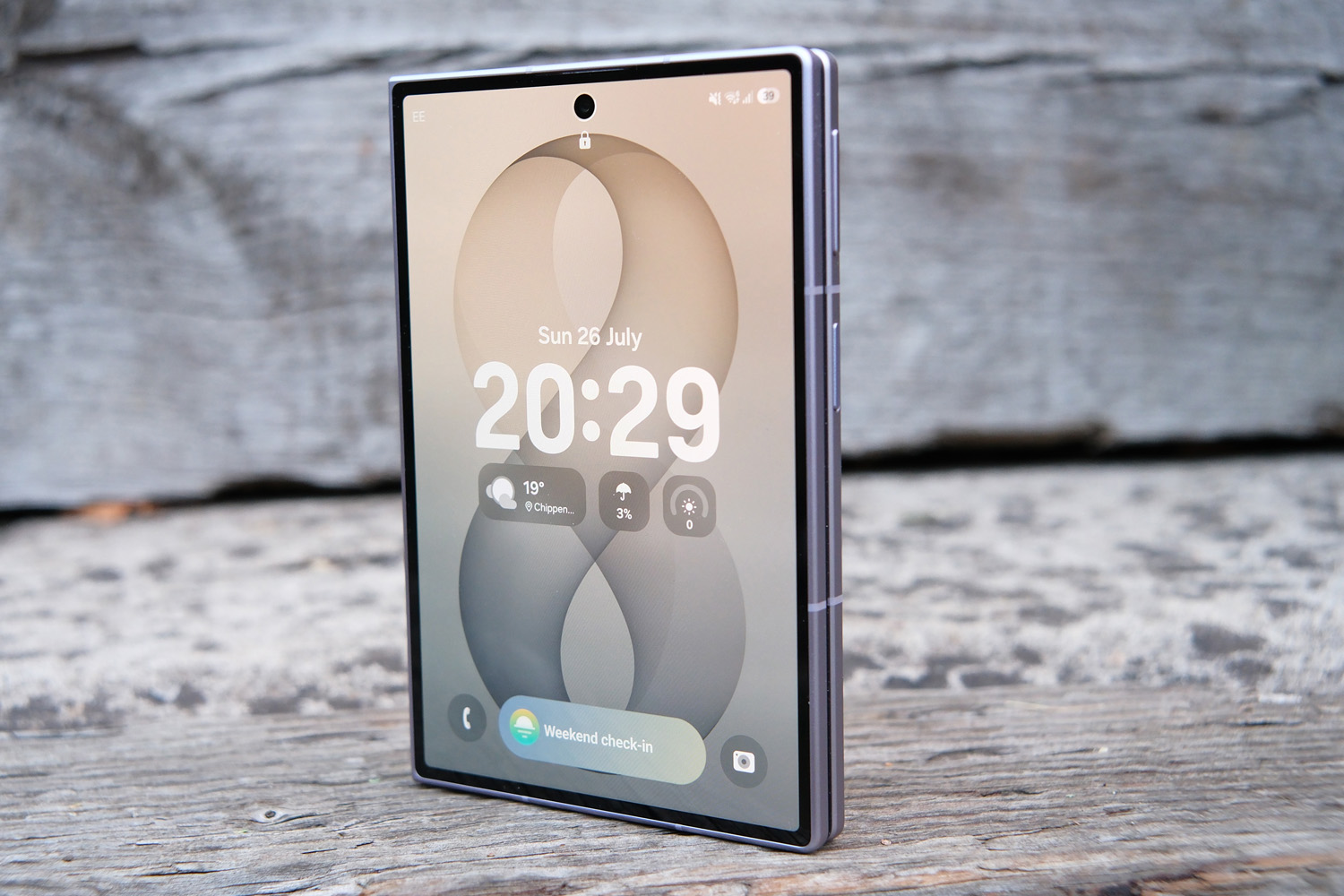
Partly a return to the small phones many tech fans thought had gone forever and partly a fresh take on the foldable form factor, the Galaxy Z Fold8 is arguably the most exciting new Samsung device in years.
Revealed alongside the more familiar Z Flip8 clamshell and renamed-but-still-skinny Z fold8 Ultra, the passport-sized Fold8’s shorter, wider shape is unlike anything else in the Western world right now. Open the diminutive 10:16 outer display and you’re met with a multimedia-friendly 4:3 flexible AMOLED. Underneath beats the heart of a true 2026 flagship, minus a few cut corners to help the Ultra maintain its place at the top of the pile.
It’s not the first of its kind: Huawei got there most recently with the China-exclusive Pura X Max and the long-rumoured foldable Apple iPhone looks set to be a very close match. But after living with the Fold8 for a week as my main smartphone, I’m convinced this new wide-style foldable breed is here to stay – even with a wince-inducing $1899/£1699 asking price.
To paraphrase Marty McFly, I guess you guys weren’t ready for the form factor pioneered by the original Google Pixel Fold and the Microsoft Surface Duo – but your kids are gonna love it.
What is the Galaxy Z Fold8’s shape like to live with?
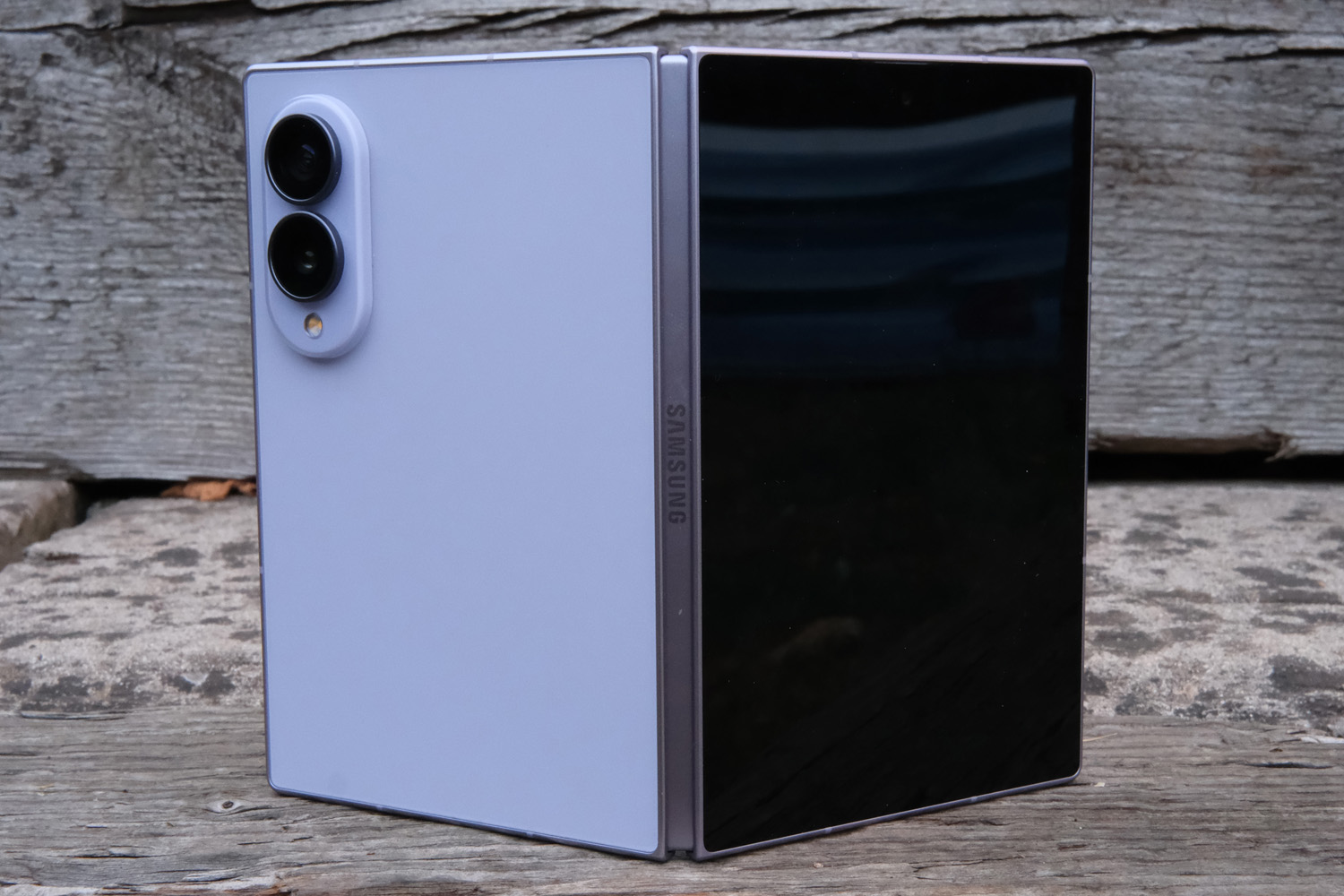
With dimensions that align almost perfectly to a passport, the Z Fold 8 feels unique among Western foldables. The 5.5in outer display’s unusual 10:16 aspect ratio is wide, but not awkwardly so; I could reach every corner while holding it one-handed. I thought I’d struggle with it being so much smaller than my normal phone, but apps don’t feel at all squeezed in like they did on the skinny Galaxy Z Fold7. The more limited vertical space just meant I spent more time scrolling than usual.
This is a properly pocketable phone when folded shut, its 9.7mm depth being very close to a non-folding flagship. While slightly thicker than the Z Fold8 Ultra, I couldn’t really tell by touch alone. It’s exceptionally light for a foldable at 201g, but also tough with Gorilla Glass Victus Ceramic 3 front glass and Gorilla Glass Victus 2 on the rear. Both have resisted all surface scratches since I took delivery.
IP48 water resistance is on par with the Z Fold8 Ultra and means accidental water dunkings aren’t a major concern, but rival foldables are better protected against dust ingress.
The Z Fold8 is rocking the same flat sides, same matte glass rear panel and same off-centre rear camera array as the Z Fold8 Ultra, except there are just two lenses here rather than the Ultra’s three. The sharper angles of the Z Fold7 return, rather than the curvier corners seen on some rivals. I think Samsung has kept the best colour option (Pistachio, a pale green) for itself this year – it’s only available through the firm’s web store. Graphite, Cream and my Lavender review unit are more widely available, but not quite as impactful.
The fingerprint-sensing power button is in its familiar place on the right side and just as speedy to recognise my digits as last year’s Fold7 was. Facial recognition is more basic, getting you past the lock screen but not able to authenticate banking apps.
Strong magnets hold the two halves of the phone firmly together while folded, but don’t need loads of force to open. The Flex Titanium hinge snaps open beyond a certain point, meaning you can’t use the Z Fold8 at narrower angles. Samsung has removed the laptop-like Flex Mode software functionality as a result, though I rarely used it on previous Folds and didn’t miss it here. The new hinge really helps minimise the screen crease, anyway; it’s one of the hardest to spot or feel of any folding phone I’ve tried.
Are the Galaxy Z Fold8’s screens suitably sharp?
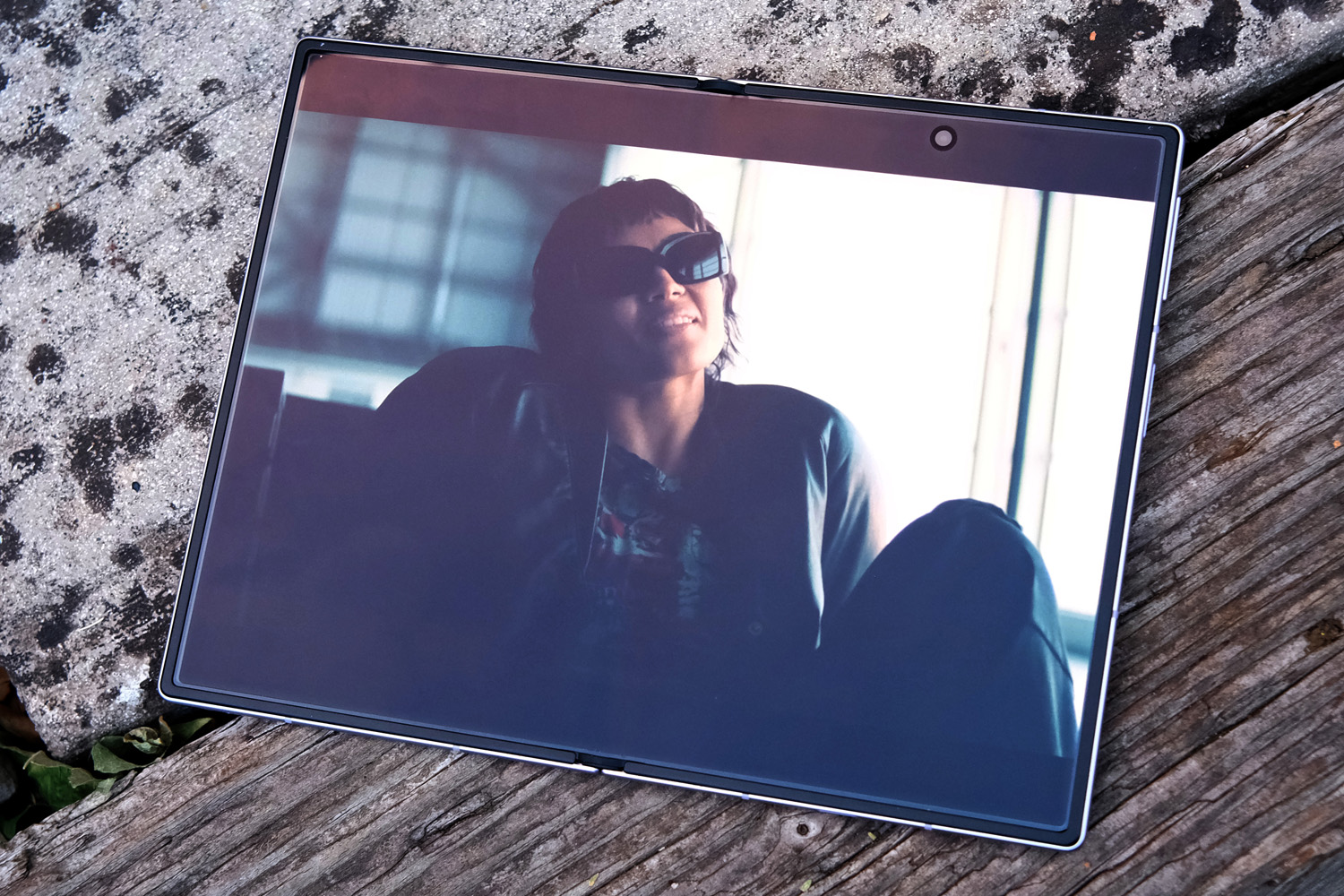
The Fold8’s tablet-like 7.6in inner display is a departure from the square-ish ones usually seen on book-style foldables. After living with the phone for a week, it’s a change I can absolutely get behind.
Hold it vertically and web browsing becomes a dream. It makes for a superb ebook reader. 16:9 video content is physically just a bit smaller than on the 8in Z Fold8 Ultra, but only just, and letterboxing is less pronounced. Apps feel so much roomier, and not at all cramped when opened side-by-side in split view. I love working on documents in portrait view, with the keyboard occupying the bottom half but leaving the app lots of room above. The split keyboard, which only shows up in portrait view by default, takes some getting used to though. I preferred to turn it off.
It helps that the panel itself is a stunner, with a 2448×1848 resolution that’s plenty sharp for the size and an adaptive 120Hz refresh rate that guarantees smooth scrolling. While the bezels aren’t as absurdly thin as some rivals, they gave me enough space to rest my fingers without blocking what was onscreen. Colours are deliciously vibrant and black levels are nigh-on perfect, giving real depth to photos and streaming video. Even better, it remained impressively usable outdoors on sunny days, thanks to a combination of 3000 nits peak brightness and an anti-reflective coating. It feels convincingly like glass, but does quickly pick up fingerprints.
Having the top and bottom speakers both on the left half of the phone does make audio feel a bit off-centre, but not distractingly so, and only when held horizontally. The speakers get decently loud and have a decent tonal balance for a phone, managing not to lean to far into high frequencies.
The 5.5in outer display is an exact match for colour and definition, with a 1972×1248 resolution that’s more than detailed enough and just as much brightness on tap.
Does the Galaxy Z Fold8’s software take advantage of the form factor?
Stick to the outer display and Samsung’s OneUI interface feels familiar enough – just with a slightly smaller font size from the factory in order to squeeze as much content onscreen as possible. It’s still perfectly legible so I never felt the need to increase it.
I do think Samsung should’ve tweaked the layout of the quick settings screen so you don’t need to scroll to see every shortcut, though. Instagram addicts won’t like the black bars around their stories and reels posts either – something that’s pretty unavoidable on a 10:16 screen when the rest of the phone world is closer to 21:9.
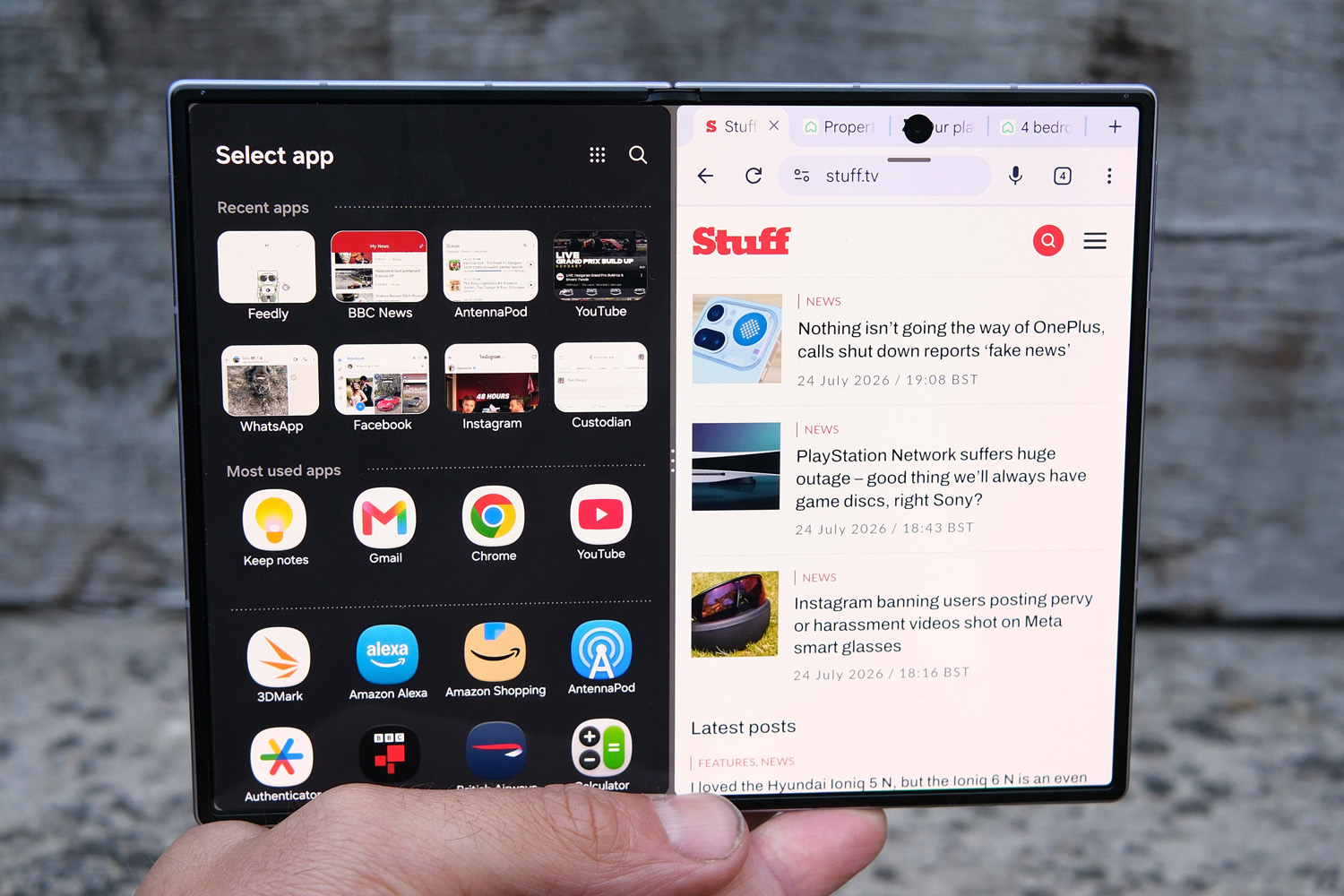
Open the Z Fold8 up and the homescreen usefully fills the extra space; you’ve got the option to have it mirror the outer display, or use a bespoke layout instead. A short swipe up from the bottom of the screen reveals the now-familiar app bar, which can be used to drag out app icons and open them in split view – either horizontally or vertically – or as a pop-up window. A two-finger swipe in from either side opens a more comprehensive menu that includes recently opened and your most-used apps.
I found it just as handy for two-app multitasking as the Ultra, just a bit more vertical scrolling involved. Being able to pin app pairs to the app bar or homescreen is fantastic. You can also pick any split up to 90:10, with the other app spilling off into virtual space. We’ve come a long way from the early days of book-style foldables, with Samsung now being on par with the best for app dual-wielding.
My only real complaints are more to do with Android’s handling of dual screens than anything Samsung has done. Apps don’t always re-render when switching between the inner and outer displays, either leaving you stuck with a mismatched layout or demanding that you restart the app entirely.
All the usual apps and features are present, including the latest iteration of Galaxy AI. That includes Generative image edits, automatic voice recording transcribing and foreign language translation, writing assistance and web page summaries, which are all of the standard I’ve come to expect from a modern Galaxy smartphone – which is to say up there with Google’s usefulness.
Now Nudge apparently had the biggest upgrade, being more context-aware and willing to suggest relevant apps to open in dual window – say Google Maps when a friend mentions directions in a text message. However I’ve yet to see it do its thing after a week of use, despite it being enabled and me using compatible (ie mainly Samsung) apps. If you use WhatsApp you’re out of luck right now.
Are the Galaxy Z Fold8’s chipset and battery class-leading?
With a Snapdragon 8 Elite Gen 5 for Galaxy chipset, 12GB of RAM and 256GB starting storage, I never had any doubt the Z Fold8 would feel suitably speedy in operation. All my daily driver apps and games ran smoothly, multitasking wasn’t ever an issue, and it could churn through image and video edits at the pace I’d expect of a modern flagship.
This meant I was largely able to leave the phone in its Light performance profile and not notice any dip in performance, while eking a little more juice from the battery between charges.
I’d like to say synthetic benchmarks backed this experience up, but Samsung had blocked most of my usual tests from running on review units ahead of launch. Even after the firm supplied a software fix, Geekbench 6 and Geekbench AI would hang after completing their runs and never provide a score. It also gets hot very quickly while under load.
Of the few tests I could run, browser benchmark Speedometer 3.1 produced an even higher score than the Galaxy S26 Ultra. 3DMark’s graphics benchmark was significantly lower, however. More demanding 3D titles from the Play Store still hit decent frame rates, but there are better choices if you want the best gaming performance from your phone.
| Samsung Galaxy Z Fold8 benchmark scores | |
| Speedometer 3.1 | 39.3 |
| 3DMark Wild Life Extreme | 5431 |
Samsung hasn’t pushed the envelope on battery capacity for a while now, so I was in two minds about the Z Fold8’s 4800mAh cell. While it’s usefully larger than the 4400mAh unit seen in the older, skinnier Z Fold7, it’s a step behind the Z Fold8 Ultra – and a long way off the foldable class leaders, which have now broken the 6000mAh barrier.
Capacity is one thing, but efficiency is another; on that front the Z Fold8 left me little to grumble about. After a day or two spent learning my usage habits, it settled down to the point I was making it to bedtime with between 30-40% remaining. A day of remote working spent mostly on 5G, with GPS navigation, Bluetooth music playback, some mobile hotspot tethering and YouTube video streaming on my train ride home at the end of the evening was a true stress test. While I was in the red by the time I reached my front door, my portable power bank had remained unused.
After a week of use, I’ve found myself either plugging in before I go to bed, or first thing in the morning when I wake up. That’ll feel like the norm for anyone yet to experience life with a huge battery phone from a Chinese brand like Oppo or Honor, but a step back for those that have.
Charging speeds are respectable rather than class leading, at 45W over USB-C and 25W wireless. Samsung also still insists on ‘supporting’ Qi2 magnetic wireless charging through optional cases, rather than baking the magnets into the phone itself like Google has done with the Pixel 10 Pro Fold.
Can the Galaxy Z Fold8’s rear cameras keep up with taller rivals?
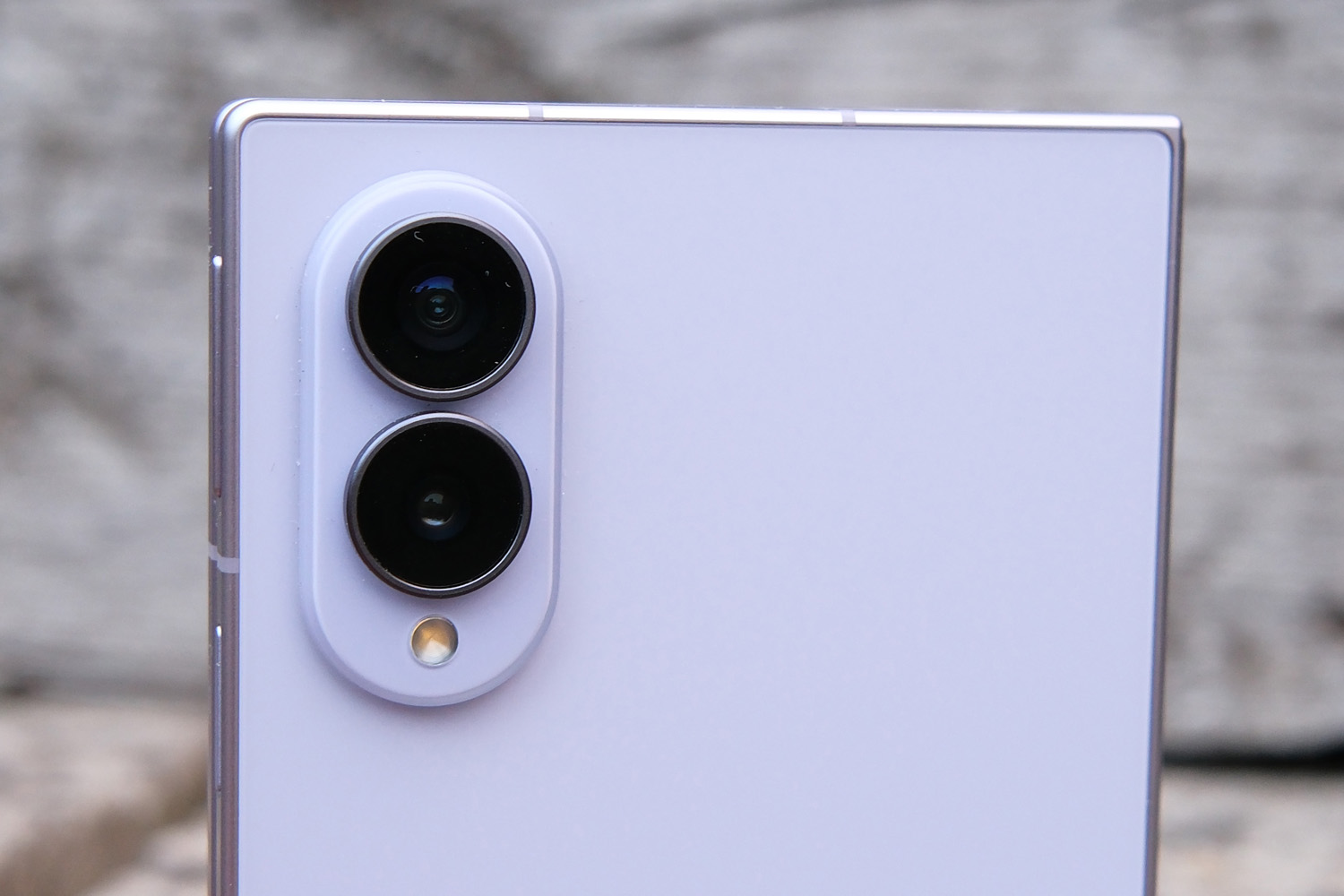
The Z Fold8 might be an all-new phone, but its four cameras – two rear, one front and one inner – are all known quantities. The 50MP lead snapper is identical to the one seen on the Z Flip7 clamshell and the 50MP ultrawide was last spotted on the Galaxy S26 Ultra. Each of the 10MP punch-hole webcams made appearances on the Z Fold7 last year, though the foldable form factor makes it so easy to use the main camera for selfies they’re really only ever required for video calls.
You don’t get a dedicated telephoto lens here – photography is one of the main areas where the Z Fold8 had to take a back seat so its bigger brother can justify the ‘Ultra’ label. That means the main sensor is on call for 2x cropped zoom, with digital magnification taking over beyond that. 4x is still usable for social sharing, but I’d steer clear of the mushy, over-processed 10x.
Samsung’s image processing algorithms have been given the customary annual behind-the-scenes tweak, with low light seemingly the main focus for 2026. Noise reduction and sharpening are well-judged, while detail levels are consistently high for close and middle-distance subjects. The Z Fold8 Ultra’s 200MP sensor has more pixels to work with and ultimately puts in the better performance.
In brighter conditions colours stay on the punchier side, as I’ve come to expect from Galaxy phones, with a satisfying amount of detail and even some natural depth blur for close-ups. Moving subjects aren’t the achilles’ heel they were on earlier Samsung handsets and the highly customisable colour filters give you plenty of in-camera control over your photos’ mood.
The ultrawide’s phase-detect autofocus system lets it double as a macro snapper. It’s a great match to the main sensor across colour, detail and contrast. Dynamic range is rather good across the board, though highlights are sometimes blown out in order to preserve shadow detail.
Nothing here is what I’d call class-leading, with the Oppo Find N6 able to better balance extreme highlights and shadows within the same scene. It’s still a good performer, but one that’s on par with traditional smartphones in the $800 range. If photography matters most, you’ll still want to head for a non-folding flagship.
Dual video recording, for capturing your live reactions using the selfie camera while filming the scene in front of you with the rear ones, is one of two new additions on the video side. My FanCam is the other: it’s essentially subject detection recording with smart pan and zoom, locking onto your subject and keeping them in frame without you having to constantly move the phone. Laptop webcams have been doing this for a while, but it’s still nice to have here.
Should you buy the Galaxy Z Fold8 in 2026?
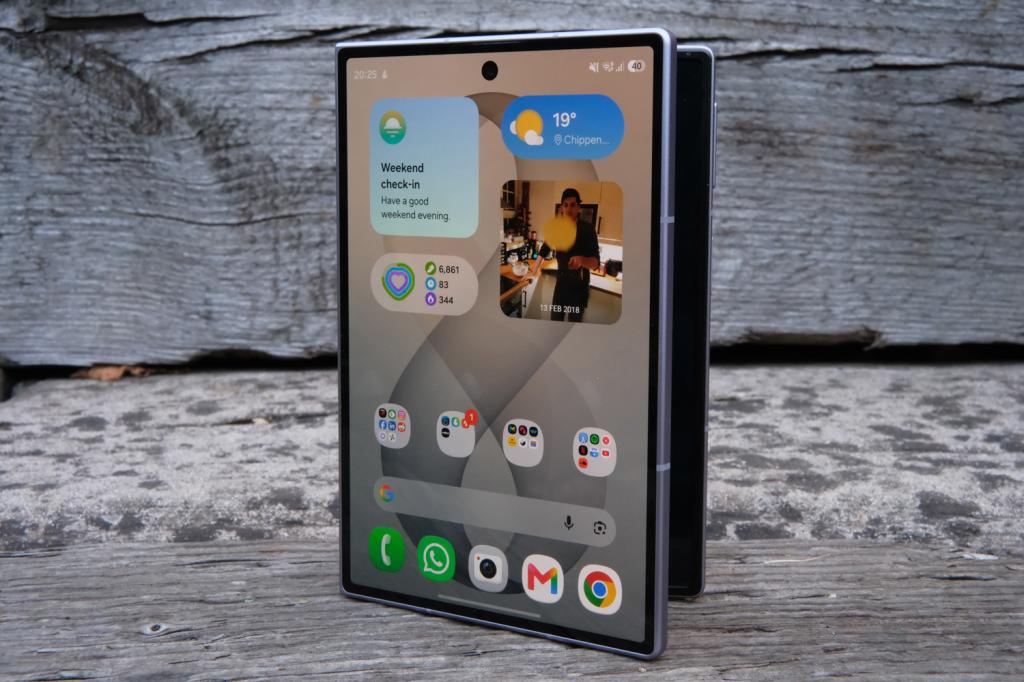
The Z Fold8 is a foldable that’s greater than the sum of its parts. This wonderfully compact handset is the ideal form factor for video playback, web browsing and reading. It’s no productivity slouch either, with slick gesture controls and ample performance for side-by-side multitasking. I’ve genuinely enjoyed my time testing it.
However, it’s also a compromise. It doesn’t have the best battery life or greatest cameras in the class, yet costs more than some of the taller, skinnier competition. The relatively small price gulf between it and the Z Fold8 Ultra don’t quite justify the lesser hardware here. The software still needs finessing too, mainly over Android yet to fully grasp how to smoothly hand over between screens. It’s something I expect the foldable iPhone to nail on the first attempt, given Apple’s tighter grasp over third-party iOS apps.
Right now, though, this is the only wide-style foldable on sale in the US and Europe. That automatically makes the Galaxy Z Fold8 the best in its niche, and it’ll probably stay that way until next year while the rest of the Android world catches up. If you can’t wait until then, you’ll be very happy with one of these in your pocket.
What are the Samsung Galaxy Z Fold 8’s technical specifications?
Scroll to see more →
| Specifications | Samsung Galaxy Z Fold8 |
|---|---|
| Screen | 5.5in, 1972×1248, 120Hz AMOLED (outer) / 7.6in, 2448×1828, 120Hz AMOLED (inner) |
| Chipset | Qualcomm Snapdragon 8 Elite Gen 5 for Galaxy |
| Memory | 12GB RAM |
| Cameras | 50MP + 50MP ultrawide rear. 10MP front. 10MP inner |
| Storage | 256GB/512GB/1TB on-board |
| Operating system | Android 17 w/ OneUI 9 |
| Battery | 4800mAh w/ 45W wired, 20W wireless charging |
| Dimensions | 82x124x9.7mm (folded) / 161x124x4.5mm (unfolded), 201g |


Read the full article here
