

Predictions about the smart homes of the future tend to age badly. We were supposed to have robot butlers, holographic TVs, and appliances that prepped and cooked dinner for us by now. Instead, many of us are still arguing with Alexa.
But your house in 2030 could look very different, with all manner of useful tech waiting to make your life that little bit easier. In fact, we’ve done our best to make some sensible (read: no hoverboards) predictions below, with the disclaimer that there are absolutely no guarantees. Don’t blame us when the second Tamagotchi uprising kicks off.
With that said, everything below should offer at least a relatively believable glimpse of how our homes could change before the decade is out. Enjoy!
1. Your kitchen worktop could become the hob
That large, unsightly black rectangle embedded in your kitchen counter could eventually disappear, thanks to invisible induction systems that place the cooking hardware underneath the worktop, allowing pans to be heated through the surface.
InvisaCook already sells systems designed to work beneath compatible porcelain or ceramic worktops – the induction units are hidden underneath, while their controls can be fitted to the counter, a nearby backsplash, or inside a drawer.
Once you’ve finished cooking and the surface has cooled, there’s no permanent hob occupying part of the kitchen. An island can be used for preparing food, cooking, eating, and working without being divided into separate zones. You also get the wonderfully futuristic experience of placing a pan on an apparently ordinary slab of stone and watching its contents start to bubble. Neat.
You need an approved worktop, compatible cookware, and professional installation, none of which come cheap. But this isn’t a lab experiment – you can install it in your smart home right now if you’ve got the means to do so. As for the rest of us peasants? We’ll catch up in a few decades.
2. Your toilet could become a health laboratory
Your toilet already receives a regular… er… stream of potentially useful information about your health, all of which is currently flushed away.
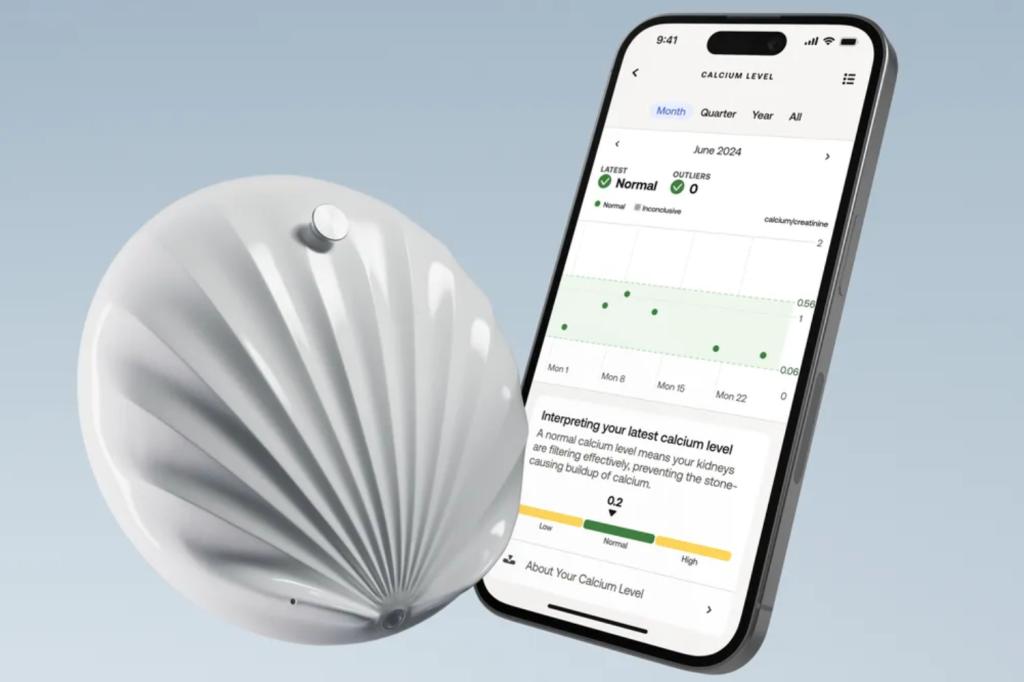
We say currently, because there are ever-growing exceptions, like the Withings U-Scan – a small device that sits inside the bowl and performs chemical analysis of urine. Results are delivered through the Withings app, while replaceable cartridges determine which biomarkers it measures.
Withings currently sells two versions in the UK. U-Scan Nutrio measures hydration, vitamin C, and ketone levels, while U-Scan Calci monitors calcium, hydration, and urine acidity to provide information related to kidney-stone risk.
That’s considerably narrower than a toilet capable of diagnosing diseases, and the results aren’t a replacement for professional medical tests. But bathroom fixtures could eventually help people follow long-term changes in their health without needing to remember to perform a separate test.
There are obvious privacy questions when some of your most personal data is being collected in the bathroom, and there’s also the prospect of subscriptions and replacement cartridges turning another household object into an ongoing smart home expense. But a toilet that monitors the more unsightly aspects of your health without much fuss could prove to be an invaluable tool indeed.
3. One room could physically split into three
Transforming tech is nothing new, but how about transforming rooms? With space at a premium, particularly in cities, robotic interiors could let a single room serve as a bedroom, living room, and home office, without cramming all the required furniture in at once.
Ori, whose technology grew out of research at the MIT Media Lab, makes motorised interiors designed to help small apartments perform several jobs. Its systems can incorporate a bed, desk, wardrobe, storage, and entertainment unit into structures that move at the press of a button.
A bed can disappear when you wake up, creating space for a living room or home office, while a storage wall can slide aside to reveal a walk-in wardrobe. Instead of rearranging several pieces of folding furniture by hand, the architecture changes around you.
Ori says that it’s installed more than 2000 systems in over 1750 apartments across 64 US cities. It currently works with property developers rather than offering one-off installations to homeowners, making new apartment buildings and converted hotels the most likely route to wider adoption.
As urban smart homes become smaller, rooms that physically reconfigure themselves could stop feeling extravagant and start feeling necessary. You’ll just have to hope your bed never suffers the architectural equivalent of a blue screen of death.
4. Your walls could be printed by a robot
While an enormous printer probably won’t arrive one morning and produce an entire finished house before lunch. It might, however, have time to print most of its walls.
Construction technology company ICON completed Wolf Ranch, a community of 100 3D-printed homes in Georgetown, Texas, in 2025. Its Vulcan printing system deposited repeated layers of a proprietary concrete-like material called Lavacrete to form the houses’ walls.
The foundations, roofs, wiring, plumbing, windows, and finishing work still require conventional construction, so “3D-printed house” makes the process sound more comprehensive than it is. Even so, the result is striking.
The printer can produce curves and unusual shapes without assembling hundreds of individual blocks, and its repeated layers leave visible horizontal ridges, giving the completed homes a distinctive appearance.
Large-scale printing could reduce waste and automate one of the most repetitive stages of construction, although it doesn’t magically remove the cost of land, utilities, labour, and everything installed inside the shell. By 2030, you probably won’t download a house from the internet, but more people could live between walls laid down by a robot.
5. The TV could disappear
For all their improvements, televisions still become enormous black rectangles when they’re switched off. LG has tried to solve that by making the screen transparent.
The 77in LG Signature OLED T can display an image while allowing you to see through the panel. A retractable black backing rises when you want it to behave more like a conventional OLED television.
Crucially, it even made the jump from trade-show prototype to commercial product. LG launched it in the US at the end of 2024 for an absurd $59,999, and it’s now listed in the UK as well.
Modular MicroLED systems like Samsung’s The Wall offer another possibility, turning a substantial section of a room into a made-to-measure display. Both technologies remain ruinously expensive, but by 2030, high-end homes could contain surfaces that switch between screen, artwork, and architecture.
6. Household robots could finally grow arms
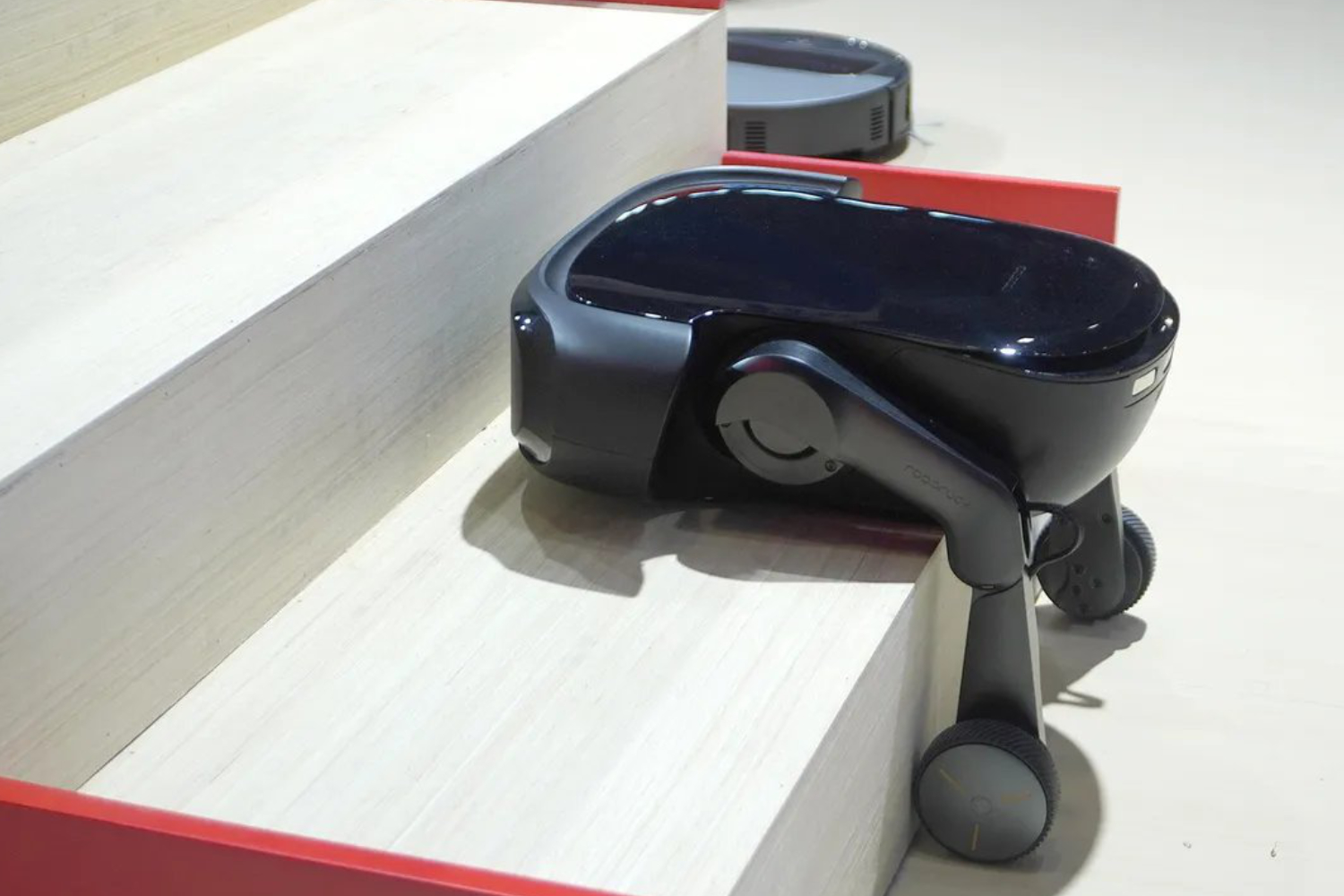
Robot vacuum cleaners have become impressively capable, but their lack of arms creates a fairly obvious restriction –they can clean around your abandoned socks, but they can’t pick them up.
The Roborock Saros Z70 is a robot vacuum with a folding mechanical arm that wants to fix this. It’s designed to recognise lightweight objects such as socks, tissues and small towels, before moving them out of the way to properly clean the floor.
Elsewhere, LG’s CLOiD has two arms and five-fingered hands, and is capable of retrieving food, operating appliances, loading a towel into a washing machine, and folding laundry. SwitchBot’s wheeled Onero H1 is also being developed to handle multiple household jobs.
Neither has a confirmed consumer price or release date, and performing a prepared demonstration is very different from surviving the chaos of a family home. Naturally, any robot navigating your home using cameras and microphones also brings obvious privacy and security concerns.
But ultimately, 2030 doesn’t need to deliver a flawless smart home or android butler. A robot that can pick up clutter, climb stairs, or operate appliances would already represent a substantial leap beyond today’s robot vacuums. Quite frankly, we’ll take it.


Read the full article here
