




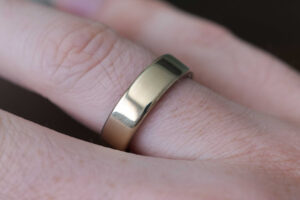


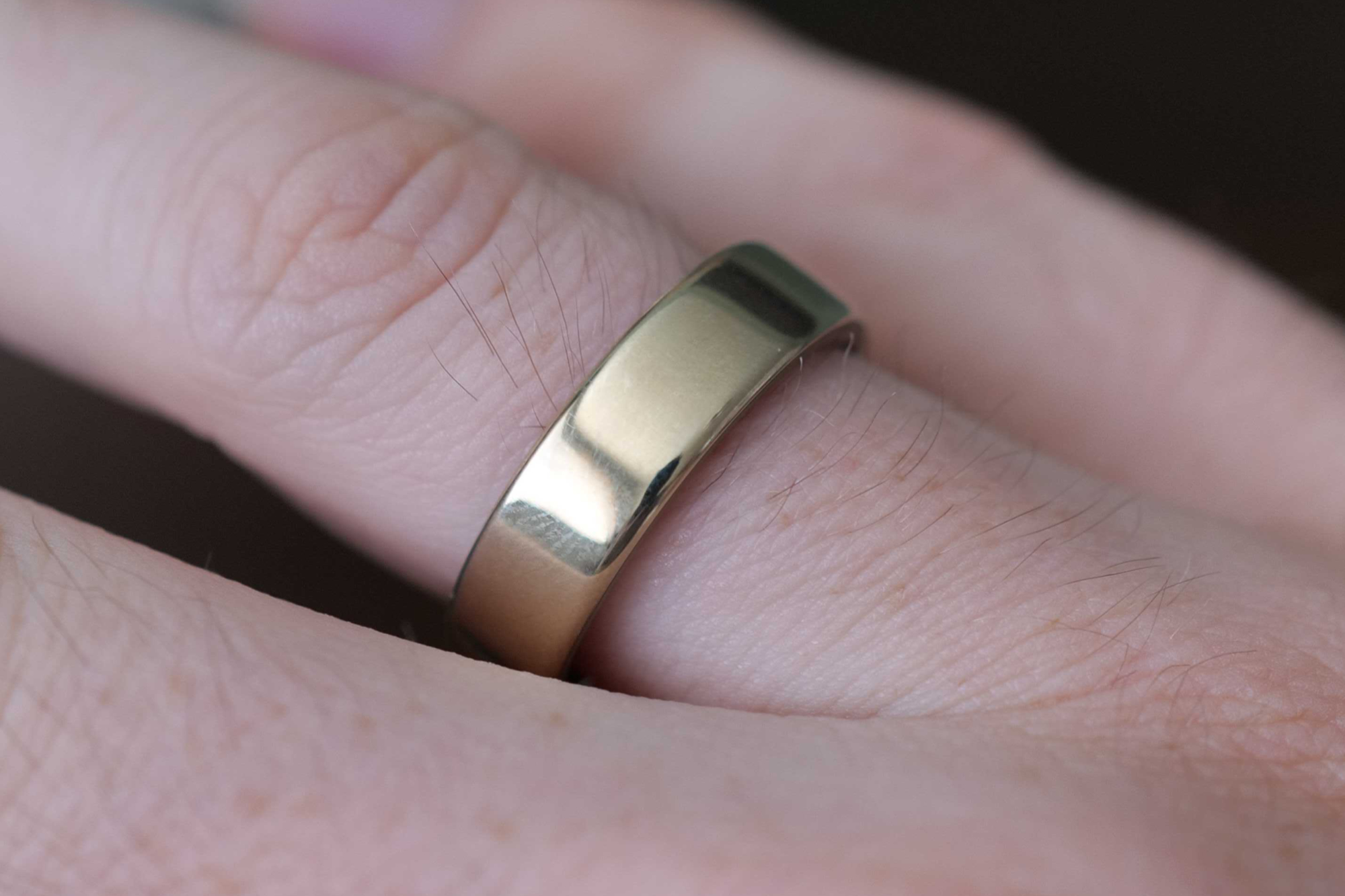
I’ve worn a fair few of the best smart rings over the past couple of years, and almost all of them have shared the same problem: they look like smart rings. Chunky, slightly clinical, and weird enough to make people ask “what’s that on your finger?” The new Oura Ring 5 is the first smart ring that actually looks like a piece of jewellery.
After a month of wearing it day and night, I’m convinced this is the smart ring’s iPhone moment – the point when a product reshapes what users expect by default.
So, should you buy one? Here’s my full review of the Oura Ring 5…
Finally, a smart ring that feels like a ring
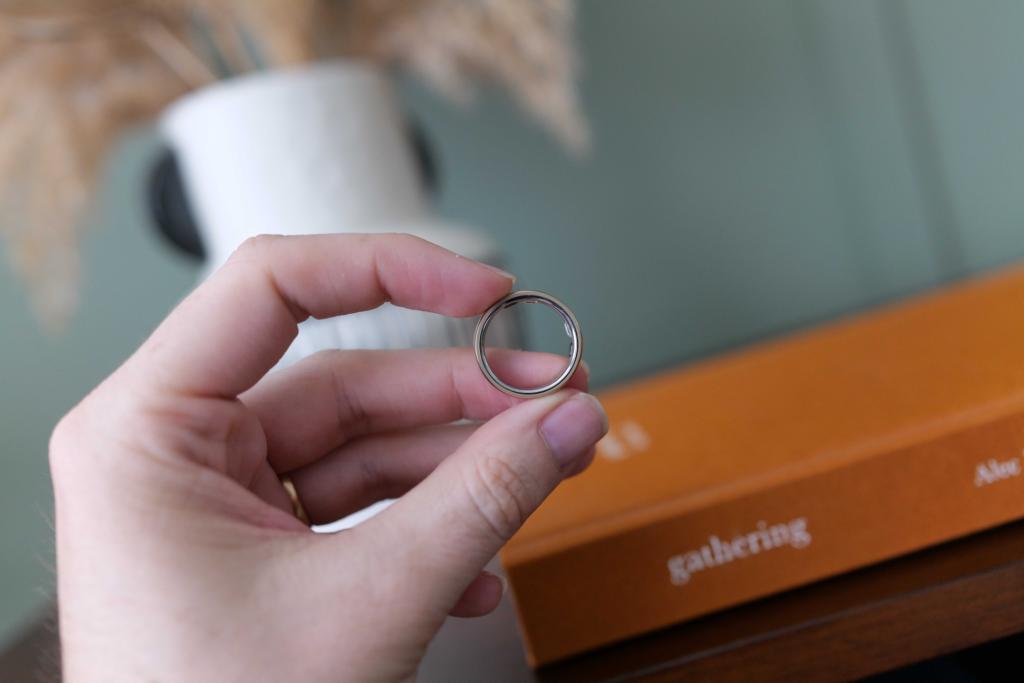
The size is the headline here, and rightly so. Oura says the Oura Ring 5 is 40 percent smaller than its predecessor, and on the finger that’s not a subtle difference.
I’ve previously tested the Ultrahuman Air, which made a big deal of being the smallest smart ring around, and the Oura Ring 5 makes it look chunky by comparison.
For anyone with smaller fingers, this is a really important point. Every smart ring I’d worn before this one drew a comment from someone (usually about resembling Tony Soprano or Mr. T). The Oura Ring 5 hasn’t drawn a single one. It just looks like a ring. A nice one, at that.

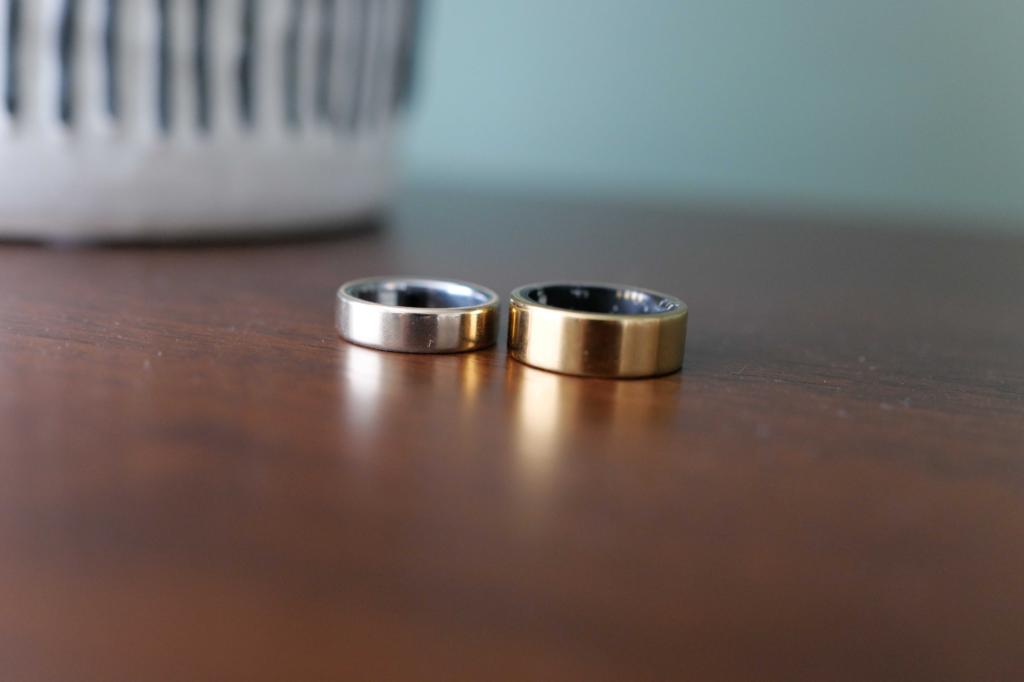
Comfort follows naturally from the size. There’s no point where I’ve been aware I’m wearing a piece of tech rather than jewellery, even after sleeping in it every night for a month. The titanium construction keeps it light, and Oura’s worked hard on the curvature so there are no sharp edges or pressure points digging in after long day at the keyboard (it’s a tough life).
A word on finish, too: I went for the redesigned Gold option, and it’s the first “gold” smart ring I’ve tried that doesn’t look like it’s been dipped in a fake metallic spray paint. Other rings I’ve tested in this colourway lean far too yellow and synthetic. Oura’s take is more neutral and restrained, closer to how actual gold jewellery looks under normal light. It looks more expensive as a result.

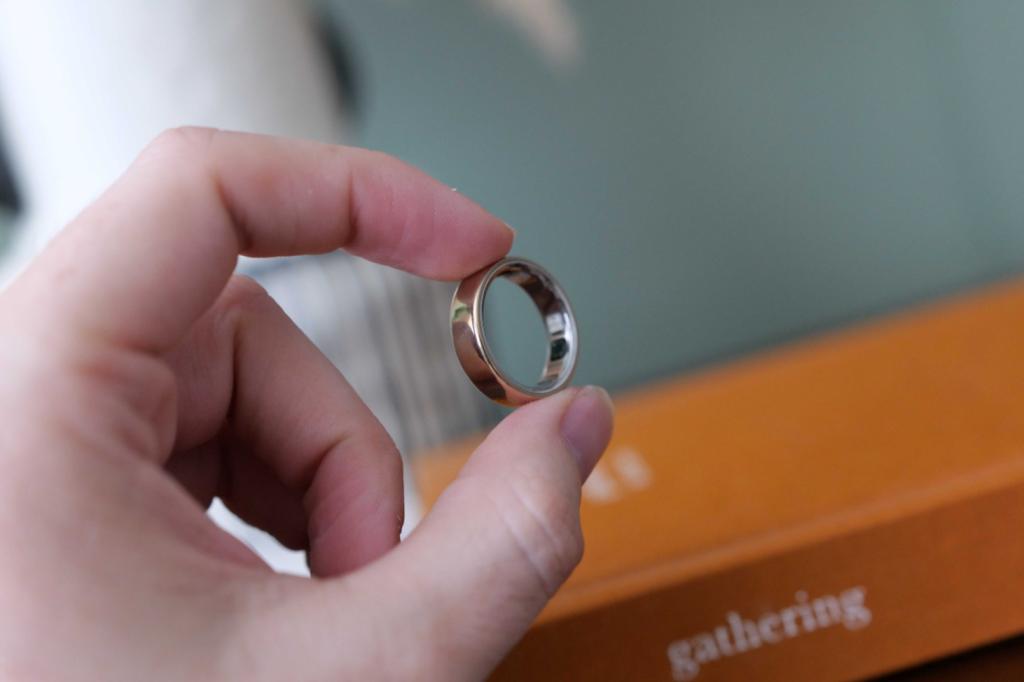
It also feels built to last. The titanium shell is more scratch-resistant than previous Oura generations, and the dust and water resistance rating of up to 100 metres means I haven’t thought twice about wearing it in the shower, the pool, or doing the dishes.
The sensors are working overtime
Smaller usually means compromised when it comes to tech (just look at the iPhone Air), but that’s not the story here. Oura has redesigned the internals from the ground up – new sensor domes, stronger LEDs, and a reworked set of signal pathways, and the result is actually more accurate tracking.
Most importantly, it matched how I was actually feeling.
On the mornings I woke up groggy after a rough night, the readiness score reflected that. On the days I felt sharp and rested, the numbers also agreed.
I know that sounds like a low bar, but if you’ve used a wearable that confidently tells you you’ve had a great night’s sleep, when you feel like you got hit by a bus, you’ll know important a good correlation is.

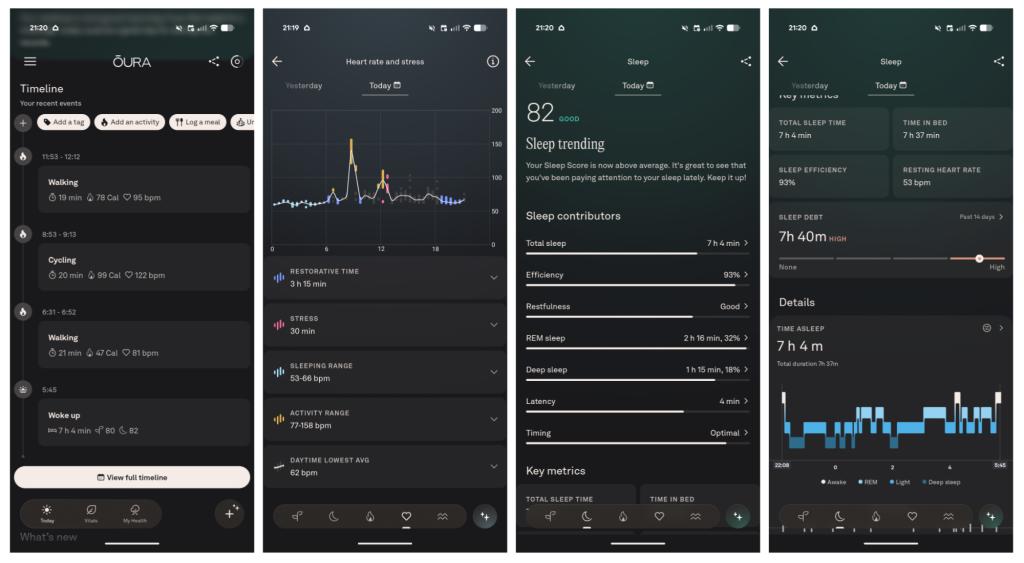
Automatic activity detection has been similarly impressive. The ring picked up every workout I did without me having to manually start anything, and, more usefully, it consistently picked up naps too.
It’s generally just very reliable.
An app for the data nerds, and everyone else
Oura’s app does a good job of serving two very different audiences at once. Open it up and you get clean, glanceable scores for readiness, sleep, activity and stress – simple enough for anyone to understand with a quick glance.
But if you want to go further, the depth is there too, with detailed breakdowns of everything from heart rate variability to nighttime breathing patterns.
My one gripe is navigation. More than once I’ve found a useful chart or insight, then completely failed to find my way back to it later. It’s not a dealbreaker, and I suspect it’s the kind of thing that becomes second nature with more time in the app, but it’s worth flagging for anyone expecting everything straight forward from day one.
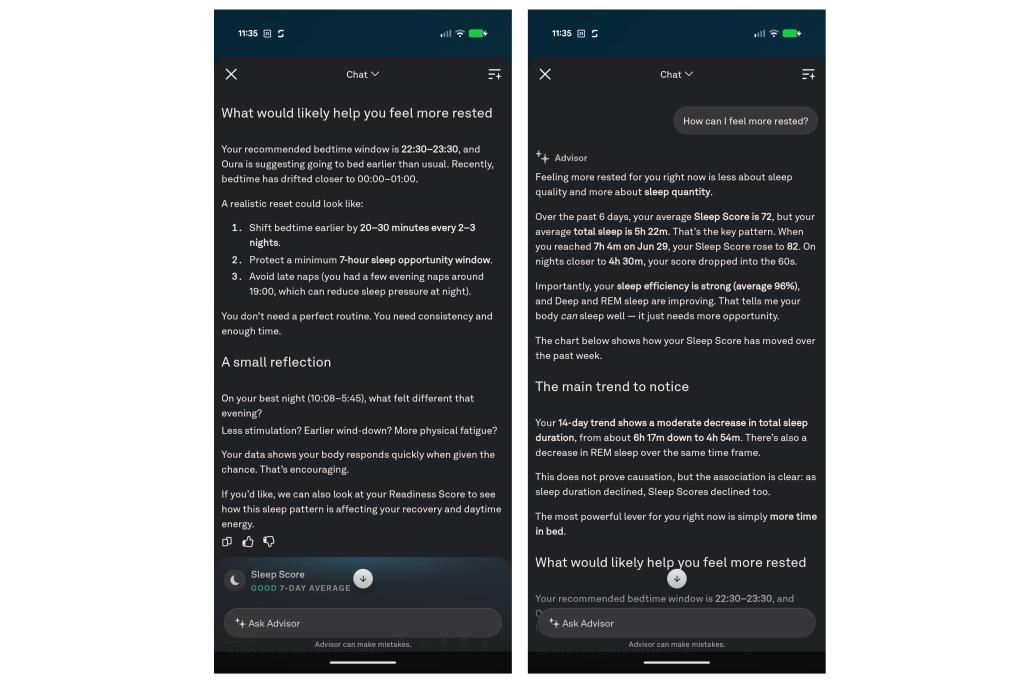
Oura has also added an AI assistant “Advisor” into the mix, and I’ve found it a genuinely useful addition. One nice touch: wherever you are in the app, you can tap the AI button and ask it to explain whatever data you’re looking at, or how you might improve it, rather than having to back out and find a separate section.
I asked it how I could improve my sleep, and rather than a generic wellness advice, it gave me specific, actionable steps based on my own data (go to sleep 30 minutes earlier and stop my evening nap).
Cycle tracking and birth control insights
My wife has been testing the ring alongside me, focusing on the cycle tracking and birth control insights, and her experience has been just as positive as mine.
The women’s health tracking is a key part of the Oura ring experience, and you can tell this is an area the brand has really focused on.
She’s found inputting her data into the app straightforward, with a good range of options to choose from during setup.
The one gap: the way she takes the contraceptive pill is a more experimental, off-label approach, and it isn’t listed as one of the preset options, so she’s had to work around that.
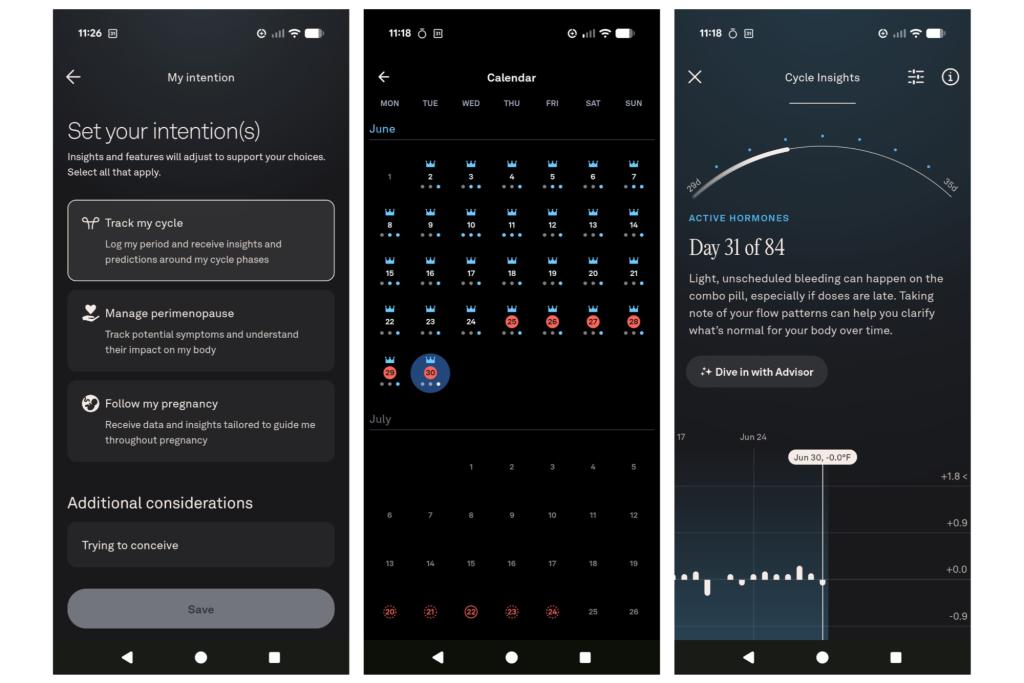
There is one moment that stood out – the ring picked up on her coming down with a cold before she felt it properly hit her. Illness detection isn’t new to Oura, but seeing it work so perfectly was a good reminder that the underlying tracking is doing more than just counting steps.
A week of battery
Despite shrinking the physical size of the ring, battery life is genuinely excellent. Oura quotes six to nine days depending on ring size and usage, and in my experience that’s held up – I’ve comfortably gotten a full week (seven days) between charges, with quick top-ups when I do need them.
For something this small, I was really blown away, and it means the ring rarely interrupts your routine or and doesn’t have frequent breaks in tracking data.
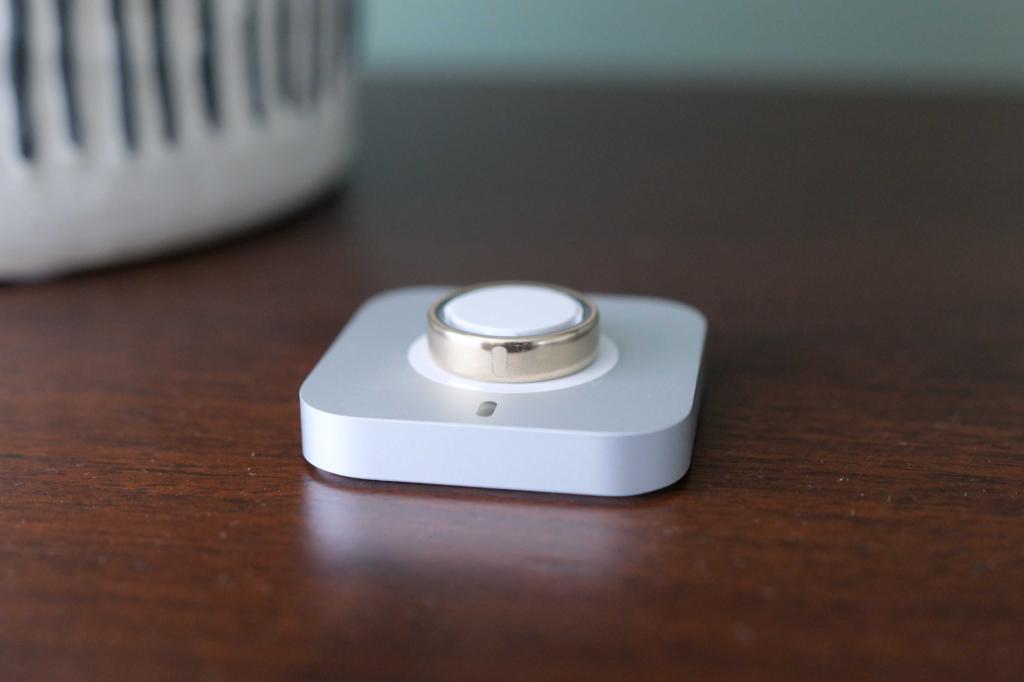
Where it gets more complicated is the Charging Case. It’s a neat accessory – a compact aluminium case that can store up to a month’s worth of charges for travel, but it’s sold separately, at $99 / £99 on top of the ring itself.
Ultrahuman, by contrast, bundles an equivalent case in with its new Ring Pro. If you travel a lot, that’s an extra cost to factor in before you’ve even thought about the subscription (more on that shortly).
Oura Ring 5 price…
Here’s where my enthusiasm runs into a wall. The Oura Ring 5 costs $399 / £399 for the base finishes or $499 / £499 for the premium colours (including the Gold I’ve been wearing). That’s already a significant outlay. Then comes the $5.99 / £5.99 a month membership fee on top.
Technically, the ring works without a subscription. In practice, what you’re left with is three basic scores – readiness, sleep, and activity – and nothing else. No trends or deeper insight, none of the context that makes those scores actually meaningful. It basically makes the subscription a requirement, rather than an optional extra.
Ultrahuman, for comparison, charges no ongoing subscription at all.
Add in the optional Charging Case, and the total cost of owning the “complete” Oura Ring 5 experience climbs well past what the initial price suggests.
Not everyone gets the full experience
There’s one more catch worth knowing about before you buy: not all of the new software features are available everywhere.
Headline features like Health Radar’s blood pressure signals and nighttime breathing insights are launching first in the US, India, and the UAE, with no confirmed timeline for wider markets.
The same goes for the new AI-enabled care partnership.

If you’re buying in the UK or elsewhere outside that initial list, you’re paying the same price for a ring that, for now, does less than the one a US customer gets out of the box.
Oura Ring 5 verdict
Caveats aside, this is, without doubt, the best smart ring on the market right now. The size alone makes it a different category of product to anything that came before it, and the accuracy, comfort, and software experience back that up.
The AI features and women’s health insights add genuine value, too.
But Oura is asking a lot for the privilege. Between the upfront cost and the subscription that locks away most of the useful data (and an accessory that should arguably be included), this is a a premium product.
Still, after wearing the Oura Ring 5 for a month, I’m sold, and I won’t be taking it off any time soon.
Oura Ring 5 specs
Scroll to see more →
| Specifications | Oura Ring 5 |
|---|---|
| Materials | Titanium (black, silver, brushed silver, stealth, gold, rose gold) |
| Sensors | Digital skin temperature, heart rate, blood oxygen LED, accelerometer |
| Connectivity | Bluetooth low energy |
| Battery | 6 to 9 days per full charge |
| Thickness | 2.28 mm |
| Weight | 2 – 2.69 g |
Liked this? Can a smart ring really replace a fitness tracker? I tried one for a month to find out




Read the full article here


