

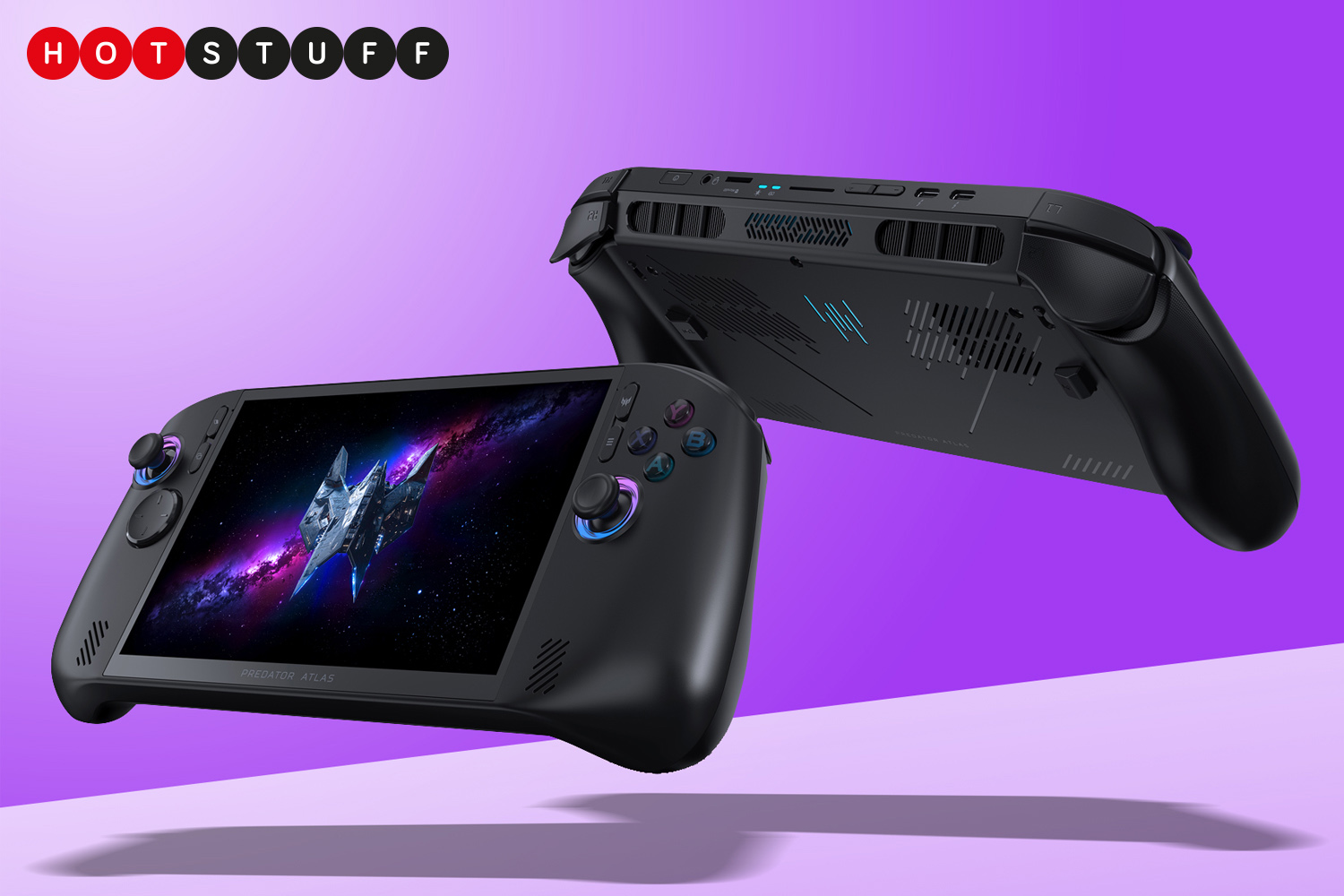
Intel has just pulled back the curtain on all-new hardware aimed exclusively at powering a new generation of Windows-based gaming handhelds – and Acer is aiming to be first into the breach with the Predator Atlas 8.
Officially revealed ahead of the Computex trade show in Taiwan, an Intel Arc G3 processor will be the beating heart of the new device, which has a high refresh rate 8in screen, sizeable battery and an adjustable control scheme that’ll appeal to fans of multiple game genres.
The Predator Atlas 8 will launch with a choice of Arc G3 or Arc G3 Extreme CPUs, which are tweaked versions of the ‘Panther Lake’ silicon used across Intel’s laptop lineup. Their Intel Arc B390 integrated graphics will support ray traced lighting and Intel’s XeSS 3 upscaling tech.
Both the Arc G3 and Arc G3 Extreme are 14-core chips with 2 P-cores, 8 E-cores and 4 LP-cores. The G3 Extreme variant gets a 12-core Xe3 GPU, while the G3 has a 10-core version. While both chips have a power range of 8-35W, the Extreme has a higher 2.3GHz clock speed. They’ll be configurable with up to 24GB of LPDDR5X memory and as much as 1TB of NVMe SSD storage.
With earlier ‘Lunar Lake’ processors making only minor headway among handheld manufacturers, Intel is playing catch-up to AMD in a big way. Team Red made the biggest splash with the custom APU powering Valve’s Steam Deck, before the Ryzen Z2 Extreme upped the ante for Windows-based rivals like the Asus ROG Xbox Ally X. Intel will be targeting the latter, which should mean playable frame rates in modern titles at 1080p.
Exact performance figures are a mystery right now, as is battery life. The Predator Atlas 8 will be launched with both 60Whr and 80Whr versions.
Acer has brought two of its Predator AeroBlade cooling fans across from its gaming laptop division to keep the chipset cool; the firm says it’s the first time metal fan blades have been used in any gaming handheld, and should bring a 10% boost to airflow over the plastic equivalent.
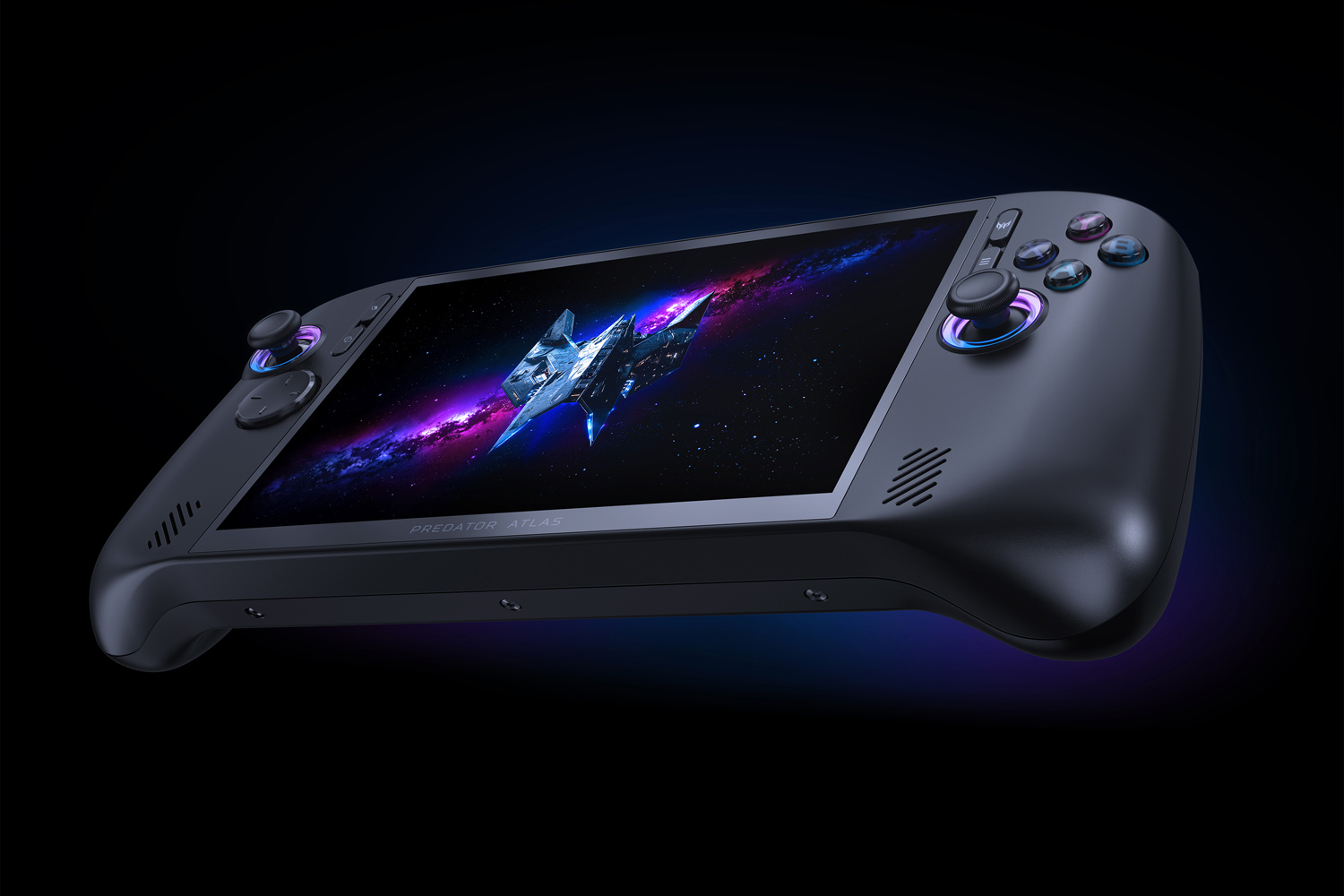
The 810g Predator Atlas 8 doesn’t stray far from the gaming handheld norm in terms of layout, but Acer has made sure to use full-size analog sticks. They’re also rocking customisable LED halo rings at the base for added visual flair. I’m more excited by the adjustable left and right triggers: they use Hall effect sensors to measure a range of pressure – ideal for racing games – but can be toggled to use FPS-appropriate microswitches with near-instant trigger response instead.
Acer has gone with an 8in, 16:10 aspect ratio touchscreen with a FHD+ resolution and variable 120Hz refresh rate. Peak brightness is a claimed 500 nits and it’s protected by Gorilla Glass Victus glass. The panel tech is seemingly LCD rather than OLED, and there’s no word on HDR support, so it might not eclipse the Steam Deck OLED for visual punch. Sound comes courtesy of dual 2W speakers.
Connectivity seems up to par with dual Thunderbolt 4s, microSD storage expansion, Wi-Fi 7 and Bluetooth 5.4. There’s also a fingerprint sensor built into the power button for conveniently skipping the Windows 11 lock screen. The new full-screen Xbox interface will be waiting when you do, and owners are promised at least one months’ subscription to Xbox Game Pass with their purchase.
The big question is whether the Atlas 8 will see a consumer release. Acer’s last gaming handheld, the oversized Nitro Blaze 11, seemingly never made it beyond the tech trade show circuit.
Officially the Acer Predator Atlas 8 is launching in the US, Europe, Middle East, Africa and Australia from October this year. Pricing is still TBC.


Read the full article here
