






Instant granules might be the definition of convenient coffee, but even the most expensive stir-in stuff can’t rival the results you’ll get from one of the best coffee machines. Whether you’re a casual morning sipper or a dedicated home barista, investing in the right coffee machine can completely transform your daily brew.
If you’re keen to kick your caffeine routine up a gear, from espresso makers and bean-to-cup machines to drip filters and pod coffee makers, these coffee machines make it easy to brew up better batches at home.
They all deliver café-quality results without the café price tag – giving you full control over everything from grind size and water temperature to shot strength and milk froth.
In search of superior swill, we’ve tested and picked out our favourites across every style and budget. There’s something here for every kind of coffee lover. So put the kettle on, make yourself a mug of the good stuff and prepare for top-notch jitter juice.
Why you can trust Stuff: Our team of experts rigorously test each product and provide honest, unbiased reviews to help you make informed decisions. For more details, read how we test and rate products.
Quick list: What’s the best coffee machine?
How to buy the best coffee machine
Clickbait news stories suggest skipping your morning coffee purchase is enough to save a deposit for a home. That’s just not true. But switching your daily grind to a home brew will save you enough to justify one of the coffee machines below.
If you’re interested in buying a coffee machine but don’t know where to start, here we’ll break down everything you need to know before making that big decision.
The bean-to-cup experience
A good bean-to-cup machine gives you the coffee shop experience at home. If you can spare the worktop space, they’re amazing. You get stunning coffees at the touch of a button, without the hassle of a traditional coffee maker or the wastefulness of capsules.
None of these bean machines takes up the same space as the industrial brewers down your local café. But be sure to check the fit before you buy – some are quite a bit bigger than others.
Variety and customisation
Change it up and you could commute with a barista-quality coffee of your choice. Some machines here even make iced coffees or syrup-infused speciality brews.
Coffee snobbery knows no limits. If you sit high up the hierarchy of obsessiveness, you’ll want extra control over water temperature and coffee strength – so go for a machine with settings to tweak.
How the technology works
Most of the machines here feature a thermoblock (for precise, fast water heating on demand) and a burr grinder (for an even coffee grind, delivering a consistent flavour that you can tailor). They all include a pump to pressurise the water too. This is essential for making a delicious espresso – at the heart of all coffees – with a rich flavour and good crema, the delicious froth on top.
The ideal pressure by the time the water hits the grinds is 7-9 bar, but machines are specced higher because the pressure is lost on the way. The higher pressure the pump delivers, the faster the brew should be… and yes, we got our stopwatch out.
Ground coffee and dual hopper options
Some of the machines on the test also feature a chute to use a scoop of ground coffee instead – for example, a speciality blend or decaf. The Siemens goes one better though with dual hoppers for two types of coffee bean.
Capacity: How much coffee do you need?
Consider your caffeine capacity. 10 cups a day may give you the shakes, but if you like a lot of swill then get a machine with a generous water jug, for regular refills without frequent trips to the tap.
A quick note on terminology
Finally, some lingo. We talk about the brewing group – that’s the internal gubbins that turn your grinds and hot water into delicious coffee. You may need to pull it out sometimes for cleaning. But on the whole, bean-to-cup machines clean themselves, prompting you when it’s time to use a cleaning or descaler tablet.
You will top up the water tank and bean hopper, and empty the tray when told, but mostly you just press a button and then drink delicious coffee.
The best coffee machines you can buy today:

1. De’Longhi PrimaDonna Aromatic
Scroll to see more →
| Specifications | De’Longhi PrimaDonna Aromatic |
|---|---|
| Bean capacity | 550g |
| Water capacity | 2.2L |
| Drink options | 35+ |
| Pump pressure | 19 bar |
| Dimensions & Weight | 39x26x46cm, 12.6kg |
| Guarantee | 2 years |
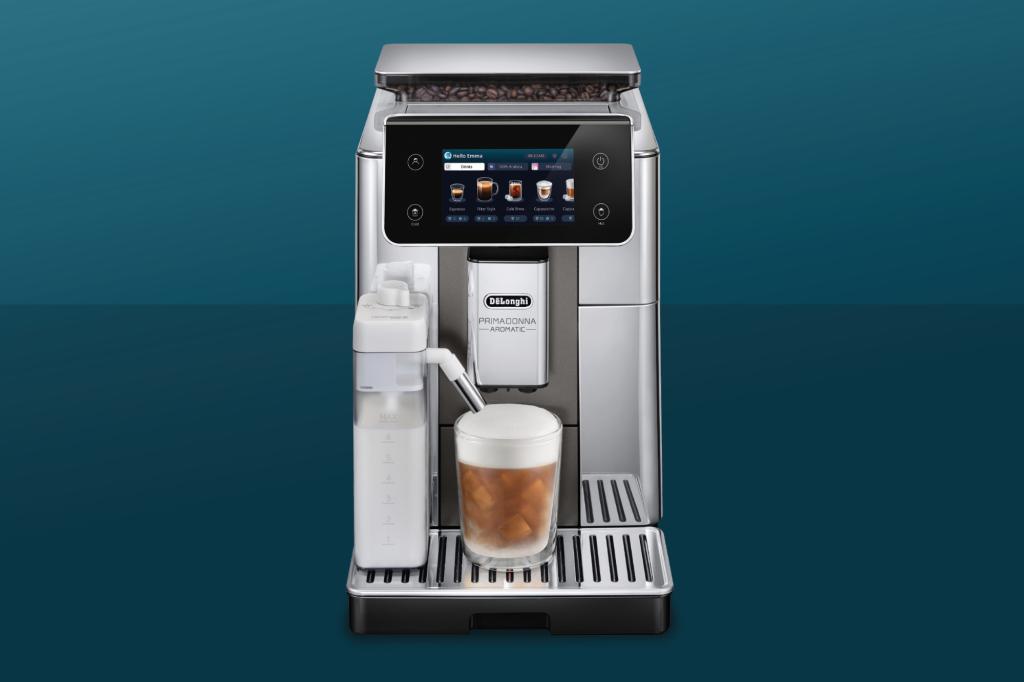
De’Longhi’s newest and most-hi-tech bean-to-cup machine offers more than 35 one-touch coffee recipes, including cold brew (in under five mins) and cold foam milk for iced cappuccinos. A five-inch touch display lets you scroll through and choose, or control via the MyCoffee Lounge app.
It comes with two LatteCrema milk carafes: the black-topped one is for hot drinks, the white-topped one for cold. It works with plant-based milks as well as dairy. But note that for cold drinks, cow’s milk should be skimmed.
There’s a chute in the top for adding a scoop of ground coffee to use instead of the beans. This means you can use different blends, decaf, etc.
Is it any good?
The PrimaDonna Aromatic is only 2cm wider than the De’Longhi Eletta Explore I tested – and loved – before, yet its water and bean capacity are both larger, so it needs refilling less often. The grounds container’s bigger too.
Setup is impressive and a video explainer shows you how to use the menu. Make a drink exactly your way, selecting size and intensity, even adding an extra shot, and it memorises it. It can even remember your preferences for different times of the day: so if you want a caffeinated double espresso first thing but a mellow latte made with pre-ground decaf in the afternoon, it knows and offers you the right favourites. There are four user profiles.
It talks you through how to set up the app too. You don’t have to reach for the instructions unless you want to. The app lets you control the machine and, more usefully, see when it needs maintaining or emptying. There’s also recipes that mostly make use of the cold brew and cold foam.
Espresso has an excellent crema. And its latte macchiato is divine: layered with a milk foam that’s tasty and sweet.
Equally impressive was the self-cleaning. It prompts you to put a container under the nozzle and turn the dial to ‘clean’. A mug will do; it just uses a little hot water. Then you can put the carafe back in the fridge for next time.
Cold brew was tasty and only took three minutes but I felt the instructed four ice cubes was overkill: one or two would have been plenty. It makes cold lattes and other frothy drinks too. My cold latte macchiato combined ice, cold froth and a hot coffee shot, relying on the ice to cool it. I was surprised it didn’t use cold brew. My only quibble, and it’s a very small quibble, is that when making a milk drink with either carafe it tells you on screen which of three settings to turn it to (depending on how frothy the milk should be) and that info isn’t on screen long enough.



2. Ninja Luxe Cafe Pro
Scroll to see more →
| Specifications | Ninja Luxe Cafe Pro |
|---|---|
| Bean capacity | 250g |
| Water capacity | 2L |
| Drink options | 25 |
| Pump pressure | 9 bar |
| Dimensions & Weight | 38x36x34cm, 17.3kg |
| Guarantee | 2 years |
About a year ago, Ninja set the caffeinated cat among the pigeons by producing the $600/£500 Luxe Cafe Premier: a machine that could basically do everything that’s coffee-related on the Starbucks slate, including that cold brew stuff that’s not to be confused with iced coffee. All those full bean-to-cup machines that other brands were selling for twice as much (surprisingly common) were suddenly looking rather expensive.
But as Ninja trailed at the time, there was an even more capable model around the corner. Enter the Luxe Cafe Pro.
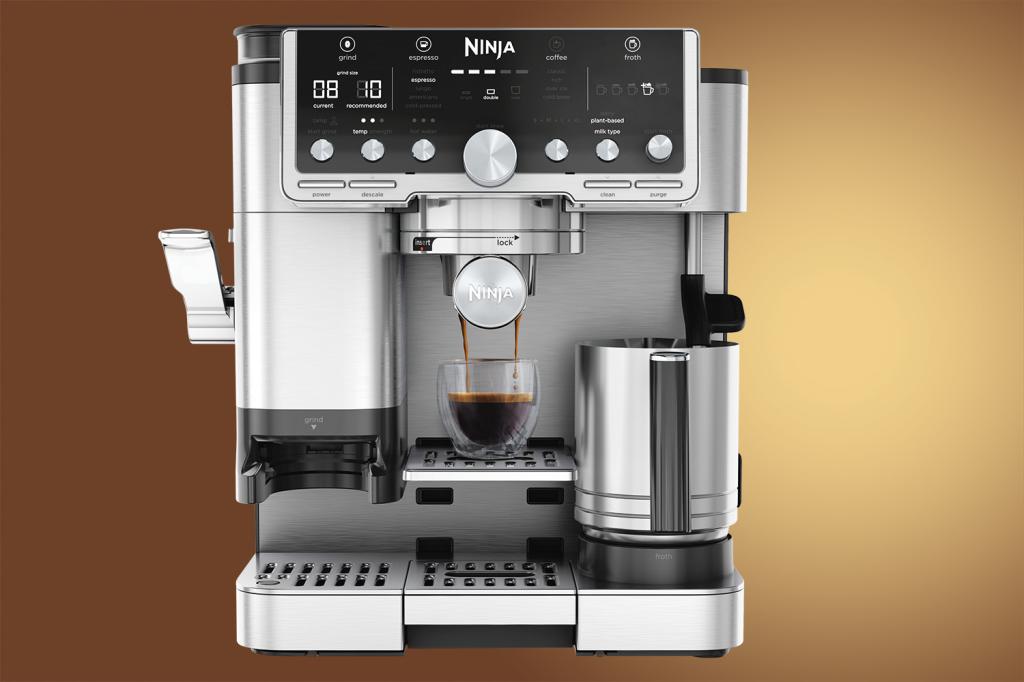
I’ve had a Premier for a little while and I can happily tell you this is a huge step up. It’s deliberately not a fully automatic bean-to-cup machine: you need to get a little hands-on with the use of the portafilter and there are stacks of settings to choose from, but everything is really simple to use and Ninja’s tech will suggest and refine the grind settings for your beans over time. The dose is also automatically determined.
Is it any good?
The main reason things are more convenient with the Luxe Cafe Pro compared to the Premier is that, on the cheaper model, you need a little plastic funnel to attach to the portafilter before the machine grinds, and you need to tamp the grounds yourself. Not huge steps that take a load of time, but I still feel like it’s unnecessary faff; and if like me you usually make a coffee with a few minutes to spare before a meeting, then it does get annoying.
The Pro has an integrated tamper so you simply slide the portafilter in, grind and then pull a lever to tamp in the same place. There’s certainly less mess. Single, double and luxe baskets (which are a little difficult to get in and out of the portafilter) are included, and there’s a drawer in the side of the machine so you can easily stow them afterwards.
The water storage is located on the back, but it’s easy to lift out; and if you really need to, you can take the lid off and fill it from a jug. The machine is fairly easy to keep tidy: the whole tray slides out at the bottom for emptying and cleaning.
There are a whopping 25 drink types available with this machine, including every single espresso style you can think of. Filter coffee is no problem either (Irish coffee, anyone?). It can also produce every conceivable type of froth and foam (even cold foam for cold brew) and deal with either dairy or plant-based milk – this can be automated, or you can get some manual control if you wish. It’ll even dispense hot water for tea, or to top up an Americano.
If you’re after espresso primarily, or you want a coffee pot on a regular basis, then this probably isn’t the machine for you – it’s for those who want to make a range of drinks regularly: say, your friends come over and one wants a flat white, another wants a latte and one just wants an Americano. This is like coffee chain cosplay.
3. Smeg BCC13
Scroll to see more →
| Specifications | Smeg BCC13 |
|---|---|
| Bean capacity | 150g |
| Water capacity | 1.4L |
| Drink options | 10 |
| Pump pressure | 19 bar |
| Dimensions & Weight | 34x18x43cm, 11.9kg |
| Guarantee | 2 years |
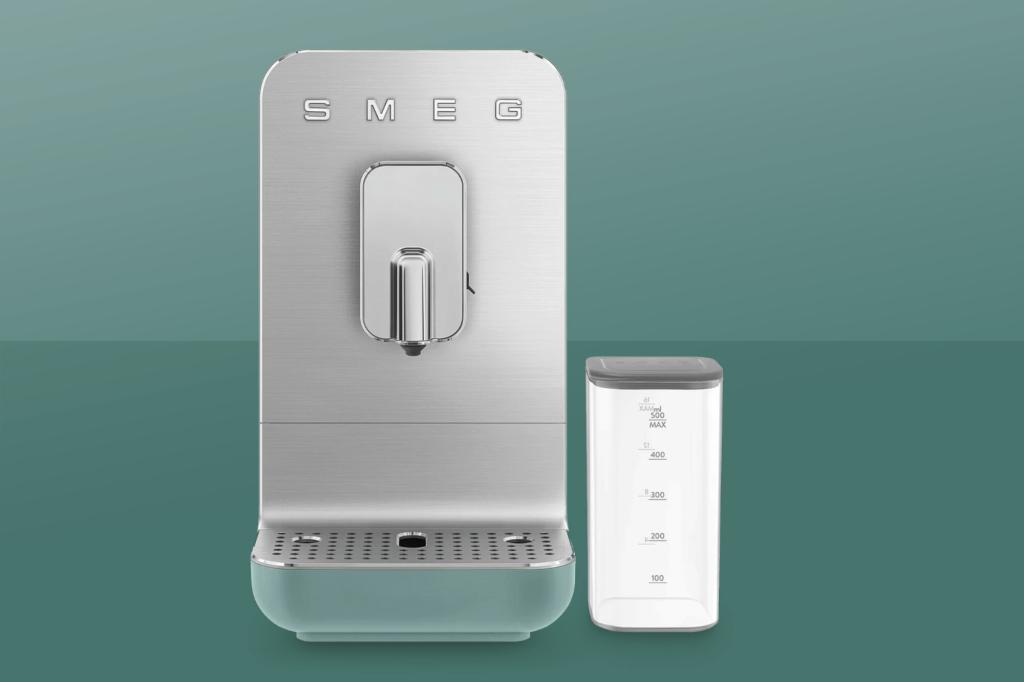
This is Smeg’s newest bean-to-cup machine and its most hi-tech, with an automatic milk frother. There’s no app or long list of beverages. Instead, it’s very slim (18cm) and stylish. It has a simple, curvy design and comes in four matt colours: black, white, emerald green and a grey-blue.
Buttons across the top let you select from ten beverages. There are few enough buttons that it’s easy to remember which button you need for your favourite brew.
It’s so simple that the Quick Start guides (there are two cards – one for how to make a cuppa, one for cleaning) are enough to get you started. And it’s easy to customise drink lengths: hold down a button for three seconds and then tap it when you’re happy with the length, to commit it to memory. For an Americano, I tapped twice: once when happy with the shot, another when happy with the hot water. And you do the same for milky drinks: one for milk, one for the coffee shot. But you can’t program it to dispense double shots.
It comes with a milk container you can stow in the fridge when not in use, a tube to connect it, a separate container for cleaning the milk circuit, and a little box to keep the tube in. They all have a similar footprint: it’s a shame they don’t clip together for storage.
It’s the only machine on test that isn’t designed to take a water filter.
Is it any good?
I love the size and styling. It’s a great choice if you’re short of worktop space. But there’s a price for that: the smaller capacities mean it needs filling with beans and water more often.
It has a small menu with intuitive controls. Good if you want simplicity and never RTFM. And great if you need to maximise worktop space. But it’s not the model to choose if you want a long list of specialty coffee options.
There is no chute to add a scoop of ground coffee, so with only one bean hopper you are limited to one type of coffee.
Black coffee was good and there are five types. Then there’s hot water and frothed milk. The other three drinks are cappuccino, latte macchiato, espresso macchiato. I tried the latte macchiato and thought the drink was pretty good. So you get a stylish, compact and relatively affordable machine (it’s the second cheapest on test) with a short menu. It’s not hi-tech. There’s no app and no touchscreen. But it knows how to make all the most popular drinks.
4. Melitta Barista SE
Scroll to see more →
| Specifications | Melitta Barista SE |
|---|---|
| Bean capacity | 270g |
| Water capacity | 1.8L |
| Drink options | 18 |
| Pump pressure | 15 bar |
| Dimensions & Weight | 37x26x47cm, 10.4kg |
| Guarantee | 2 years |
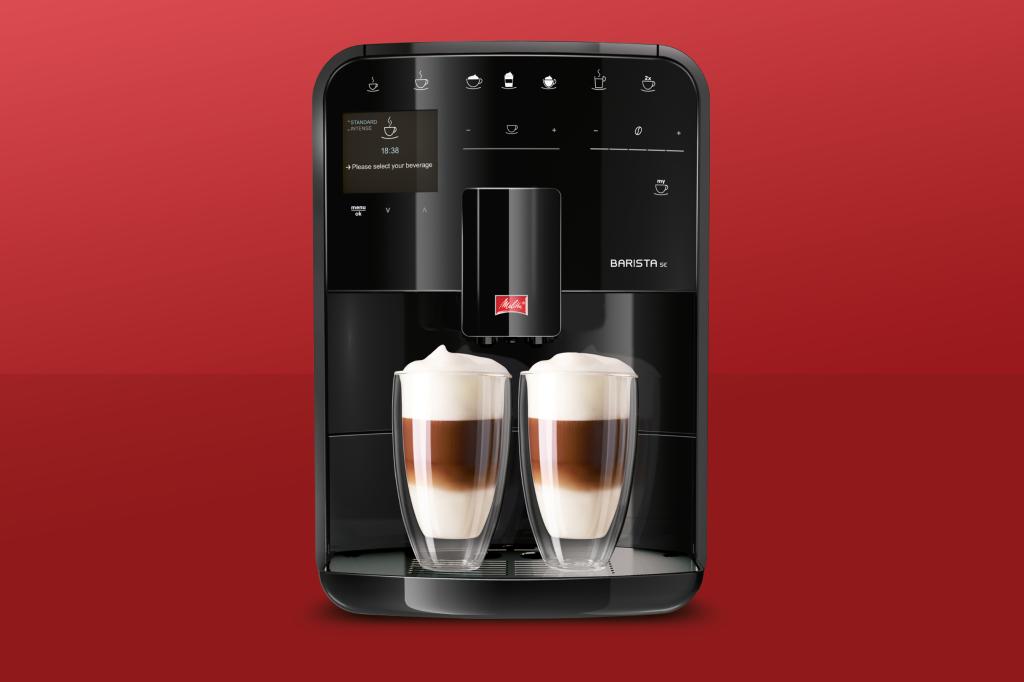
This affordable bean-to-cup machine has an unusual feature: the bean hopper is physically divided in two: slide a piece of plastic to change which side feeds the grinder. The mechanism is a bit clunky, but it’s a good idea if you want regular and decaf beans, or normal and specialty. The feature is impressive for the price. There’s also a chute on the top for adding a scoop of pre-ground coffee. Three types of coffee? That’s wild!
The display is small (3 inches) and it’s not a touchscreen. You use the up, down and ok buttons below to navigate. There’s also a series of icons across the top of the machine: tap them multiple times to select different drinks.
Is it any good?
There are only four popular types of coffee at the touch of a button: espresso, café crème, cappuccino and latte macchiato. Everything else requires a combination of button-presses that I found hard to remember. For example, to order a long black I had to press ‘ok’ to wake the machine, the ‘my cup’ button four times and then the café crème button. Unless you always make coffee one way, you will be forever looking at a piece of paper to find the magic combination.
The machine has four user profiles though the user interface is unwelcoming. But features are impressive for the price. I love the dual bean chambers and there’s a respectable number of drink options.
The long black was tasty, as was the espresso, which had a decent crema. The latte macchiato was so-so. It was tasty and comforting but the foam flattened after a few minutes instead of keeping its body. And where some machines (like the De’Longhi and Jura) slightly caramelise the milk deliciously, this was just milk foam.
There’s no carafe, you just poke the rubber tube in a glass or pint of milk. But the self-cleaning worked well.
In all, I think this is a good machine for the money but I prefer the simplicity of the Smeg for a similar price. I’d rather have a smaller menu of drinks, clear controls and clean lines.
High-end machines like the De’Longhi are far better, in terms of features and the quality of the drinks, but they cost twice as much. But this is a good buy if you’re on a budget and you don’t mind looking at a piece of paper to figure out the right button-combination for your drink! And the fact you can use two types of beans, and ground coffee too, is superb.
5. Jura J10
Scroll to see more →
| Specifications | Jura J10 |
|---|---|
| Bean capacity | 280g |
| Water capacity | 1.9L |
| Drink options | 42 |
| Pump pressure | 15 bar |
| Dimensions & Weight | 35x32x45cm, 10.4kg |
| Guarantee | 25 months |
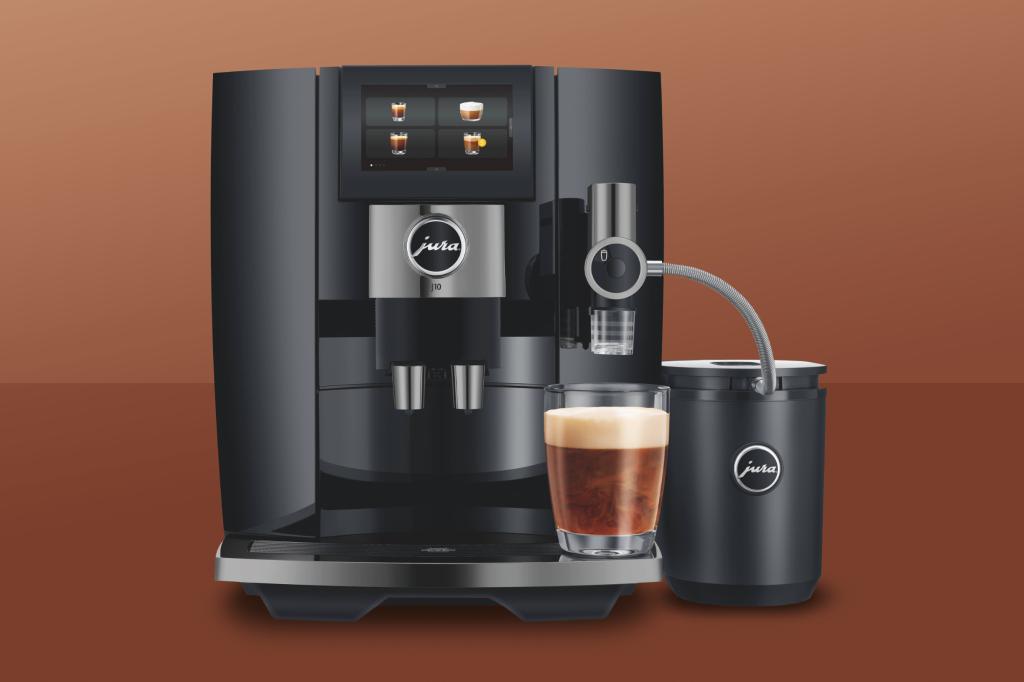
I’ve tested the Jura J8 before. The J10 looks similar but adds cold brew coffee. You can even buy an accessory to make hipster nitro cold brew. Unusually, it also comes with syrup attachments. A touchscreen lets you choose and customise your cuppa.
It also works with the Jura JOE app. The app is dark and macho with a ‘cockpit’ to tweak settings. I liked that the app reminded me when I needed to clean the milk system.
I found it weird that there are two places you can put your cup. Put it in the middle for drinks without milk, on the right for milky drinks (coffee is dispensed there too… which begs the question: why not just one place?). But the Jura can sense where you put your cup, so at least there’s no risk of putting it in the wrong place and the drink going straight into the drip tray.
Is it any good?
User interfaces are a matter of personal taste but I didn’t like the Jura’s 4.3-inch touchscreen menus. It was easy to select the wrong coffee, hard to scroll and hard to customise. It took me a couple of goes to get the coffee I wanted. You’d get used to it but it isn’t intuitive.
I selected a latte macchiato and it told me to put the cup under the right-hand spouts. But it didn’t instruct me to connect the milk tube to the side. So I ended up with a cup of steam. This was frustrating: these machines thrive on Mickey Mouse instructions. If they’re trying to streamline the user interface they just need a “tick if you don’t want to see this again” box.
That said, when I did connect the milk tube, the resulting latte macchiato was absolutely delicious, with a robust foam that tasted sweet, perfectly balanced with the espresso layer.
Cold brew coffee was good and only took three minutes. Cold latte macchiato was strange: The machine warmed the milk as it frothed it, then added cold brew coffee, resulting in a lukewarm drink that needed plenty of ice.
The optional nitro kit simply includes two lengths of glass straw, a rubber tube and a clip that holds the straw in your cup. It doesn’t bubble nitrogen through your coffee per se, but air is 78% nitrogen, so it uses the machine’s milk steamer circuit to bubble air through a shot of iced, cold brew coffee. This gives it a foamier head.
The Jura is pricey and I didn’t like the user interface, but it is a good buy for someone who loves making specialty coffees. It makes delicious drinks. But I think coffee nerds prefer manual machines: bean-to-cup machines are for those of us who want to drink good coffee without the effort. And for automatic machines, I liked the De’Longhi more.
6. Siemens EQ700
Scroll to see more →
| Specifications | Siemens EQ700 |
|---|---|
| Bean capacity | 320g |
| Water capacity | 2.4L |
| Drink options | 36 |
| Pump pressure | 19 bar |
| Dimensions & Weight | 38x35x47cm, 10.5kg |
| Guarantee | 2 years |
I’ve tested the Siemens EQ900 before, which boasted dual hoppers for two types of beans. This TQ717GB3 has a single hopper and no chute for ground coffee, so you’re stuck with one type of bean, but it adds cold brew coffee.
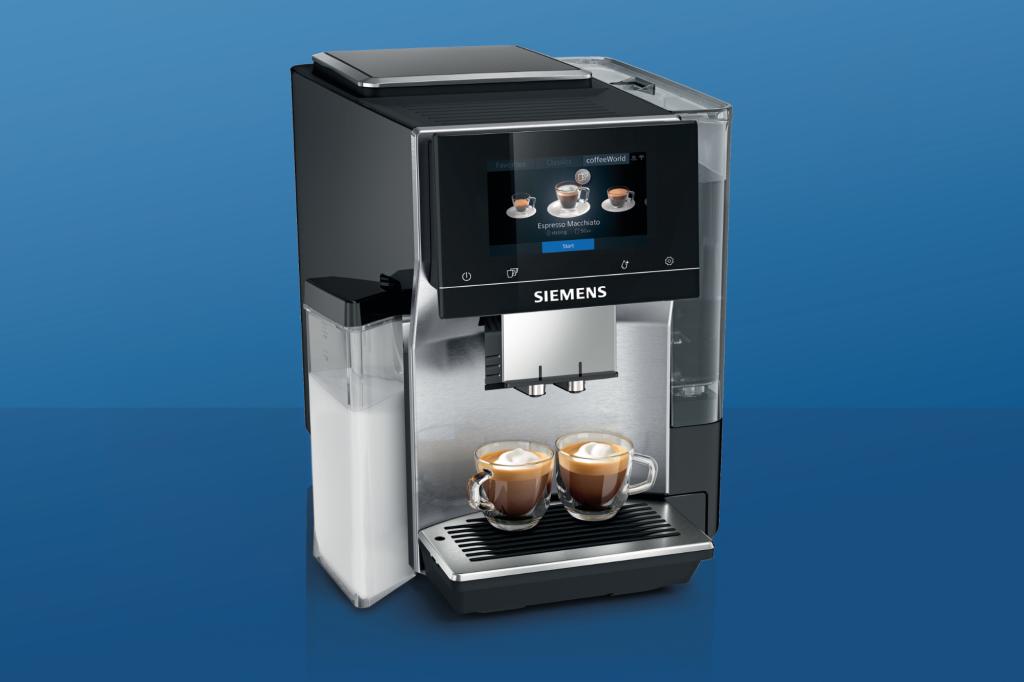
The machine is actually only 30cm wide to look at, but adding the milk carafe on the left side makes it 35cm. It also means you can’t have anything up against the front-left side because you need to be able to get the carafe on and off.
Is it any good?
Setup was simple and on screen it asked me to pair with the Siemens Home Connect app. The app lets you monitor the machine, turn it on remotely, you can even turn on the cup warmer – perfect preparation for your first espresso of the day. My favourite app feature is the Playlist, which lets you take everyone’s drink orders in the app and then the machine makes them all: the app remembers the orders for you.
Back to the machine. There’s no chute for ground coffee, so you can’t switch to specialty coffee or decaf without emptying the bean hopper.
Espresso was tasty. Its latte macchiato looked good, with nice layers. The milk foam on top was perfectly robust but not as tasty and sweet as the De’Longhi or Jura’s foam, but the warm milk at the bottom was sweet and tasty.
You can customise the length and strength (including double and even triple shots) of the drinks but the defaults are good ones: my latte macchiato was the right size for my coffee mug (which was of course a glass mug, so I could inspect the layers).
The cold brew latte macchiato was interesting. It took longer than the De’Longhi and didn’t demand I used skimmed milk for the froth (there’s a milk carafe, which you can stow in the fridge when not in use) but it was much less tasty than the De’Longhi’s. And the instructions were less detailed. For example, it started making the drink with a picture of a cup of ice on screen and I thought “oh, I guess I should put ice in there”. Idiot-proof instructions would have been nice. It’s a good coffee machine and features cold brew, but I’d have liked a chute for ground coffee. And the De’Longhi does it better, with tastier drinks and more intuitive controls.

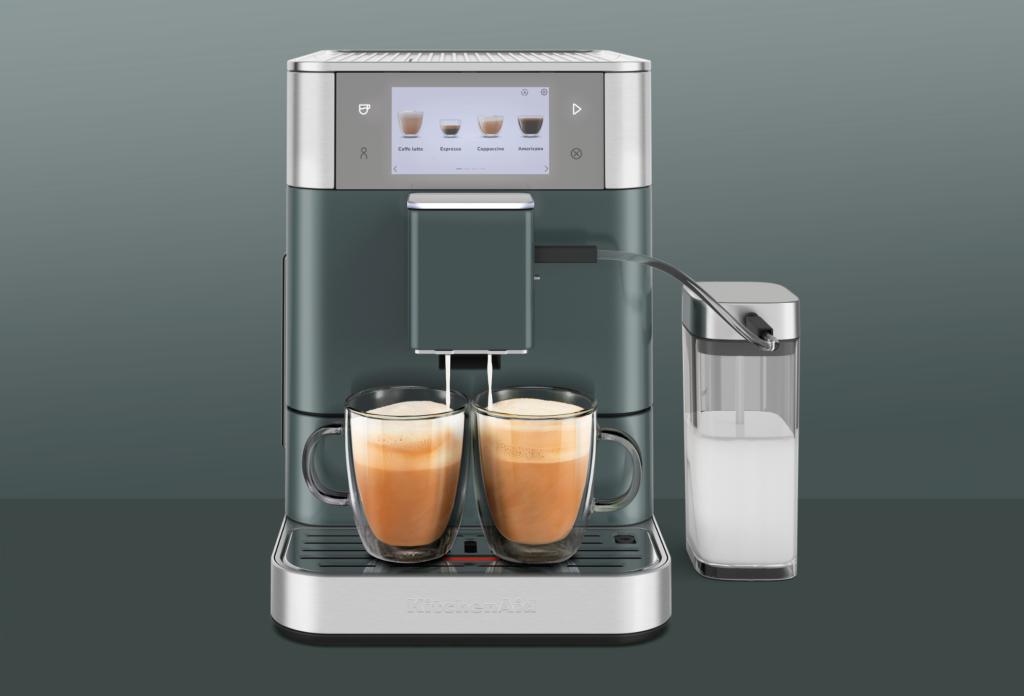
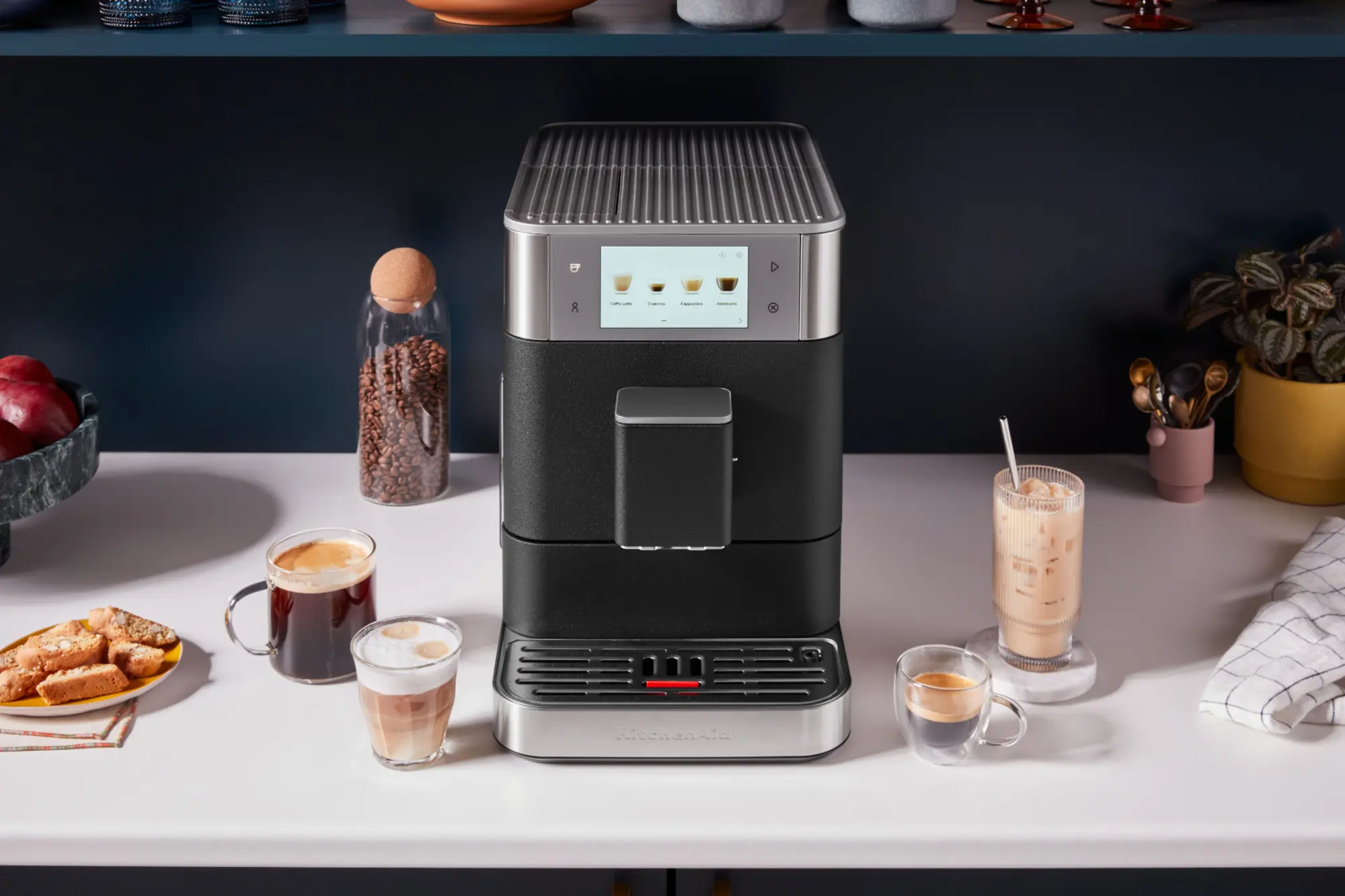
7. KitchenAid KF8
Scroll to see more →
| Specifications | KitchenAid KF8 |
|---|---|
| Bean capacity | 270g |
| Water capacity | 2.2L |
| Drink options | 40+ |
| Pump pressure | 15 bar |
| Dimensions & Weight | 54x36x47cm, 18.1kg |
| Guarantee | 3 years |
This is a large, chrome affair. The lines are clean but boxy. It boasts six user profiles and promises ten-year repairability. I tested the stainless steel finish but it’s also available in matt black, white or dark green.
Its bean hopper can be removed but I’m not sure why. I guess it makes it easier to tip the beans out if you want to change to another variety. But I’d have liked a second hopper, so you could swap.
Milk is handled by a carafe which you store in the fridge while not in use. It’s connected with a flexible tube which you can alternatively stick in a jug of milk.
Is it any good?
First up, it was infuriatingly hard to find the power button. I had to look in the manual and I test gadgets for a living! It’s pretty much disguised as a piece of trim. This is the kind of coffee maker where you need to show guests where the button is.
And then it started loud, just for the first few seconds. I was surprised because it’s been awarded a QuietMark. But after that it’s not too noisy and it’s even melodic, with little tunes alerting you when your coffee is brewed.
The black coffee was pretty good. There were several options and you could choose a double shot. But its latte macchiato was a letdown. You can control the size and strength of the coffee (which was pleasingly hot) and the amount of foam, but the foam tasted dull. It had nothing of the sweetness of the milk foams from the De’Longhi and Jura.
After each milky drink, it asks if you want to clean the milk system and I found this laborious. First I had to empty the drip tray and grounds container, then I had to plug the milk hose into the tray, then I had to put a container under the nozzles. To do that after every batch of milky coffees is a lot.
And this is the most expensive machine on test. While it has a touchscreen, there’s no app, no WiFi, no smart control at all. If you bought this machine you wouldn’t hate it. But you can do better… and for less money.
My favourite thing about the KitchenAid is the commitment to repairability. In an age when products go wrong after years, not decades, and then the parts aren’t available, it’s a refreshing change.
Coffee machine specification comparison
Scroll to see more →
| Specifications | De’Longhi PrimaDonna Aromatic | Ninja Luxe Cafe Pro | Smeg BCC13 | Melitta Barista SE | Jura J10 | Siemens EQ700 | KitchenAid KF8 |
|---|---|---|---|---|---|---|---|
| Bean capacity | 550g | 250g | 150g | 270g | 280g | 320g | 270g |
| Water capacity | 2.2L | 2L | 1.4L | 1.8L | 1.9L | 2.4L | 2.2L |
| Drink options | 35+ | 25 | 10 | 18 | 42 | 36 | 40+ |
| Pump pressure | 19 bar | 9 bar | 19 bar | 15 bar | 15 bar | 19 bar | 15 bar |
| Dimensions & Weight | 39x26x46cm, 12.6kg | 38x36x34cm, 17.3kg | 34x18x43cm, 11.9kg | 37x26x47cm, 10.4kg | 35x32x45cm, 10.4kg | 38x35x47cm, 10.5kg | 54x36x47cm, 18.1kg |
| Guarantee | 2 years | 2 years | 2 years | 2 years | 25 months | 2 years | 3 years |
Frequently asked questions
Espresso machines force pressurised hot water through finely ground coffee to produce a concentrated shot, while drip makers simply brew a larger, milder pot by letting water flow through grounds by gravity.
A decent entry-level machine starts around US$150 / £120 for drip or pod machines, while a quality home espresso machine typically costs US$1000 / £800 or more.
You should rinse removable parts after every use and descale the machine every 1–3 months depending on how hard your water is and how frequently you brew.
Pre-ground coffee works fine for most machines, but investing in a burr grinder will noticeably improve flavour since freshly ground beans produce a much more aromatic and consistent brew.
Pod machines are very convenient and low-maintenance, but the cost per cup is significantly higher over time and they produce considerably more plastic waste than bean-to-cup alternatives.




Read the full article here


