






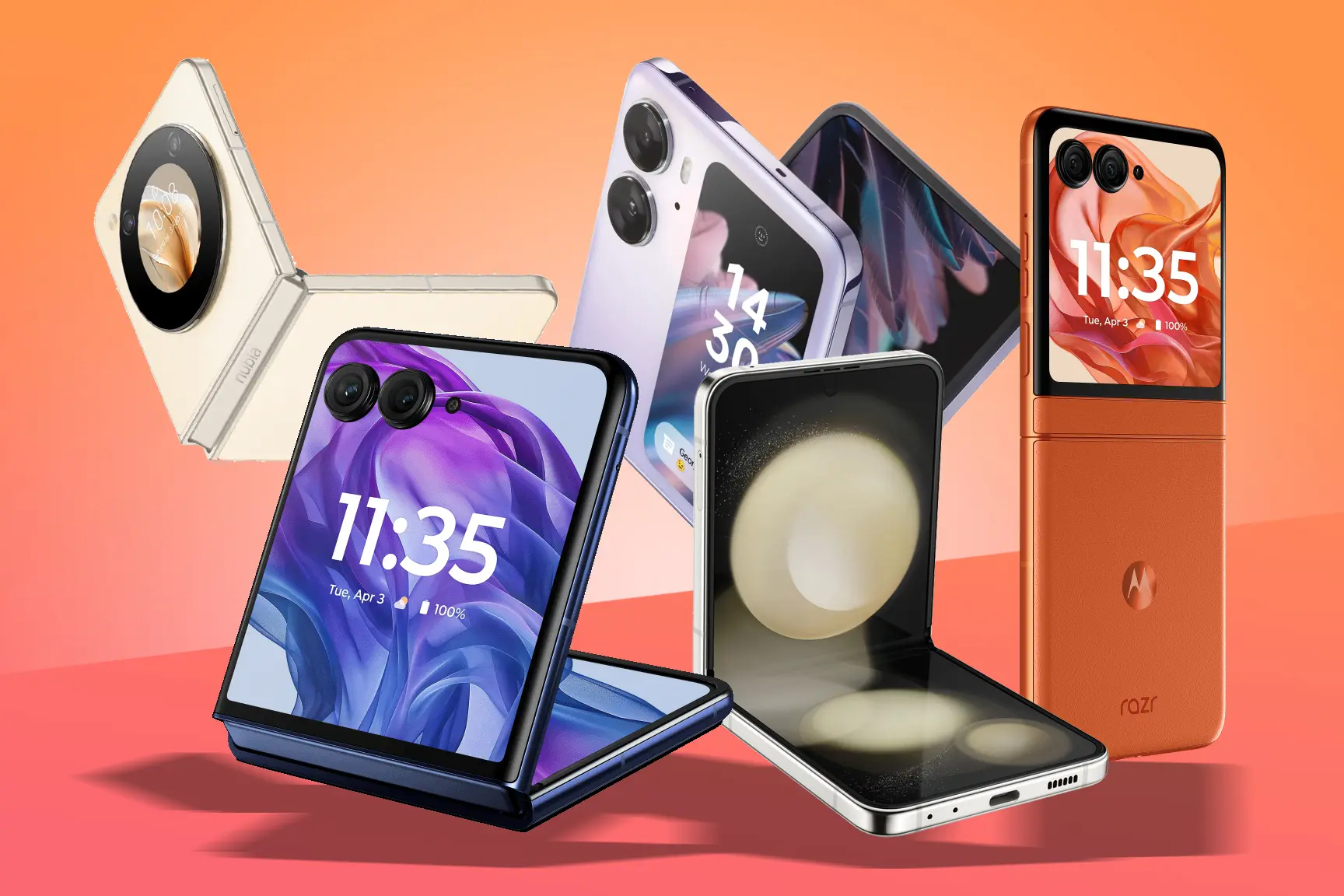
With enough force, almost every phone can fold in half – not even the best phones are immune to brute strength. But only a few can do it without suffering terminal damage. From retro revivals to cutting-edge clamshells, the best flip phones combine a flexible internal display with a secondary outer screen for the perfect blend of pocketability and top-tier hardware.
By hiding a larger screen on the inside, flip phones are half the size of a traditional smartphone. Their outer screens are getting smarter and smarter, too, saving you from constantly flipping the thing open to read notifications, reply to messages or check incoming emails. Add in increasingly capable cameras and they’re some of the most versatile phones around. We’ve tested the best so you know which one is worth your cash, and also highlighted the upcoming models that might be worth waiting for.
Perhaps you prefer a larger book-style foldable with a little more substance? Read about the best foldable phones here.
Why you can trust Stuff: Our team of experts rigorously test each product and provide honest, unbiased reviews to help you make informed decisions. For more details, read how we test and rate products.
Our top best flip phone picks for 2026 at a glance
The best flip phones you can buy today:

1. Motorola Razr 60 Ultra
Scroll to see more →
| Specifications | Motorola Razr 60 Ultra |
|---|---|
| Cover display | 4in, 1272×1080 165Hz AMOLED |
| Main display | 7in 2912×1224 165Hz AMOLED |
| Cameras | 50MP, f/1.8 w/ PDAF, OIS + 50MP, f/2.0 ultrawide w/ PDAF rear, 50MP, f/2.0 front |
| Chipset | Qualcomm Snapdragon 8 Elite |
| Memory | 16GB RAM |
| Storage | 512GB/1TB |
| Battery | 4700mAh w/ 68W wired, 30W wireless charging |
| Dimensions | 172x74x7.2mm (unfolded), 88x74x15.7mm (folded), 199g |
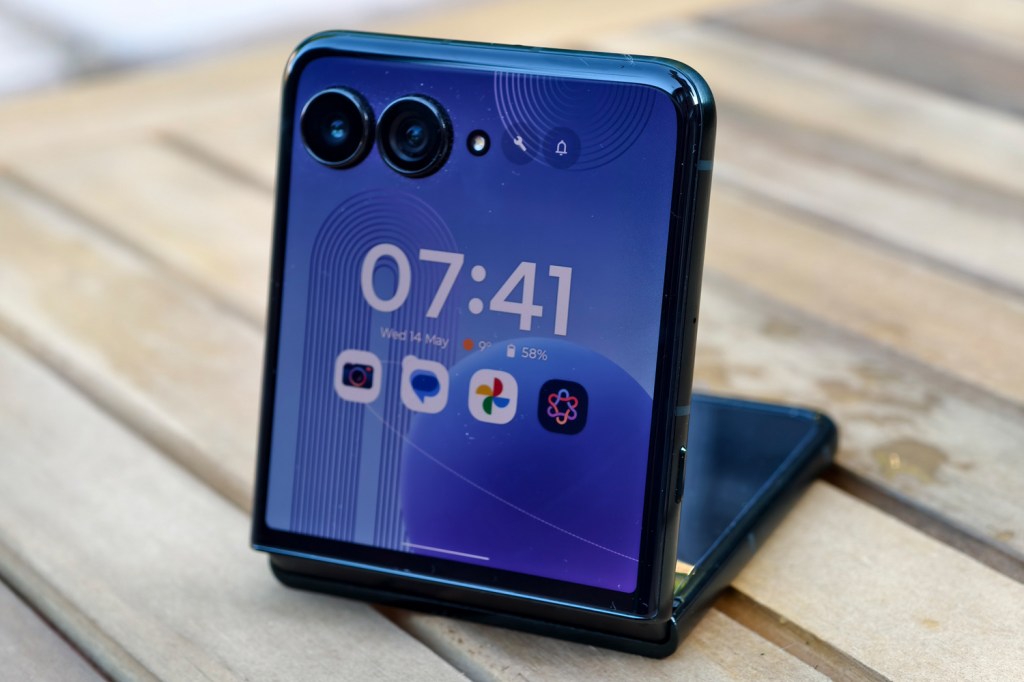
It’s not just about the looks – though the mix of Pantone colours and Alcantara, leather or wood finishes make it feel more premium than any rival. The Motorola Razr 60 Ultra’s real magic lies in how usable it is while shut. The 4in outer display isn’t just for widgets – you can reply to emails, type messages and even run full apps comfortably without needing to flip it open. That alone gives it a huge edge over Samsung’s Z Flip line.
Open it up and you’re greeted by a gorgeous 7in OLED that’s brighter and sharper than any folding screen I’ve tested. The crease barely registers, colours are vivid, and the 165Hz maximum refresh rate makes scrolling silky. The cameras finally feel like more than an afterthought too. The 50MP main sensor produces sharp, vibrant shots and the ultrawide matches it well for colour and tone. Shooting with the cover screen as a viewfinder is brilliant – especially for selfies.
Performance is flagship-strong thanks to the Snapdragon 8 Elite chipset and 16GB RAM, even if it does run hot during long gaming sessions. Battery life, however, blew me away. The 4700mAh cell comfortably lasted into day two, and 68W charging got us back up in just over an hour.
Why we chose it
It’s expensive, but with no real weak links, the Razr 60 Ultra is the closest any clamshell has come to perfection.
2. Samsung Galaxy Flip7
Scroll to see more →
| Specifications | Samsung Galaxy Z Flip7 |
|---|---|
| Cover display | 4.1in AMOLED |
| Main display | 6.9in AMOLED |
| Cameras | 50MP + 12MP ultrawide rear, 10MP front |
| Chipset | Samsung Exynos 2500 |
| Memory | 12GB RAM |
| Storage | 256GB/512GB |
| Battery | 4300mAh |
| Dimensions | 75x86x13.7mm (folded), 75x167x6.5mm (unfolded), 188g |
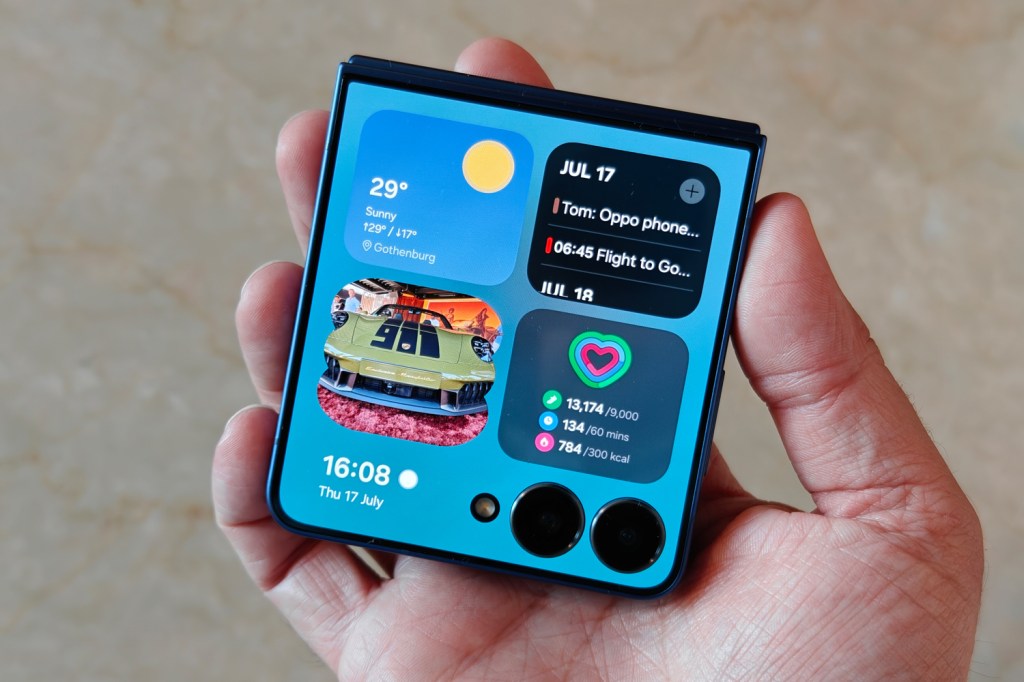
The Galaxy Z Flip 7 is easily the most refined Samsung flip phone I’ve tested. The thinner design and bigger cover screen make it feel like a proper upgrade, not just another yearly refresh. In hand, it looks and feels fantastic – slimmer than the Z Flip 6, with a hinge that finally hides the crease well. I especially liked how the 4.1in outer display now plays a real role, even if you still need the optional Good Lock software to unlock its full potential. The 6.9in inner AMOLED is classic Samsung: sharp, bright and buttery smooth.
Using it day-to-day, the cameras proved consistent rather than groundbreaking. The 50MP main shooter delivered detailed, colourful shots and handled motion better than previous Flips. The ultrawide lagged slightly, and selfies were nothing special, but the outer display makes using the main cameras far more practical.
Performance, powered by Samsung’s Exynos 2500, didn’t always match the $1100/£1049 asking price. Benchmarks were closer to mid-range, and I noticed it getting hot under heavy loads. Battery life was just enough for a full day, but charging remains sluggish compared to Motorola’s Razr 60 Ultra.
Why we chose it
With an eye-catching design, respectable performance in every area and software that has mainstream appeal, the Z Flip 7 is Samsung’s most balanced flip phone yet.
3. Motorola Razr 60
Scroll to see more →
| Specifications | Motorola Razr 60 |
|---|---|
| Cover display | 3.6in, 1056×1066 AMOLED |
| Main display | 6.9in 2640×1080 AMOLED 120Hz |
| Cameras | 50+13MP (rear), 32MP (front) |
| Chipset | MediaTek Dimensity 7400X |
| Memory | 8/12GB RAM |
| Storage | 256GB/512GB |
| Battery | 4500mAh |
| Dimensions | 171x74x7.3mm (unfolded), 188g |
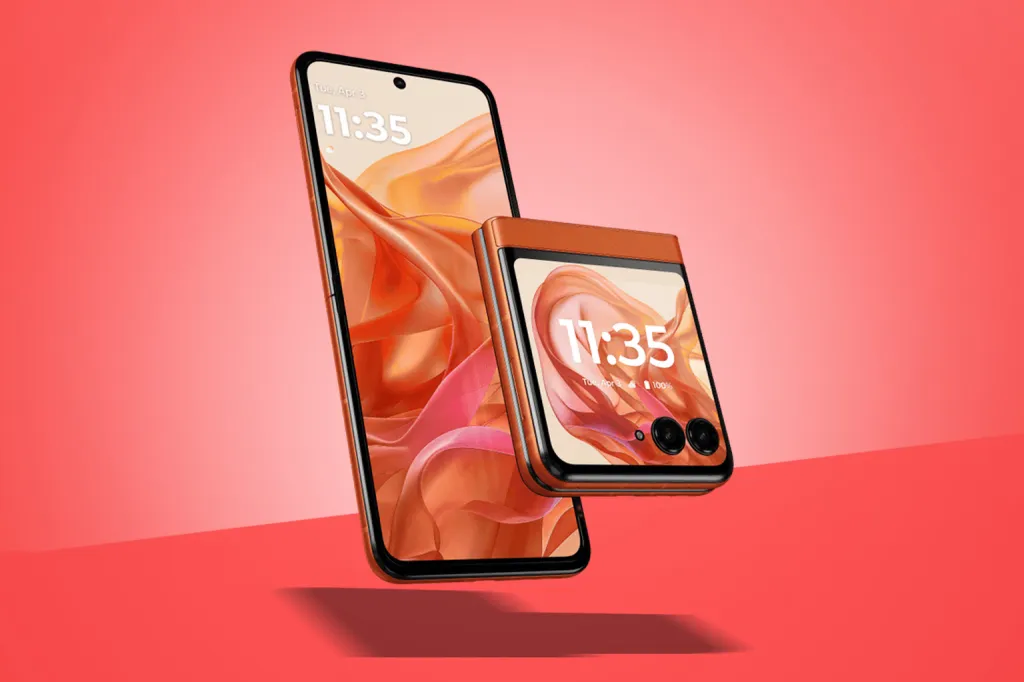
Motorola’s two-tier approach to flip phones has been working well for a few generations now, bringing the cost of entry down significantly. That’s still the case for the Razr 60, except here you’re getting a significantly improved battery over last year’s effort. 4500mAh is more than you’ll find in some mainstream, non-folding phones.
At 3.6in and with access to any app you want, the outer screen remains far more useful than rival Samsung’s more restrictive effort. Inside MediaTek silicon still provides the power, only here you’re getting a newer generation chip than the outgoing Razr 50 got. The 50MP main snapper and 13MP ultrawide should be very competitive among flip phones.
Why we chose it
It’s most of what makes the Razr 60 Ultra our top flip phone choice, dialled back just enough to reach a more appealing price.
Flip phone specs compared
Scroll to see more →
| Specifications | Motorola Razr 60 Ultra | Samsung Galaxy Z Flip7 | Motorola Razr 60 |
|---|---|---|---|
| Score |
★★★★★
|
★★★★★
|
Not yet rated |
| Cover display | 4in, 1272×1080 165Hz AMOLED | 4.1in AMOLED | 3.6in, 1056×1066 AMOLED |
| Main display | 7in 2912×1224 165Hz AMOLED | 6.9in AMOLED | 6.9in, 2640×1080 AMOLED 120Hz |
| Cameras | 50MP + 50MP ultrawide rear, 50MP front | 50MP + 12MP ultrawide rear, 10MP front | 50+13MP (rear), 32MP (front) |
| Chipset | Qualcomm Snapdragon 8 Elite | Samsung Exynos 2500 | MediaTek Dimensity 7400X |
| Memory | 16GB RAM | 12GB RAM | 8/12GB RAM |
| Storage | 512GB/1TB | 256/512GB | 256/512GB |
| Battery | 4700mAh | 4300mAh | 4500mAh |
| Dimensions | 172x74x7.2mm (unfolded), 88x74x15.7mm (folded), 199g | 75x86x13.7mm (folded), 75x167x6.5mm (unfolded), 188g | 171x74x7.3mm (unfolded), 188g |
Frequently asked questions
Flip phones bring something refreshing to the smartphone world. They’re novel and fun. You get a big screen that folds neatly in half, making it pocket-friendly without losing that premium smartphone feel. The folding design also doubles as a built-in stand for hands-free video calls or taking selfies. Beyond the novelty, there’s practicality: smaller size, added protection when closed, and often some genuinely fun features like cover screen widgets or camera shortcuts.
Yes, over time, but not in a deal-breaking way. Today’s flip phones are far tougher than the early models. Brands like Samsung, Motorola, and Oppo have refined their hinge systems to survive hundreds of thousands of folds (roughly equivalent to years of daily use). You might notice a faint crease on the screen, but it’s usually only visible at certain angles or lighting. The key is to treat it like any high-end gadget, so avoid grit near the hinge and use a case. It’s durable, but obviously not indestructible.
Almost certainly. What started as a niche trend has evolved into a proper category with annual updates from major brands. Prices are dropping, durability is improving, and the designs are more refined each year. As long as people value compact designs, personality, and a bit of fun in their tech, flip phones aren’t going anywhere.
Stuff’s top flip phone pick in 2026 is still the Motorola Razr 60 Ultra. Until Samsung launches a new Z Flip – or Motorola replaces it with the inevitable Razr 70 Ultra – its blend of performance, battery life and camera capabilities remain unmatched.
Early clamshell phones honestly weren’t great: flexible AMOLED screens were still emerging tech and didn’t like being folded. Things have improved dramatically in just a few years, so now they can cope with being opened and closed hundreds of thousands of times. New hinge mechanisms with better seals mean modern flip phones usually have an IP rating of IP48 or above, meaning they can survive a short drop into water.
European and US audiences aren’t exactly spoiled for choice when it comes to clamshell phones, but it’s a very different story in Asia. These are the most recent flip phones worth highlighting:
The Xiaomi Mix Flip 2 has hardware that puts many candybar-style handsets to shame, just in a form factor that folds in half. A Snapdragon 8 Elite chipset, a 5165mAh battery that’s simply huge for the class, and twin 50MP outer cameras would’ve made it a serious contender in the West, had the firm made a global version.
Huawei has a bulging clamshell line-up, including the more affordable Nova Flip and the top-tier Pocket 2. The latter has a funky circular outer display, rather than follow the trend of bigger, square screens seen elsewhere. Then the Pura X sits somewhere between flip and foldable, with larger screens than a typical clamshell.
Honor introduced the Magic V Flip 2 in summer 2025, with a layout that sticks close to the one Motorola and Samsung have made the norm here in the West. It’s a bit behind on power with a Snapdragon 8 Gen 3 chipset, but makes up for it with a huge 200MP outer camera.
There are also a handful of value-minded flip phones aimed at south east Asia, Africa and the Middle East. The Techno Phantom V Flip2, Infinix Zero Flip and Blackview Hero 10 are all beginning to show their age now, having been around for several years. The ZTE Nubia Flip3 is much newer, only debuting in January 2026. It’s packing a mid-tier MediaTek chipset and runs an older version of Android.
How to choose the best flip phone
Start with the screen – it’s the main event. Go for a sharp AMOLED display with a fast refresh rate for smooth scrolling and bold colours. Durability matters too. Foldable screens use delicate materials such as ultra-thin glass, so it’s worth checking reviews and real-world tests to see which models can handle daily folding without fuss.
The hinge is another make-or-break part. A solid hinge should fold smoothly, stay firm when open, and keep dust out. Brands that talk about tested lifespans or have strong user feedback tend to be safer bets for long-term reliability.
Don’t overlook the outer display either. A larger cover screen lets you read messages, take selfies or change tracks without opening the phone. If you like quick access on the go, this can make a big difference to how practical the phone feels day-to-day.
Battery life can be tricky with flip phones, as there’s less space for big cells. Look for phones that use power efficiently and support fast charging. Also, make sure the software makes use of the folding design — multitasking should feel natural, not like a gimmick.
Upcoming flip phones
Want to wait and see what the next generation of flip phones bring to the table? These clamshells should all arrive to take on the established class leaders… eventually.
- Motorola officially launched the Razr 70, Razr 70 Plus and Razr 70 Ultra in April 2026, though which models are available depends on where in the world you live. Only the Razr 70 and Razr 70 Ultra are UK-bound, for example. The former is a somewhat safe mid-range update to the Razr 60, while the latter brings a bigger battery, new Pantone-approved colours and a LOFIC lead camera sensor that promises wider dynamic range than the previous effort. We’ll have a review coming soon.
- The Galaxy Z Flip 8 is almost certainly in development right now. Samsung’s next flip phone may or may not get a slim overhaul on the scale seen with the Z Fold 7, but with Motorola providing consistently strong competition, it’ll need to address things like camera hardware and battery life if it wants to remain top dog. A Z Flip 8 FE will likely follow after, with cut-down internals and a cheaper price.
- Some rumours suggest Apple’s first foldable could be a clamshell, with the iPhone Air acting as a test bed for the slim dimensions needed to compete with the ultra-skinny flip phones offered in the Android stable. Others have hinted it’ll be a book-style foldable more like the Galaxy Z Fold series. September 2026 could be our first look, though tipsters have suggested it’ll be pushed back to 2027 if the firm isn’t able to fully hide the screen crease.
Recent updates
- 22nd May 2026: Motorola Razr 70, Razr 70 Ultra details confirmed in upcoming phones section
- 12th March 2026: added specs comparison table
- 6th February 2026: added “what other flip phones are available?” section, updated upcoming phones section
- 23rd January 2026: Fixed the numbering and updated the headline
- 12th December 2025: Removed Xiaomi Mix Flip, added Motorola Razr 60, added upcoming flip phones section
- 27th October 2025: Added frequently asked questions section
Related: 15 of the ugliest phones that ever existed




Read the full article here


