



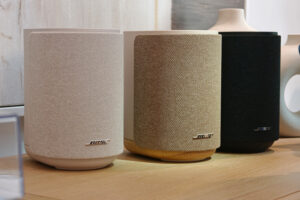


Last Thursday, in a staged home on the Upper West Side of Manhattan, I sat on a couch that was a bit too low and a tad too deep in front of a small, beige-colored smart speaker sitting on the middle of a trio of arched midcentury storage cabinets. On either side of the smart speaker sat two tall curved white screens.
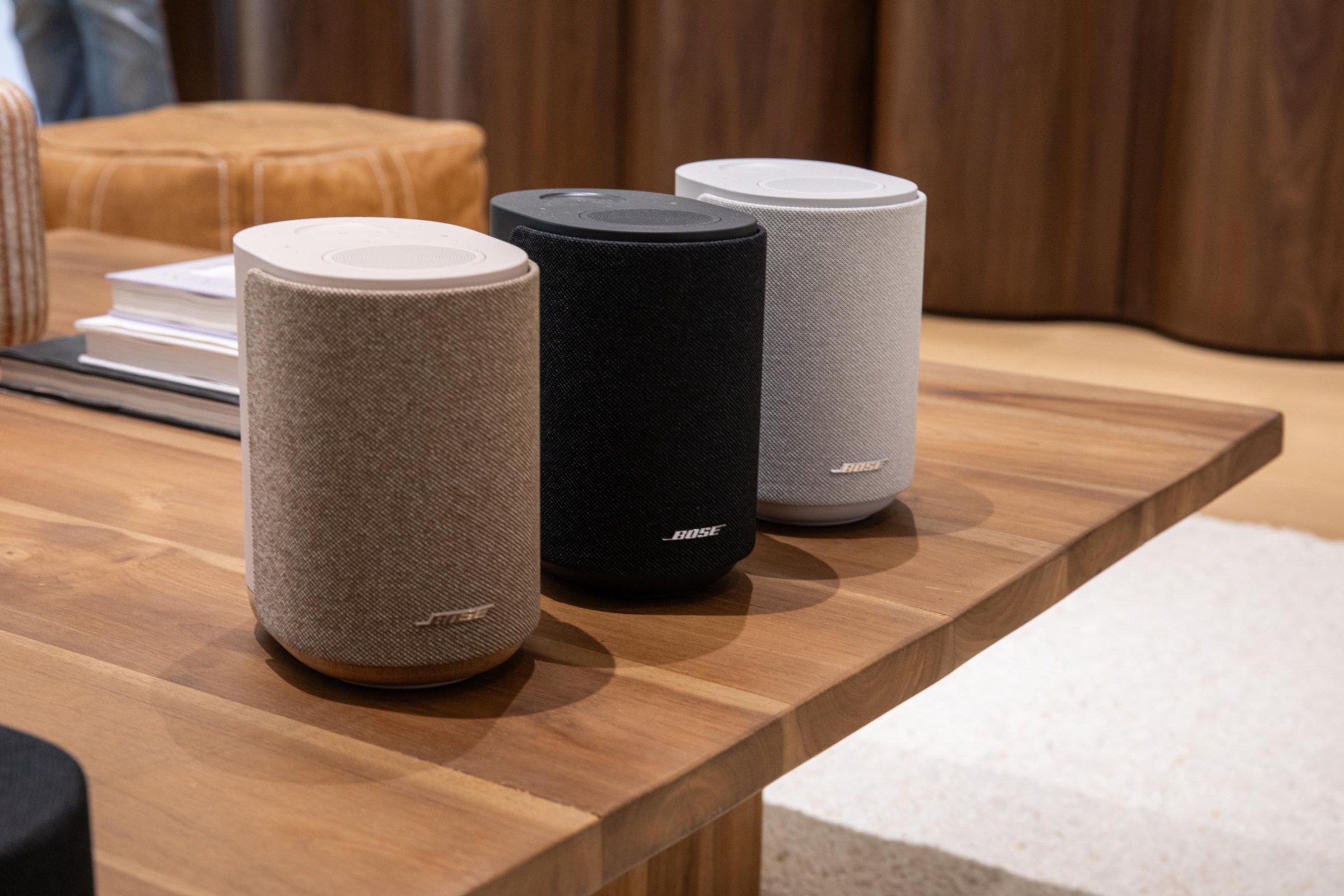
The speaker was the new $299 Lifestyle Ultra, Bose’s answer to the Sonos Era 100. Alongside a $1,099 Ultra soundbar and $899 subwoofer, it’s one of three new home audio products the company announced today, all of which seem to be gunning directly for Sonos — hopefully minus that company’s recent missteps. I heard all three at Bose’s New York event, and the speaker in particular impressed me.
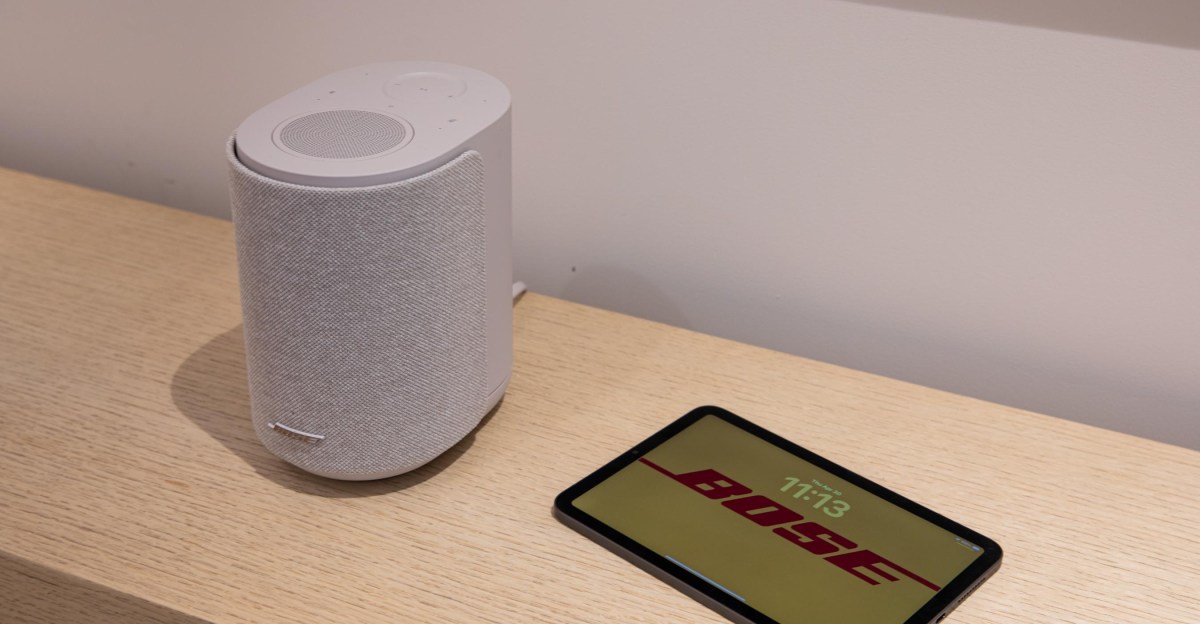
The $299 Ultra Speaker is the most interesting and most distinctive-looking of the bunch. It has a front-firing woofer and tweeter, an up-firing driver — unlike the Era 100 — and a bass port on the back. (For music, Bose uses its own processing for the upward-firing sound, rather than Dolby Atmos.) On the top of the speaker, behind the up-firing driver, are capacitive controls for power, Bluetooth pairing, microphone mute, volume control, and a play/pause button. The volume and play/pause are in a circular depression, which you can trace with your finger clockwise or counterclockwise to also control the volume. The Ultra Speaker and soundbar support Alexa Plus.

The speaker sounds impressively big with great vocal clarity, and without the harsh highs present on speakers like the SoundLink Plus. In fact, when listening to the first sample — “Man I Need” by Olivia Dean — I thought there must be additional speakers playing from behind the curved white screens.
I was partly right: The screens were hiding two more Lifestyle Ultra speakers, but they weren’t playing during that track. Instead, they were there for a later demo of a stereo pair. Playing Leon Bridges’ “Peaceful Place” and Steely Dan’s “Hey Nineteen,” they demonstrated good stereo sound separation.
I did find that the Ultra speaker can sound overly punchy when it comes to things like snare hits (I noticed this most during Chris Stapleton’s “Bad As I Used To Be”), at least at the volumes we listened to. This might be down to the lack of room correction, a surprising omission from the Ultra Speaker at launch. Especially when being used in a stereo pair, I expected there would be some way to tune the speakers to the room and compensate for any placement issues. I was told that Bose is looking into the possibility of adding room correction at a later date for both single-speaker and stereo setups.
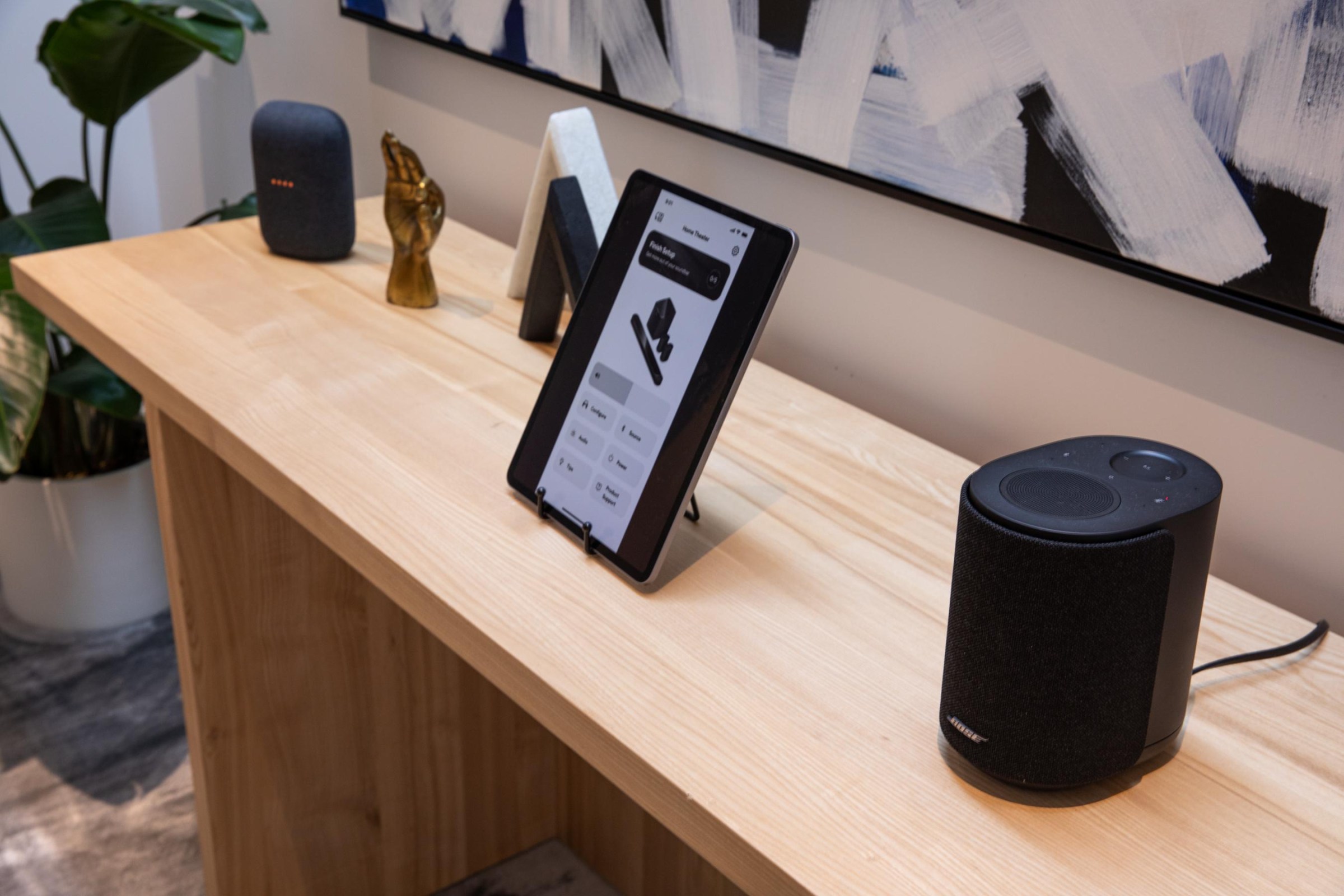
Instead of putting all streaming app playback control in the Bose app like Sonos does with its app, Bose instead relies upon the grouping and playback functionality within apps people are already using regularly, such as Apple Music and Spotify. The Ultra speaker can stream music over Wi-Fi through Apple AirPlay, Google Cast, and Spotify Connect, and it can be added to AirPlay and Google Cast speaker groups, including those with non-Bose speakers. When Wi-Fi is unavailable, you can stream to the Ultra via Bluetooth. The speaker is Auracast capable, but will not be Auracast enabled when it’s launched on May 15. Raza Haider, Bose president of premium consumer audio, told me Auracast will be turned on once that ecosystem is more mature.
I was expecting Bose to unveil its own Sonos app competitor, but this more open option — allowing you to expand what you currently have whether it’s Bose or not — is intriguing. It also bypasses the difficulty of housing all of those individual streaming apps within the Bose app, and getting it to work properly. “We deliberately are trying to be more open and app-less in our experience,” said Haider. In addition to Spotify Connect, I’m hoping Bose will include services like Qobuz Connect and Tidal Connect in the future.
Upstairs from the Ultra Speaker was a demo for the $1,099 Ultra Soundbar, which is Bose’s first major soundbar redesign in years. It has two up-firing drivers, two wide-set drivers for left and right channels, two Bose PhaseGuide drivers — proprietary designs that direct the sound out to the sides — and two additional drivers flanking a center tweeter. The capacitive controls are similar to those found on the Ultra Speaker.
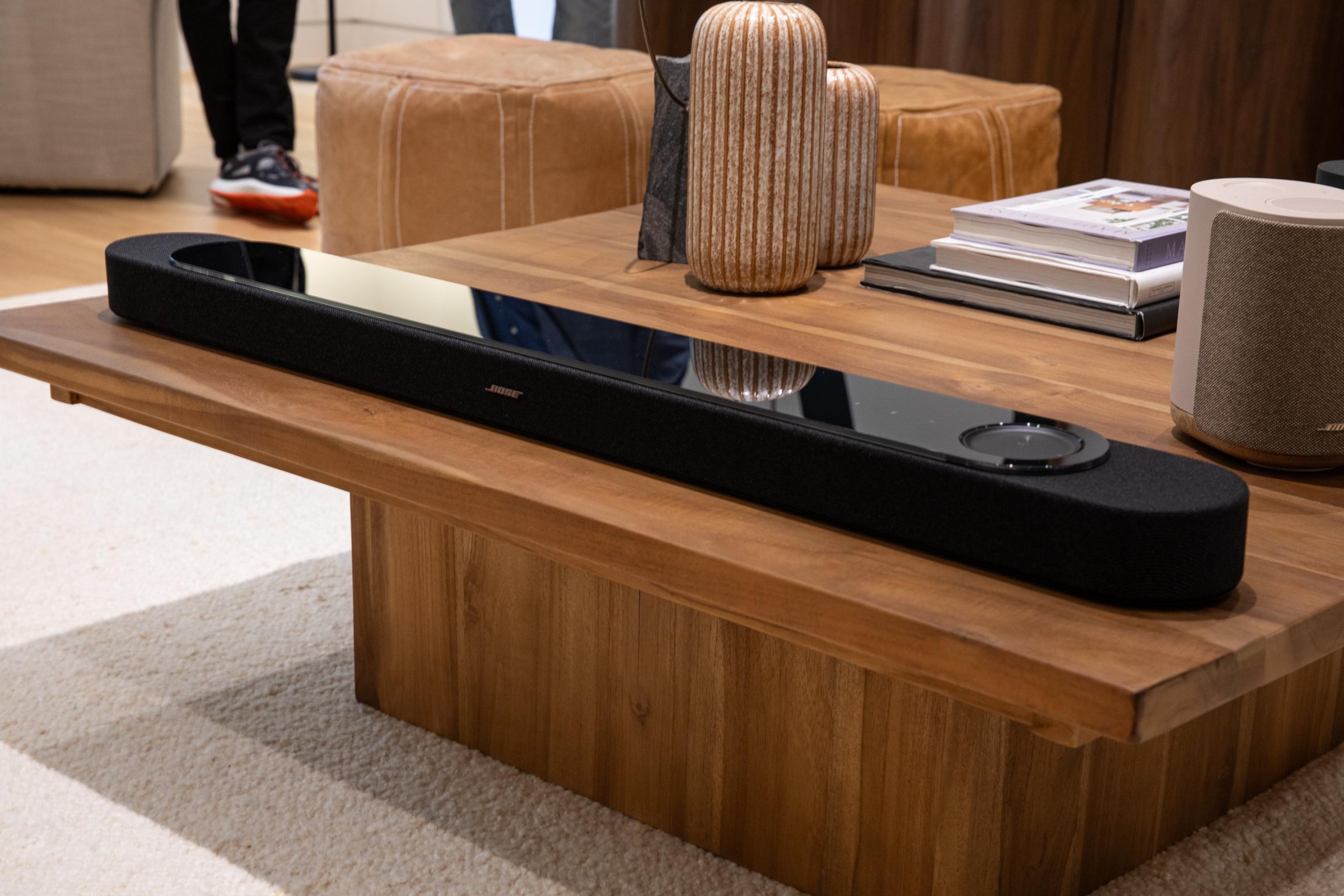
We began the soundbar demo with the spice harvester evacuation scene from Dune, and it was a bit underwhelming. That’s one of my go-to scenes for testing movie sound, so I’m very familiar with it. While the soundscape had great width to it and I could feel rumble through the floor, there was a hole where the bass frequencies should meet the midrange, causing the sound to feel hollow. Vocal clarity was crisp, and the soundbar did a decent job with the Atmos channels, but I couldn’t get past the absent upper bass frequencies.
Fortunately, along with the Ultra Speaker and Ultra Soundbar, Bose is releasing the Ultra Subwoofer, and it’s what the soundbar needs to fill the frequency hole I heard. Instead of just feeling some vibrations from the low end, on Jacob Collier’s “Mi Corazón” the bass sounded full and supportive. It was a significant difference, but at $899, it also turns the soundbar/sub combo into a $2,000 system (the same price as the Sonos Arc Ultra paired with a Sonos 4 sub).
For a full Atmos system, two Ultra Speakers can be used as rear channels, creating a 7.1.4 configuration. Wembley Stadium, from the Live Aid concert portion of the movie Bohemian Rhapsody, surrounded and filled the room well. The Atmos height was good, although a little indistinct at times in its placement. That could have been due to the room design and my sitting position — though interestingly, unlike the smart speaker by itself or in a pair, the full system has room calibration.
Based particularly on my experience with the Ultra Speaker, there’s great potential for the new Bose Lifestyle Collection. “There’s lots more to come. This is the start of the new platform of the Lifestyle series,” said Haider when I asked him about the possibility of a battery-powered version or a larger speaker. “The next one won’t be smaller.”
Photography by John Higgins / The Verge
Read the full article here


