








Planning a trip to Disneyland Paris with a nearly-four-year-old is, in theory, simple. Book a hotel, buy some tickets, work out how to get there without anyone having a meltdown. In practice it’s a logistical headache of dates, budgets, ride heights and nap schedules. So instead of doing it myself, I handed the job to two AI chatbots and asked them to act as my travel agent.
I gave ChatGPT and Gemini the same basic brief: a family trip to Disneyland Paris for two adults and a four-year-old, early November, an affordable but not barebones budget, staying on-site. Then I let each of them run with it.
What came back told me less about Disneyland Paris than it did about the two very different directions AI assistants are heading in.
Which did a better job? I’m actually planning this trip, not running a hypothetical test, so I’ll explain which chatbot did the best job and which trip I’ll be booking at the end.
Here’s how to two go on…
ChatGPT: short, sharp and full of caveats
ChatGPT opened by asking exactly what I’d expect a decent travel agent to ask: who’s going, roughly when, how many nights, where I’m travelling from, budget, and what matters most. Once I’d answered, it didn’t just churn out an itinerary – it made an actual recommendation and explained why.
“I’d make this a 3-night / 4-day trip, rather than 2 nights,” it told me. “With a four-year-old, two nights is enough to see Disneyland Paris, but it can feel surprisingly frantic.”
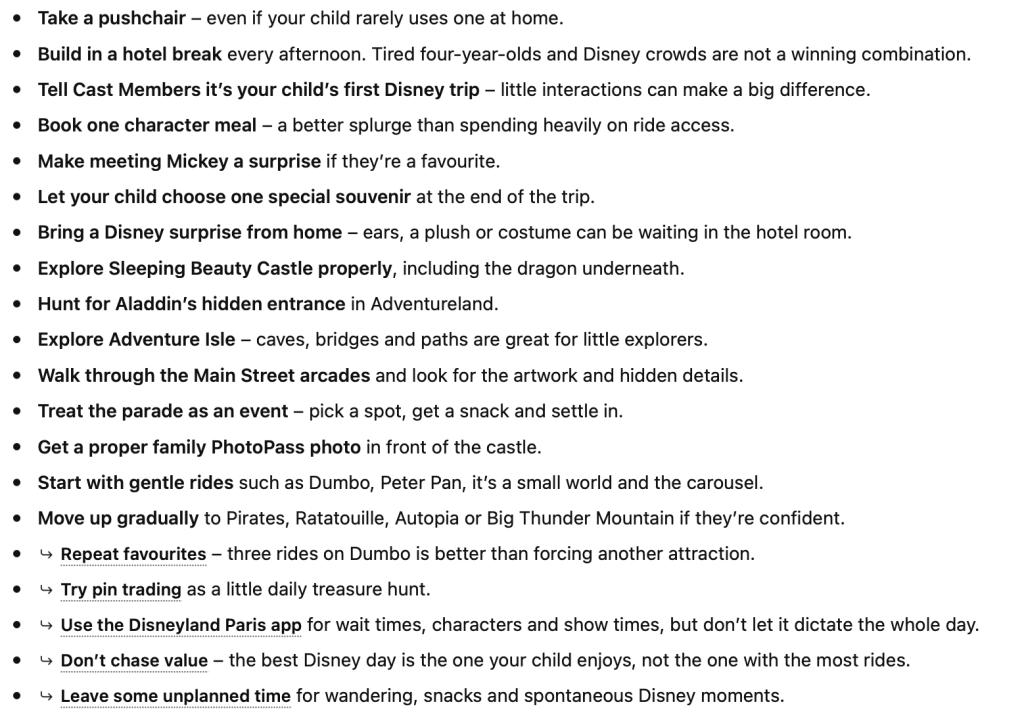
It shortlisted three Disney hotels, picked a favourite (Disney Sequoia Lodge, “the sweet spot”), and built out a full day-by-day plan, right down to when to schedule an afternoon break because, as it bluntly put it, “a four-year-old who has spent six hours walking around Disneyland may suddenly decide that civilisation is overrated.”

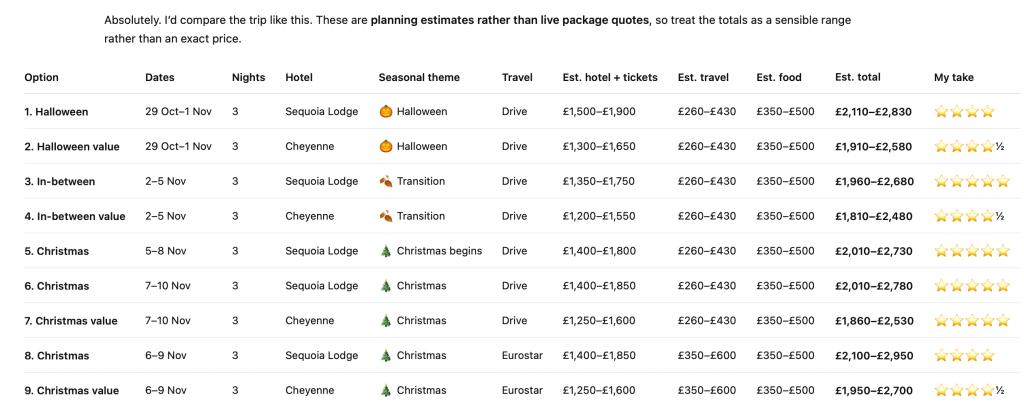
What struck me most was how often it hedged its own numbers. When I asked for costs, it gave a table of ranges rather than a single figure, and was upfront about why: “These are realistic planning figures rather than live quotes, because Disney’s package price changes according to the exact dates, room and availability.”
It then backed that up with real advertised prices it had found – Sequoia Lodge packages “from around £339–£399pp for two nights on selected dates” – and was careful to flag that the headline price assumed two children, not one, so it “aren’t directly transferable to your three-person family.”
That kind of self-correction happened more than once. A few messages later, it caught its own mistake on the Christmas dates: “One correction to my previous answer first: Disney Enchanted Christmas officially runs from 7 November 2026, although Disney Hotels have Christmas-related offerings from 5 November.”

I also asked about getting there, whether I could drive there in a Tesla Model 3 or Model Y, and it answered like it actually knew the route. It flagged a specific Supercharger site “at Bailly-Romainvilliers with 24 Superchargers capable of up to 250kW,” worked out charging costs against fuel and Eurotunnel prices, and concluded, unprompted, that I should “actually choose the Model Y” for the boot space alone.
Almost every claim came with a link back to a source, whether that’s Disney’s own site, Eurostar, or Tesla, and answers were broken into short, scannable sections. It read like a briefing document, not a conversation.
Gemini: very personal, but a bit unsettling
Gemini’s opening reply is where things got strange. Unprompted, it addressed my son by name, worked out he was “a nearly-four-year-old,” and referenced my wife (again by name) and even our dog by name when asking whether I’d need pet-sitting sorted for the dates we’d be away. None of that came from what I’d typed into the chat. It had pulled it from other conversations.
“It’s often much easier than flying and gives a nearly four-year-old like Francis plenty of space to stretch out and move around during the journey,” it said, before later working out logistics around our actual car: “Loading up the Tiguan means you won’t have to worry about luggage limits.”
I’ll admit it was unsettling at first, seeing a chatbot casually drop in details I hadn’t given it in this conversation. Of course, I knew Google and Gemini would know that information about me, but to see it pull it up unprompted was a strange moment of realisation.

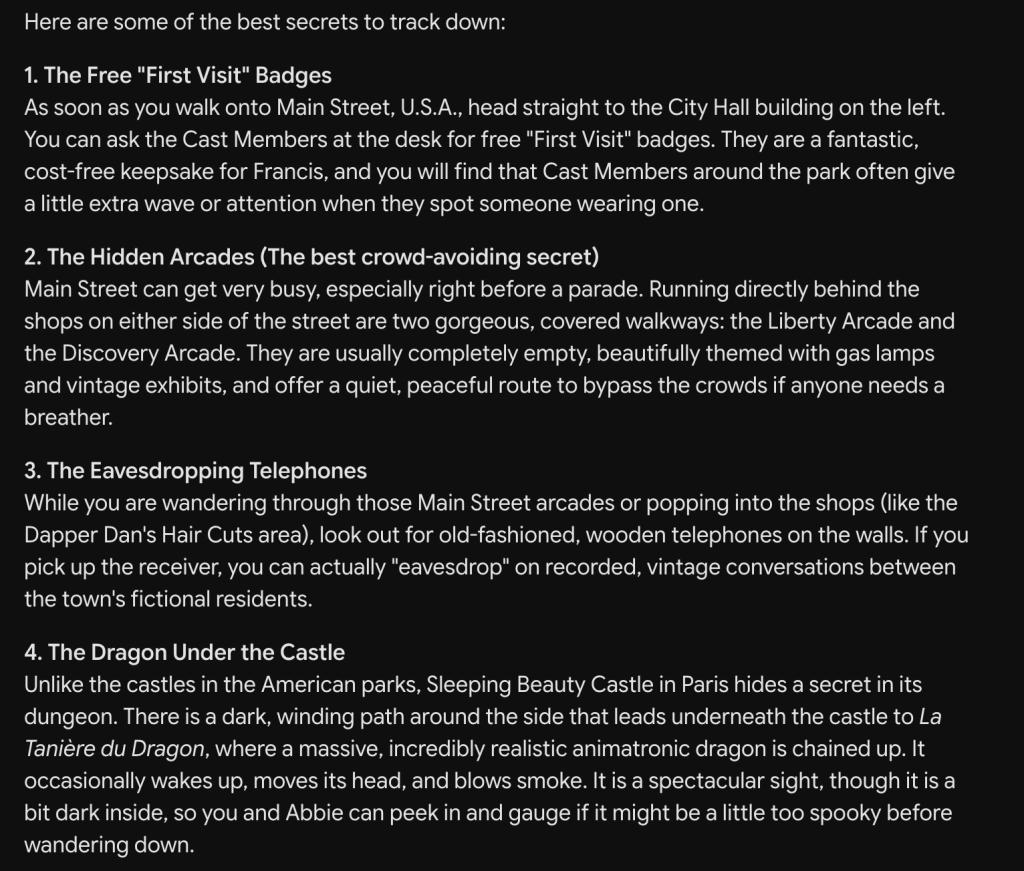
But after the initial shock, I did appreciate the personalisation. By the time it produced a full three-day schedule, it read less like a generic Disney itinerary and more like something written specifically for us, right down to flagging quiet, “low-sensory” restaurants for if my son got overwhelmed by the crowds, and suggesting Rider Switch on the bigger rides so my wife and I could take turns without queuing twice.
Where it fell down was depth. Where ChatGPT gave ranges and reasoning, Gemini gave confident, breezy statements with nothing to check them against – no links, no source, no acknowledgement that a Disney package price might have moved since it last knew anything about it.

It also ran noticeably longer per answer, wrapping every practical detail in a layer of scene-setting prose that was pleasant to read but required me to dig the key information from.
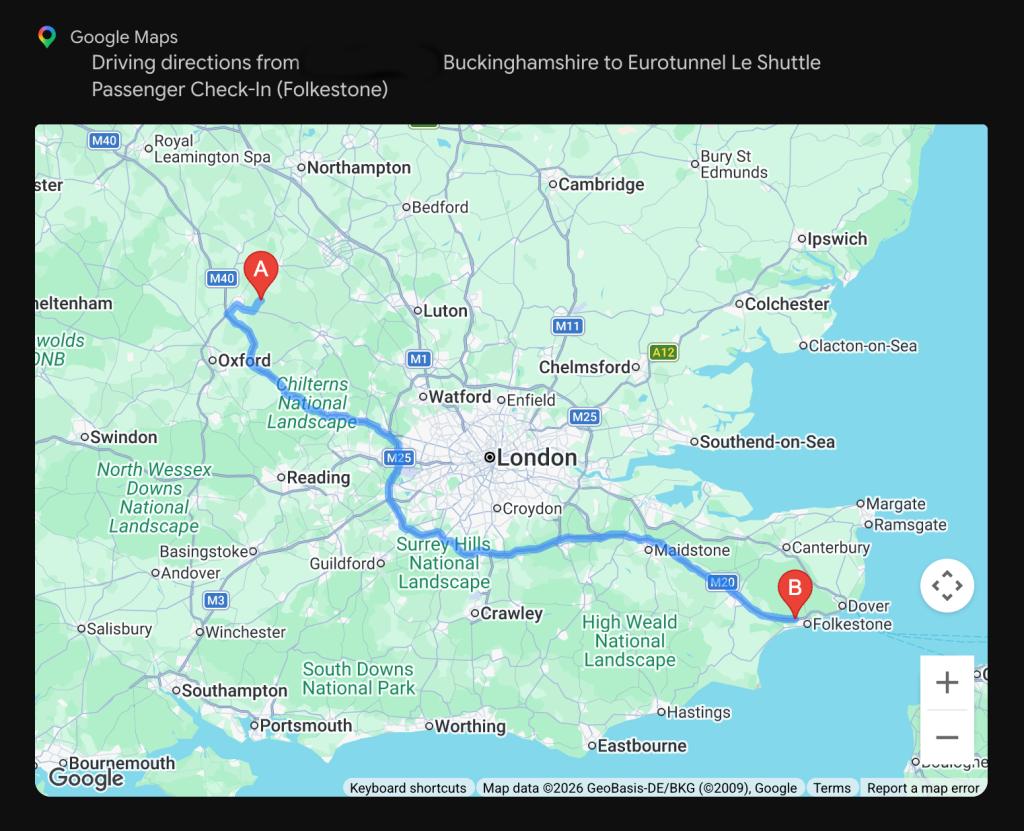
It did have one trick ChatGPT didn’t: when I asked for directions it returned a Google Maps card for the drive from my house to the Eurotunnel terminal. Very useful.
The verdict: which AI did it best?
Neither of these fully replaced a human travel agent. I couldn’t give either my credit card details for them for book it for me, resulting in some manual effort by me.
But they also failed in planning in different ways.
ChatGPT felt very useful. It asked better questions upfront, showed its working, corrected itself when it got something wrong, and pointed me to primary sources rather than asking me to take its word for it. The trade-off was that every other answer nudged me towards checking live prices, and double checking the information provided. It also included an advert for hotel booking sites after every reply.
Gemini was the more charming assistant to have plan a family holiday, precisely because it already seemed to know my family. But that personalisation came at the cost of substance. They were confident and specific-sounding answers with not that much behind them, and required me to ask for more information.


If I actually had to book this trip tomorrow, I’d use Gemini to build the plan as it just felt so personal, and can provide those extra details like restaurant reviews and directions from Google Maps.
Whether that adds up to a full travel agent experience, though, is a different question. A good travel agent doesn’t just know your itinerary, they know when the train’s been cancelled, when the hotel’s overbooked, and will be on-hand to fix it. Neither chatbot can do that yet.
Liked this? Can AI replace your personal trainer? I asked Siri AI to create me a work out plan, and the results were surprising




Read the full article here


