







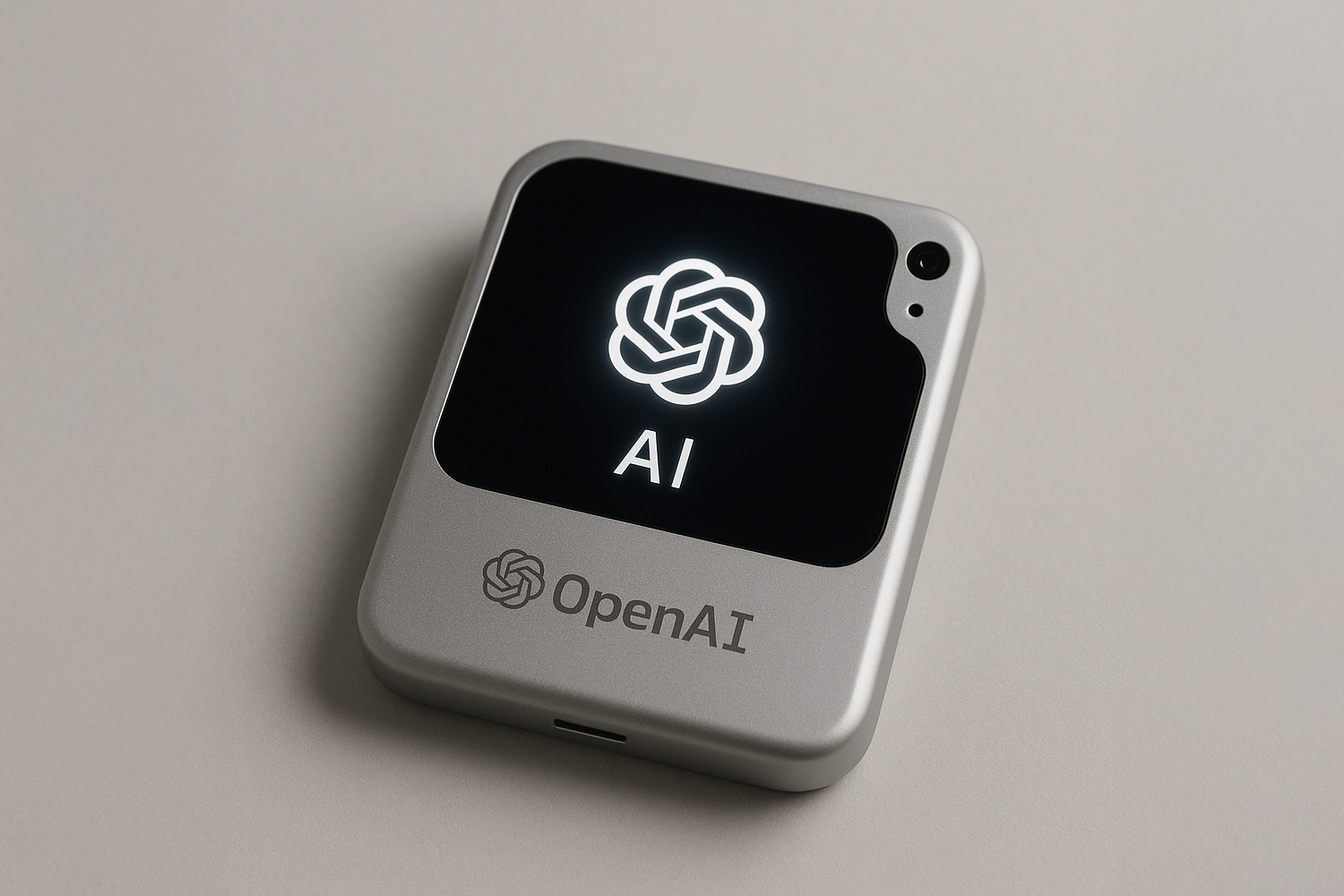
OpenAI, the company behind ChatGPT, is reportedly working on its first consumer device with Sir Jony Ive – the former Apple design chief who helped shape iconic products including the iPhone, iPad and Apple Watch. Depending on which report you read, it’s a screenless AI companion, a smart speaker, or something that doesn’t fit neatly into either category.
Whatever it turns out to be OpenAI is likely hoping for an iPhone-level shift in personal tech. The smartphone isn’t disappearing any time soon, mind, but just as it eventually replaced MP3 players, sat-navs and cameras for millions of people, AI could eventually change how we interact with our devices altogether – and how we design them in the first place.
It’s an ambitious goal, especially when so many companies are chasing the same prize. So what is OpenAI actually building, why is Jony Ive involved, and could this really become the next big thing after the smartphone? Let’s do our best to find out…
OpenAI gadget: what do we actually know?


Despite all the headlines, not that much. OpenAI hasn’t officially announced the device, shown it off, or even confirmed what it’ll be called. Almost everything we know comes from reporting by Bloomberg (specifically, reliable analyst Mark Gurman), later backed up by Reuters and other publications, which at least gives us a reasonably consistent picture.
The first thing worth clearing up is the “smart speaker” description that’s appeared in a lot of headlines. Bloomberg says that the device will look something like one, but OpenAI reportedly doesn’t see it that way internally. Instead, it’s said to think of the product as an entirely new type of AI computer – one that’s designed around conversation instead of apps and touchscreens. And yes, according to the reports, that means no display.
Instead, the device would apparently rely on OpenAI’s latest voice technology, allowing you to speak to it naturally rather than typing prompts into ChatGPT. It’s also expected to include cameras and environmental sensors to help it understand what’s happening around it, along with access to information like your calendar and emails so it can offer help before you even think to ask.
The idea isn’t just to answer questions, but to become more like an assistant that understands your day. Maybe it reminds you you’re running late as you head for the front door, helps with dinner while you’re cooking, or notices you’ve forgotten something before you leave the house – a very different proposition from asking Alexa to play the radio or setting a timer on your phone.
Another interesting detail is that it’s reportedly designed to move around the home with you. Rather than staying plugged into the kitchen worktop like a traditional smart speaker, Bloomberg says that it’ll include a rechargeable battery so you can carry it from room to room. It’s also said to feature moving mechanical elements that make it feel a little more expressive during conversations, although exactly what that means in practice remains anyone’s guess.
Beyond that, though, we’re still firmly in rumour territory. We don’t know what it’ll cost, what processor it’ll use, how long the battery will last, or even what OpenAI plans to call it. Bloomberg reports that the design has now been finalised and that OpenAI hopes to unveil it later this year, although the company has previously said it doesn’t expect to ship its first hardware before the end of February 2027.
Why does OpenAI suddenly want hardware?
OpenAI almost certainly isn’t doing this to become the next Sony, Samsung or Apple. The company already has one of the world’s most popular AI products in ChatGPT, and you can use it on pretty much anything with a screen. Whether you’re on an iPhone, Android phone, MacBook or Windows laptop, getting hold of ChatGPT is hardly difficult. So why spend billions building hardware from scratch?
One potential answer is that, despite ChatGPT’s popularity, OpenAI doesn’t actually own the experience. Every time you use it, you’re doing so through somebody else’s platform. Building its own hardware changes that.
Instead of asking people to open an app whenever they want AI, OpenAI appears to be imagining a world where AI is simply… there. Always available, aware of what’s happening around you and capable of helping without waiting for a carefully worded prompt.
That might sound like a subtle difference, but it completely changes how you think about using AI. At the moment, interacting with ChatGPT still feels a bit like using Google. You have a question, you open the app, you ask it, and you get an answer. OpenAI seems to think the next step is an assistant that understands enough about your day to step in before you even realise you need help.
Whether that’s actually useful or slightly creepy probably depends on how well it works. We’ll just have to wait and see.
Why Sir Jony Ive?

If OpenAI really believes we’re approaching the biggest change in personal computing since the smartphone, then building the hardware suddenly becomes only half the challenge. The other half is persuading millions of people to actually want it. That’s where Sir Jony Ive comes in.
During his nearly 30 years at Apple, he helped shape iconic products including the iMac, iPod, iPhone, iPad and Apple Watch. Those weren’t always the first devices of their kind, but they often ended up becoming the ones that everybody else copied because they were so polished.
As for AI, the technology itself is remarkable, but most of us still interact with it by opening a chatbot and typing into what is essentially a glorified text box. That’s fine if you already know what you want, but it doesn’t exactly feel like the future. OpenAI appears to want to move beyond the app icon, to an always-on world.
Interestingly, both Ive and OpenAI boss Sam Altman have hinted that they want technology to become less distracting rather than more. Altman has previously described current smartphones as feeling a bit like Times Square – noisy, cluttered and constantly demanding your attention – while saying one OpenAI prototype feels more peaceful and natural to use.
Despite all the hype (and Sir Jony’s massive design clout), this is no easy task. The AI hardware industry doesn’t exactly have a great track record – Humane rode months of hype with the AI Pin, promising a future where you could spend less time looking at your phone. Rabbit’s colourful R1 suggested AI agents would transform the way we use technology. Both bombed.
In both cases, people quickly found themselves coming to the same, awkward realisation – that their phones could already do it all. That’s a question that OpenAI will need a much better answer for.




Read the full article here


