






According to CarNewsChina, the company’s automotive division called “Project Starry Sky” once employed over 1,000 people, but now only a handful legal and HR staffers remain, charged with winding down the operation. In a statement, Dreame said it “recently adjusted certain operations that were in the exploratory phase,” and that going forward, it would focus on four key business areas: “smart home, outdoor/garden, smart mobility, and embodied AI.” (A spokesperson for the company didn’t respond to a request for comment.)
The news comes after China’s government issued new rules aimed at tightening oversight of the $3.4 trillion private fund industry, singling out Dreame in the process. After becoming one of the world’s largest manufacturer of vacuums, the company quickly moved into a variety of new businesses, spawning nearly a thousand affiliated ventures related to smartphones, robotics, and cars. But much of that expansion was funded by China’s government — and the government is now starting to take a closer look at how Dreame spends that money, according to CNBC.
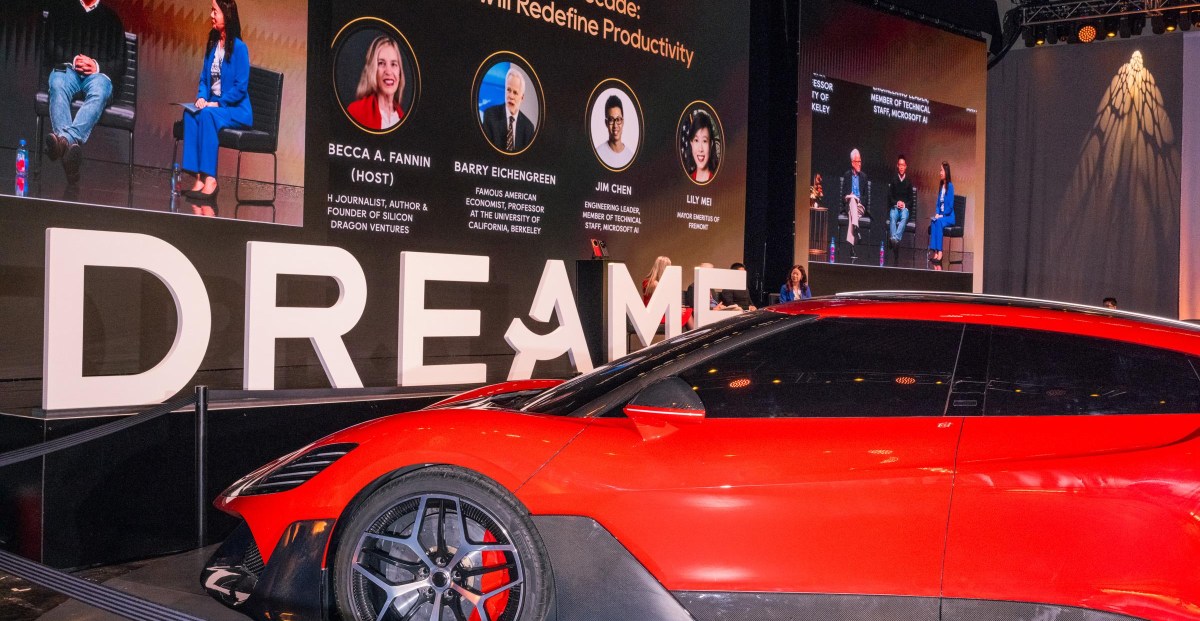
Dreame wowed audiences at a San Francisco expo earlier this year with “Nebula Next 01 Jet Edition,” a sleek looking concept car equipped with a pair of rocket engines that theoretically can accelerate from 0 to 60 mph in 0.9 seconds. The vehicle was allegedly equipped with a sulfide-based solid-state battery with a record-breaking energy density exceeding 450 Wh/kg and a purported range of over 550 km (341.7 miles). The company claimed its boosters would deliver 100 kilo-Newtons of force.
But the concept raised a lot of questions, including some basic ones about how Dreame could make a car accelerate so quickly without breaking the laws of physics. Apparently Dreame didn’t have any answers to these questions, as the car itself was fully vaporware. Former employees told China Economy that the concept that was shown off in San Francisco lacked an actual chassis and was driven via remote control. (Concept cars are rarely “real” cars, in the technical sense — but even this is a little shocking in its level of deception.)
The news that Dreame’s vaporware car was totally vaporware will come as little shock to those familiar with the showy, boastful promises of companies that have never actually built a car suddenly deciding to build a car. Faraday Future, another Chinese companies with ambitions to build all manner of electric, autonomous vehicles, ran into this exact problem nearly a decade ago. And it also faced accusations of operating self-driving cars for public demos via offstage remote control.
Read the full article here


