






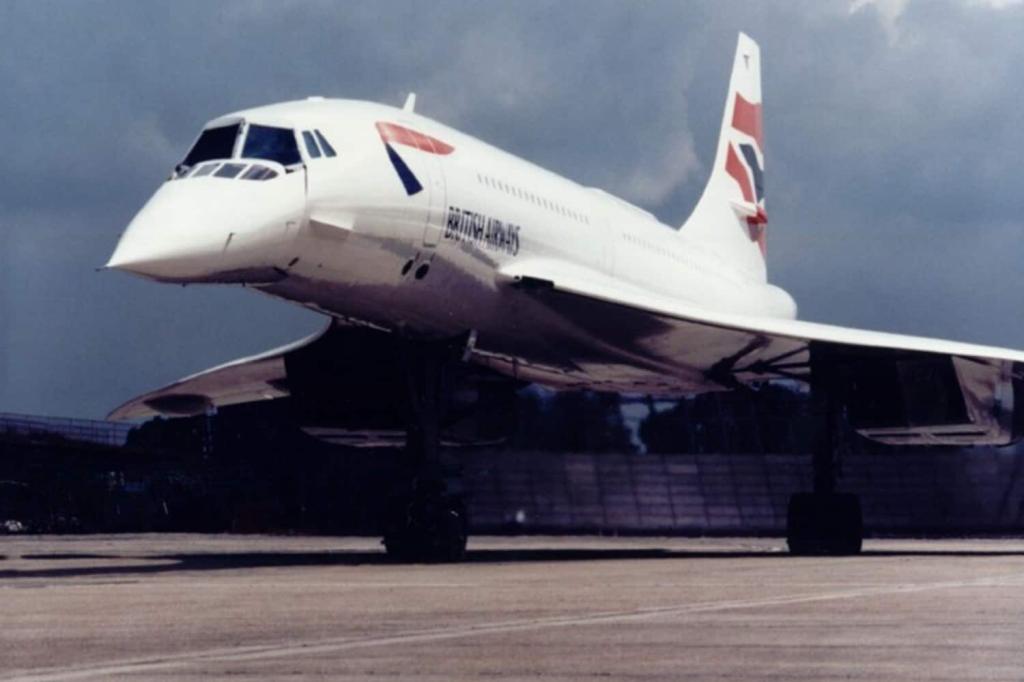
When it comes to speed of travel, commercial flight has regressed since the 1970s. For 27-years it was possible to fly between New York and London in under three hours thanks to a remarkable feat of Anglo-Franco engineering that offered the ultimate in luxury transatlantic travel.
The record flight time from JFK to Heathrow was two hours and 52 minutes at an average of 1,250mph. Cruising at 60,000 feet at a speed was Mach 2.04 – more than twice the speed of sound. As a species, we did that! Since the Concorde fleet was retired in 2003, it now takes around double the time to accomplish the same journey at subsonic speeds. Supersonic flight only exists in the military context these days, sadly. Despite 20 years of efforts to bring it back, none have got off the ground.
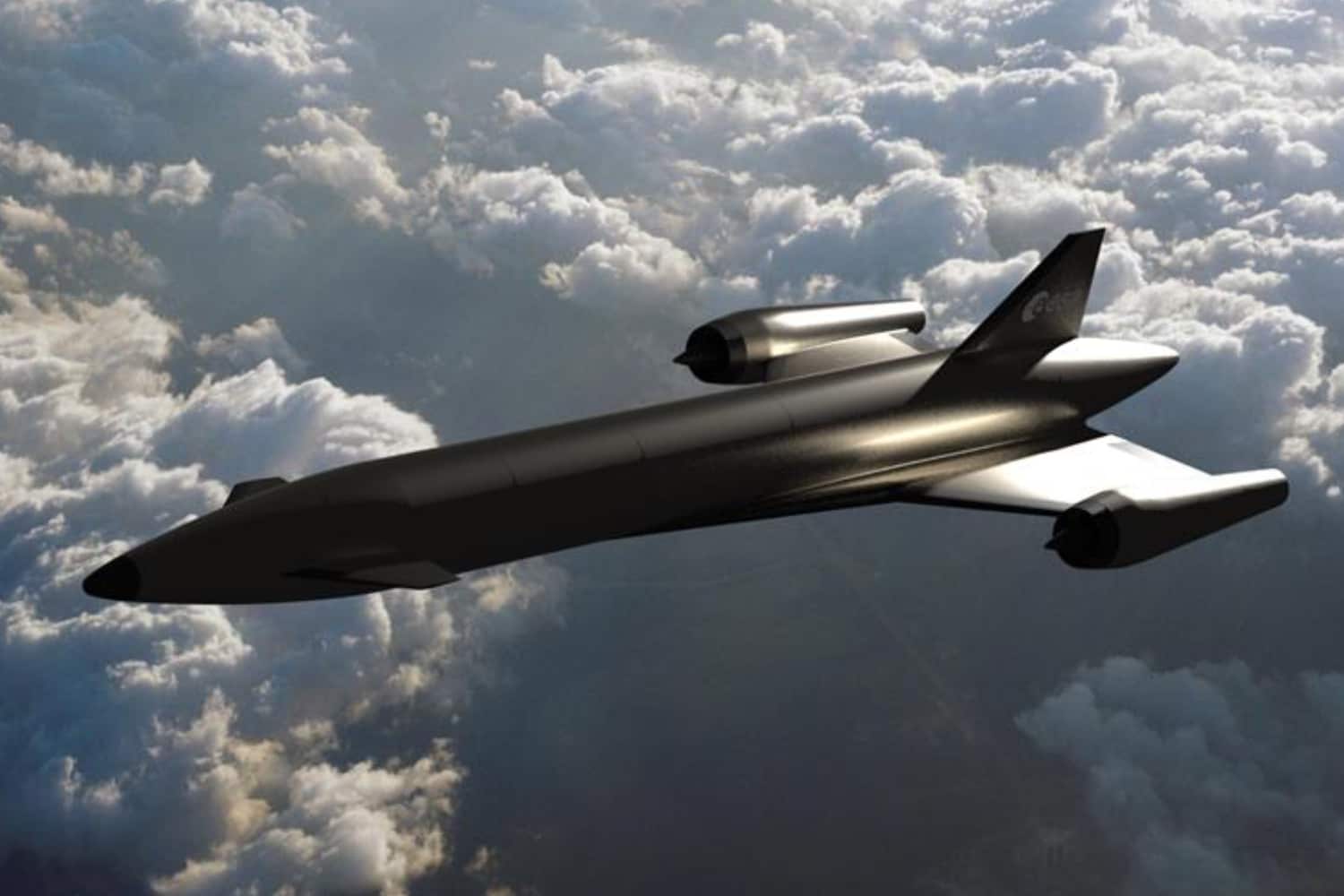
However, that may be on the cusp of change with the advent of Hypersonic flight via the European Space Agency-backed Invictus project capable of travelling at Mach 5 speed – that’s five-times the speed of sound.
What is the Invictus project?
The Invictus project – a partnership between the ESA and UK-based Frazer-Nash and other third parties – is still in the design phase and currently making plans for future testing of the concept.
It is planned to be a “fully reusable experimental aerospace vehicle capable of flying at Mach 5” with horizontal take-off and landing from a runway, just like a conventional passenger flight.
It is hoped the design will be finalised before the end of this year. The tests could take place in Machrihanish in west Scotland or Cornwall in England as early as 2031, with a final decision expected on the location expected this year.
The tests would assess key technologies like the hydrogen-fuelled precooled air-breathing propulsion system. “This innovative technology, able to chill superheated air in a fraction of a second, has already been successfully demonstrated through integration with conventional jet engines,” the ESA says.
This is key because when travelling at those speeds the air is too hot to be handled by a traditional turbine engine. The ability to cool the air quickly is what would make the sustained Hypersonic flight possible.
Why did Supersonic flight disappear?
The Air France Flight 4590 crash in 2000 spelled the end for the Concorde fleet. Commercial flights did not resume after the catastrophe that killed 109 crew and passengers and four more on the ground.
The legend of Concorde never recovered, but it wasn’t retired because the fleet was unsafe. It had a flawless service record for 24 years before the chain reaction of events that began with debris on the runway puncturing a tire.
The reasons for its actual retirement are numerous and contested. The Concorde fleet was losing money, especially as demand fell post 9/11 and laughable American boycotts of France following their decision to oppose the second Iraq war. Single digit passenger numbers, when the plane burned 6,771 gallons per airborne hour – seven times more than the planes today – were unsustainable.
Maintenance was becoming incredibly expensive because new planes were made after the 20 Concorde planes originally entering service. Air France wanted out. British Airways wanted to keep going. The French won out and the whole fleet was grounded.

What is the purpose of Invictus? Could passengers be next?
If the project comes to fruition, the primary use case would be affording easier access to the edge of space for the purposes of delivering satellites, etc.. However, it has the potential to “revolutionise both terrestrial and orbital transportation” according to the ESA.
Tommaso Ghidini, Head of ESA’s Mechanical Department, says: “Hypersonic flight is not just the next frontier of aerospace – it is the gateway to a new paradigm of mobility, defence, and space access. With Invictus, Europe is seizing the opportunity to lead in technologies that will redefine how we move across the planet and reach beyond it.”
Theoretically, it’s plausible that this technology could be opened up to passenger planes in the future. Mach 5 speeds (at least 3,806 mph) would enable travellers to get from London to Sydney in three hours, or from London to New York in one hour.
“You could be in Sydney, Australia in three hours. It depends on the speed at which it flies and the success of the technology, but it would be amazing wouldn’t it?” Spaceport Machrihanish Gordon Stephenson told the Telegraph. “The idea of the space plane is a bit like an aircraft; it can come down again and be used.”
Mach 5 passenger flights are possible but are they realistic?
Supersonic flight hasn’t returned for many of the reasons it initially failed. The tech remains commercially unviable. Concorde flights were horribly inefficient at pre-millennium gas prices. Can you imagine today? Cost would likely be incredibly prohibitive.
The use of cryogenic liquid hydrogen as a fuel source promises to cut out carbon emissions – a major barrier to the return of Supersonic flight. However, it would release greenhouse gases like nitrous oxide directly into the atmosphere. Can’t win there.
The problem of noise pollution that hasn’t been solved either. The sonic boom – that constant thunder-like crackling – when the speed of sound is broken, wasn’t permitted over land because it was a) disruptive and b) could smash windows or crack plaster on the ground.
At Mach 5 the Sonic boom could reach 160 decibels, far more than Concorde’s 110dbs. During testing, that can be mitigated to ensure communities are unaffected, but not for practical passenger flights.
The ‘Kangaroo Route’ for a London to Sydney trip is majority over land, so it’s highly unlikely we’ll be travelling that flight path at Mach 5. London to New York may be more achievable because the journey mostly happens over open Atlantic Ocean.




Read the full article here


