





It feels like a new gym pops up on the high street every few seconds these days, with enticing, low-cost membership offers already convincing almost 20-percent of the population to sign up to monthly plans.
However, research by Atom Bank earlier this year found that nearly half of those questioned in its survey didn’t use the membership regularly. Thankfully, there is another way.
Wayne Gordon, former Gladiator and Bio-Synergy ambassador, has trained everyone from complete beginners to elite performers. His conclusion? The basics still work best.
“I’ve trained on TV sets, in elite sports facilities and in my own living room,” he says. “People are always looking for the perfect workout when what they actually need is a consistent one.”
With that in mind, here are six workouts that cover strength, muscle building, fitness, mobility and fat loss — without requiring a fancy gym or complicated programme.

1. The Full-Body Strength Builder
Best for: Packing on muscle and improving strength
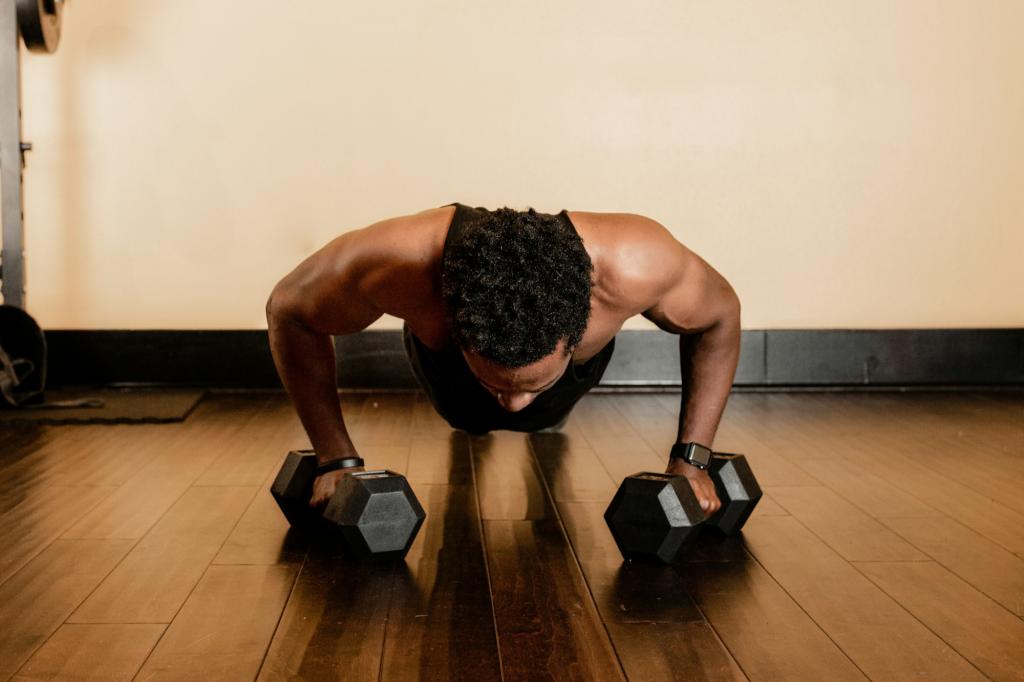
Recommended by fitness coach to the stars Monty Simmons, this session trains every major muscle group through the movement patterns your body uses every day: squatting, pushing, pulling and hinging. Plus, all you need is a set of dumbbells.
The workout
- Goblet Squat – 3-4 sets × 8-12 reps
- One-Arm Dumbbell Row – 3-4 sets × 8-12 reps per side
- Rest 45 seconds
- Push-Up – 3-4 sets × 8-15 reps
- Dumbbell Romanian Deadlift – 3-4 sets × 8-12 reps
- Rest 45 seconds
- Dumbbell Overhead Press – 3 sets × 8-12 reps
- Rest 90 seconds between rounds.
Form tip
“Focus on feeling the muscles work, not moving the heaviest weight possible,” says Simmons. “Most beginners get better results by slowing down than by adding more weight.”
2. The 15-Minute ‘No Excuses’ Workout
Best for: Busy schedules
Everyone claims they don’t have time to exercise – this workout removes that excuse entirely.
Using nothing more than your bodyweight, it builds strength, elevates your heart rate and can be squeezed into a lunch break or between Zoom meetings.
The workout
- Bodyweight Squat – 40 seconds
- Reverse Lunge – 40 seconds
- Push-Up – 40 seconds
- Glute Bridge – 40 seconds
- Plank – 40 seconds
- Rest 20 seconds between exercises.
- Complete 3 rounds.
- Rest 60 seconds between rounds.
Form tip
“The goal isn’t perfection,” says Simmons. “The goal is finishing the workout.”
For push-ups, Gordon recommends keeping your elbows at roughly 45 degrees from your body rather than flaring them wide.
“It protects your shoulders and actually makes the movement harder in all the right ways.”
3. The Body Transformation Big Six
Best for: Maximum results with minimal equipment
If former Gladiator Wayne Gordon could only prescribe six exercises for the rest of your life, these would be the ones.
Together they cover every major movement pattern the human body needs.
The workout
- Squats – 3-4 sets × 10-15 reps
- Push-Ups – 3-4 sets × 10-15 reps
- Walking Lunges – 3 sets × 10 steps per leg
- Dumbbell Rows – 3 sets × 10-12 reps per side
- Planks – 3 × 30-60 seconds
- Sprint Intervals – 5 rounds × 20-second sprints
- Rest 60-90 seconds between sprint efforts.
Form tip
For rows, Gordon says the key is thinking differently about the movement. “Pull your elbow towards your hip, not the weight towards your chest.”
That simple cue shifts the focus onto the lats and upper back instead of letting the biceps do all the work.
4. The Anywhere Athletic Circuit
Best for: Building muscle, burning fat and improving fitness at the same time
Created using fitness expert and co-Founder of One LDN, Kurt Johnson’s favourite body-transforming exercises, this circuit combines pushing, pulling, lower-body strength and explosive conditioning into one session.
The result is a workout that builds muscle, elevates the heart rate and improves overall athleticism without requiring a room full of gym equipment.
The beauty of circuit training is that you’re constantly moving, which means you’ll challenge your cardiovascular system while simultaneously training all the major muscle groups.
The workout
- Push-Ups – 10-20 reps
- Pull-Ups (or Inverted Rows) – As many quality reps as possible
- Bulgarian Split Squats – 8-12 reps per leg
- Burpee to Squat Jump – 8-10 reps
- Rest 90 seconds to 2 minutes.
- Complete 3 rounds.
Form tip
Johnson says push-ups remain one of the most effective upper-body exercises ever invented, provided your technique is solid.
“Keep your body in a straight line from head to heels and lower your chest towards the floor with your elbows tucked at roughly 45 degrees,” he explains.
For pull-ups, focus on driving your elbows towards your hips rather than simply trying to pull your chin over the bar.
When tackling Bulgarian split squats, keep your torso upright and push through your front heel to stand. If bodyweight becomes easy, simply add dumbbells.
Finally, don’t rush the burpees. Land softly from the squat jump and absorb the impact through bent knees before starting the next rep.
This circuit isn’t about surviving the first round — it’s about maintaining good movement quality all the way through to the third.


5. The Beginner Cardio Upgrade
Best for: Improving fitness without crumbling knees
Running can feel intimidating if you’re starting from scratch. That’s why Simmons recommends the walk-jog workout.
It improves cardiovascular fitness, burns calories and builds confidence without leaving you gasping for oxygen after five minutes.
The workout
- 1-minute jog
- 2-minute brisk walk
- Repeat for 10 rounds.
- Finish with a 5-minute cool-down walk.
Total workout time: approximately 35 minutes.
Form tip
“Don’t treat the jog like a fitness test,” says Simmons. “If you’re gasping for air after the first round, you’re going too hard.”
The goal is consistency, not setting a world record.
Best for: Fat loss, fitness and maximum efficiency
“I’ve done a lot of cardio in my life. Long runs, cycling sessions, rowing — all valuable in their own right,” he says. “But if I had to pick one method for improving cardiovascular fitness and burning calories in the least amount of time, it would be sprint intervals without hesitation.”
Unlike steady-state cardio, sprint intervals train both your aerobic and anaerobic energy systems at the same time, improving fitness while also driving calorie burn long after you’ve finished.
The catch? You have to actually sprint.
The workout
Beginner
- 5 rounds × 20-second sprint
- 60-90 seconds recovery walk
Intermediate
- 8 rounds × 20-second sprint
- 60-90 seconds recovery walk
Advanced
- 10-12 rounds × 20-second sprint
- 60-90 seconds recovery walk
Total time: 10-20 minutes depending on fitness level.
Form tip
Before you even think about sprinting, warm up properly.
“The one thing I won’t compromise on is the warm-up,” Gordon says. “A few minutes of brisk walking, light jogging and some mobility work before you go anywhere near full speed isn’t optional — it’s non-negotiable.”
And don’t be tempted to shorten the recovery periods.
“That recovery is part of the session, not a break from it. The contrast between effort and rest is what drives the adaptation.”
Liked this? How to get six-pack abs in time for summer




Read the full article here


