





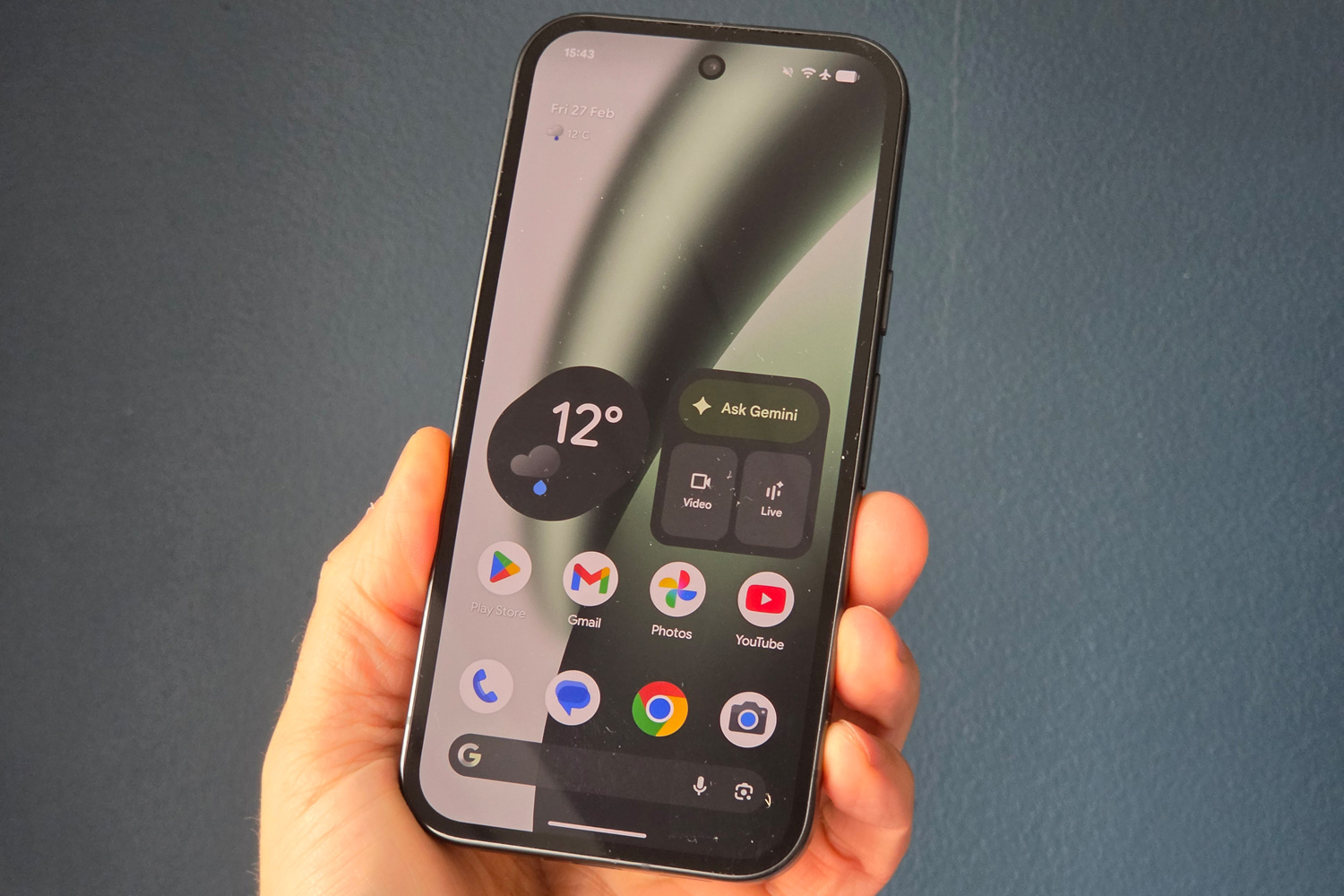
Google has finally started to roll out an Android feature that will attempt to remedy the age-old problem of motion sickness. The Motion Assist feature, first spotted in December 2024, is starting to land on Pixel phones, according to a new report.
According to Android Authority’s team of sleuths, Motion Assist is starting to show up on homegrown Google Pixel phones running on Android 17, seemingly via a phased rollout. Those who have it can find the feature by browsing to Settings > Your profile > All services and choosing Motion Assist under the personal and device safety section.
When enabled, Android users may see a prompt that reads: “This may help reduce motion sickness when you’re in a moving vehicle.”
When it was spotted in Android betas, Google called the feature Motion Cues, but it is now fully-formed. It works by showing visual cues, which move around the edges of the display – in line with how the vehicle itself is moving.
Users can also customise the colour, shape, and opacity of the indicators. The the idea is that users can focus on the moving dots to neutralise the effects of the motion. That’s because it matches what your eyes see with the motion you are feeling in your body. It can be enabled to automatically to start when the phone senses the user is travelling in a moving vehicle, or can be quickly turned on and off via a Motion Assist tile in Android’s Quick Settings.
Apple offers a feature called Vehicle Motion Cues, which operates on the same premise. It launched in iOS 18 in 2024. Back in March this year, Samsung revealed a headphones app called Hearapy, which promises to reduce motion sickness for people who suffer during travel by playing a 100Hz sound for a minute to set you up for a two-hour trip.
At the time Samsung says the “ordeal” is caused by inner-ear conflict. “The balance organ registers movements, the eyes see something quiet like a smartphone display or a book. The body reacts with stress,” Samsung said.
“Researchers have experimentally investigated which clay most effectively stimulates the balance organ. The result: If you hear a sound with 100 Hz for 60 seconds at a volume of 80 to 85 dB, you can improve your balance performance,” Samsung said in a blog post at the time.
“The researchers were able to transfer the result to people who suffer from motion sickness. The test subjects had significantly less stress and fewer complaints during a car ride. The effect can last up to 2 hours. However, it only shows up if no music or other sounds disturb the sine tone. In addition, the frequency must be exactly 100 Hz and both ears must be sounded for at least 1 minute before the ride. The Samsung Galaxy Buds4 Pro in combination with the free Hearapy app from Samsung contribute to pleasant travel conditions – whether on the plane, car or train.”
We’ll see how Google’s feature matches up!


Read the full article here


