

Introduction
We’ve come a long way from smart speakers simply being a way to turn your lights on and off without physically reaching for the switch. Voice assistants are now expected to have full-blown conversations, know current events inside out and access every corner of your digital life. It’s clever stuff – which is perhaps why the Google Home Speaker waited nine months from its initial reveal before finally going on sale.
This orb-like speaker promises 360-degree sound from something barely any bigger than a grapefruit, but music isn’t the main event. It was purpose-built for Gemini for Home, which has seen a near-constant stream of updates and tweaks since arriving in beta form. The new voice assistant sounds less robotic, recognises a lot more than specific phrases and can keep the chatter going with Gemini Live – though only if you’re willing to fork out for the monthly fee.
At $100/£100 it competes directly with Amazon’s Echo Dot Max and (as of late June 2026) narrowly undercuts Apple’s HomePod Mini, meaning it’s a three-way showdown between Gemini, Alexa+ and Siri. Can Google come out on top?
Is the Google Home Speaker’s design a bit derivative?
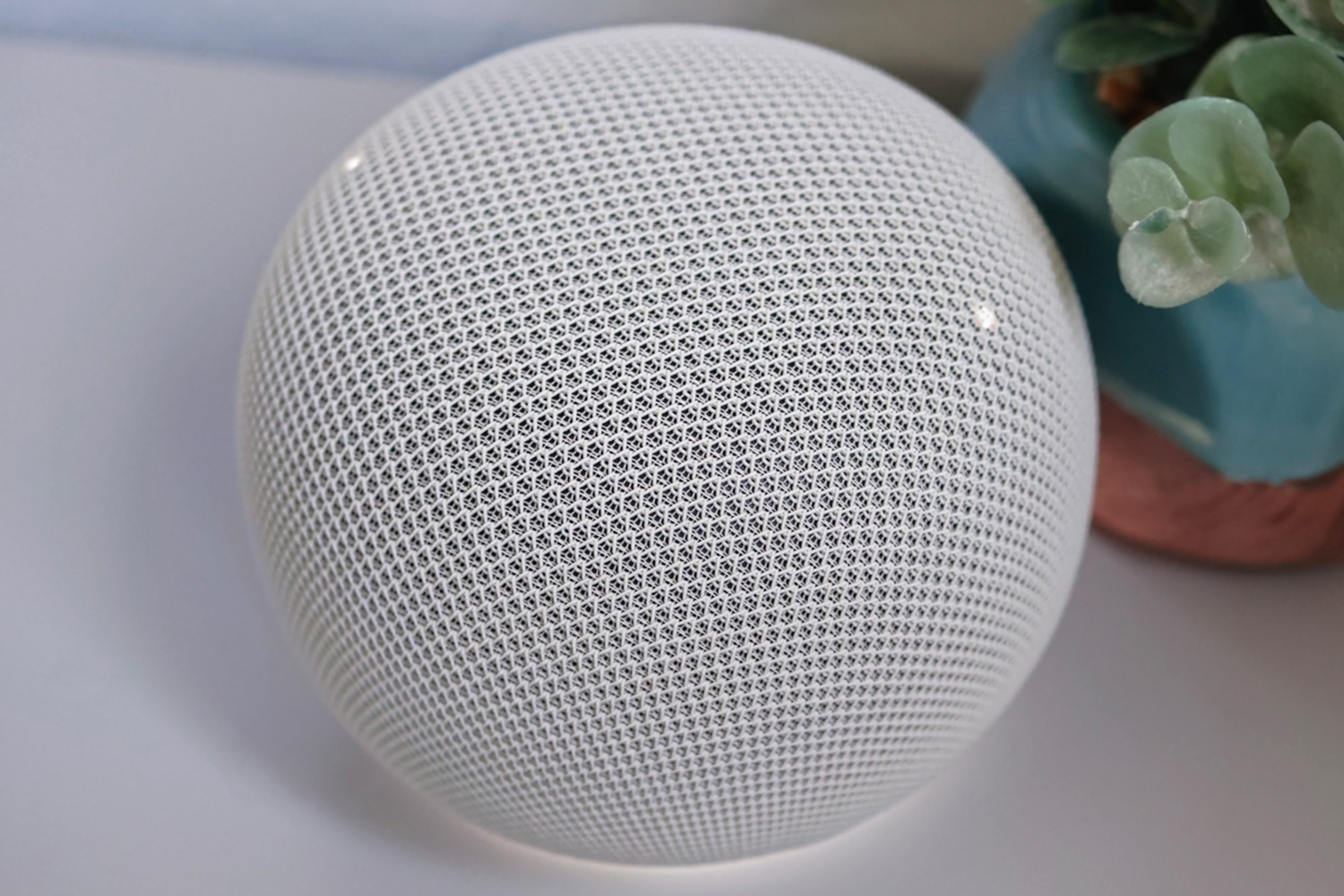
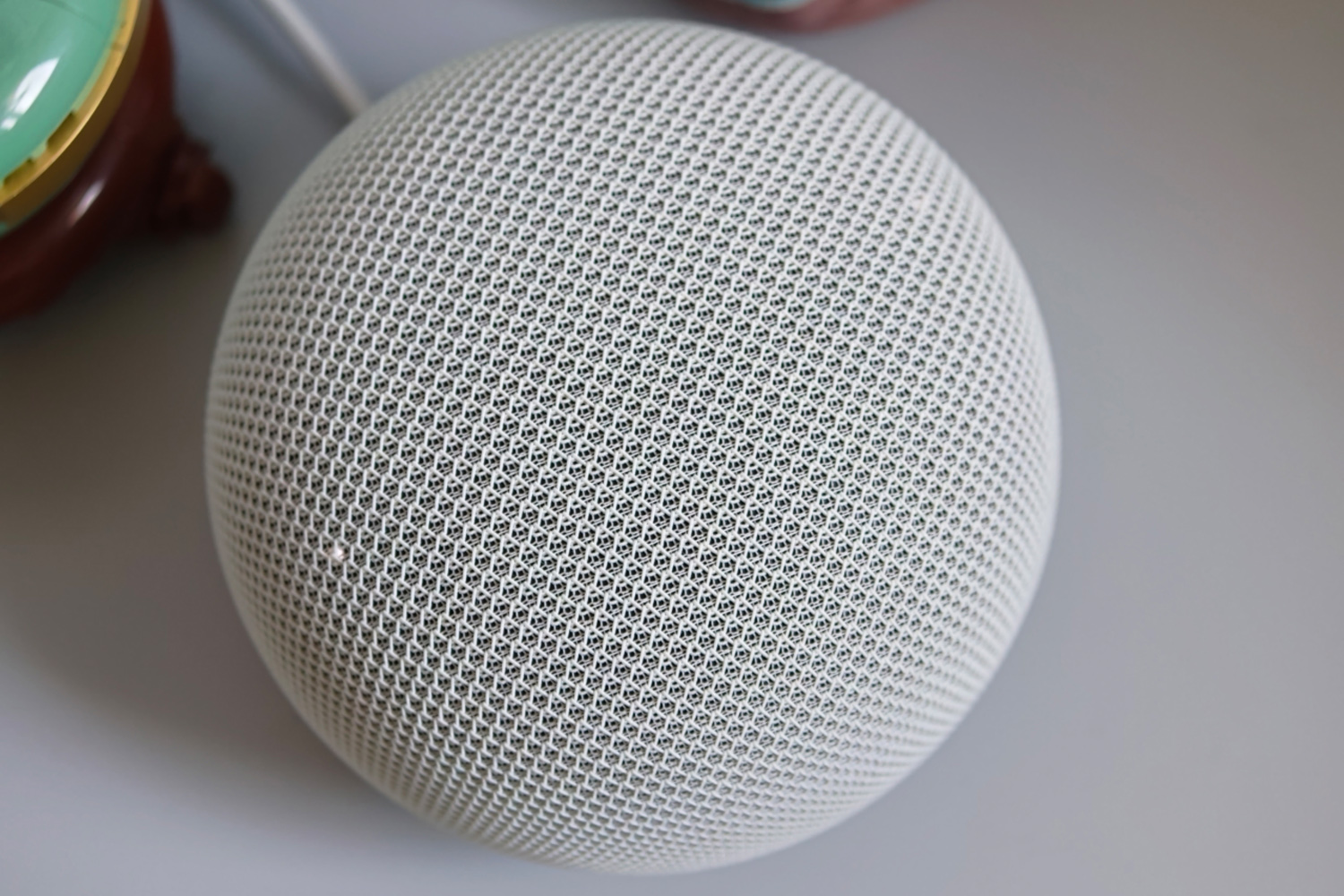
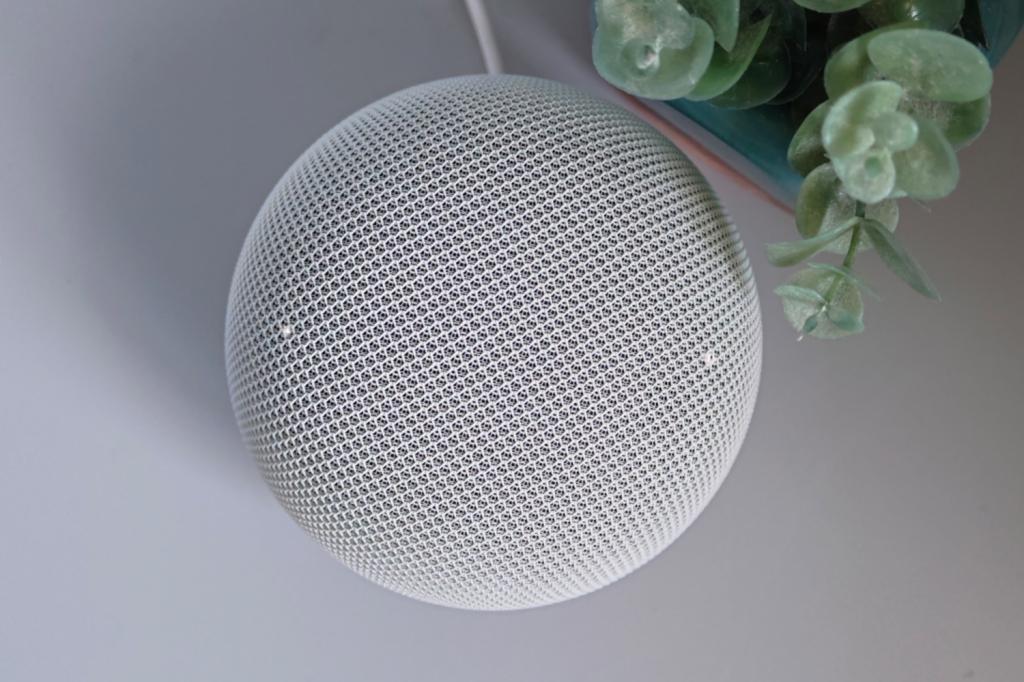
You could say that. The Google Home Speaker replaces both the Nest Audio and Nest Mini. It’s a slightly squashed sphere that’s a lot smaller than the former, but taller than the latter to make room for a larger, down-firing full range speaker driver. To me it looks an awful lot like a HomePod Mini but without the flat top, or an older Amazon Echo but with a more distinctive pattern to its fabric wrap. Google says the 3D knitting process used helps reduces material waste and the fabric itself is partly recycled, which is a small environmental win.
It’s a real shame Google has decreed the two more interesting colours (Berry, a pinky-red, and Jade, an earthy light green) be kept exclusive to the US; everywhere else just gets Hazel (black) or Porcelain (white). At least they’re fairly neutral, so I had plenty of choice when picking a place for my review unit to live.
The captive power cord was more restrictive; it’s not that long at only 5ft and were it to break you’d need to send the speaker back for repair, rather than simply buy a replacement like you can with Amazon’s latest Echos.
Physical controls appear to be entirely absent, but tapping the top of the speaker pauses music playback and tapping either side adjusts the volume. Little white LEDs illuminate to point you in the right direction. The one hardware button – a mute switch for the three integrated far-field microphones – is hidden at the rear of the speaker. Flick it and the LED ring built into the base glows orange, instead of the white to indicate Gemini for Home is listening or the shades of blue that tell you it’s thinking or responding.
What are the Google Home Speaker’s connectivity options?
This is very much a solo smart speaker, with no 3.5mm port to hook up another device using a wired connection. It does have Bluetooth built-in, though, so you can pair wirelessly for music playback even if your device isn’t on the same Wi-Fi network.
You can run two Google Home Speakers in a stereo pair or as part of your home cinema when combined with a Google TV Streamer, where it supports Dolby Atmos and can convert regular audio to spatial – though only ever through two speakers. Amazon’s Echo Studio can run five, each handling a separate channel, if you’re fully committed. I was only sent a single speaker for this review so couldn’t test this functionality.
What are the Google Home Speaker’s smartest features?
On the hardware side, the Home Speaker nails the basics. Naturally it slots straight into the Google Home ecosystem, letting you control any compatible smart home kit using your voice. The smartphone-assisted setup was a breeze, taking just a few minutes to join my wireless network and appear in my Google Home app’s devices list. From there it could control any of my smart lights, play music to my speakers and activate my robot vacuum. It’s also a Matter Hub and can serve as a Thread border router, letting compatible smart kit connect to it directly.
The speaker isn’t as well equipped as its rivals, though. A HomePod Mini has temperature and humidity sensors built-in, as does the Echo Dot Max. Amazon’s hardware also has ambient light and presence detection, and can extend Eero mesh routers. That Google didn’t think to offer similar compatibility with its Nest Wi-Fi Pro routers seems like an own goal to me.
It’s once you start speaking to Gemini for Home that the Google Home Speaker starts to make more sense. The microphones could recognise me saying “hey Google” from across the room, even while playing music, and it rarely struggled to recognise what I’d said.
Gemini’s voice (of which there are multiple styles to pick from) is convincingly human-like – much more so than Amazon’s updated Alexa+. It responded to my requests very quickly and stutters or stumbles don’t throw it off.
Responses are casual rather than gratingly chipper, and often include context: when I asked for recipes to prepare during a heatwave, it confirmed it was especially hot in my area that day. It accessed my Google calendar when asked what I had on that day and was able to delete entries for a train journey I’d cancelled the evening before.
Continued conversation keeps the mics active so you don’t have to say the trigger word after every request, meaning I could ask for more detail after a query about the weekend’s upcoming Formula One race only gave the basics. The follow-up explained the circuit’s characteristics and which team was favourite to win. It’s all very slick, and as close to feeling like I was talking to a person rather than a gadget as any voice assistant I’ve tried.
Gemini Live is where the things get properly conversational, letting you bounce ideas off the assistant as it responds in a proper back-and-forth, pivoting to different topics when prompted and letting me interrupt mid-flow when I wanted more in-depth info. It helped me plan a weekend around my infant son’s nap schedule, taking the hot weather and that I wanted to watch the F1 into account.
Maybe it’ll be a must for planning holidays or revising for school subjects, but I can’t honestly say it’s a feature I used more than a few times outside of this review. Perhaps that’ll change the more I live with it, but the clock is ticking: Gemini Live doesn’t come as standard, but bundled into the Google Home Premium subscription. Once the six month trial included with the Google Home Speaker expires, you’re expected to pay $10/£8 per month (or $100/£80 annually) for the standard membership.
Google Home Premium is effectively the successor to Nest Aware, so most paid-for features focus on security cameras and Nest video doorbells. You get 30 days of “event-based” video history, familiar face detection alerts and package notifications along with Gemini Live, while stepping up to the $20/£16 per month or $200/£160 per year Premium plan doubles event history to 60 days, brings 10 days of 24/7 history with search, audible event descriptions (played through the Home Speaker) and daily summaries of any recorded events. If you don’t pay Gemini for Home will still handle voice-activated basics, but won’t do conversations.
I don’t have any other Nest kit, and given Gemini Live is effectively free on my Android smartphone, I can’t see any reason to pay a monthly fee to do the same thing on a different device. Hopefully Google either reconsiders the subscription model, or makes it more compelling in the future.
How does the Google Home Speaker sound?
Temper your expectations – the 58mm driver may be a fair bit larger than the 40mm found inside the outgoing Nest Mini, but this is still about as small as smart speakers get. There’s also no separate woofer and tweeter like the larger Nest Audio, so while Google might’ve aimed for a similar sound profile, I don’t think the Google Home Speaker quite gets there.
The low end isn’t quite as refined; there’s not the distinct separation between the sub bass and bassline on Mt. Eden’s Air Walker that a larger speaker can deliver. That said, there’s more oomph here than the Nest Mini ever had, and it’s largely on par with the Apple and Amazon competition.
Mids are the standout, doing a good job with vocal clarity and ensuring Luude’s Down Under isn’t overwhelmed by the percussion or synths. Basic bass and treble sliders can be found in the Google Home app if you want a little less top-end.
I liked how it comfortably filled my small home office with sound, though there’s not the clear separation between instruments you get from a bigger speaker. A Sonos Era 100 or Bose Lifestyle Ultra Speaker deliver better clarity and room-filling ability, but they cost more than twice the price. At the $100/£100 level it’s very competitive and a definite step up from the previous generation.
Should you buy the Google Home Speaker in 2026?
If you’re all-in on Google’s services but haven’t yet picked up a smart speaker, the Home Speaker makes a lot of sense. It slots seamlessly into the Google Home ecosystem, with an intelligent voice assistant that understands context and sounds more natural than either Siri or Alexa. Audio quality is also impressive for a speaker of this size.
That you only get the conversational Gemini Live if you subscribe is a letdown, though, given you get a near-identical experience for free through your phone. The rest of the paid-for features will also be lost on you without a Nest doorbell or security cameras.
I think Amazon maintains its hardware lead for now: the latest Echos pack in more sensors, making them a better choice of smart home hub, and have wider device support for things like Eero routers. There’s also no real incentive to upgrade if you’ve got a recent Google speaker, given they support Gemini for Home too.
For anyone that chats to Gemini Live on a daily basis, though? I can see this getting plenty of use.
What are the Google Home Speaker’s technical specifications?
| Drivers | 58mm dynamic |
| Wired connectivity | None |
| Wireless connectivity | Wi-Fi, Bluetooth |
| Smart home connectivity | Matter, Thread, Google Home |
| Dimensions | 54x54x87mm, 396g |


Read the full article here
