




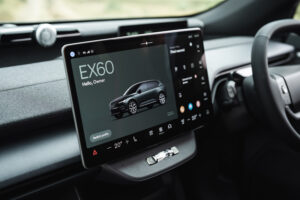


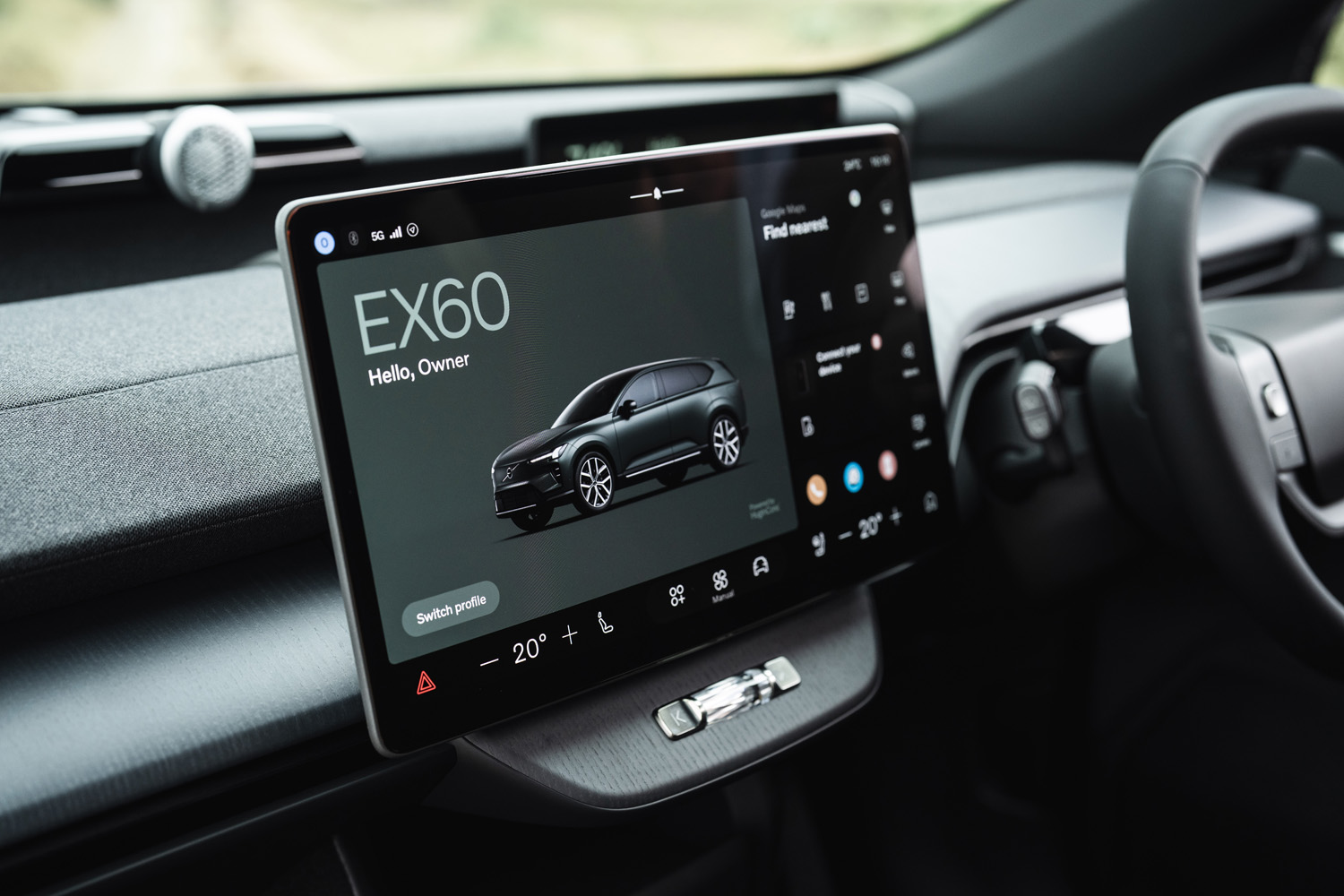
“That’s an interesting topic. I’d be happy to discuss it with you.” It’s not the sort of reply I’m used to getting when using in-car voice commands – but it might quickly become the norm for electric cars. The Volvo EX60 was my first on-the-road experience with Google Gemini, the conversational AI assistant that’s just as happy to shoot the breeze as it is to find driving directions or put on your favourite playlist.
The EX60 – which you can read our driving impressions of here – heavily integrates the latest version of Google’s Android Automotive OS throughout its infotainment system. Navigation naturally defaults to Google Maps and Google’s entertainment apps can stream music using the car’s on-board LTE connection. Prod the gloriously sharp and colourful 15in OLED touchscreen (or a physical button on the steering wheel), though, and it reveals its party piece.
Gemini understands context and is plugged into your route planning, so you can ask it to plot detours around specific food choices (“find a place on my route that sells burgers”), ask follow-up questions (“what are the reviews like”) and set the mood without having prepped a playlist first (“play something relaxing”). It all works as advertised, not being tripped up by my “ums” and “ahs”, and responding quickly. Eventually it’ll be able to access the car’s exterior cameras so you can ask if you’re allowed to park somewhere, though that’s still a work-in-progress.
Open-ended conversations go even further. Google and Volvo’s press release suggested I ask it to “brainstorm a warm, adventurous family holiday without a long flight”, which to me is unrelated to the task of driving. During my test drive I questioned Gemini on the merits of deeper discussions with an AI while behind the wheel of a near-2.4 tonne SUV that can dash to 60mph in less than five seconds. It didn’t quite get my meaning and the chat quickly tapered off after a few back-and-forths.
Volvo’s reps were confident that Gemini’s more advanced conversational abilities don’t fly in the face of the firm’s long-running safety focus – which also sees the EX60 being first with a multi-adaptive seatbelt. It uses cameras and weight sensors to adjust the amount of force used to restrain you, so it doesn’t overdo it for children or pregnant women but applies extra for taller or heavier-set passengers. The ‘safety hug’ it gives when starting up is a nice touch.
Just like Gemini on your phone, Gemini in the car could still do with getting to the point a little quicker, and tone down its overly praising nature: Signing off with “it’s been fun to chat” (or words to that effect) felt insincere coming from a disembodied robot voice.
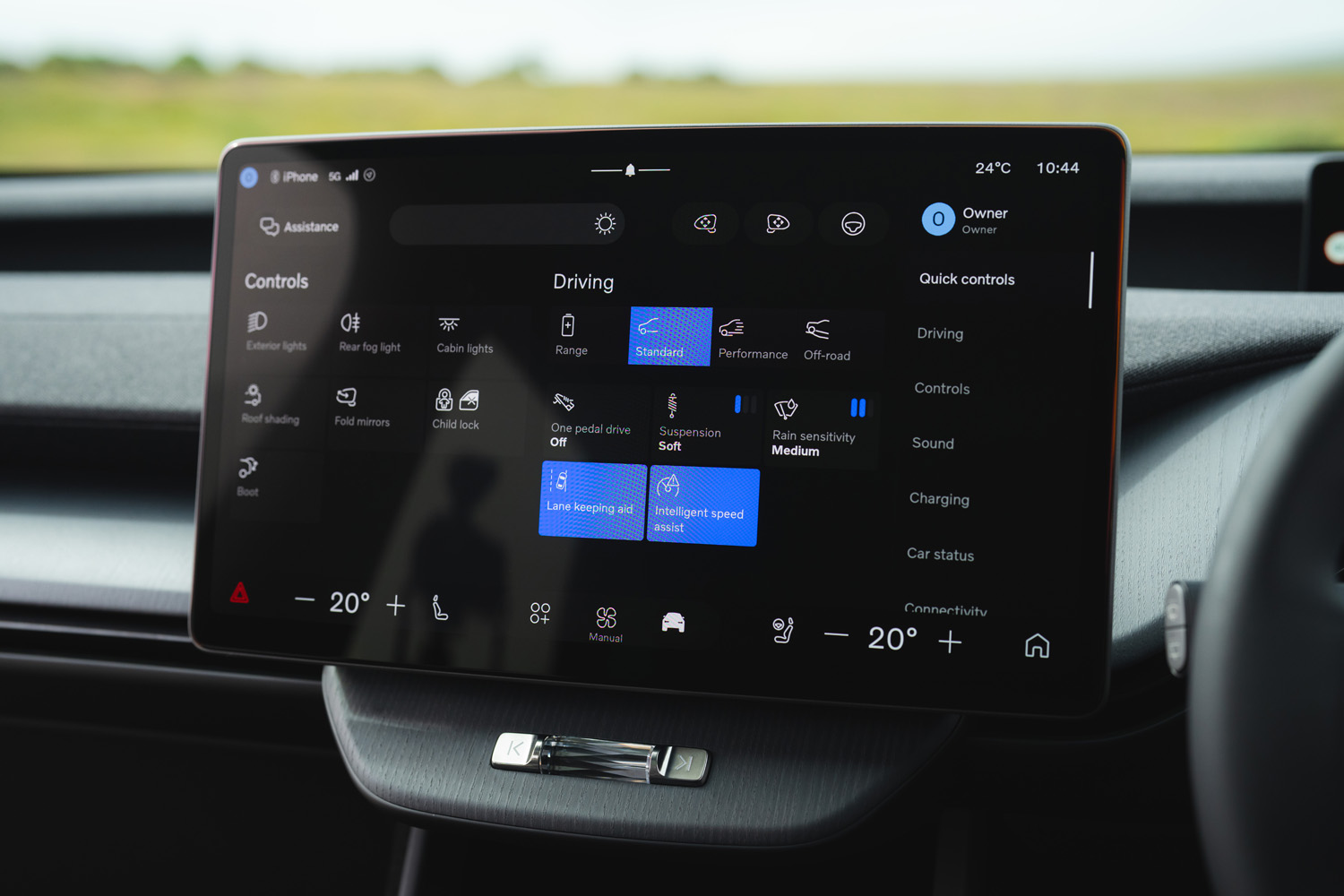
What it can’t do right now is point you to specific settings within the car’s menus – something that I’m sure drivers used to buttons would welcome, given the dashboard is devoid of all physical controls save the volume dial. That said, the switch from a portrait touchscreen to a landscape one and a few minor layout tweaks from the ES90 electric saloon I drove in 2025 meant the settings I needed most often were all just a tap (or two) away. The climate controls always being present at the bottom of the screen was a big win.
A mix of Qualcomm and Nvidia hardware under the skin provide plenty of processing oomph, so the UI feels instantly responsive. It’s intuitively laid out, with an ever-present shortcut taking you straight to the drive modes, light controls and ADAS systems. Everything feels easier to find than any of the current crop of Chinese EV rivals, which have almost all embraced touchscreens but have yet to fully nail the ergonomics.
Keeping the digital instrument cluster around is a big part of that here. It has been pushed further away from the driver, to occupy the same eyeline as a heads-up display might, but with enough resolution and clarity to display a lot more information than even the most advanced HUD. That’ll be a big deal when L2+ autonomy comes along later. Right now it can show navigation, visualise the ADAS’ hazard detection systems, or simply show basic driving info like speed, range and traffic signs. Either way you’re keeping your eyes on the road more than in cars that just have a centre console display.
A knock-on effect has having to shrink the steering wheel a little to ensure it didn’t obscure the screen, but I liked how it made me feel I was driving a smaller car – despite an abundance of narrow lanes on the driving route telling my brain otherwise.
The other highlight from my test drive was the outstanding Bowers & Wilkins sound system. 28 separate speakers, including ones built into the headrests, do a phenomenal job at creating a convincing spatial sound, with even stereo tracks feeling like individual elements were being scattered throughout the cabin.
There’s a wonderful sense of clarity here too, with a clean high-end and impactful bass that doesn’t need to be cranked to deafening levels before you hear it. The fact there’s no noise from the electric motor helps here, of course, but so does the active noise cancelling tech which piggybacks on the speakers to reduce the sense of wind and road noise.
I’d argue it’s reason alone to buy the EX60’s Ultra trim over the Plus variant, which gets a Bose-tuned setup – even if that does bump the on-the-road price to north of $67,000/£65,000.




Read the full article here


