





The internet has settled on a grim nickname for what has become, in essence, my favourite pair of walking headphones: “pervert glasses”. That’s awkward, because headphones really are what my Ray-Ban Metas mostly are to me.
Most of the time, I use them as open-ear headphones while walking around town or through the woods near my home. I average around 20,000 steps a day, and I can still hear cars, cyclists, and other people around me. They sound much better than the bone-conduction headphones I’ve tried, too. Occasionally, I’ll listen to an audiobook or YouTube video instead, and they help me stay more in the moment when playing with my son, or going on hikes.
Then my colleague Britta O’Boyle wrote about everything wrong with Meta’s so-called “pervert glasses”. Her article covered women being filmed without their consent, influencers provoking strangers, and why a tiny white recording light doesn’t necessarily make people feel protected.
My reaction wasn’t that she was wrong. It was the uncomfortable realisation that I’d judged the glasses almost entirely from inside the frames.
Now, I’m a man who has never felt particularly vulnerable walking alone, and I know my intentions are harmless. But everyone around me has much less information. They can’t tell whether I’m listening to music, asking Meta AI about a landmark, taking their photograph, or livestreaming them.
Recently, with recording using the glasses now restricted in Wetherspoon pubs and other venues, and the devices prohibited throughout courts and tribunals in England and Wales, I wanted to understand what I’d been missing…
Why I like them




The camera accounts for a tiny proportion of my use, but it has captured some of my favourite memories.
At Legoland, the glasses let me record our day, including some ride footage, without holding a phone that I could drop. Venue and ride-specific rules still apply, of course. In the playground, I could film while climbing across monkey bars and going down fireman’s poles with my son. A few years ago, they let me enjoy a 90,000 step, three-day hike without spending every waking moment capturing memories through my phone’s screen instead.
A GoPro could do something similar, but I don’t own one and have no desire to become the action-camera dad strapping equipment to his head before kicking a football around at a picnic. The Ray-Bans are already on my face because it’s sunny, and I can take a picture or start recording with a button press or voice command.
They’ve proved useful in less photogenic ways too. In Italy, I asked Meta AI to translate signs, which were then read to me through the speakers (in Dame Judi Dench’s voice, no less). The glasses can also share the wearer’s view during WhatsApp and Messenger video calls, which could help someone troubleshoot a relative’s router or virtually accompany a friend walking alone at night.
I’ve even been looking at cheaper sunglasses on Amazon with built-in Bluetooth audio but no camera. For around 90 per cent of what I do with my Ray-Ban Metas, something like that might be enough.
For blind and low-vision users, though, the cameras can be much more important. Be My Eyes works with Meta’s glasses to connect the wearer hands-free to sighted volunteers, trusted contacts and participating support services. They can also help someone find an item in a shop, operate an appliance or configure a piece of technology.
So writing the glasses off entirely means overlooking some excellent uses, then. But none of them makes the privacy problem disappear.
I know what they’re doing – nobody else does

I asked a group of school dads and several women I know what they thought about camera glasses. This wasn’t a scientific survey, but their reactions exposed just how much uncertainty surrounds them.
Some didn’t know what the glasses did. One said he would assume anyone wearing them was filming and immediately ask why. Another understood their appeal for sport, but couldn’t see why an everyday lifestyle product needed a camera.
One dad had recently seen someone wearing a GoPro in a swimming pool full of children. It felt wrong to him, despite the camera being extremely obvious. A lifeguard reportedly said the wearer could record only his own family, something that would be almost impossible to enforce with other families swimming around them.
A visible GoPro can make people uncomfortable too, then. At least everyone recognises it as a camera. Staff can challenge the wearer, parents can move their children, and anybody nearby understands the situation.
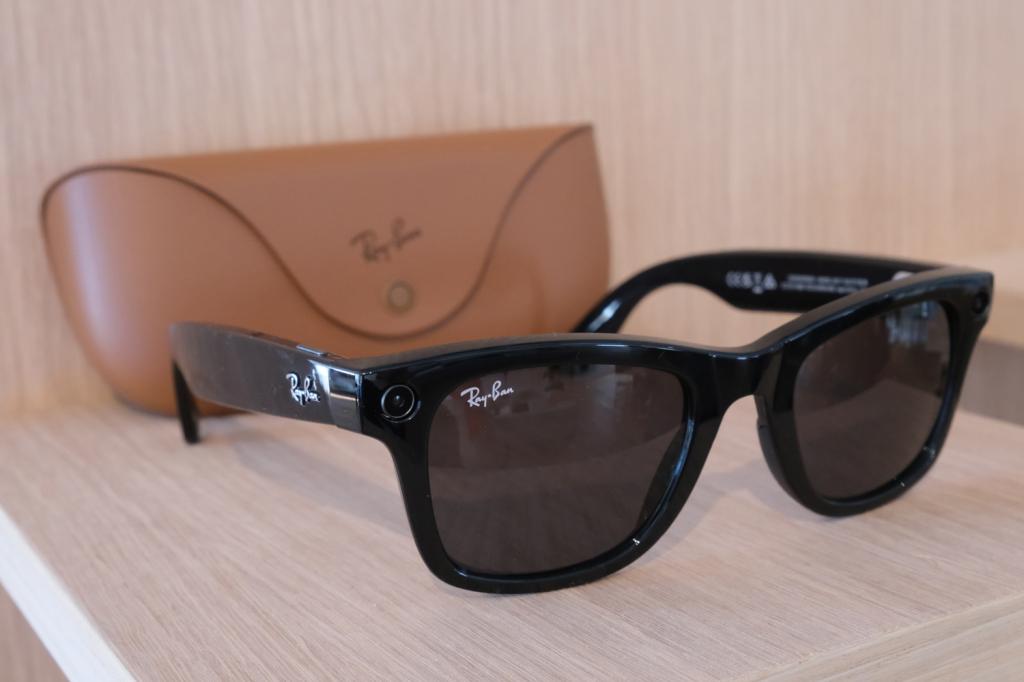
Ray-Ban Metas look remarkably similar to ordinary glasses. That’s a big part of their appeal, but it also means people may not realise there’s a camera at all.
In some places, that uncertainty matters even more. One friend who works in mental healthcare said camera glasses are prohibited at her psychiatric hospital because of data and confidentiality concerns. She also explained that their presence could be deeply distressing for some people experiencing psychosis or persecutory delusions.
The glasses wouldn’t need to be recording to affect that interaction, because the patient would have no reliable way to know that they weren’t.
Several people I asked drew a line between recording your own experience and unknowingly turning other people into content. In practice, that line is difficult to maintain. My son doesn’t play in an empty playground, after all, and we didn’t have Legoland to ourselves.
Phones can spy too, but glasses are easier

Camera phones caused plenty of anxiety when they first appeared. My earliest memory of one is my dad’s Sony Ericsson T68i, which accepted a tiny camera attachment on its underside and produced pictures that looked as though they’d been assembled from porridge.
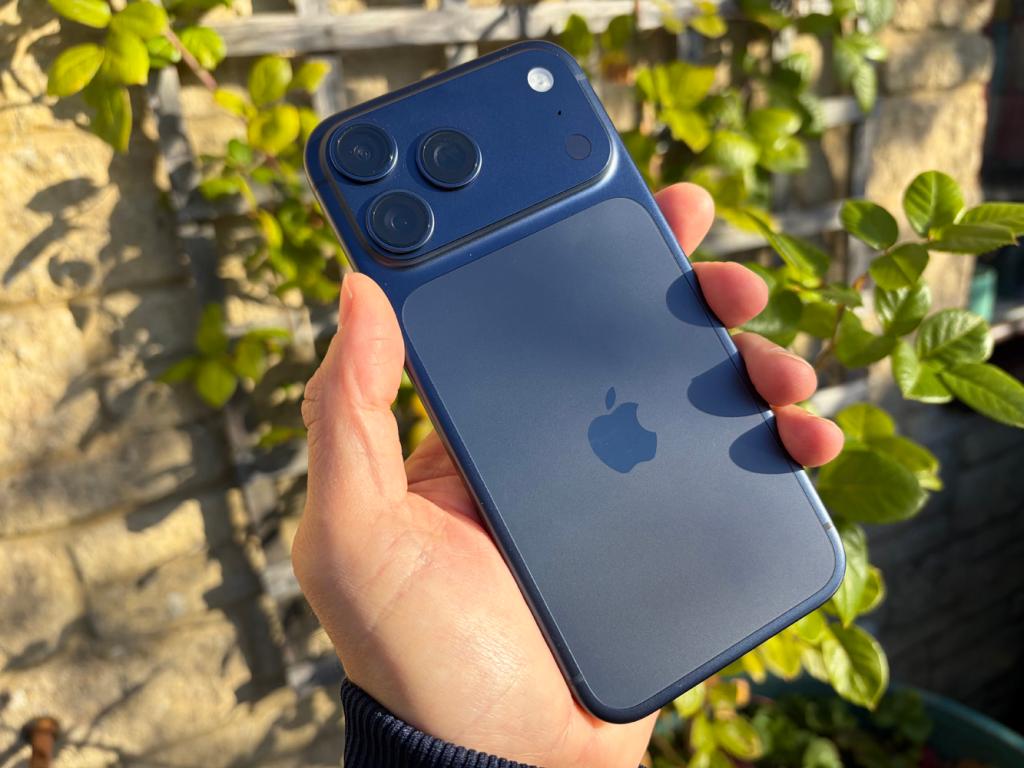
More than two decades later, we barely react when somebody opposite us on a train points a phone in our direction. They may be browsing Instagram, but they could just as easily be recording. Modern flagship phones also have much better cameras than the Ray-Bans, including zoom lenses capable of capturing somebody from much farther away.
Glasses aren’t covert while phones are obvious. Someone can pretend to scroll while filming or leave a phone positioned on a table. Glasses simply remove more of the friction. Their camera follows the wearer’s gaze, and there’s nothing to raise or conspicuously hold in position.
I demonstrated that to myself during a recent walk. I passed a couple with three dogs, then encountered some fresh dog mess they appeared not to have collected. From roughly 100 metres away, I used the glasses to take a photograph and short video of them.
I hadn’t witnessed any dog fouling. The footage proved nothing, and the mess could have come from a completely different dog. My intentions weren’t malicious, but from the couple’s perspective, a stranger had covertly recorded them on the basis of an unverified suspicion.
Taking out my phone, turning around and visibly filming them would have felt excessive. With a camera already resting on my face, the threshold was much lower. Whether or not I was legally entitled to do it wasn’t really the point. I’d recorded two strangers without knowing they’d done anything wrong.
Trust needs more than a blinking light
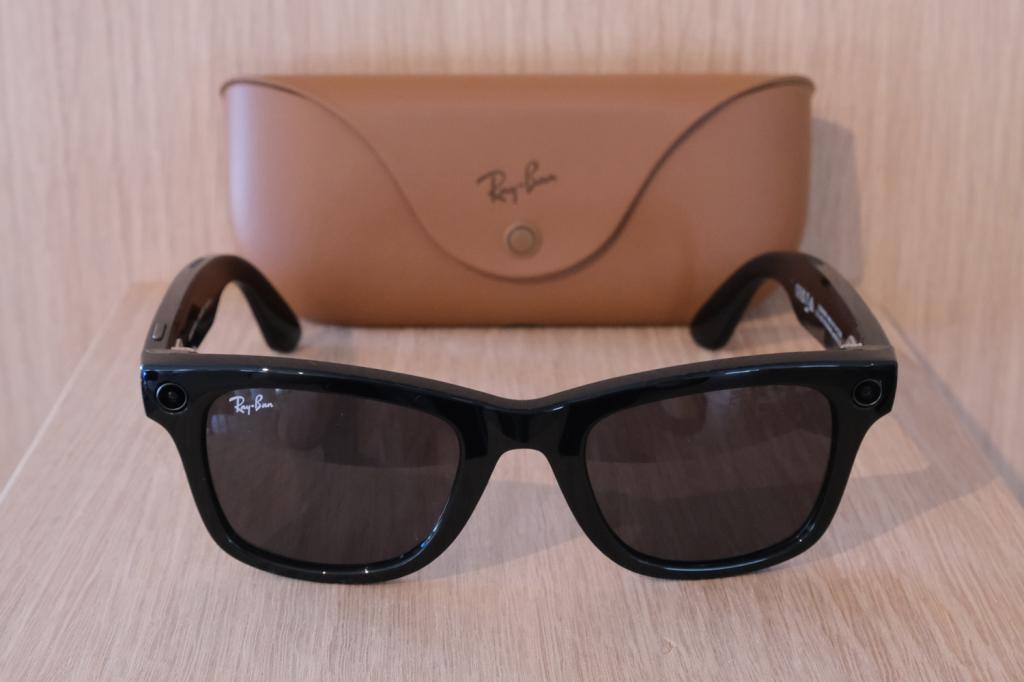
Meta has strengthened its safeguards. A white capture LED flashes when the glasses take a photograph and continues blinking while they record video. On second-generation models, covering that light disables the camera. Meta also announced a mandatory update in July designed to detect attempts to damage or physically modify it.
That’s substantially better than allowing someone to defeat the indicator with black tape, but a small white light means nothing to somebody who doesn’t know what it represents.
Meanwhile, Ray-Ban’s own FAQ says that the LED doesn’t illuminate when newer models use their cameras for certain AI requests, such as identifying a landmark or plant. The company says that’s because this isn’t shareable content, the imagery isn’t saved in the AI conversation history, and facial recognition isn’t used.
To someone standing nearby, the difference between being recorded and having a camera analyse what surrounds them may not feel especially reassuring.
I’d like to see an unmistakable physical shutter covering the lens. Sliding it closed should mechanically prevent the camera from seeing anything while leaving music, calls and other audio features available. A larger or brighter recording signal would help when the shutter is open. Anyone looking at the wearer should be able to understand the camera’s state without recognising a particular model or trusting a software setting.
Better etiquette matters, too. Tell people before recording a conversation. Remove or shutter the glasses in swimming pools, changing areas, medical settings and other sensitive places. Ask before posting footage in which a stranger is identifiable. Owners also can’t simply demand that everybody else gets used to camera glasses. Meta can’t put them on millions of faces and leave the public to work out all the rules afterwards, either.
Perhaps they’ll eventually become as ordinary as camera phones. That wouldn’t necessarily mean the privacy problem had been solved. It might only mean enough people had accepted that opting out of wearing a camera could no longer stop them from appearing in everyone else’s.
I still love my Ray-Ban Metas, and I’ll continue wearing them – mostly as headphones. But I’ll think much more carefully about where I wear them and when the camera has any business being used. My harmless intentions are visible only to me, and if camera glasses are going to become normal, trust can’t be something only the wearer gets to feel.




Read the full article here


