






Microsoft has announced Project Solara, which is a new platform built for AI agents rather than applications. During the Build 2026 keynote, Microsoft says it expects the next wave of AI-first devices to run on the Android-based Project Solara, rather than Windows.
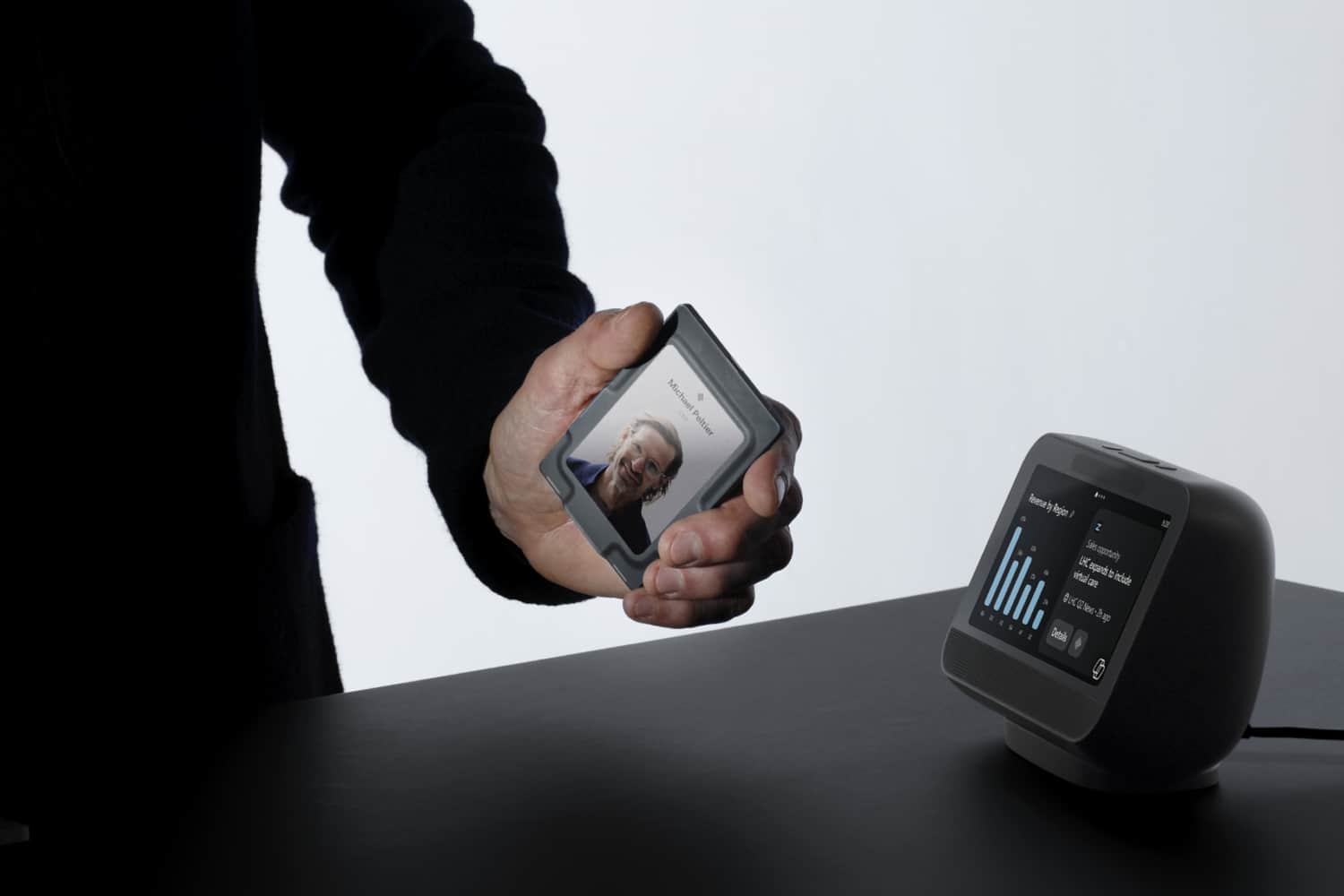
The company already has a couple of hardware form factors in mind, unveiling concepts for a smart display and a smart badge. The badge is the more interesting of the two devices, as it is designed to mimic a smart identity badge that workers in certain professions use gain to access to their offices, etc.
“We’ve reimagined a form factor that information workers, nurses, front-line workers, and millions of others use every day: the access badge. This on-the-go, lightweight, always connected companion empowers each person to do more by having their agents always by their side,” the company says in the announcement.
“Using the integrated camera, the platform allows agents, with user permission, to better understand and help take action on the environment around them.”
It has a touchscreen display, a Hello fingerprint sensor, a privacy switch, speaker, side-facing camera, WiFi, Bluetooth and 5G. It’d run off a Qualcomm wearable chip.
The idea behind the display is for a new “Priority Agent” service that shows the user what’s most important in that moment, while users are only one tap away from using their “Facilitator” capture in person meetings, transcribe the entire thing, and pull out action points.
Microsoft is also working on a desk-based smart display similar to an Amazon Echo Show that offers access to Microsoft 365 Copilot as a “thought partner” with users able to hand off tasks. It’ll also offer access to a “Researcher” agent that enables users to kept tabs on their longer-range projects and share reports.
“Together, the badge and desk concept devices show what becomes possible when agents are no longer confined to one app, one screen, or one device. They show how agent-first experiences can move across stationary, portable, and wearable forms—adapting to the user, the context, and the work,” Microsoft says.
Microsoft plans to start piloting devices – not necessarily these ones – in the enterprise realm.


Read the full article here


