




Meet the new, self-proclaimed king of Samsung’s foldable phone line-up – though good luck working out what the Galaxy Z Fold8 Ultra has done to truly earn its title. This book-style foldable is simply an evolution of what came before, which could be a tough sell when its new baby brother just debuted a fresh form factor.
It has the hardware edge over the shorter, wider Galaxy Z Fold8 and there are more under the hood changes to talk about than the by-the-numbers Galaxy Z Flip8. The outgoing Galaxy Z Fold7 was also a truly great handset, so surely any further improvements can only be a good thing?
Having tried one ahead of Samsung’s Unpacked launch event, I left wondering whether it might’ve been better to take a year off and let its baby brother have some time in the spotlight – especially as the ongoing electronics component price crisis has pushed the price up to an eye-watering $2099/£1899.
Tall vs wide: which is best?
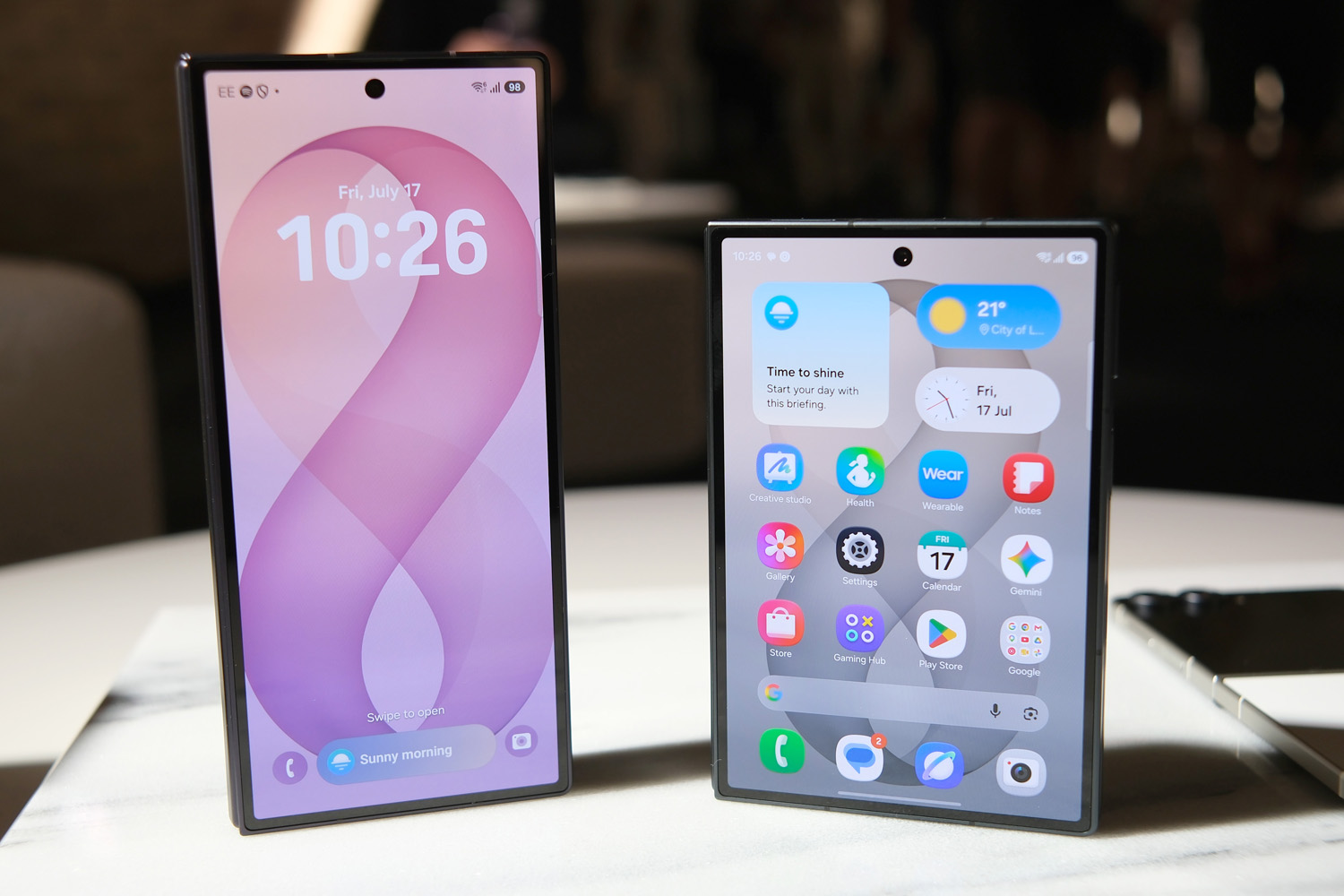
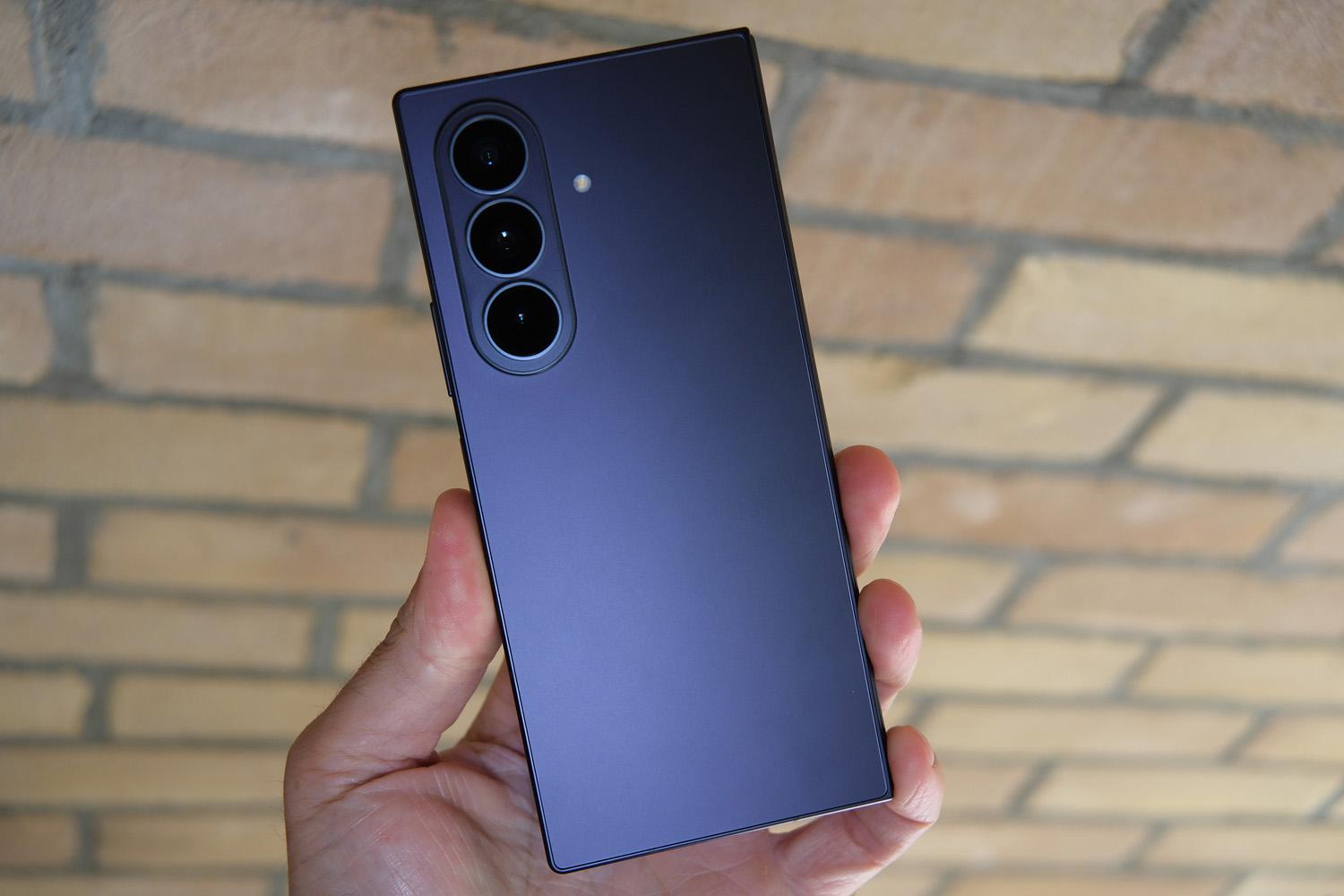
Put it side by side with the Galaxy Z Fold8 and the Z Fold8 Ultra looks comically slim, but the two share a design language. Both are boxy handsets with flat glass, compact rear camera modules and squared-off sides that give you plenty to hold onto. Slightly softened edges help with comfort.
The Z Fold8 Ultra’s overly slim front screen feels compromised in ways the stubby Fold8’s doesn’t, though: UI elements are squashed together or forced offscreen entirely until you scroll. It takes some getting used to if you’re coming from a non-folding phone. There are more advantages to the passport-shaped Fold8 when you open it up as well.
After last year’s distinctive Blue Shadow I was hoping Samsung would fire back with another standout colour scheme for 2026. Instead, the Fold8 Ultra’s Violet Shadow is very subdued, while Graphite and Cream are the play it safe options. I thought Violet Green was the best of the bunch: it’s almost British Racing Green from some angles, but appears almost black at others. A shame it’s exclusive to the Samsung web store, then.
Goodbye crease, you won’t be missed
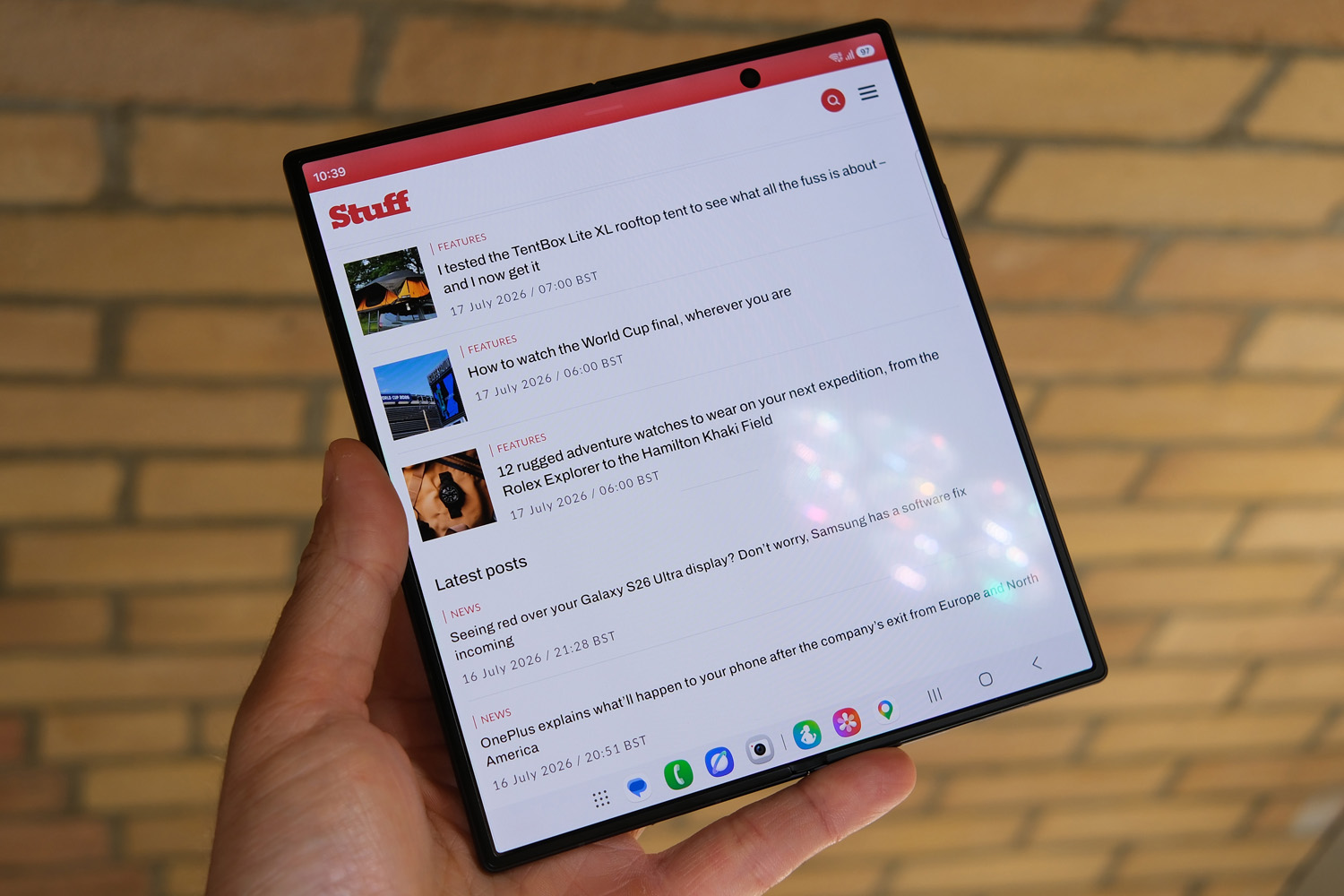
You can’t tell while the phone is folded, but Samsung has done a fantastic job on the Z Fold8 Ultra’s Flex Titanium hinge. Combined with a new titanium-alloy film supporting the two OLED panels, it felt impressively sturdy and opens with a satisfying snap. The inner screen crease is now all but invisible from all but the most extreme angles. You can still feel it, but it’s subtle.
The only downside? The phone isn’t as willing to stay open at more extreme angles anymore, either falling closed or springing open depending how far you’ve got before leaving it to its own devices. That’s not a dealbreaker for me as I rarely use foldables in a halfway house position – it’s either fully folded or open to take advantage of the entire inner display.
Otherwise the 6.5in outer screen and 8in inner one aren’t all that different from last year. Size, resolution and refresh rate are basically identical, while peak brightness has climbed to 3000 nits. With just an indoor demo area available for testing, I can’t yet say how well it holds up in direct sunlight, but an anti-reflective display should help keep distractions down. I can’t fault them for colour, contrast or detail at this early stage.
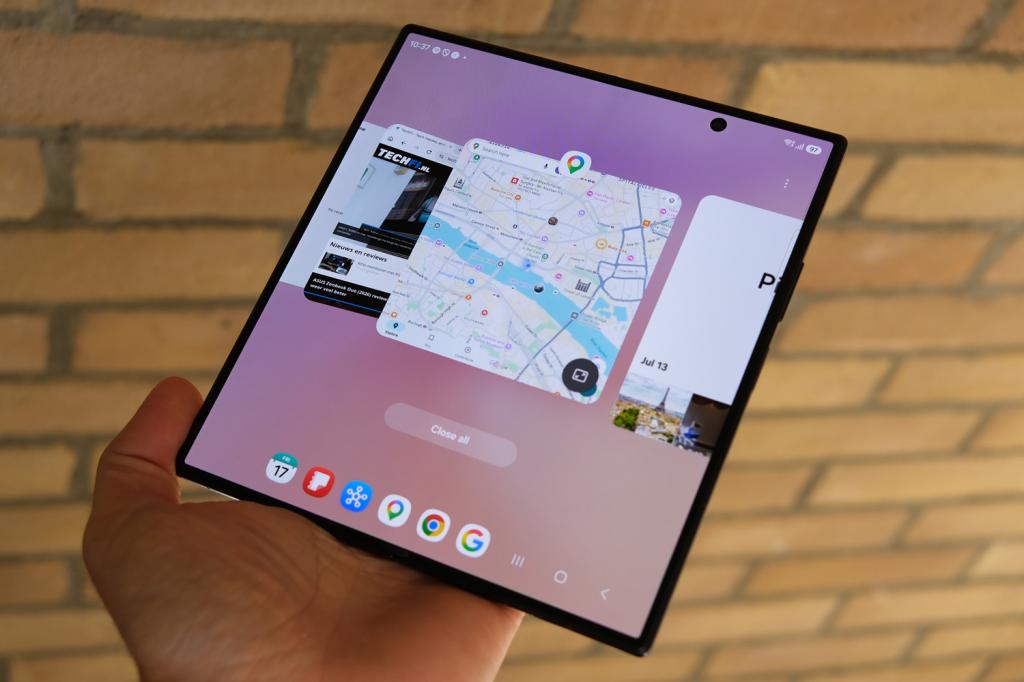
I’ve yet to properly see how the updated Now Nudge will prompt you to split apps across each half of the inner screen. Samsung has added more support for third party apps and can detect more context around what you’re doing, so popups should give you useful suggestions – say Google Maps when someone in your WhatsApp chat shares an address. Elsewhere the big talk is on a more agentic feel to Google Gemini, rather than any major visual upgrades from the previous generation of OneUI. Anyone with a Galaxy Z Fold7 shouldn’t feel like they’re missing much.
Faster but familiar hardware
It’s once you dig below the surface that the annual changes seem slightly less impressive. Sure, the Z Fold8 Ultra is packing a Snapdragon 8 Elite Gen 5 for Galaxy – one of the fastest chipsets you’ll find in any phone today – but we’re not talking huge performance or efficiency gains over the silicon that came before it.
Everything felt responsive during my hands-on session, with apps loading quickly and split view multitasking being perfectly smooth, but no more so than they did on last year’s phone. The fact that Samsung’s OneUI upgrades have largely focused on Now Nudge and AI automation rather than visual tweaks mean it all feels a bit too familiar. How well the slim chassis will contain the chip’s temperatures under load and while gaming remain to be seen too.
It’s great that Samsung is finally stepping up to silicon-carbon battery chemistry, after several years of being eclipsed on capacity by the Chinese competition. 5000mAh is a welcome improvement over the outgoing phone, albeit still quite a way behind the class best. I can understand the firm being cautious given its fiery history with big battery phones, and it reckons there’s still enough juice for 27 hours of typical use, so it should still be an all-day phone. I’ll definitely be testing that out come the full review.
Charging speeds are decent rather than spectacular at 45W over USB-C and 20W wirelessly. Both are improvements over last year’s model, but still falls behind the S26 Ultra’s 60W wired speed. It would’ve been nice to see some parity here given the shared name. Samsung still seems averse to adding Qi2 magnets to its phones too – but then again, it’s only really Google bucking the trend here.
A new camera, but not the one I wanted

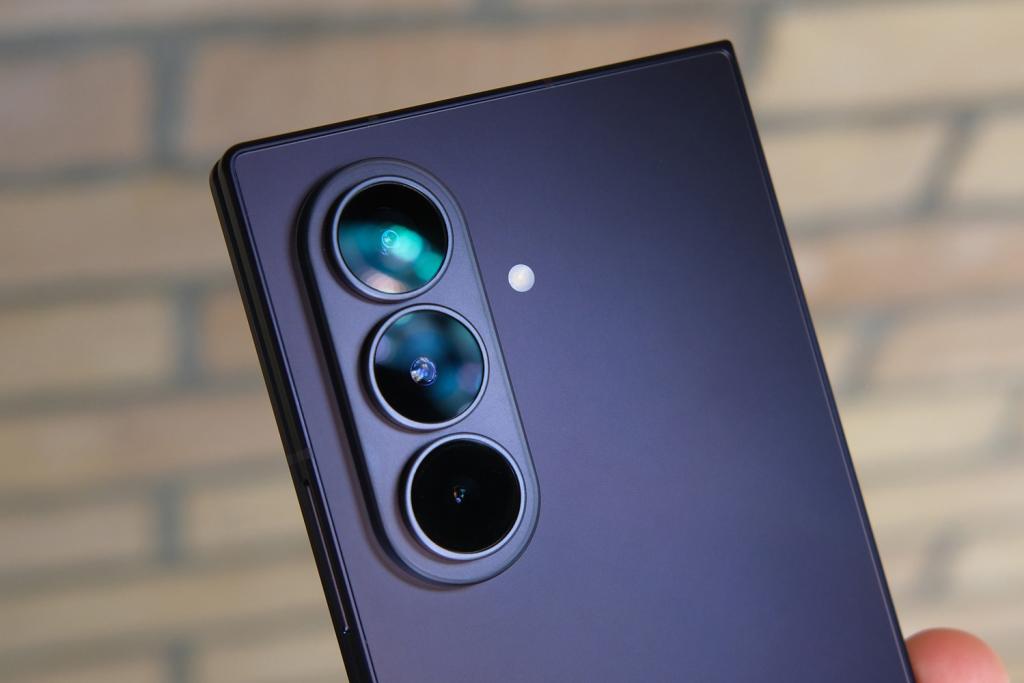
While hardware upgrades of any kind are welcome given Samsung’s penchant for reusing camera sensors across multiple phone generations, I can’t help but think the Z Fold8 Ultra updated the wrong lens. Rather than give the telephoto some love, the firm has instead added a 50MP ultrawide.
That’s great if you happen to shoot lots of landscapes or architecture, but portraits and closeups rely on a strong zoom. There almost certainly wasn’t space inside the Fold8 Ultra for the S26 Ultra’s 50MP periscope lens with 5x optical magnification, but it means you’re reliant on the same 10MP sensor as last year, at a time rivals have stepped up to physically larger sensors with much higher pixel counts. Only a full review will reveal how much of a stumbling block this is – as well as how much the ultrawide has improved between generations.
At least the 200MP main snapper returns from last year unchanged. It was a very capable camera in 2025, so should still make a strong impression against the current crop of foldable rivals. Samsung’s highly consistent image processing algorithms will surely help here.
Software-wise not much has changed, other than the ability to record videos in the APV codec and apply cine LUT colour profiles.
Samsung Galaxy Z Fold8 Ultra initial verdict
After my first encounter with the Galaxy Z Fold8 Ultra, I’m conflicted. Its predecessor was my main smartphone for six months and this is an improvement in almost every way: a stronger hinge that also minimises the inner screen crease, a bigger battery, a more powerful CPU and an uprated camera (albeit the one I use least often). I’m sure that’ll be enough to impress in Western countries where Google and Motorola are the main competition.
However, there’s little here that truly earns the Ultra label. The Fold8 doesn’t support the S Pen and doesn’t have the S26 Ultra’s Privacy Display. Samsung still lags behind the Chinese competition for battery capacity and charging speeds. Qi2 magnetic wireless charging remains MIA. It simply would’ve made more sense to call this phone the Z Fold8, and make its baby brother the Z Fold8 Wide.
To top it all off, the price has jumped to a level that was previously unheard of. Even once network carrier deals and contracts come online, I think it will be a tough sell. Anyone with a Z Fold7 should stay put and those with an older foldable – or wanting to try the form factor for the first time – have the (slightly) more affordable Z Fold8 to consider.




Read the full article here


