






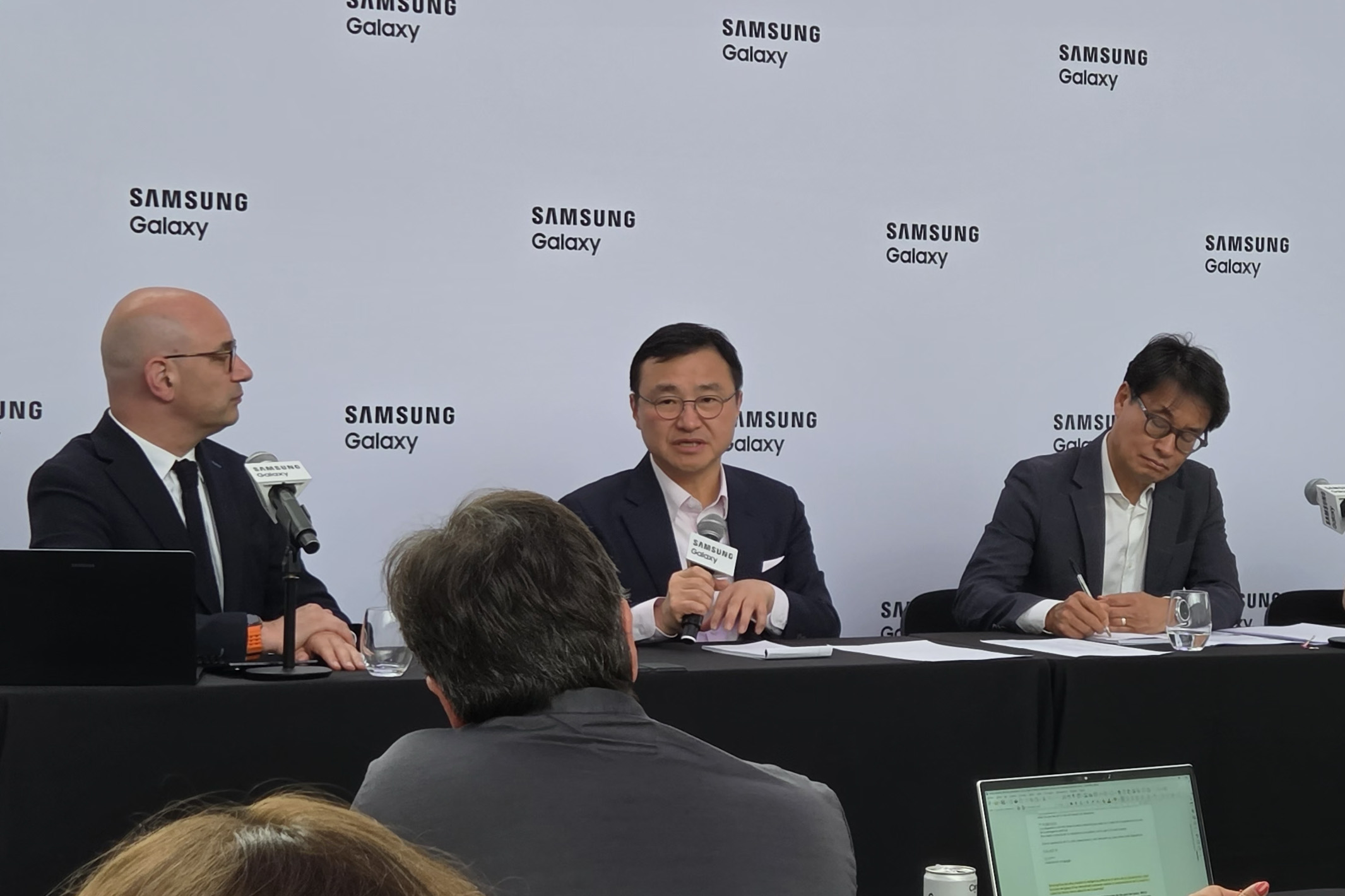
Samsung’s CEO and Head of Mobile Devices TM Roh was only one day removed from announcing the firm’s new slate of foldable phones to the world when Stuff got an exclusive opportunity to discuss (among other things) the rise of Galaxy AI, rising component costs and the future of wearable tech. But he was quickest to establish that Samsung wasn’t in any way threatened by Apple’s imminent arrival in the category.
I was one of just a handful of UK media outlets in the exclusive Q&A session with Roh (conducted via translator) following Samsung’s London Unpacked event, which primarily focused on artificial intelligence. Some of his responses were provided after the fact by a PR representative.
“Samsung welcomes more players entering the (foldable) space, but our technical expertise and insights – which were built up over the past seven years – can’t be replicated overnight,” Roh said as part of his opening statement. “As the market becomes more competitive, we’ll remain ahead of the curve and continue to set the standard.”
Record pre-order figures for the passport-sized Galaxy Z Fold8 gave good reason for the Samsung head honcho to feel bullish – as might the fact his firm’s Display division is reportedly the one supplying Apple with flexible OLED panels for the long-rumoured iPhone Ultra. And let’s not forget the Galaxy Z Fold8 Ultra and Galaxy Z Flip8 are eighth-generation devices that have almost completely ironed out the kinks of earlier efforts.
Roh wouldn’t directly comment on other companies when asked his thoughts on OpenAI’s expected entry into the hardware space, but he’s not worried about more competition there either.
“We believe that the entrance of these new players could add more value to the users, considering all of the new possibilities, experiences and innovations that we have seen so far driven by AI. With this healthy competition, we will see more contributions in respect to technological development.
“Samsung’s strategy will continue to be leveraging our strengths in terms of the best understanding of the technology and the users, backed up by the extensive range of product categories that we have, ranging from mobile phones and wearables all the way to home appliances and TV. That is how we will continue to provide greater added values for our consumers, and that will also shape our future advancements in terms of AI and technology products and services.”
With Galaxy AI set to reach to 800 million people by the end of 2026, it was interesting to hear that on-device processing and optimised algorithms are Samsung’s main ways of combating the increasingly high energy demands of datacentres and their massive water usage. “Our goal is to ensure users can seamlessly enjoy the ultimate AI experience, while we remain fully committed to technological innovations that prioritise energy efficiency.
“Reducing Galaxy AI’s carbon emissions through innovation aligns with our commitment to ensure all users have the best possible AI experience that is also environmentally responsible.”
Charging customers to use Galaxy AI remains on the table, but seemingly only for future services. “Samsung’s core Galaxy AI features will remain free of charge. As AI capabilities continue to evolve, certain advanced capabilities or new services may be offered as paid options or separate services in the future.”
Those new abilities could be ones built into the smart glasses shown onstage at Unpacked, or wearables like a successor to the Galaxy Watch Ultra2 also launched at the event – but Roh doesn’t think your smartphone will be replaced any time soon.
“I believe that our mobile devices will serve as the core and foundational product of this new era AI,” he explained. “A mobile device is best positioned to provide these benefits of mobile AI because it is always on; mobile devices come with many sensors that perceive your environment; mobile devices have multiple mobile apps that can get input from the users.”
Roh sees the effect AI is having on the price of consumer electronics as “an industry-wide challenge affecting the entire technology sector, not just Samsung,” but that “we remain committed to delivering the best possible user experience through continuous innovation, research, and technological advancement.
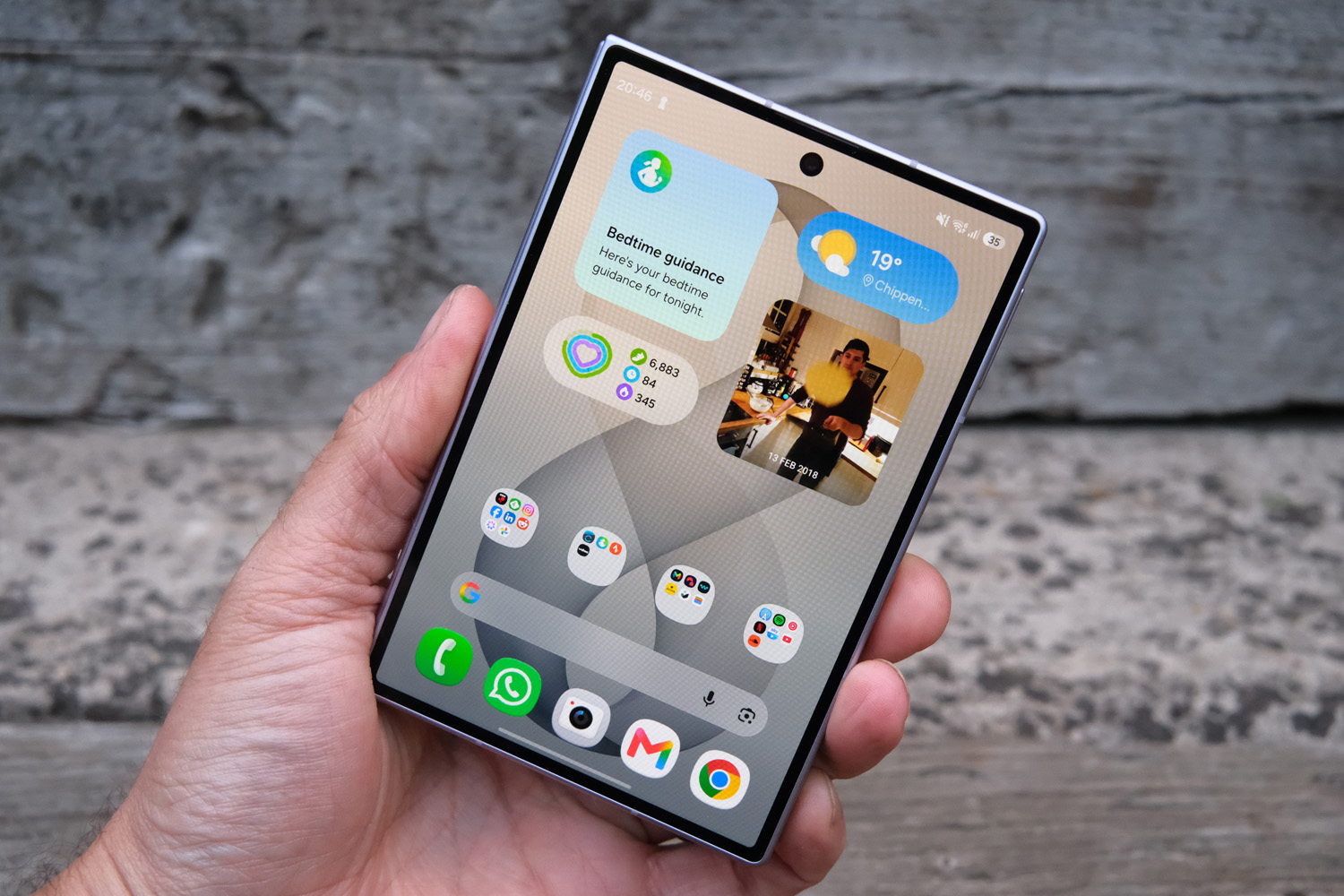
He highlighted generational hardware improvements, giving the Z Fold8 Ultra’s 5,000mAh battery, Flex Titanium display tech and new 50MP ultrawide camera as evidence the firm continues to “prioritise meaningful user value and customer satisfaction,” which he thinks will “accelerate, rather than hinder, the growth of the foldable market.”
Finally, has South Korea’s recent boom in popularity, across music, TV, food and more, been of any benefit to Samsung? Apparently not.
“Samsung started as a Korea-based business. However, now we have a much larger global operating presence, including in Europe and North America. Samsung has continuously been committed to enhancing and deepening the understanding of our global customers, paying close attention to the expectations and the requirements of the global customers, and thereby providing experiences for our users powered by our technology innovation. That truly defines the strategy and the direction of Samsung, and I think that is what contributes the most to all our businesses.”




Read the full article here


