








The MacBook Neo is here, and it took no time at all for an executive from a major PC manufacturer to put their foot in their mouth trying to discuss this new competition from Apple’s $600 laptop. On Asus’ latest earnings call, CFO Nick Wu said that the Neo and its aggressive entry-level pricing were “certainly a shock to the entire market.” Wu also disclosed that Asus had some knowledge of Apple developing the Neo back in 2025, much as many of us had heard rumors of a MacBook with an iPhone chip for months — and yet, Asus and other PC makers seem to have been caught flat-footed.
What’s worse is these company executives don’t even seem to realize what the Neo means. Apple has fully entered the budget laptop space, with an extremely capable (and colorful) device seemingly geared at everything from mainstream Windows laptops to the fleets of Chromebooks in schools everywhere. Apple’s manufacturing might, design chops, and near-total ownership of its tech stack give it the tools to take on this market in a big way. Somehow, the PC makers still don’t see it coming. Here’s how Wu described the MacBook Neo, specifically its 8GB of RAM limitation:
“I think when Apple positioned the product, it’s probably focused more on content consumption. This differs somewhat from mainstream notebook usage scenarios, because in that case, the Neo feels more like a tablet — because tablets are mostly for content consumption.”
Hang on. Can we hold up for a second here?
Equating the MacBook Neo to a glorified Netflix machine is preposterous. It’s not a desktop replacement-class laptop with tons of power, but it’s a very capable machine. And this misunderstanding tells me that PC manufacturers are about to repeat many of the same mistakes as when they spent years mocking the supposedly underpowered MacBook Air, and when former Microsoft CEO Steve Ballmer laughed at the iPhone. Once again, the Windows world appears to not understand what people actually want.
How, exactly, does the MacBook Neo differ from mainstream notebook usage, like web browsing, editing documents, making basic presentations, and maybe occasionally playing a game? According to a 2025 CNET survey, 52 percent of laptop owners use their laptops for creating and viewing documents. Next highest was 35 percent using their laptops for streaming and watching shows and movies (content consumption, yes). The other surveyed uses behind that were creative work, studying, test taking, and basic life organization. That’s all stuff the Neo can do well (with some limits on the creative side). And it does it while having a good trackpad, a bright and colorful screen, a solid keyboard, and quality speakers — things that go a long way to making a computer compelling, and which are often lacking on low-cost Windows laptops.
If the Neo came out running iPadOS, sure, call it a consumption machine, but it runs macOS — a desktop OS that’s known for getting by better with less RAM than Windows. And, meanwhile, thanks to the ongoing RAM shortage, we may once again get more new laptops with 8GB of starting RAM on Windows. As RAM prices explode, Apple’s vertically integrated supply chain can continue to offer computers cheaper. Even if PC makers can match the specs, they’ll have a hard time matching the price.


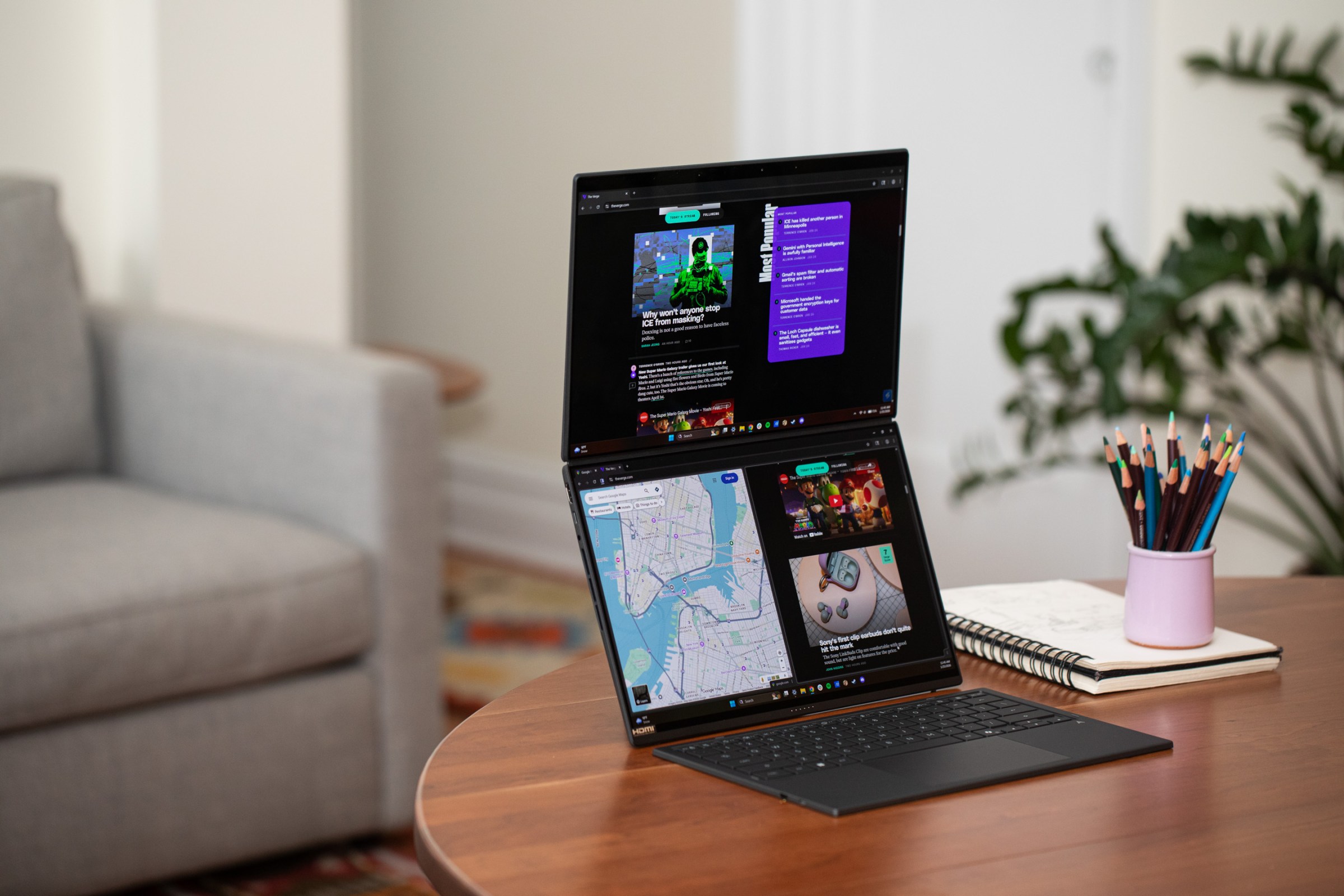
The proof of the MacBook Neo’s performance for the money is in the numbers. In single-core benchmarks tests — which most accurately measure the kinds of everyday tasks you do on a computer — the Neo’s A18 Pro chip beats out all manner of Windows laptops, including the new flagship Intel Panther Lake chip in Asus’ own $2,400 Zenbook Duo. Is a Zenbook Duo more capable than the MacBook Neo for heavier tasks, like photo and video editing or playing more graphically demanding games? Yes, and it’s part of why I loved that dual-screen laptop when I reviewed it. But the Zenbook Duo also costs four times as much. And, again, the Neo can hang with it for most common tasks, even with its 8GB of RAM.
I said in my review that the Neo embarrasses an entire class of affordable Windows laptops, but further embarrassment awaits these companies if they have nothing to answer it with. I hope they’re already working on that next generation of laptops that will actually compete at $600. And I really hope companies like Asus, Microsoft, Dell, HP, Acer, Samsung, and MSI have an actual understanding of what makes their new competition so good, and what it can do for a whole lot less than current Windows-based offerings. I reached out to all these companies, and the answers I’ve received so far are expectedly milquetoast.

Gigabyte marketing director Howard Chiu told me, “Gigabyte is not currently pursuing laptops in the same segment as the Neo. The Gigabyte A16 would be minimum specs that we are involved in.” Which, okay, I can actually respect that. Because Gigabyte is a small player in the laptop space and mostly specializes in gaming — it’s simply not competing with the Neo.
Dell PR rep Nathalia Romano pointed me to COO Jeff Clarke’s CES keynote. Clarke teased the release of a new XPS 13 laptop that will be “the most accessible XPS price point ever.” He also said the company’s aim is to “cover all price points with great products. Is a great product different at $399 than it is at $1,999? Of course it is, but they both can be great at what they’re expected to do.” What does Dell currently have at the Neo’s price? A Dell 15 laptop with a dim 16:9 display, plastic build, three-year-old Intel chip, and… 8GB of RAM. On Windows 11. Woof.
It isn’t just about performance scores or the amount of RAM, it’s also about making affordable laptops that don’t feel like a punishment to use — a total package for everyday people, for a price that’s not exorbitant. That’s what Windows laptop manufacturers are up against, and if they don’t understand that, then they don’t understand an entire class of customers who can walk into an Apple Store today and get exactly that for $599. Because they’re about to.
Read the full article here


