

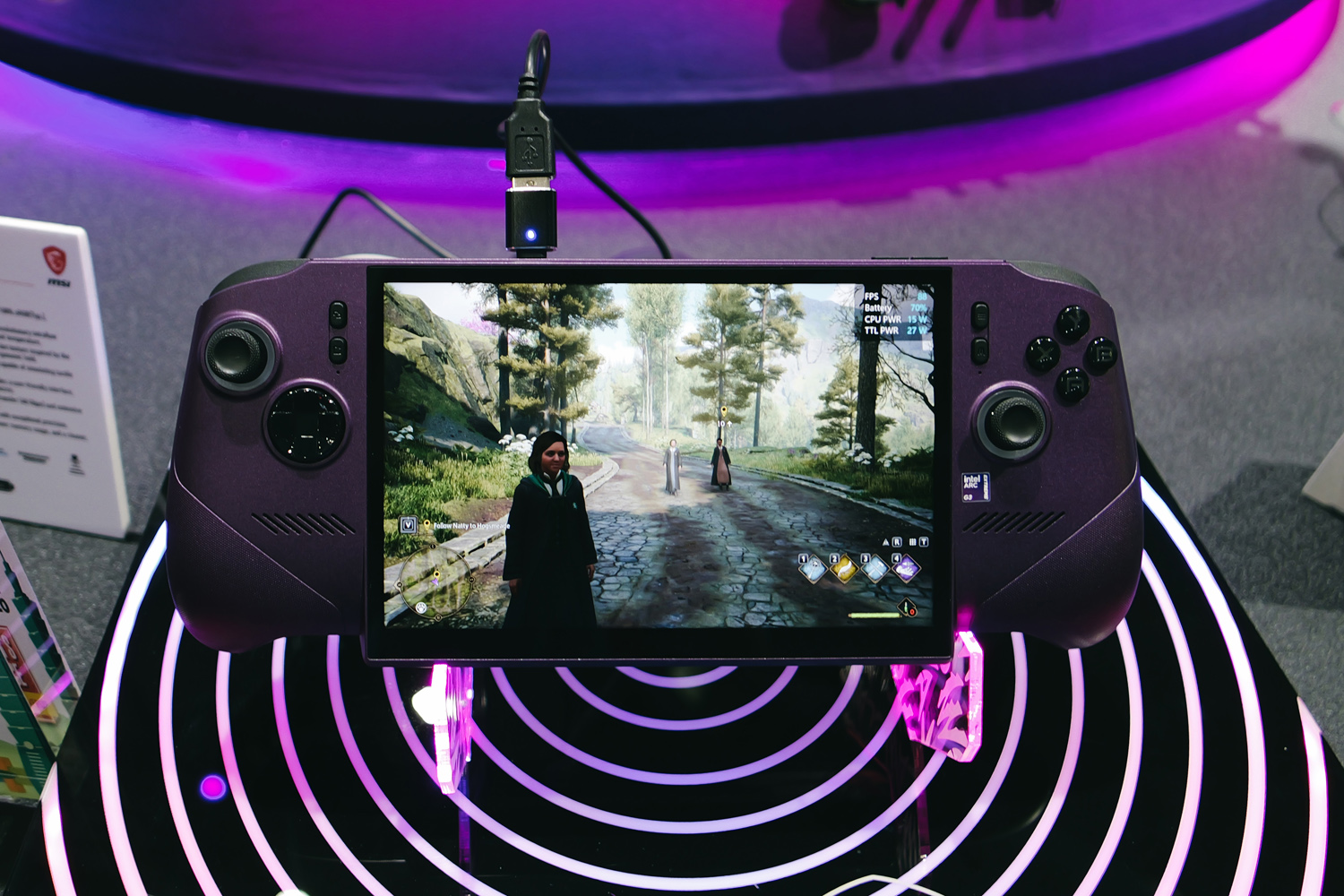
Intel’s new Arc G3 Extreme gaming handheld chip was one of the biggest stars of this year’s Computex show, with a bunch of brands jostling to show off their upcoming models – but it was the MSI Claw 8 EX AI that impressed me the most. Just as Intel has made a huge leap forward on performance and efficiency in a single generation, MSI has seemingly sorted every issue that made its early handheld efforts also-rans in one fell swoop.
The Void Purple finish is arguably more of a head-turner than Asus’ translucent Xbox ROG Ally X20, and really shows off where MSI has refined the shape and overall ergonomics. The blocky, angular lines of the old Claw have been ditched in favour of curves and thicker handles that more comfortably fill your palms. The textured material on the back adds plenty of grip and overall weight distribution is fantastic. This is still a big handheld, but MSI has managed to shed a little weight since the previous generation.
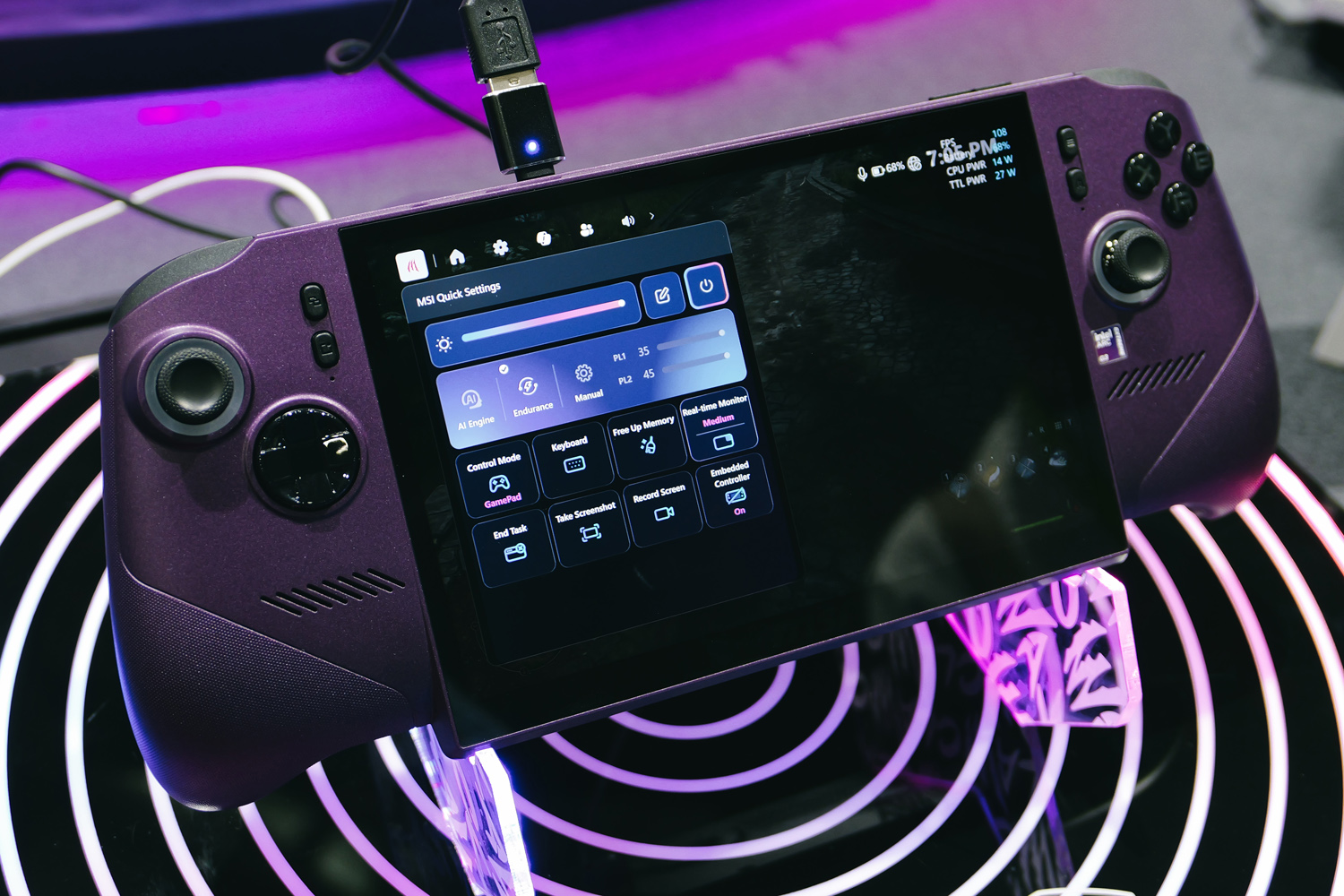
Almost all of the controls have levelled up in one way or another. The analog sticks are now Hall effect, completely eliminating the chance of stick drift over time; the ABXY buttons are more responsive and not as mushy as they used to be; the D-pad is so much snappier. The bumpers have been tweaked and haptic feedback has seriously levelled up, with new linear motors that deliver more nuanced rumble in games. It’s early days, but I’d put them a close second behind the Xbox Ally’s Impulse triggers.
Up top you get a pair of USB-C ports, a microSD card slot and a power button that doubles as a fingerprint sensor. Little change there, then – but you can also spot the large vents that hint at the uprated cooling system inside.
The display – an 8in, 1920×1200 LCD with 48-120Hz variable refresh – is essentially unchanged from the last Claw. I’m not a huge fan of the way the screen ungainly juts out the bottom of the chassis, and because it’s not an OLED blacks don’t look quite as inky and contrast isn’t class-leading, but it’s big, bright and very colourful.
A proper test of the built-in speakers will have to wait for a full review, but of all the handhelds I tried on the busy Computex show floor, it seemed to be the loudest.
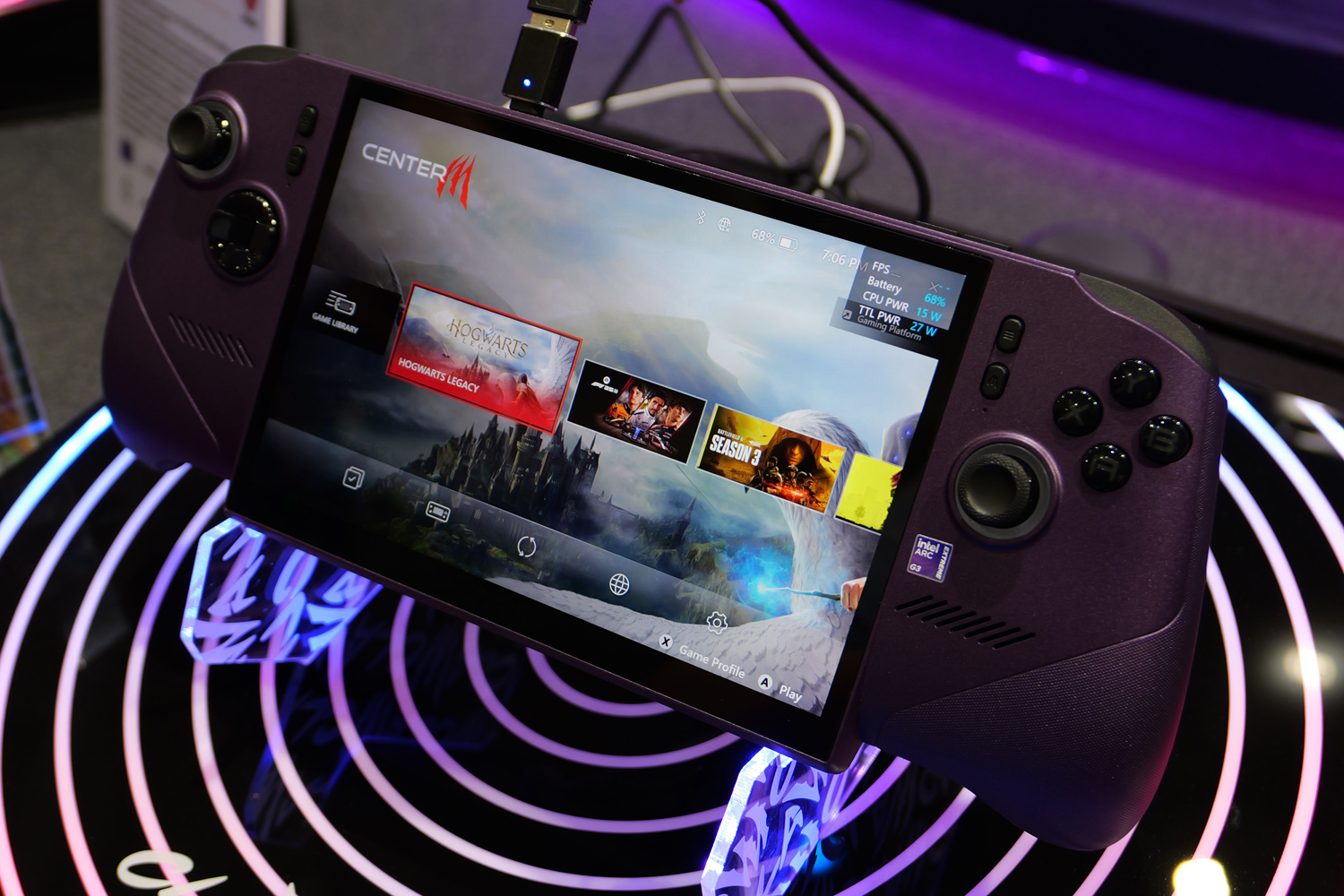
How a handheld looks and feels is one thing; how well it can run games is another. Yet it only took a few minutes of play to see what speedy progress Intel has made with Arc G3. The new silicon is based on the firm’s Panther Lake laptop architecture but heavily tweaked for handhelds. There are two variants – Arc G3 and Arc G3 Extreme – with MSI is only using the latter.
That means the Claw is rocking a 14-core CPU and Arc B390 integrated graphics, with 12 Xe3 cores with XeSS 3 upscaling. It’s paired with as much as 32GB of RAM and a 1TB SSD, and operates in a power window of 8-35W. Intel reckons it can deliver the same performance as AMD’s rival Ryzen Z2 Extreme at half the wattage, which could mean big things for battery life. Expect up to 11 hours per charge, depending on the game, from the 80Whr cell.
When given the same maximum power envelope (35W) it’s about 40% faster – albeit with 2x XeSS upscaling. That’s still enough extra oomph to cope with modern titles that just don’t run well enough on AMD’s current hardware. I’d already tried Forza Horizon 6 on Acer’s rival Predator Atlas 8; Hogwarts Legacy was MSI’s game of choice.
With the graphics set to a mix of medium and high presets, I was seeing frame rates hover in the 70-90fps region at the Claw’s native resolution. That’s a very strong effort: a Steam Deck can barely crack 50fps and its screen has a lower resolution. The Xbox ROG Ally X doesn’t fare much better. If you’re happy to flick on Intel’s XeSS upscaling, the Claw then has enough grunt to enable ray traced lighting – or output to an external display and play at native 4K while plugged in and using the maximum power profile).
MSI’s two-fan, two-heatpipe cooling system was definitely putting in the work, getting noticeably loud when in the highest power profile, but keeping temperatures in check.
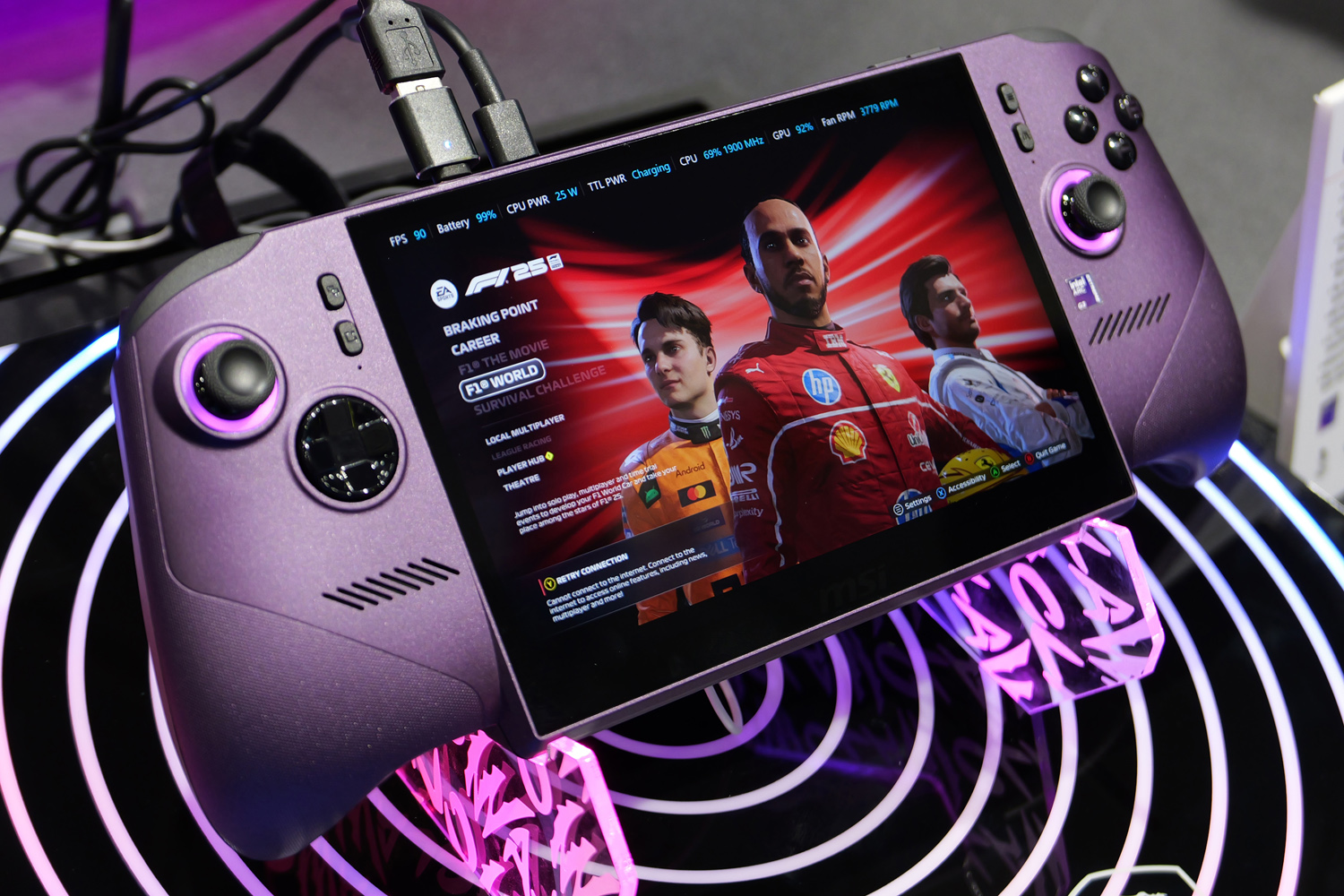
This is performance the current crop of AMD-powered handhelds just can’t match, even with FSR upscaling. That it’s also being done on Windows – previously a dirty word among handheld owners used to Valve’s power efficient, Linux-based SteamOS – shows how far we’ve come in a very short space of time. Unless Team Red responds in quick fashion, my next handheld will almost certainly have an Arc G3 Extreme inside.
My biggest concern right now is price. Even if you ignore the spiralling costs of RAM and SSDs – an unwanted side effect of the tech industry’s obsession with AI – Arc G3 Extreme handhelds are going to be expensive. No-one at Computex would come out and say it, but $1500 is the whisper that keeps coming up among the assembled media. That’s twice as much as an AMD Ryzen Z2 Extreme handheld like the Asus Xbox ROG Ally X.
The MSI Claw 8 EX AI is set to go on sale later this year.


Read the full article here
