







Introduction
If, like me, you feel like noise-cancelling headphones have gotten a lot more expensive of late, the Momentum 5 Wireless will be a breath of fresh air. While rivals keep pumping up prices – almost certainly because Apple set an unwelcome precedent with the AirPods Max – Sennheiser has shown a little more restraint.
At $400/£330 they’re hardly a pocket change purchase, but they handily undercut the Sony WH1000-XM6, Bose QC Ultra Headphones gen 2 and Bowers PX7 S3. The firm has also played the long game with generational updates, waiting four years between the (already very accomplished) Momentum 4 Wireless and this latest model.
What few complaints we had about the predecessor have been addressed here, while battery life continues to embarrass the competition. And with the HDB 630 now catering to serious audiophiles wanting wireless convenience, the Momentum 5 Wireless is free to shoot for mainstream appeal. So, has Sennheiser hit its target?
Design & build: it’s in the jeans
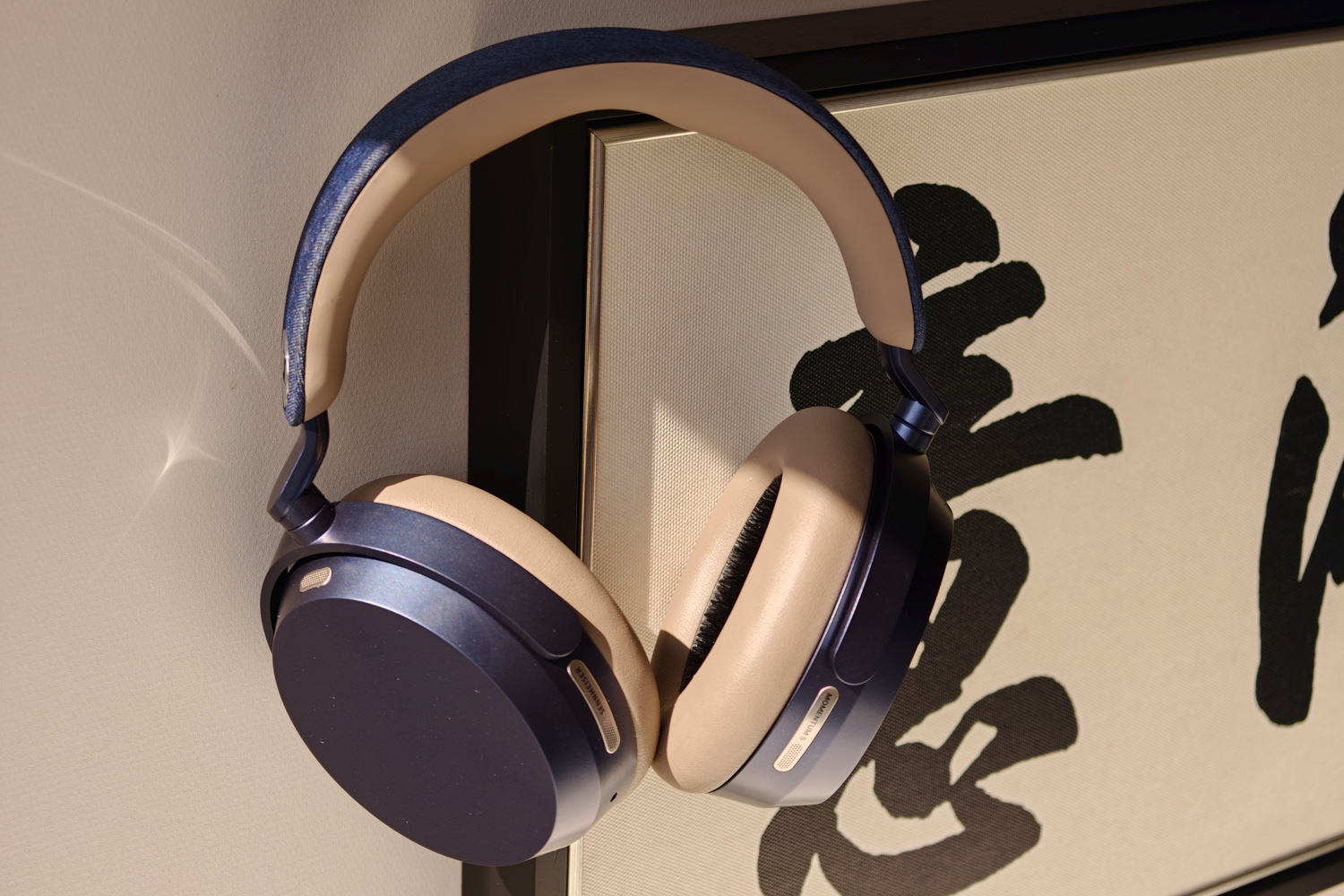
Sennheiser’s last few Momentum flagships have been sedate affairs; that’s largely true of this new one as well. If you go for the black or white versions, anyway. My review unit was the more fetching Denim, which combines a rich blue exterior with tan faux leather cushioning on the ear cups and headband. It’s quite the looker, with the fabric headband in particular feeling suitably high-end.
It’s mainly plastic everywhere else, which isn’t quite so luxurious, but at least the matte finish wasn’t quick to pick up fingerprint smudges. You’ve got to step up the Bowers & Wilkins PX8 S2 to get noticeably better materials.
The silver trim around the microphone grilles are the only design flourishes on what are otherwise very minimal-looking ear cups. That’s largely down to Sennheiser using touch controls rather than buttons for playback and ANC adjustment. There’s just a power button, row of battery LEDs, USB-C and 3.5mm port on the right ear, while the left is completely bare.
The sticker indicating the various tap gestures looked like hieroglyphs to me at first. With pinches in and out to adjust transparency on the fly as well as swipes to change tracks and volume, there’s quite a lot to learn.
At 290g these aren’t the lightest headphones in their class and the headband isn’t quite as well padded as the ear cushions, but I had no comfort complaints after wearing them throughout a long-haul flight. The cups are large and deep enough not to put unwanted pressure on your ears and a sensible amount of clamping force keeps everything in place without being headache-inducing. There’s lots of headband adjustment, ample horizontal swivel and just enough vertical tilt.
Features & battery: just keeps going

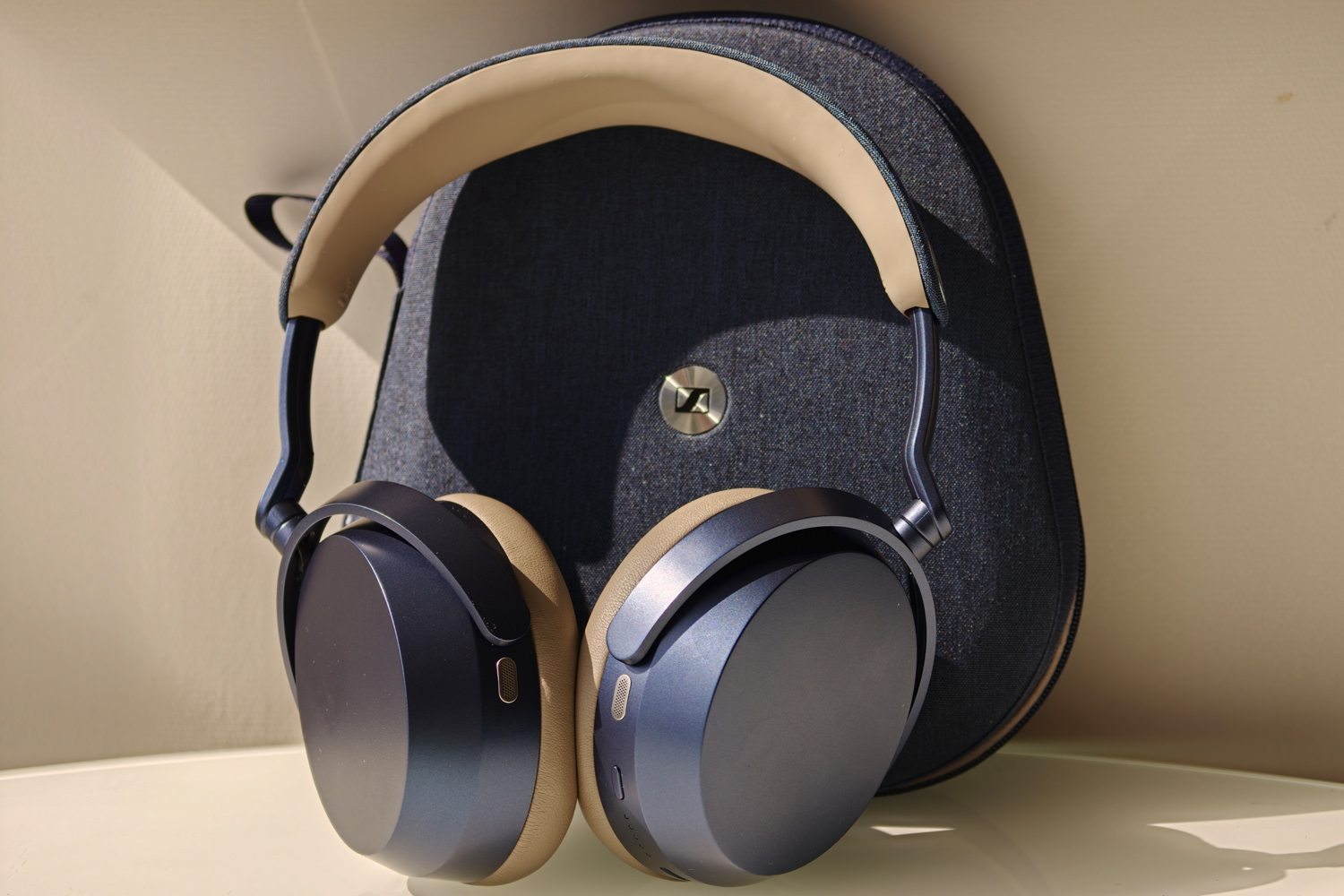
While the headphones don’t fold down for travel, Sennheiser does throw in a rather nice carry case to keep the cans safe while in your bag. It’s soft lined, with straps to keep the bundled cables stowed, and comes wrapped in the same hard-wearing material as the headband. It’s relatively slim (and usefully smaller than the Momentum 4 Wireless’ case) so easily slipped into my backpack.
You won’t find an in-flight entertainment adapter here. Sennheiser told me it that because airlines are upgrading their systems with Bluetooth there was less customer demand to include one. That it helps cut the firm’s manufacturing costs was a bonus.
Both USB-C and 3.5mm come included, with the former being usable for lossless wired playback as well as charging – not always a given, even at the spicier end of the wireless headphone price range. Bluetooth 5.4 connectivity is comprehensive, with Multipoint for dual device pairing and up to aptX Lossless codec support. An upgrade to Bluetooth 6 is promised later in the year, but there’s no word yet on what whether it’ll also bring a boost to wireless range or power efficiency. I had zero issues with dropouts or interruptions, even in busy airport terminals and train stations, as it is. Call quality was top notch, too.
It was while travelling that the Momentum 5 Wireless’ played its trump card. Battery life is simply superb, comfortably lasting more than 50 hours with noise cancelling enabled. That’s a tad less than the previous generation, but more than double what a Sony WH1000-XM6 can manage, and puts almost every other premium rival to shame. Charging the 700mAh cell is almost as speedy, and I love that it can be replaced with just a standard Phillips screwdriver. This sort of repairability will eventually become the norm, but Sennheiser is ahead of the game here.
During my testing a firmware update added head tracking for the Dolby Atmos spatial audio mode. The way it locks the sound in place as you turn left and right still feels unnatural to me, but I know the tech has its fans. Spatial upmixing in general was convincing enough, widening the soundstage without altering the tonal balance too wildly, although very high frequencies do become just a little tinny. I largely listened with it switched off.
Interface: time to tap
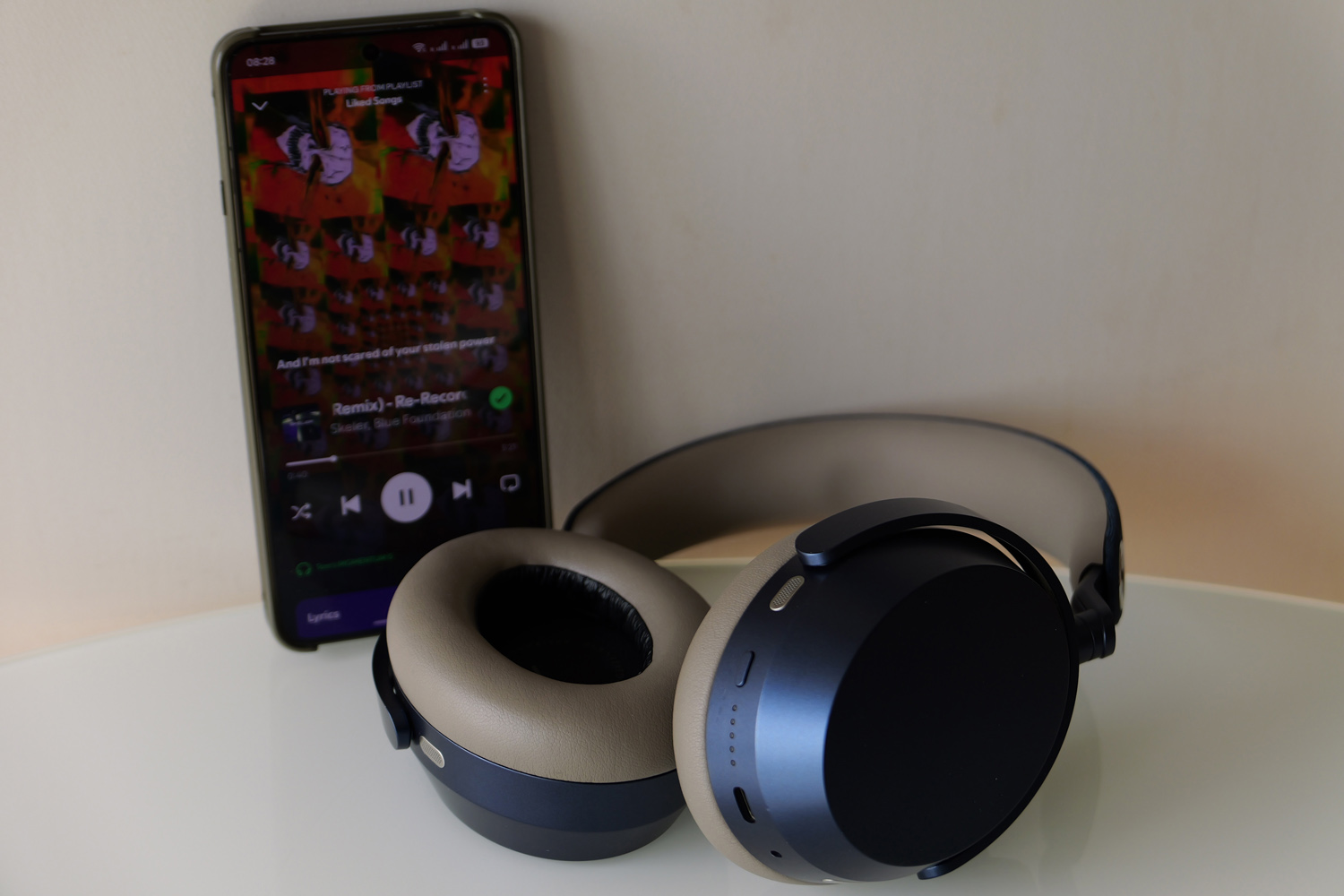
Sennheiser’s Smart Control Plus companion app takes care of more than just spatial sound. It puts battery life, connection management and ANC controls front-and-centre, with the latter letting you pick between the adaptive mode or a custom level.
There’s also an anti-wind toggle, which came in handy while out on a blustery day; it was more consistent than the adaptive mode here. Dig further and you can choose to auto-pause music when transparency mode is enabled, or have transparency kick in automatically when taking phone calls.
Scrolling down the main screen reveals the sound personalisation, find headphones tool and control options, although that last one seems to just be an explainer of the various taps, swipes and pinch gestures. I couldn’t see any way to customise them, just an option to turn them off entirely.
You don’t get anything like the adjustment seen on the HDB 630, but with eight presets, an eight-band equaliser and multiple custom profiles, there’s still lots of room for tweaking the audio to your own taste. There’s also a unique Sound Profile test that plays a demo track and lets you adjust strings, bass and drums independently. I found it a bit vague and the resulting tune ended more bass-heavy than I wanted, even after multiple tests.
Smart pause, auto-power off and wear detection are hidden in a separate settings screen. That last one was one of the Momentum 4 Wireless’ weak points, so it’s great to see Sennheiser add a second sensor; there’s now one in each ear cup. Whether I was pulling down one ear or taking the headphones off entirely, they were consistently correct in pausing and restarting my tunes.
Sound quality and noise cancelling: a luscious listen
Sennheiser has really put the work in to improve the Momentum’s noise cancelling ability between generations. The usable microphone count has doubled from four last year to eight here, while updated algorithms are apparently three times more effective at cutting out unwanted chatter. The focus on speech frequencies was instantly noticeable, effectively muting a busy hotel lobby while I worked with music at a relatively low volume.
Lower frequency rumbles like plane engines are a bit more present than the very best of the breed, but not by a lot. Likewise Sony and Bose cope better with sudden loud noises, but these still do more than enough to please frequent flyers. The transparency mode, while a little artificial-sounding, is up there with the best rivals I’ve used recently. I even found I used it more here because it was easier to toggle with a double-tap, rather than make you find and hold down a particular button.
Things have also been changed up on the audio front, albeit only slightly. The 42mm dynamic drivers are essentially the same as the ones used in the old Momentum 4 Wireless, just with updated tuning that favours quite a lot of bass. I thought the extreme low end in particular was decidedly un-Sennheiser-like, until I went into the companion app and disabled the bass boost function; with it active the Teddy Killerz’ Feed Your Soul was simply too thumpy for my liking, but switch it off and that boomy presentation disappears.
What’s left is a more nuanced sub-bass delivery, if one that leans more towards a populist presentation than the more analytical approach you’ll find elsewhere in the firm’s lineup. The Momentum 5 Wireless is still a very enjoyable listen, with warmer, fuller mids than the previous generation that gave the Brand New’s At the Bottom real presence. The soundstage isn’t hugely wide in stereo; if you want a bigger sense of space you’ll need to reach for the Atmos upmixing.
The very high frequencies roll off a little earlier than the best sounding rivals, but you’ll need very good hearing to notice. The razor-sharp percussion on Burial’s Imaginary Festival doesn’t lose any of its bite. If Sennheiser was aiming for more of a mass-market tune, I’d consider this a job well done.
Sennheiser Momentum 5 Wireless verdict

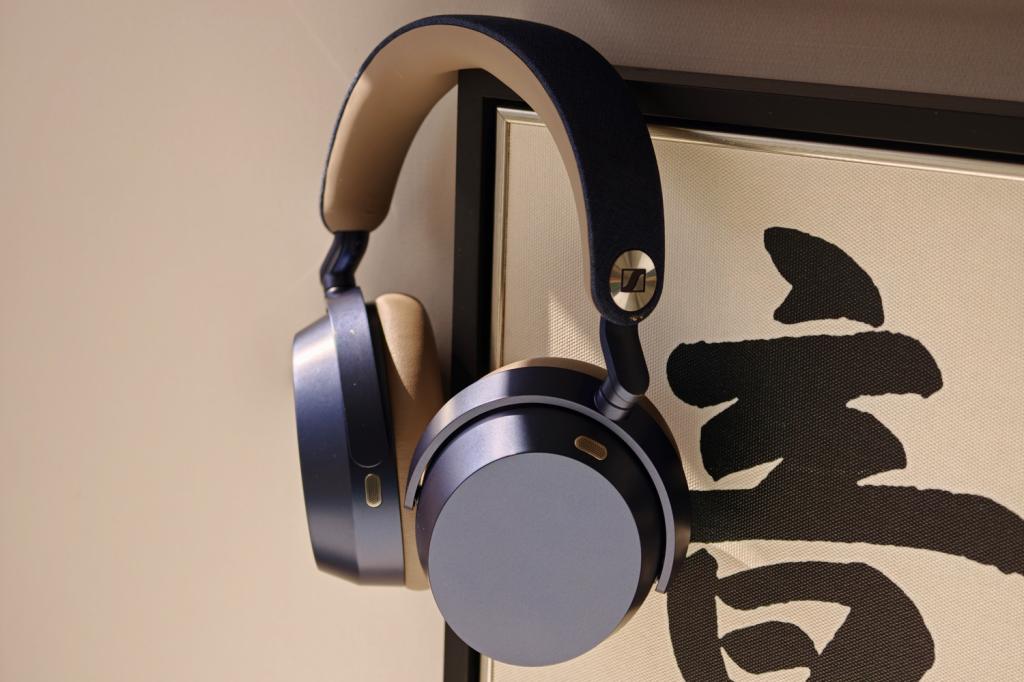
The Momentum 5 Wireless is a timely reminder that price doesn’t equal performance. Sennheiser has managed to undercut almost every direct rival – in some cases by quite the margin – yet keep up with them in pretty much every area that matters. Sound quality is excellent, noise cancelling is very accomplished and battery life is superb.
While they’re by no means a bargain (and aren’t quite the last word in ANC ability) I still think some mental gymnastics are now required to justify paying the extra for something from the Sony or Bose stables.
Sennheiser Momentum 5 Wireless technical specifications
| Drivers | 42mm dynamic |
| ANC | Yes |
| Bluetooth version | Bluetooth 5.4 |
| Codecs supported | SBC, AAC, aptX Lossless |
| Durability | Not stated |
| Battery life | Up to 57 hours (ANC on) |
| Weight | 290g |




Read the full article here


