

Introduction
Well this firmly puts those tech world whispers that Sony was getting out of the phone game to bed, doesn’t it? The Xperia 1 VIII is the smartphone I wasn’t entirely sure we’d get yet here it is in my hand, sporting a fresh new look and making big claims about camera upgrades.
The Xperia 1 VII successor is also an admission by Sony that mainstream appeal is even more important than pleasing long-term fans with features rivals have long since given up on. It has roped in the industry’s flavour of the month – AI – to help newbie photographers get up to speed, while keeping the more advanced modes loved by more creative types.
There’s plenty of other Xperia heritage on display here, for better or worse. So with US sales looking unlikely, and strong competition in Europe from Chinese brands with cutting-edge cameras and giant batteries, has Sony diluted down the formula enough to meet mass-market expectations for a 2026 flagship?
The UK price is set at £1399 for the 256 version and £1849 for the 1TB Native Gold version. The former price is something of a relief, since rumors before launch were suggesting that the entry price would be set at around £1700.
Design & build: heart of stone
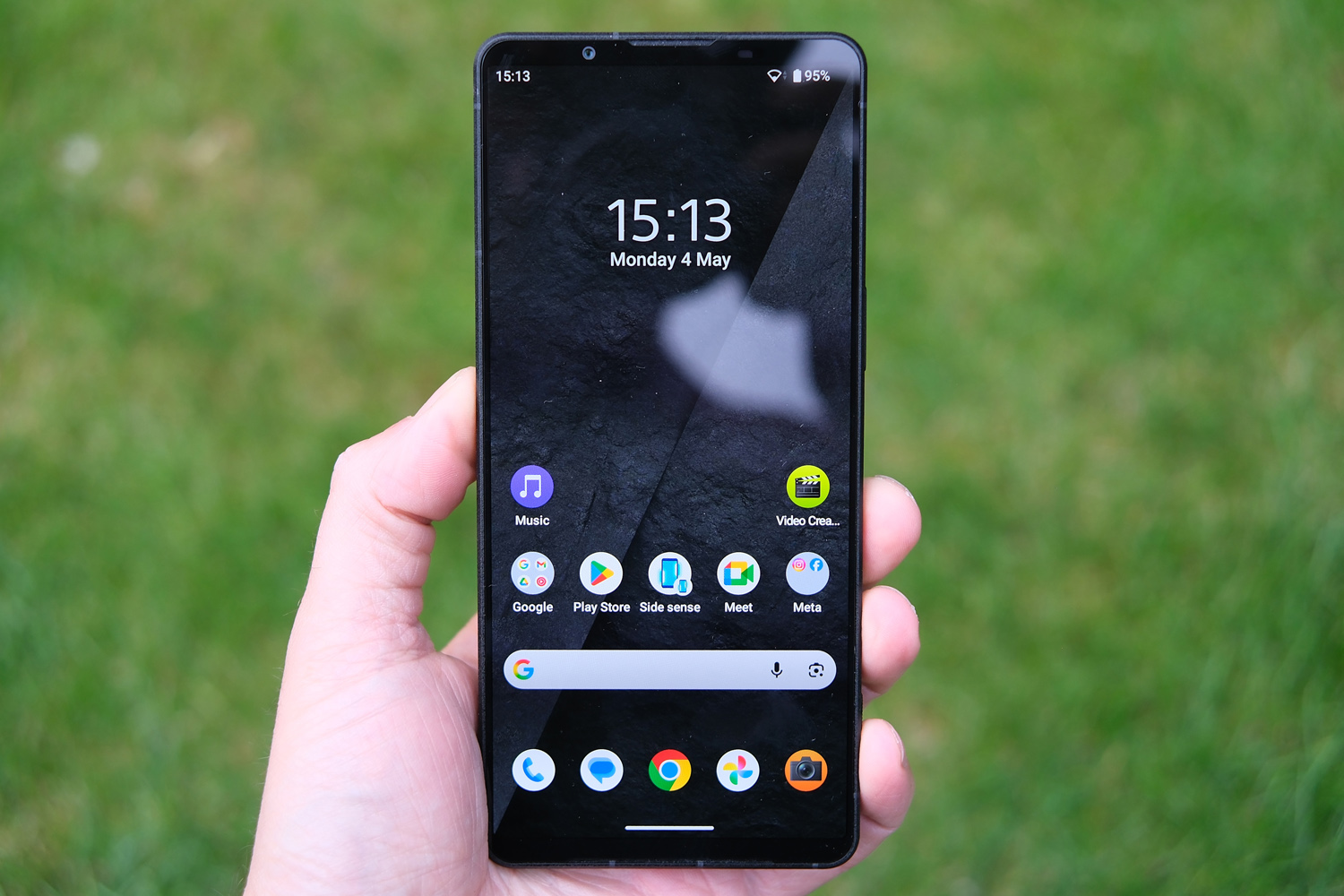
After what feels like a record-breaking run of minor iterations, Sony finally let its design team off the leash to give the Xperia 1 VIII a new face.
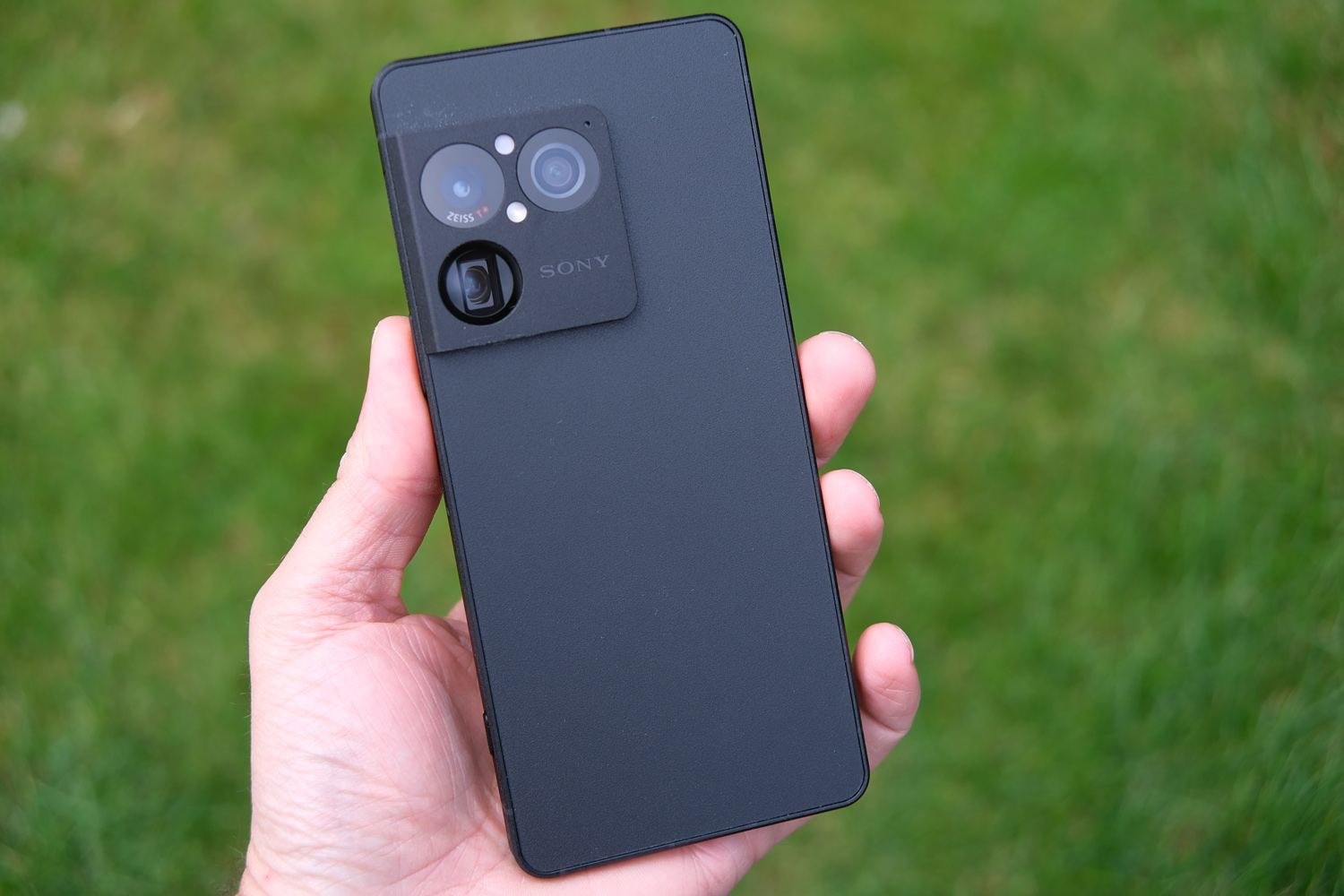
The “Ore” design, which was apparently inspired by natural textures and precious stones, sees the rear camera island changed fully for the first time in seven years. Instead of a long strip of lenses, it’s now sporting a square island that mixes sharp angles and more rounded curves. It’s treated with the same textured surface as the rear glass and metal mid-frame, which gives plenty of grip and genuinely feels different from the glass-and-aluminium sandwich you’ll find almost everywhere else.
My review unit came in Graphite Black. I’m sure it will prove to be the most popular of the four choices, even though Iolite Silver, Garnet Red and Native Gold are all easier on the eye, based on images I’ve seen.
That said, it otherwise doesn’t stray far from what came before. It’s still tall, slender and a bit monolithic, with a squared-off frame and flat front glass. Break out the tape measure and you’ll spot dimensions that are virtually identical, being just 0.1mm thicker than the outgoing phone. It’s also 3g heavier, but that still undercuts the Samsung Galaxy S26 Ultra by a considerable amount.
What that does mean, of course, is that all the long-time signature Xperia features stick around. The SIM tray is still tool-free, and still has a slot for a microSD card – something that’s a much bigger deal in 2026 now that flash memory prices have gone sky high as a result of the AI boom. The physical camera shutter button at the side is still the most comfortable to reach of its kind, even if it can’t do the fancier things Apple’s Camera Control can like change shooting mode. The 3.5mm headphone port at the top continues to make Sony my top pick for music fans wanting the best possible quality.
There is one area I’d have liked to see Sony mix things up a bit though. This must be the last flagship smartphone (outside of flip and foldables) doggedly sticking with a side-mounted fingerprint sensor, rather than going under-display. Accuracy and speed feel unchanged from last year, and it has a sensible enough placement that I didn’t ever struggle to reach it (something left-handed phone owners will know can be a problem). But it does feel like a reminder of just how far back this phone’s roots go.
I’m less bothered by the IP65/IP68 resistance ratings, which are good enough to survive a total dunking in water and won’t suffer from a drop into sand at the beach. While there are rivals with IPX9 protection now, I can’t say high pressure water jets are something my phone encounters all that often.
Screen & sound: as film-friendly as ever
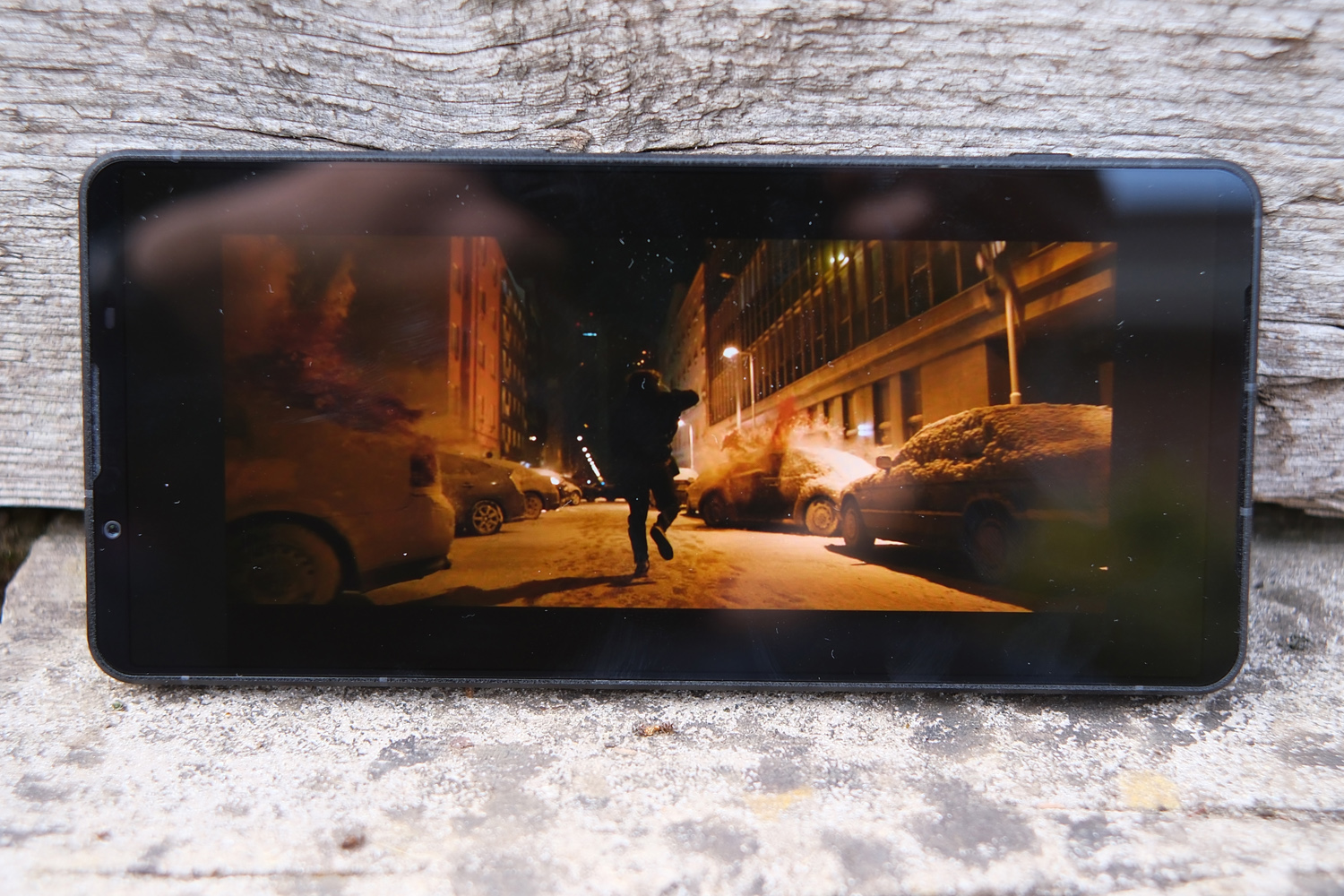
You’ve got to give Sony some respect for refusing to let a punch-hole camera get in the way of a full-screen viewing experience, or compromising on sound by ditching the front-firing stereo speakers. The Xperia 1 VIII sticks closely to the firm’s established formula, meaning an uninterrupted 6.5in OLED panel with a slender 19.5:9 aspect ratio. That does mean it’s saddled with more prominent top and bottom bezels though, which feel even more dated in 2026 than they did on the previous generation.
The underlying panel doesn’t seem to have changed all that much. That means you’re still getting a 2340×1080 resolution that looks perfectly crisp at a typical viewing distance, an LTPO adaptive refresh rate that can bounce between a power efficient 1Hz for static content and silky smooth 120Hz scrolling, and image processing tuned by picture engineers from Sony’s Bravia TV division.
Luminance sensors and the front and back of the phone can adjust colours based on your environment, separate from Android’s adaptive brightness toggle, and the auto Creator mode also makes a return to get as close to the director’s intention as possible on a screen that still slips into a pocket.
Unsurprisingly streaming content looks superb here, with vibrant yet natural looking colours, exceptional contrast and the deepest, darkest of blacks. HDR video in particular really stood out, helped by wide viewing angles and the same high brightness as the outgoing handset. That also translated to great outdoor visibility, if not quite as good as the class leaders.
I give Sony the edge on sound over pretty much every rival, though. The speakers are always clear and give effective stereo separation, as you’d expect given the forward-facing arrangement, but volume has taken a step forward from last year. There’s more bass too, while the high-end gives a greater impression of detail. I’m never going to vouch for people playing music from their phones in public, but wager I’d find it just a little less annoying if it were done through this phone.
Cameras: new zoom
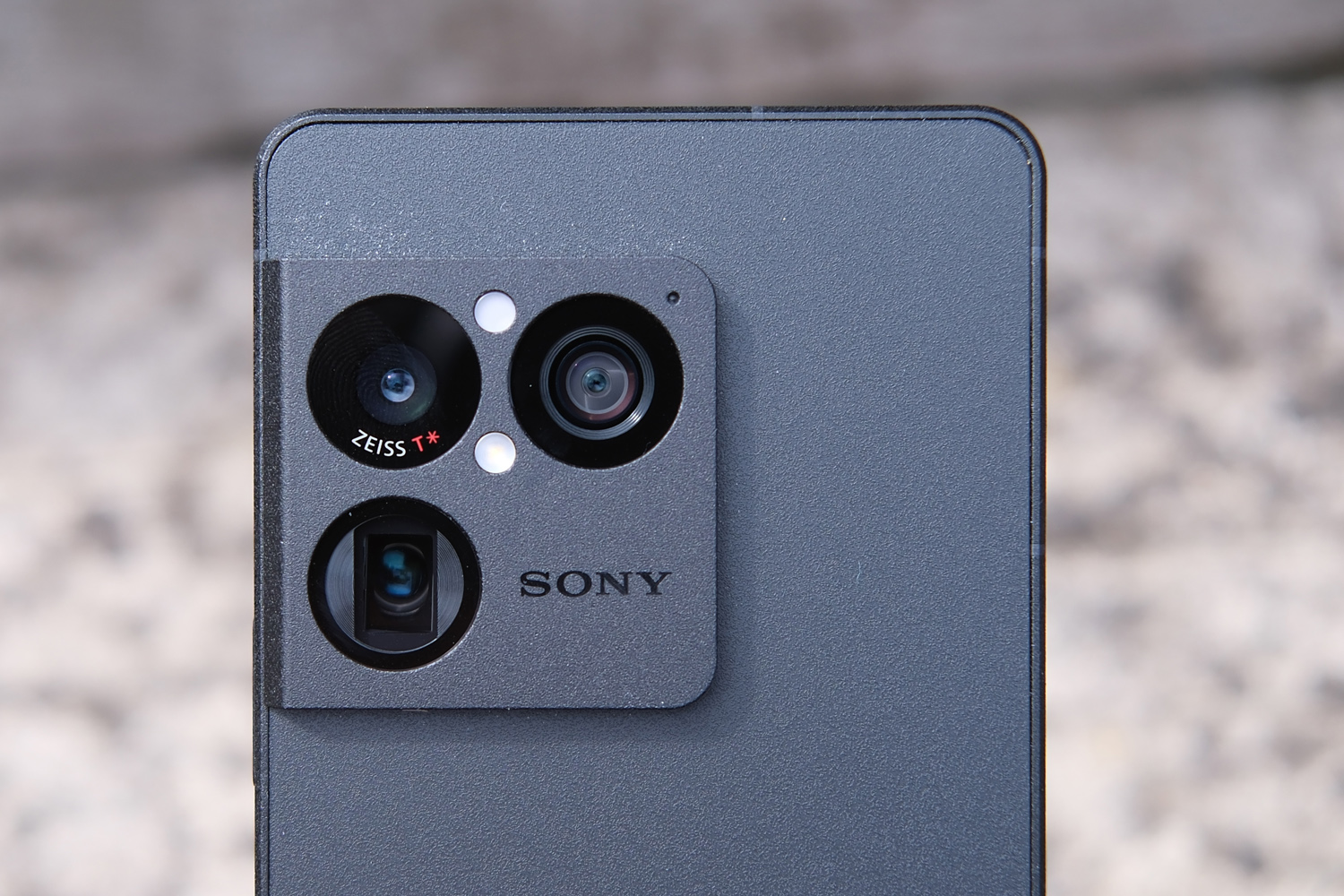
Photography has always been an Xperia strength, and Sony is hoping to keep that streak going with the 1 VIII – though only one of the three rear snappers has seen an upgrade from the previous generation. The 52MP Exmor T for Mobile lead lens returns unchanged with a still-competitive 1/1.28in sensor size, 48MP effective resolution and f/2.0 aperture. I can’t blame Sony for sticking with the 48MP ultrawide, either – it was arguably the star of the show on last year’s Xperia 1 VII.
The telephoto sensor, meanwhile, is a considerable four times larger than the old handset, with a higher 48MP pixel count and f/2.8 aperture. Sony has simplified the lens a bit, losing the continuous zoom in favour of a fixed focal length and digital sensor cropping to go from 2.9x to 5.8x virtually losslessly.
New hardware aside, the other major addition is a shooting helper within the camera app that uses AI to give you tips on composition. Thumbnails pop in from the side of the screen once it detects a scene, suggesting different filters based on Sony’s Creative Looks; it can also apply bokeh blur and suggest switching to a different lens for a new perspective. You can then fine-tune the effect before you press the shutter button.
Or at least, that was Sony’s pitch. In practice, I found it rarely prompted to change lenses – and when it did, the pulsing animation was so subtle I would often miss it. The thumbnail previews are also so small I would struggle to tell what they’d actually do to my image, and there’s no caption or text to suggest which of Sony’s five Creative Looks is being applied. You’ve got to tap multiple times to find that out, should you want to apply the same filter again later.
Google Pixel’s Camera Coach is just plain more helpful for proper photography newbies that need help lining up their shots, while rivals trying to mimic specific analogue looks – Xiaomi and Leica, oppo and Hasselblad, Vivo and Zeiss – make it clearer which filter is which. Some of Sony’s filters just don’t look all that great to these eyes.

A lot of the other software upgrades have been on creator wish lists for a while. The macro mode may have a longer focus distance now but it supports autofocus, and works across all camera modes rather than being its own dedicated function; the Auto Framing video mode, which uses object detection to keep your subject within frame even while moving around the shot, now supports the telephoto sensor for higher quality close-ups; multi-frame RAW processing now works across every sensor for stills shooting, including within portrait mode; and the bokeh mode’s subject separation is even more convincing, doing a much better job with stray hairs.
The 1 VII feels fantastic to shoot with, thanks to that physical shutter button and a camera app that mimics the look and behaviour of Sony’s alpha cameras. The firm continues to deliver punchy, dynamic photos that aren’t short on contrast, helping them give the impression of greater depth than some rivals. Consistently well-judged exposure and loads of dynamic range meant I rarely encountered blown-out skies, even on especially sunny days.
Closeups are far easier now there’s autofocus to lend a hand, along with a highlight peaking option in the settings. Depth blur is convincing enough, if still a step behind rival handsets with even larger lead lenses. The pro and manual modes stick around for shooters who want total control, including one of the best burst shooting modes I’ve used on any phone, but the Auto mode can spit out very satisfying images too.
I still think the ultrawide is one of the best around, with the sort of fine detail you rarely see from a phone. Colours are also very consistent with the other lenses and there’s no shortage of dynamic range. Noise levels don’t quickly creep up at night, and bright artificial lights rarely throw off the exposure, preserving strong shadows.

While a little less zoomed in than before, the telephoto lens delivers great results at the native 2.9x – and because it uses sensor cropping now, the 5.8x snaps are that bit sharper than the outgoing phone could deliver at 7.1x with its too-clever-for-its-own-good variable aperture zoom. The higher pixel count really makes all the difference, both during the day and at night; colours, detail, contrast, exposure and noise are all on point for a high-end handset. It’s only once you head beyond 6x magnification that the zoom abilities fall behind the very best flagship phones.
Overall performance is comfortably up there with Google and Samsung’s latest efforts, though the current crop of Ultra-badged alternatives deliver a more filmic look out of the box. The Oppo Find X9 Ultra’s 10x zoom also sets the pace for distance shooting.
Software experience: a familiar face
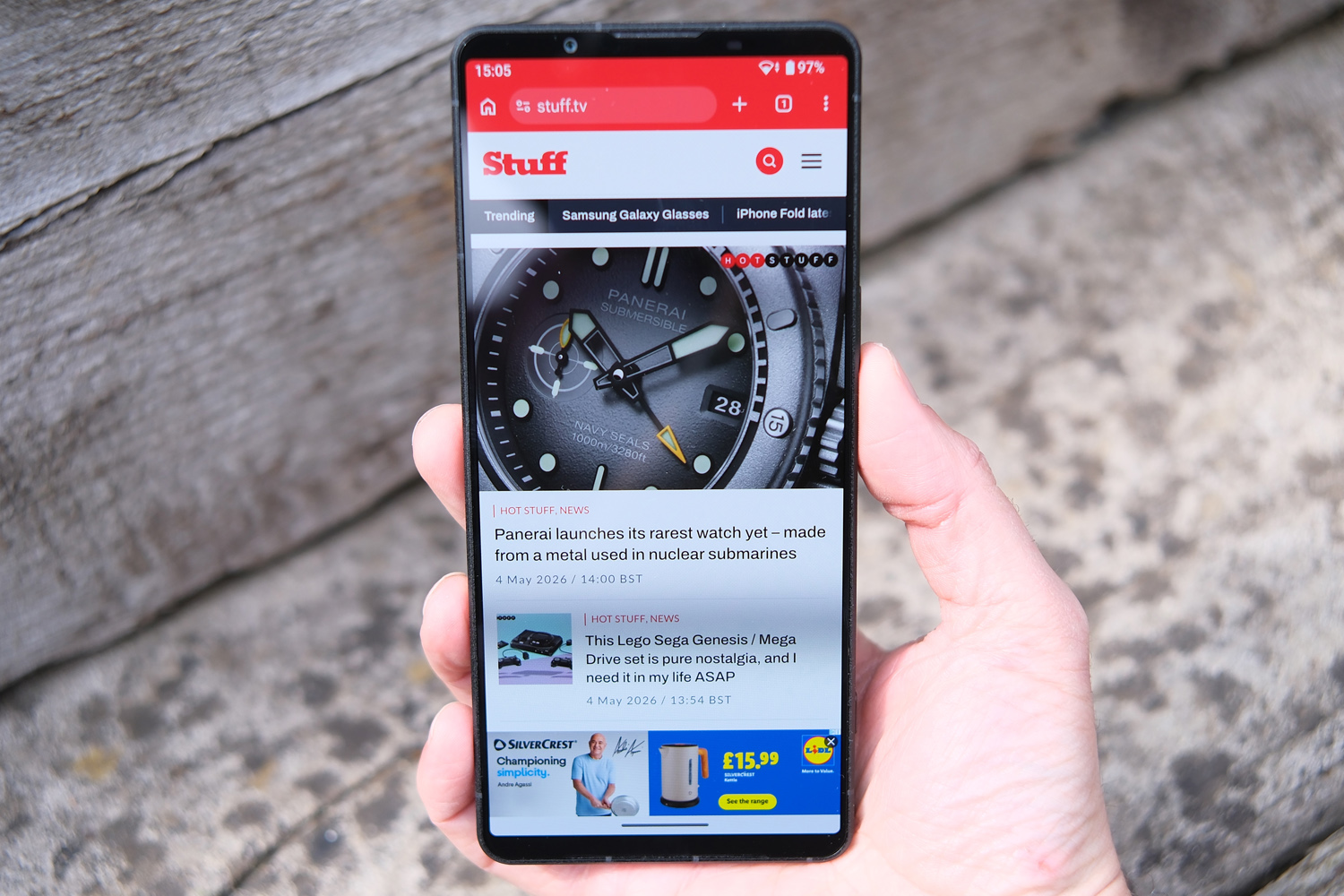
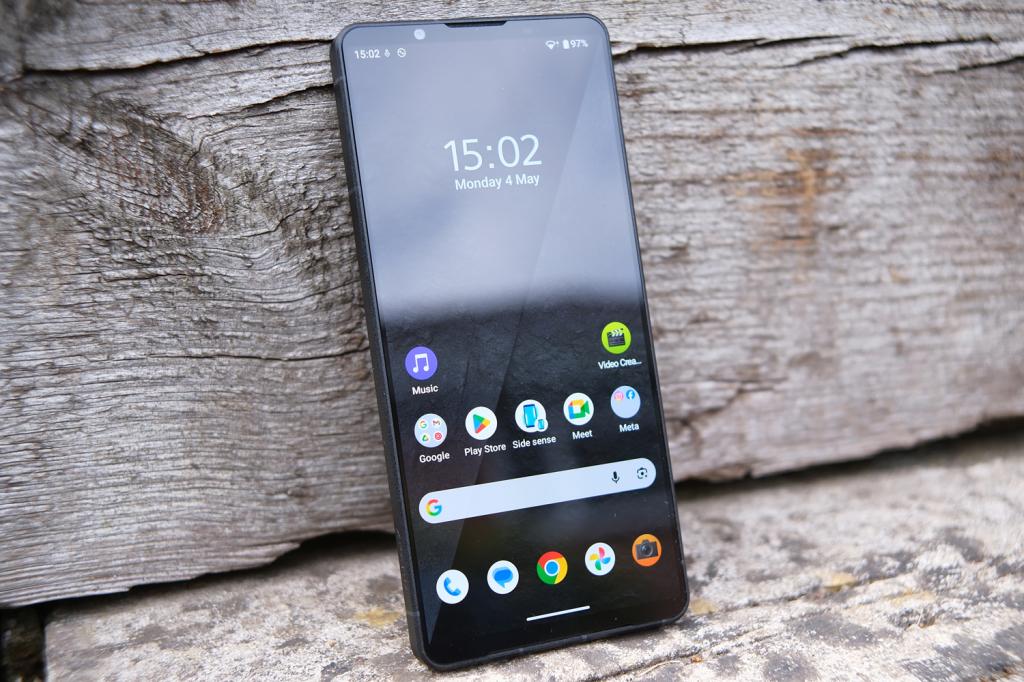
Sony doesn’t tend to make a big song and dance about its custom Android interface – possibly because it hasn’t changed all that much over the last few Xperia generations. This latest iteration sits on Android 16 and feels all but identical to the Xperia 1 VII’s, with a familar bunch of own-brand apps that happily aren’t just duplicates of Google’s defaults.
The Music app is a useful reminder this phone has both a 3.5mm headphone port and microSD card slot, so can double as a high quality portable music player more effectively than any mainstream rival. Music Pro, which used cloud processing to clean up audio recordings, has seemingly been scrubbed from the list this year, but the comprehensive Video Creator still makes the cut. You’ll need to also own a Sony camera and pair of Sony headphones to make use of the pre-installed companion apps.
Square icons in the Quick Settings screen and a bespoke Xperia font are the biggest clues you’re not looking at vanilla Android. I thought the text size was very small on first boot, but a quick tweak in the Settings menus made things more legible. I appreciated the returning Side Sense sidebar, which makes it wonderfully simple to set up and open pairs of apps in split view for speedy multitasking.
While AI might’ve dug its claws into the camera app, the rest of the phone is largely devoid of machine learning smarts. It’s a refreshing change of pace from Google and Samsung’s recent phones. You’ll need to head to the Play Store if you want generational audio transcription or real-time foreign language translation.
It would’ve been nice to see Sony step up its long-term software commitments, which remain at four years of new Android versions and six years of security patches here. Rivals have pledged as many as seven years, which could be something to think about if you want a handset to last as long as possible.
Performance & battery: ample power, average lifespan
There are no real surprises lurking under the Xperia 1 VIII’s hood. It’s rocking the same Qualcomm Snapdragon 8 Elite Gen 5 chipset as most of its direct rivals, along with either 12 or 16GB of RAM depending on if you go for the more widely available model with 256GB of internal storage, or spend the extra on the 1TB version exclusively sold through the Sony online store.
My testing was done on the base handset, with performance being about where I expected for the money. Raw numbers put it around the middle of the current generation flagship pack, suggesting Sony has kept its usual conservative approach to clock speeds and internal temperatures. None of my synthetic tests showed any obvious weaknesses and Android felt very responsive in everyday use.
I could definitely feel the phone warming up after a few benchmark runs, but the combination of heat diffusion sheet and vapor chamber ensured performance never noticeably tanked in games or demanding creative apps. Recording long 4K video clips, which could often be an issue with older Xperia 1 handsets, was trouble-free here.
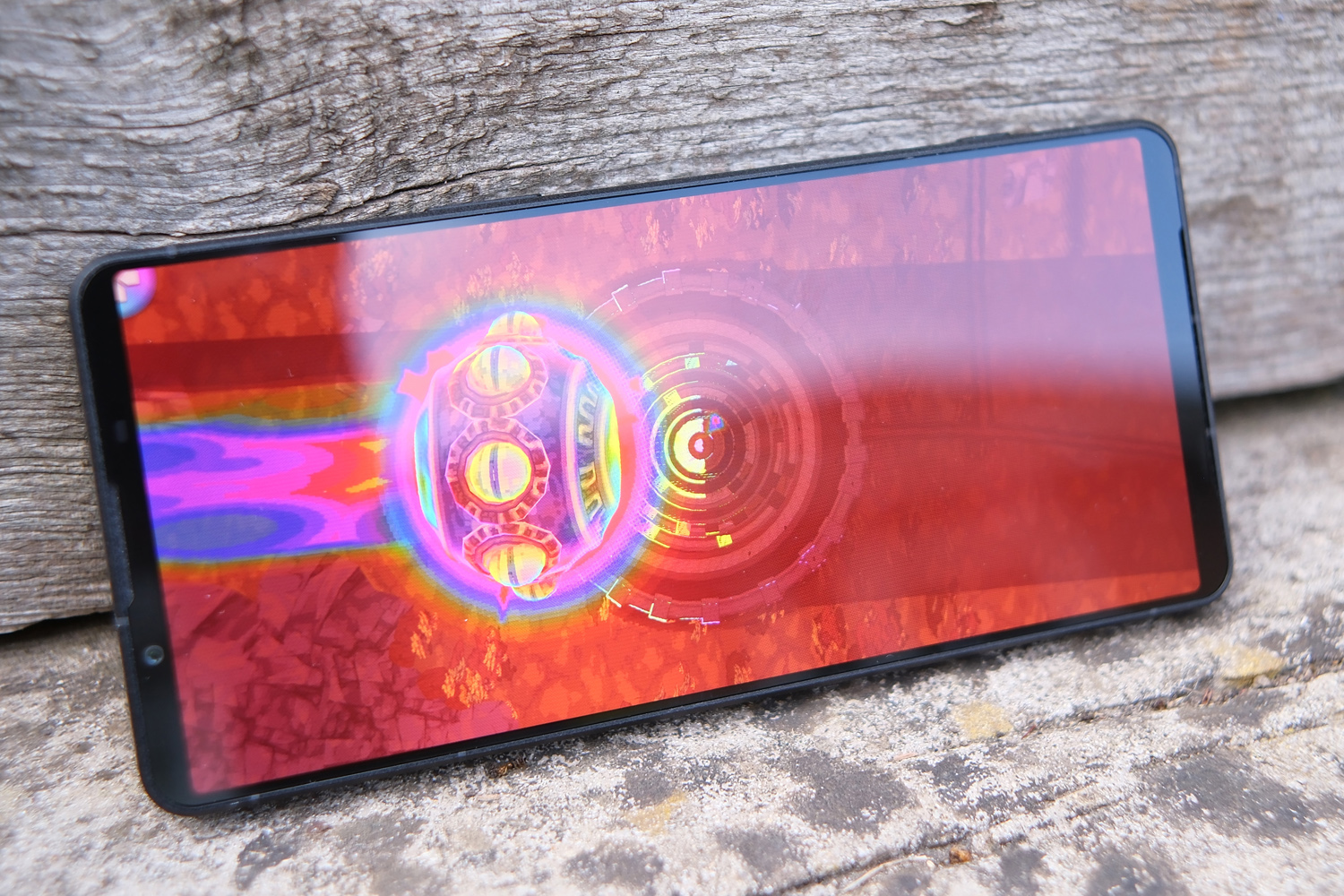
Gaming in general was great, with 3D titles defaulting to higher detail settings and delivering consistently smooth frame rates.
| Sony Xperia 1 VIII benchmark scores | |
| Geekbench 6 single-core | 3150 |
| Geekbench 6 multi-core | 8975 |
| Geekbench AI | 5778 |
| Speedometer 3.1 | 24.6 |
| PCmark Work 3.0 | 19,904 |
| 3DMark Wild Life Extreme | 6213 |
I was less enthused by the 5000mAh battery, which is unchanged from the now-retired Xperia 1 VII – but that’s because I most recently used a Chinese flagship phone with almost 50% more capacity. Oppo, Xiaomi and Honor really are setting the pace on this front, even if Sony has gone head-to-head with Google and Samsung’s latest flagships.
It got through an entire day of pretty heavy use split across Wi-Fi and 5G connections, then lasted around an hour longer than its predecessor for video playback. Some may find that good enough, but when an Oppo Find X9 Pro can comfortably manage two days between refuels, I think it’s an area where Sony could do better.
Wired and wireless charging speeds are a similar story, remaining at a fairly mediocre 30W over USB-C or 15W on a wireless charging pad. At best you’re looking at an hour and a half on mains power before you’re back to 100%. This is also the latest Xperia generation where Qi2 magnetic charging hasn’t made an appearance.
Sony Xperia 1 VIII verdict
Underneath the sleek new shell, the Xperia 1 VIII doesn’t fully feel like the evolution Sony needs it to be. That new zoom lens might put the rear camera trio on par with mainstream rivals from Google and Samsung, but serious phone photographers have now moved on to Chinese alternatives with even more impressive hardware. Then at the other end of the spectrum, the AI composition tips are too small and subtle for the amateur audience the firm is hoping to attract.
It comfortably keeps pace on performance and you won’t find its combination of uninterrupted screen, expandable storage and wired listening options anywhere else. Yet battery life and charging speeds continue to tread water while rivals push forward with long lasting silicon-carbon tech, and the price hasn’t come down at all to make up for it.
The Xperia’s creator-first positioning remains, then – but that at least means Sony fans who keep coming back year after year will be very happy here.
Sony Xperia 1 VIII technical specifications
Scroll to see more →
| Specifications | Sony Xperia 1 VIII |
|---|---|
| Screen | 6.5in, 2340×1080 OLED w/ 120Hz |
| CPU | Qualcomm Snapdragon 8 Elite Gen 5 |
| Memory | 12/16GB |
| Cameras | 48MP + 48MP + 48MP rear, 12MP front |
| Storage | 256GB/512GB/1TB |
| Operating system | Android 16 |
| Battery | 5000mAh w/ 30W wired, 15W wireless charging |
| Dimensions | 162x74x8.3mm, 200g |


Read the full article here
