







Introduction
Steelseries has a knack for going where no gaming headset has gone before. It was only at the tail end of 2025 that the firm went full-on luxury, outfitting its latest flagship with carbon fibre drivers in pursuit of audiophile-grade sound; now the Arctis Nova Pro Omni is here to repeat that feat, only at a slightly less wince-inducing price point.
It’s still a wireless multi-platform headset that can mix up to four audio sources simultaneously. It still includes a handy dandy base station with LCD readout and battery charger for zero downtime between cell swaps. And it still has subtle enough styling that you could happily use it for your work commute (and really make the most of the active noise cancelling). While you don’t get the fancy carbon dome drivers that gave the Arctis Nova Elite such incredible precision, the Omni is still Hi-Res Wireless certified.
At $400/£349 it’s still in premium territory, but considerably less so than its bigger brother. Given the Elite was one of my favourite gaming headsets of 2025 – so much so I was still using it right up until I started this review – what’s possibly not to like?
Design & build: family tree
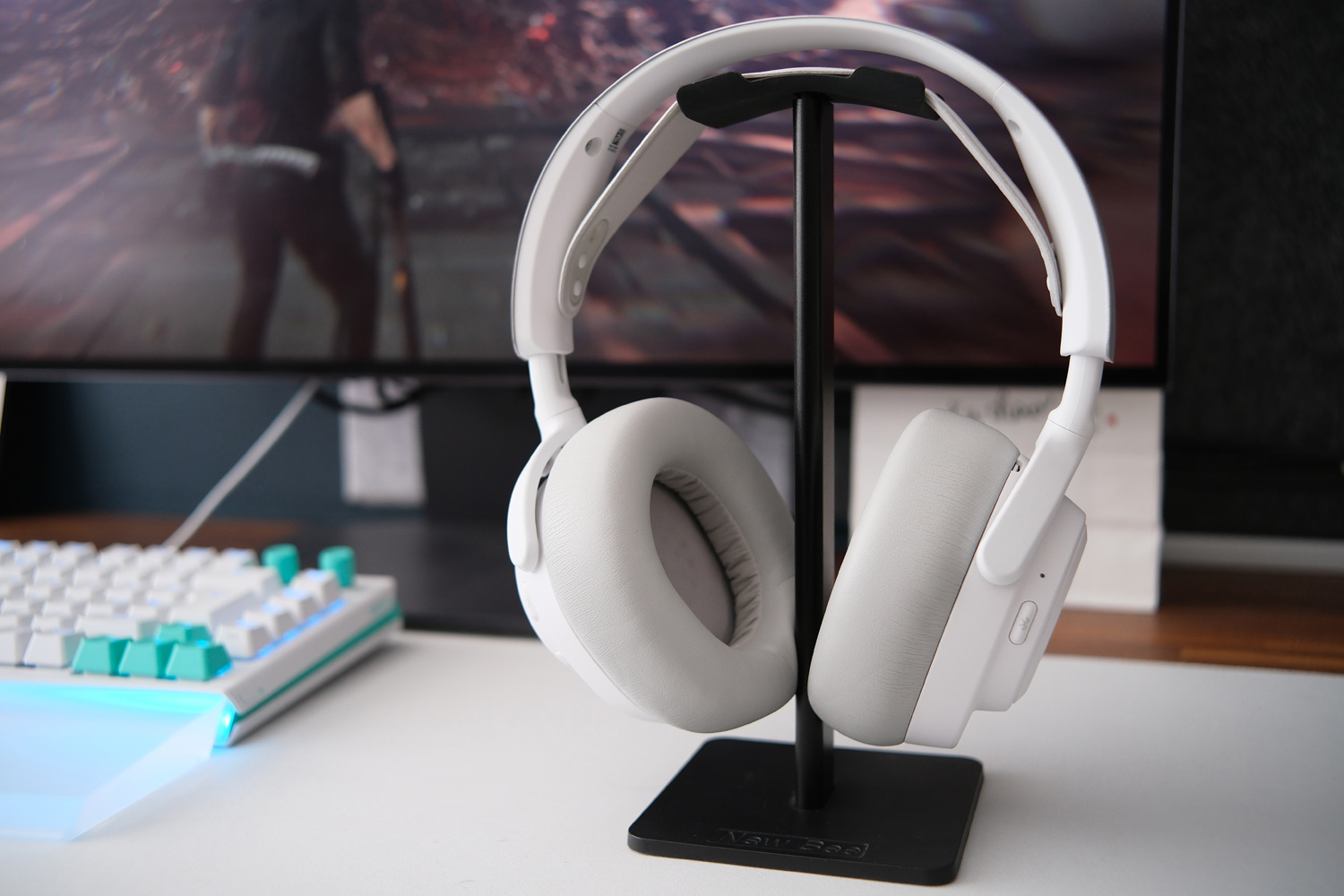
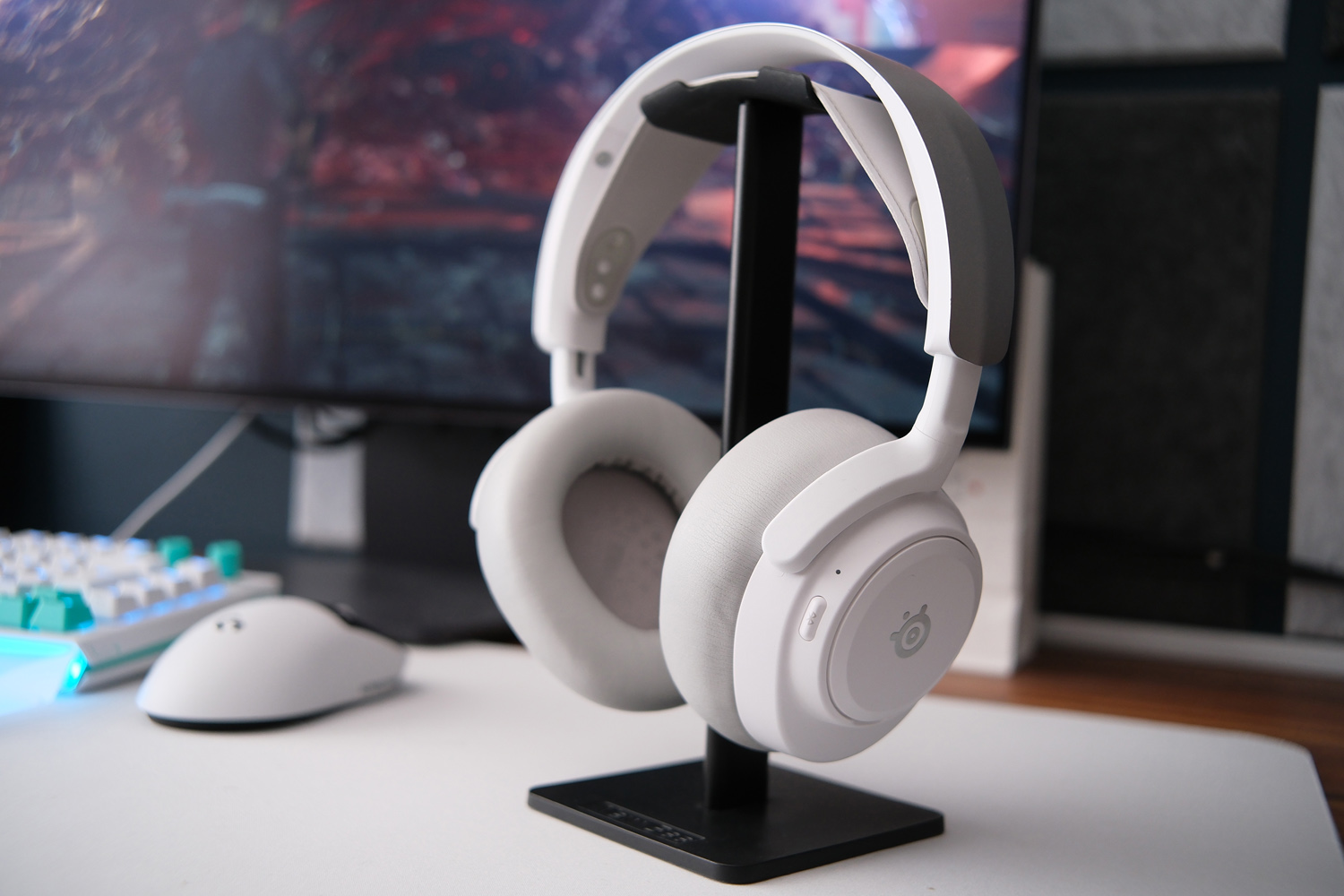
You’ve got to look pretty closely to spot where the Arctis Nova Pro Omni does things differently from the Elite. It keeps the same familiar Steelseries styling, with a suspension-style headband and modest-looking earcups adorned with all the physical buttons you’d expect a wireless headset to have.
The materials aren’t quite so luscious here though, losing the faux leather and soft-touch finishes in favour of regular plastic. That goes for the ear cup hangars and volume wheel too. Still, the metal strip over the headband acts as a good reminder this is still a high-end model.
You won’t spot any rainbow RGB effects, whether you go for the black, white or blue colour option. Branding is kept to a minimum, the Steelseries logo only appearing on the magnetic end plates that remove to reveal the USB-C port (for direct charging when you’re away from home) and the battery bay (for hot-swapping between the two included batteries when the GameHub is within reach). It treads the line neatly between overt gaming headset and a pair of go-anywhere headphones.
Using less metal and more plastic has helped bring the weight down a bit, while the chunky padded ear cushions and adjustable headband ensured I stayed comfortable even after wearing the Omni for an entire working day. There’s enough height, swivel and tilt adjustment to suit most head shapes and sizes. The clamping force is expertly judged too.
Rather than go full lifestyle with completely integrated mics, Steelseries has stuck with the Elite’s retractable boom mic. It sits flush to the left ear cup here too, with a handy mute button within easy reach and a red LED to remind you when your teammates can’t hear you.
The omnidirectional pickup pattern means you don’t have to position the boom right in front of your mouth and because it has double the bandwidth of a typical gaming headset your voice isn’t crushed down. AI-based noise rejection then does a great job of deleting background distractions, whether you’re playing on PC or console.
Features: keep it simple
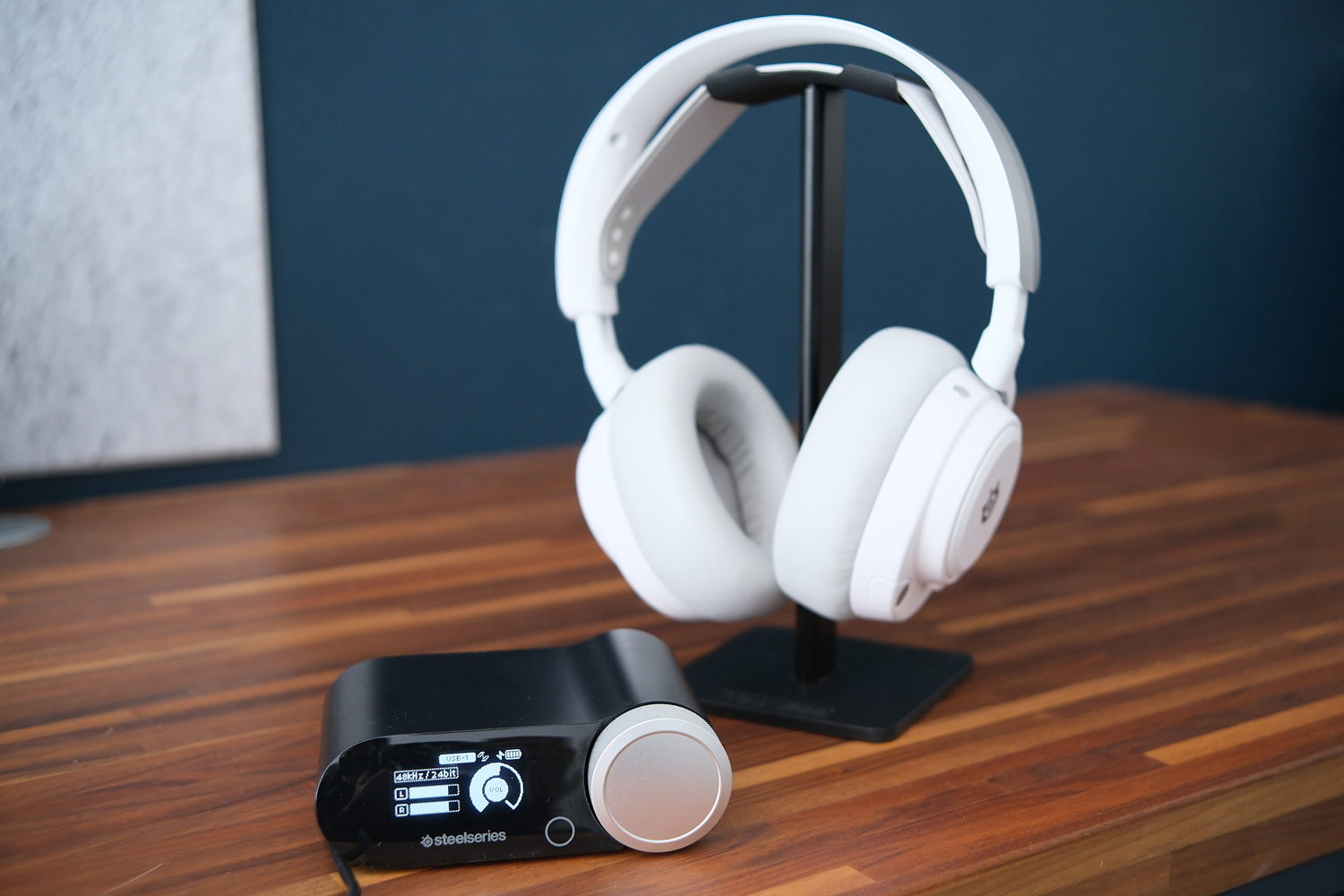
Built-in LE and LC3+ Bluetooth lets the Omni pair with a phone, tablet, or handheld in high quality sans cables, while the bundled GameHub docking station takes care of everything else. It’s basically unchanged from the Elite, save the colour of the oversized volume dial, so is just as easy to find room for on your desk. The volume dial and single touch-sensitive button let you tweak the game/chat mix or change active input if it’s within reach; if not you can do it all from the headset itself.
You still get a clean, monochrome OLED display up front showing left/right sound balance, volume, audio bitrate, battery life and the active source. The font is a little small to read from across the room when placed next to your TV and home consoles, but was just fine for me on my office desk.
Around the back there are three USB-C inputs for wiring in a gaming PC, PS5 and Xbox (or a Nintendo Switch if you’re more Mario than Master Chief). Analogue audio hasn’t been forgotten either, with both 3.5mm line in and out ports. Officially it can combine four separate audio streams at once, although I could only ever realistically use three: console gameplay, PC-based voice chat and Bluetooth music from my smartphone. It all worked flawlessly in my testing though.
As ever, having a battery charger built into the GameHub is a boon for gamers that regularly forget to plug in their gadgets between play sessions. As long as the unit is plugged in – and you’ve slotted the included second battery pack – it’ll always be ready to swap out should the one in the headset run out of juice mid-multiplayer match. Steelseries’ claimed 30 hours of use over 2.4GHz and 50 hours via Bluetooth seemed largely on the money, as long as I disabled ANC. While it’s true there are headsets with even more staying power, they’ll still need time out to refuel at some point.
Interface: everyone’s welcome
The Omni will be like catnip for gamers that like to tinker. As well as the Sonar GG suite, which gives minute adjustment while gaming on a Windows PC, the Arctis mobile app gives just as much control to console players. It’s got ANC controls, EQ presets and mic adjustments galore, including a Parametric EQ to really dial in the sound to suit specific games.
It has hundreds of game-specific EQ presets to pick from if you’d rather not get your hands dirty. They can be applied straight from your phone while you’re connected to a console, too – no need to disconnect and head to a PC first, as is the case with a lot of gaming headsets. It makes testing pre-made EQs out far easier.
I personally didn’t have a lot of use for the Streamer mode, which takes over from Windows’ audio management and lets you split audio sources down to the individual app or game, but found the spatial audio upmixing could be a boon in games where enemies were regularly trying to sneak up on me from behind.
Sound quality: different but still great
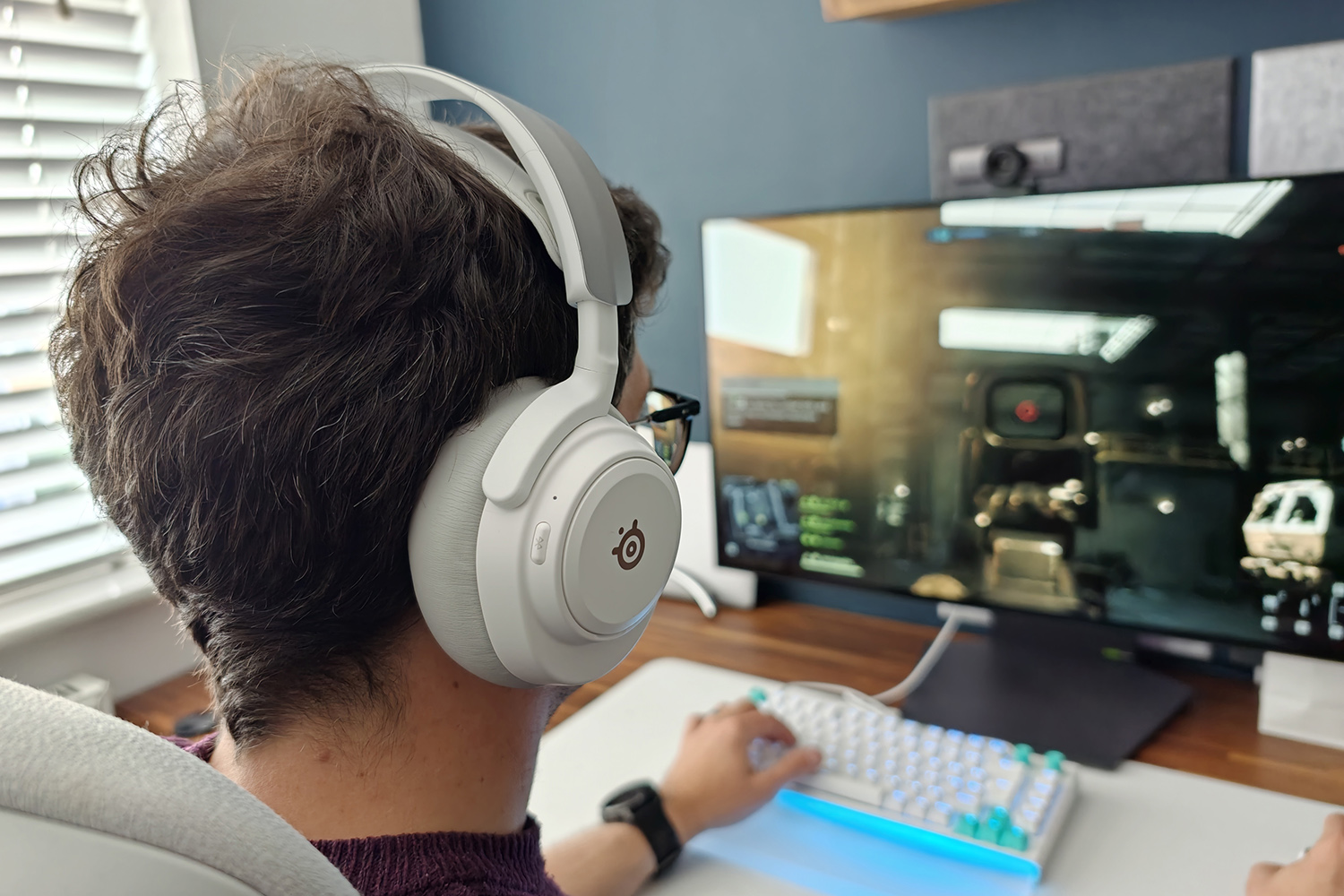
Seeing how fantastic the Arctis Nova Elite’s carbon fibre drivers sounded, I’ll admit I’m sad to see the Omni return to more mainstream dynamic drivers – even ones that were custom-designed for this headset. They’re still sizeable at 40mm and cover an impressively wide 10Hz-40kHz frequency range, though, so are by no means a consolation prize.
It helps that the Omni supports 24-bit/96kHz playback for both gaming and music, ensuring you’re getting the best quality possible when listening over 2.4Ghz. Feed it a hi-res source and there’s a very respectable amount of detail on show. While precision and outright clarity aren’t quite on the Elite’s level, this is still a very well-balanced listen given it’s first and foremost a gaming headset.
The out-of-box tune tries to make up for it with accentuated high-end frequencies, but they come across a little sharper than I’d like; a bit of EQ tweaking can restore the balance. At the other end of the spectrum there’s no shortage of bass, and it’s the kind that doesn’t all blur together when things get hectic in games or you pick a particularly heavy electronic tune.
There’s an awful lot to like here, whether you’ll mainly be gaming, listening to music, or something in between the two. With an abundance of game-specific presets you really can boost details and high frequencies when needed, then get a more balanced, bass-forward presentation that makes songs and films feel full and engaging.
I’m pleased Steelseries has managed to maintain a similar level of ANC performance as the Elite. A four microphone array and smart signal processing do a great job of muting low-frequency rumbles like washing machines, approaching cars and vacuum cleaners. My crying toddler could still make himself heard, but it otherwise coped well with wind noise while outside. I could happily use them on public transport and not feel I was missing out by leaving my usual over-ears at home.
Steelseries Arctis Nova Pro Omni verdict

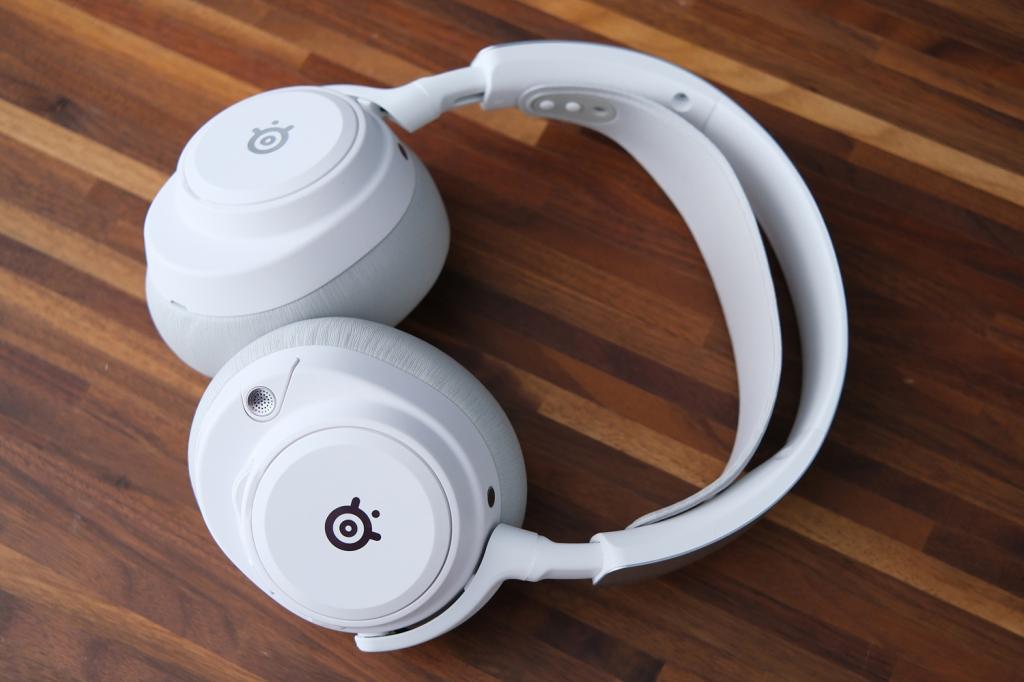
Given how closely Steelseries stuck to the formula it laid down with the five star-scoring Arctis Nova Elite, it was hardly a surprise the Nova Pro Omni turned out to be a top performer. It has the same strong noise cancelling capabilities, future-proof Bluetooth connections, and multi-console connectivity thorough the convenient GameHub, which also guarantees you’ll never be out of battery for more than a few seconds while you swap cells. They’re incognito enough to wear everywhere too, not just at your desk.
Dropping the costly carbon drivers does mean this isn’t quite the crossover king that its bigger brother was, with audio that lacks the bite and outright fidelity of the best musically-minded headphones – but the gap is smaller than the price gulf would suggest. It’s enough that I think most gamers wanting a do-it-all headset would be better off skipping the Elite for a pair of these instead.
Steelseries Arctis Nova Pro Omni technical specifications
Scroll to see more →
| Specifications | Steelseries Arctis Nova Pro Omni |
|---|---|
| Drivers | 40mm Dynamic |
| ANC | Yes |
| Connectivity | 2.4GHz Wireless, 3.5mm, USB, Bluetooth |
| Bluetooth version | Bluetooth 5.3 |
| Codecs supported | SBC, AAC, LC3+, Bluetooth LE |
| Battery life | 30 hours (per battery, two included) |
| Dimensions | 193x168x89mm, 339g (headphones) 43x83x115mm, 169g (GameHub) |




Read the full article here


