






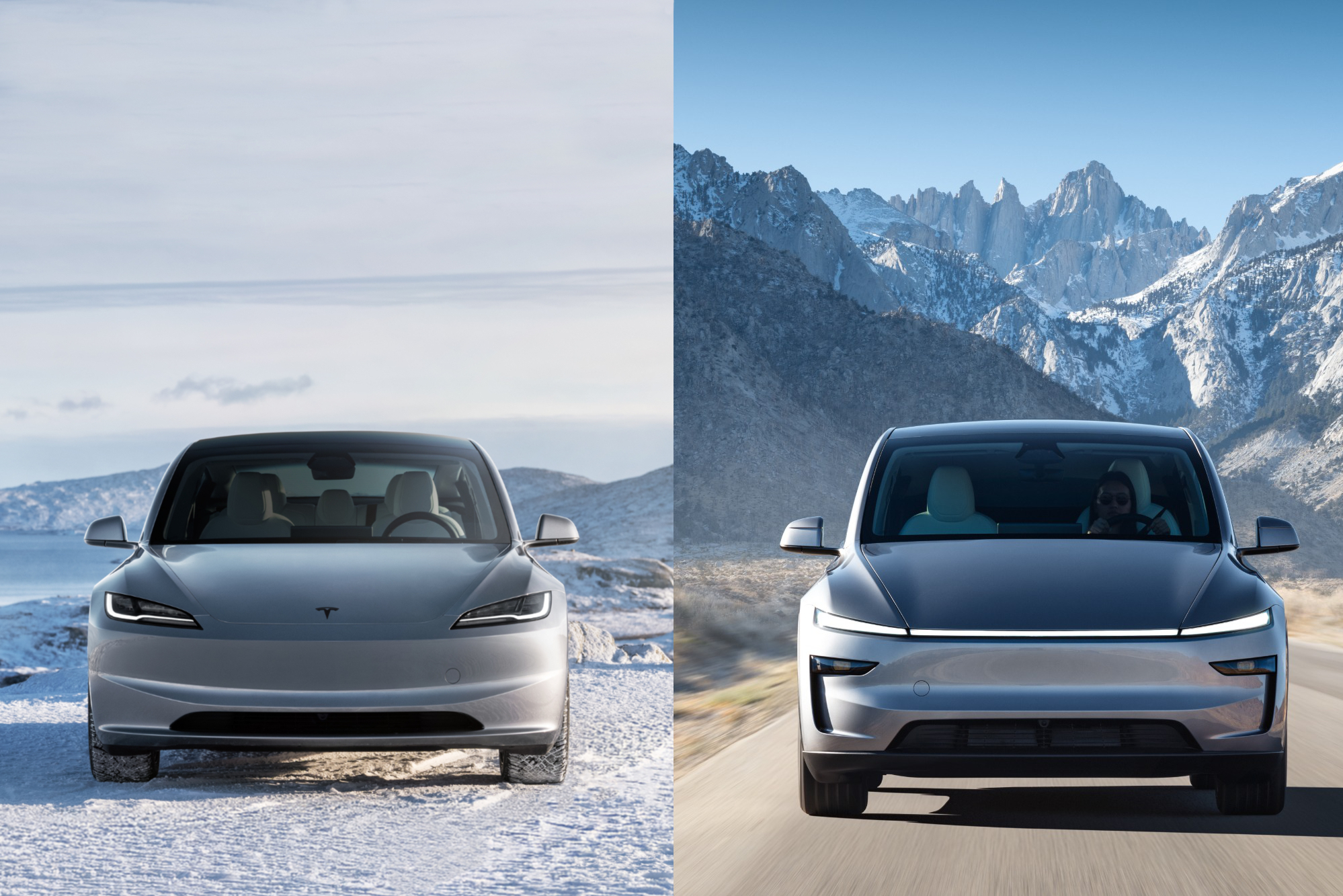
We’ve already put every single car in Tesla’s line-up under the microscope, from the entry-level Model 3 Standard right up to the range-topping Model X and Cybertruck. But two models keep coming up in conversation more than any other: the Model 3 and the Model Y.
Between them, these two account for the vast majority of Tesla’s global sales, and if you’re cross-shopping the brand, chances are you’re choosing between these two rather than looking at the S or X.
On paper, they’re closely related. Both sit on the same underlying platform, both use the same infotainment tech, and both are offered with the same drivetrain options, right up to a Performance variant with genuinely startling acceleration. But drive them back to back and they feel like different cars entirely. One is a low-slung, sporty saloon; the other is a taller, more practical crossover.
Here’s how the Model Y and Model 3 compare.
Design
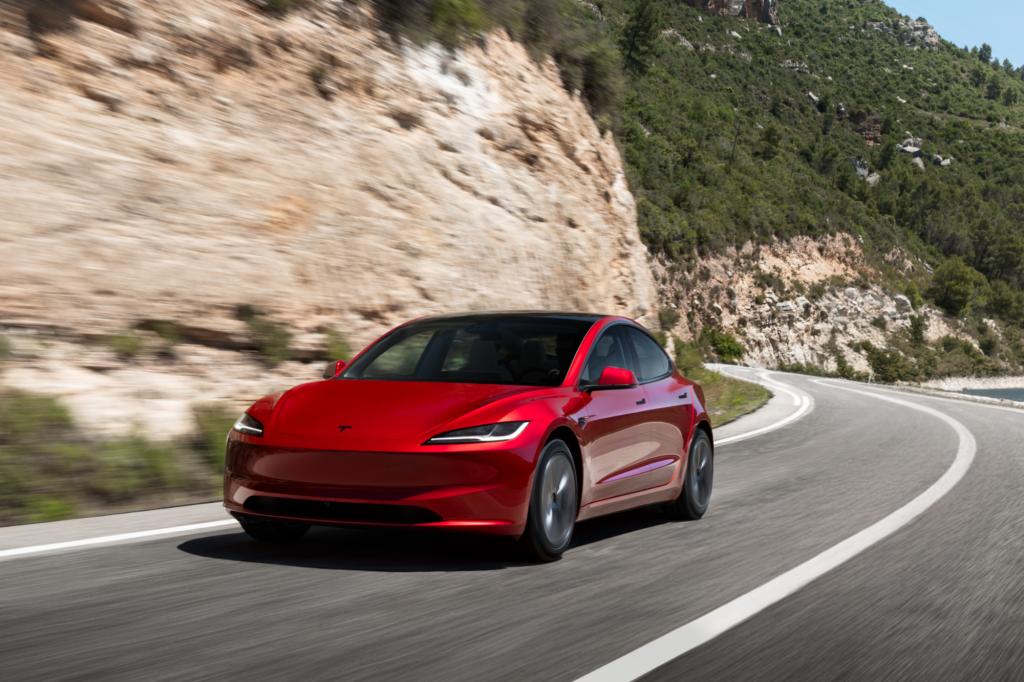
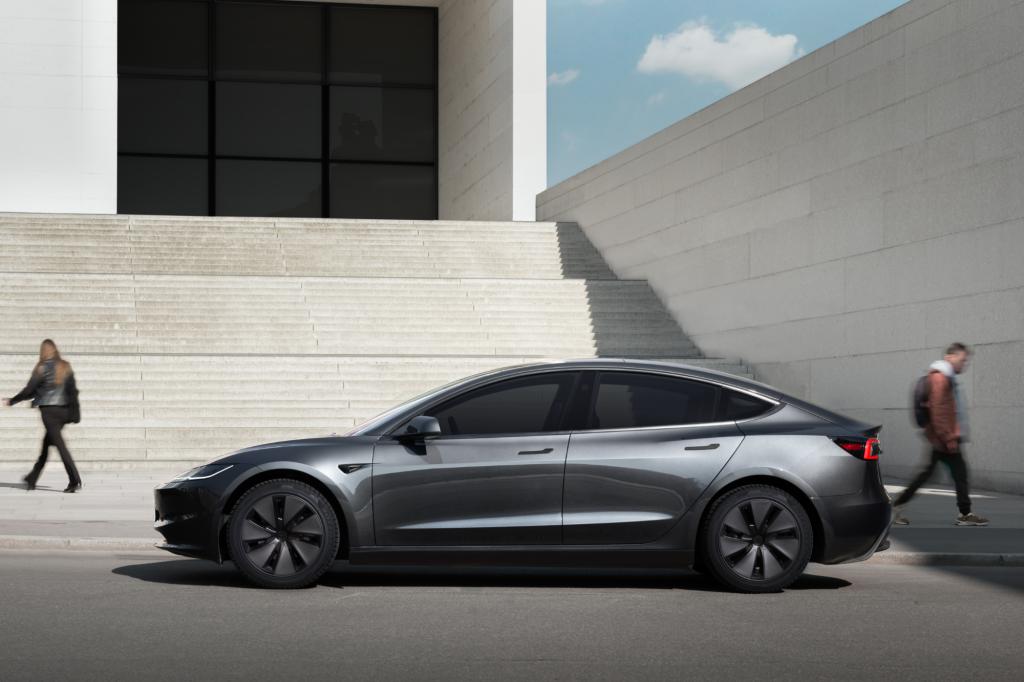
The Model 3 is the sportier-looking of the two, and it’s not close. It sits low, has a proper boot rather than a hatch, and its proportions borrow more from a compact sports saloon than an SUV.

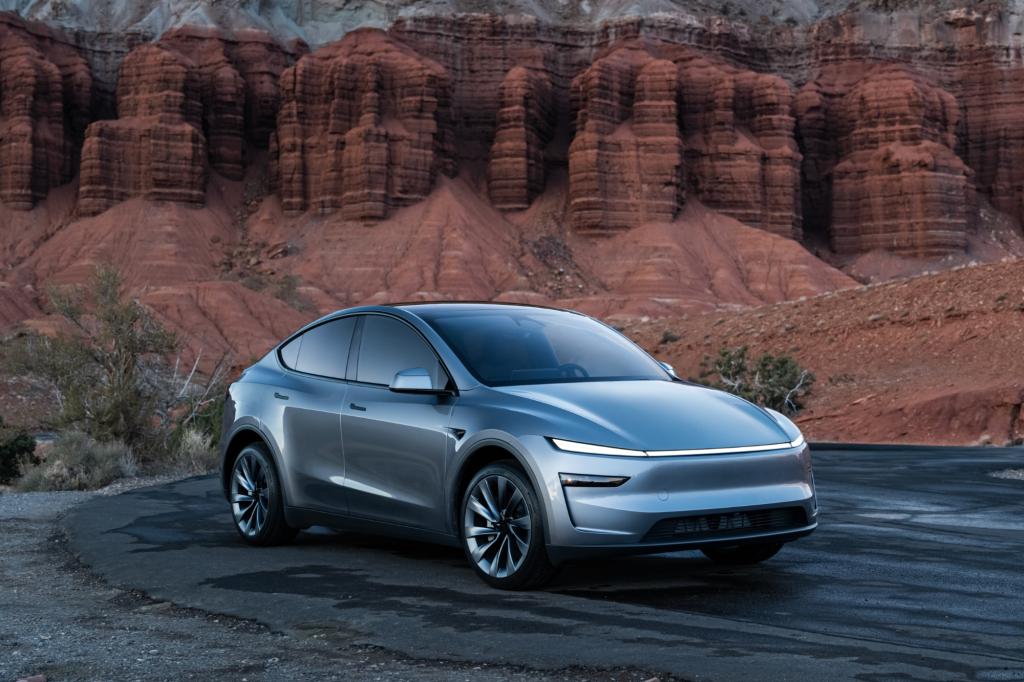
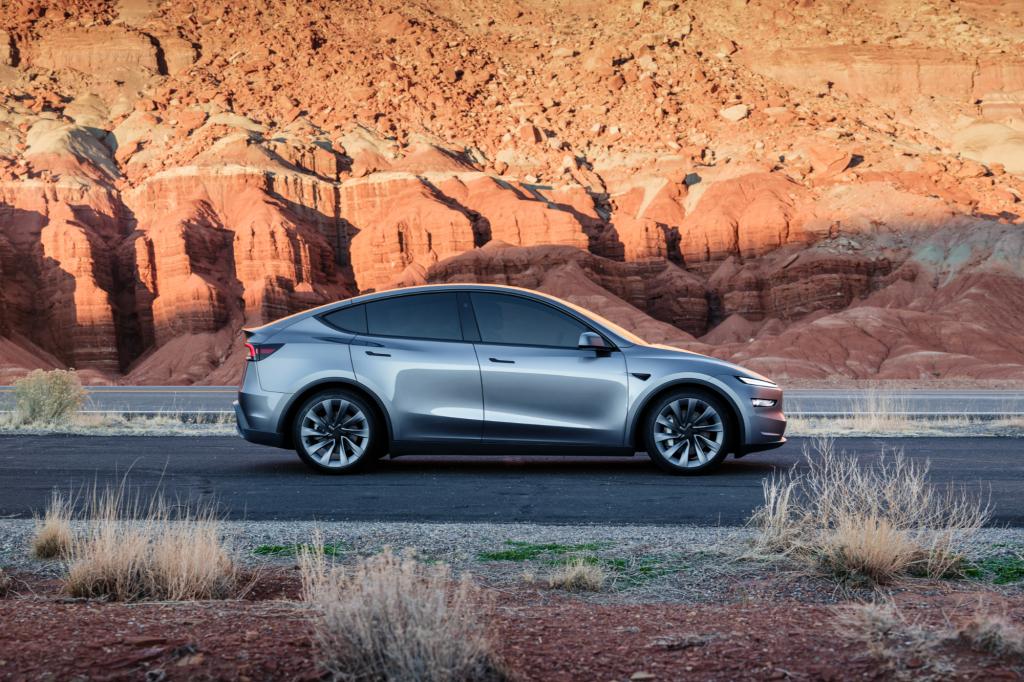
The Model Y is essentially the same car stretched upward, with a raised ride height and a liftback rear end that trades some of that sleekness for a bigger boot opening.
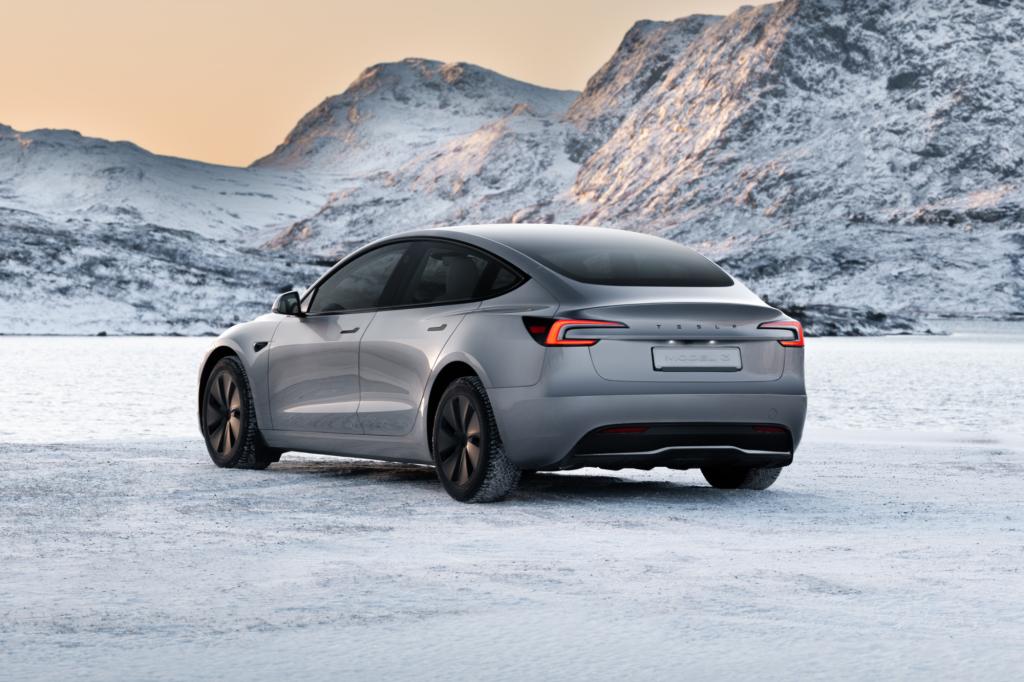
Both have had recent refreshes. The current Model 3 (codenamed Highland) brought a redesigned front and rear light signature, an improved interior and a suspension retune that softened the ride without blunting the handling.
The Model Y followed with its own Juniper-era update in 2025, bringing sharper styling, acoustic glass throughout the cabin and, on the Performance model, a much more aggressive aero package with a carbon-fibre spoiler and 21in wheels.
Which looks better is entirely subjective: if you’re after a sporty-looking car then you’ll gravitate towards the Model 3, however, if you prioritise outright practicality, then you’ll happily trade a bit of visual drama for the Y’s added usefulness.
Practicality
This is where the Y pulls ahead, no contest. Its liftback opens onto a genuinely useful load bay that swallows bulky items – bikes, prams, flat-pack furniture – far more easily than the 3’s narrower boot aperture.
The 3’s boot is deep, but the opening itself is the limiting factor; anything wide or awkwardly shaped often has to go in via the folded rear seats instead.
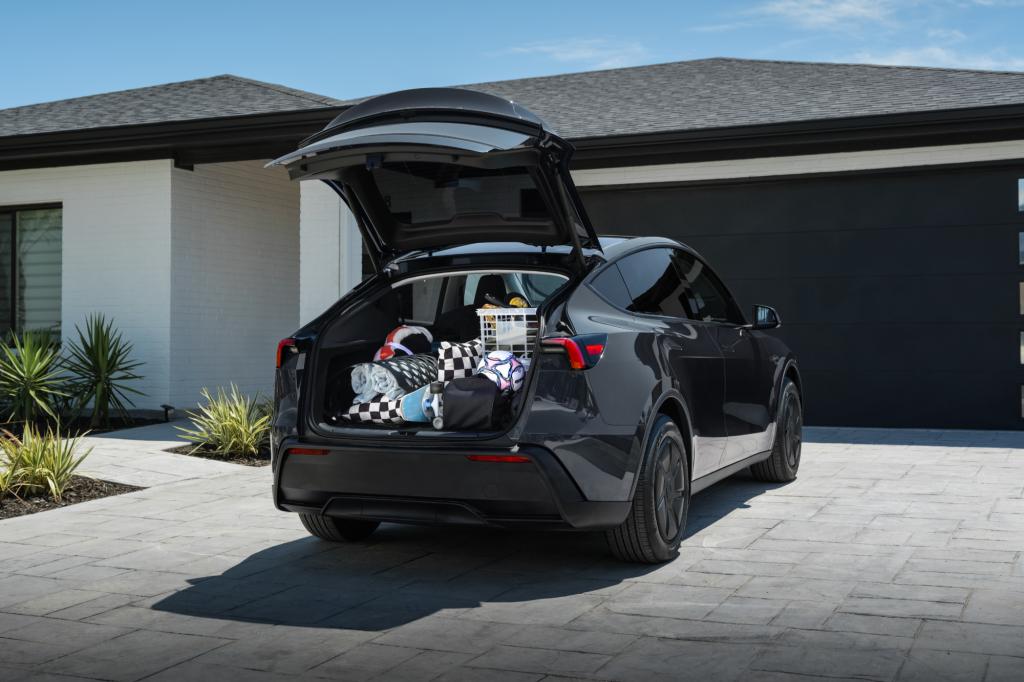
Interior space is broadly similar between the two, since they share a wheelbase, but the Y’s extra height translates into an airier feel in the back row, and its higher hip point makes getting in and out easier – something that matters more than you’d expect if you’re regularly loading car seats or have older passengers on board.
If you are buying a Tesla as a family car, with Model Y is the easier car to live with day to day.
Performance
Both cars share Tesla’s latest-generation Performance 4DU drive unit, and both should feel seriously quick, but the Model 3 is the more engaging car to actually drive. It’s lighter, sits lower and has a noticeably more planted feel through corners; the Model Y, for all its improvements, still drives with more body roll and a taller centre of gravity that you can’t fully engineer away.
Tesla’s own figures back this up. The Model 3 Performance uses a chassis specifically tuned with adaptive dampers, stiffer suspension top mounts and a multi-section stabiliser bar, alongside track-ready brakes as standard. The result is a car that should feel more at home on a circuit, something Tesla leaned into with its overhauled Track Mode.
The Model Y Performance, meanwhile, borrows much of that same hardware – including the adaptive suspension and the same drive unit – and delivers 460hp with a 0-60mph time of 3.3 seconds. That’s genuinely rapid for a family SUV, but the extra weight and height mean it will never quite matches the Model 3’s sense of agility. Think of it as the more comfortable, still very quick option, rather than the outright driver’s car.
Range
The Model 3’s lighter weight and more aerodynamic shape give it a genuine efficiency advantage. Depending on trim, real-world consumption gaps of 15-25-percent between the two aren’t unusual, with the difference more pronounced at higher, motorway speeds where drag matters most.
Both cars have recently gained cheaper Standard variants, which are the most efficient versions Tesla has ever built. Tesla claims up to 321 miles on the US EPA cycle for both.
We’ve included a table of the Model 3 and Model Y ranges below:
Scroll to see more →
| Specifications | Model 3 (RWD) | Model Y (RWD) | Model 3 (Long Range) | Model Y (Long Range) |
|---|---|---|---|---|
| Range (EPA) | 321 mi | 321 mi | 363 mi | 357 mi |
| Range (WLTP) | 332 mi | 309 mi | 466 mi | 387 mi |
If maximising range or minimising your electricity bill is a priority, the Model 3 remains the more efficient choice across the board.
Price
Pricing has narrowed considerably since the Model Y first launched. Today, the Model Y typically costs a few thousand dollars more than the equivalent Model 3 trim.
Here’s a table comparing the price of the entry-level model, Long Range model, and Performance models:
Scroll to see more →
| Specifications | Model 3 (RWD) | Model Y (RWD) | Model 3 (Long Range) | Model Y (Long Range) | Model 3 (Performance) | Model Y (Performance) |
|---|---|---|---|---|---|---|
| Price (USD) | $36,990 | $39,990 | $42,490 | $45,990 | $54,990 | $57,990 |
| Price (GBP) | £37,990 | £41,990 | £44,990 | £51,990 | £59,990 | £61,990 |
The smaller price gap makes the decision less about affordability and more about which shape and use case actually suits you, though it’s worth noting the Model 3 has more consistently attracted Tesla’s more aggressive finance incentives, including 0% APR deals that have occasionally made it a notably cheaper car to finance than the sticker price alone suggests.
Verdict
There’s no wrong answer here, both the Tesla Model 3 and Model Y are great electric cars.
If you want the more involving, efficient and better-looking car to drive every day, and you don’t have a regular need for maximum load space, the Model 3 is the one to go for.
If your life involves car seats, prams, sports equipment, bulky shopping runs or simply need to get in and out of the car with less effort, the Model Y’s extra practicality and easier access will matter more to you than a sharper drive. It’s the more sensible, family-friendly all-rounder (and it’s no slouch either).
Our advice, is to test drive both before you commit, as the spec sheets are close enough that the deciding factor usually comes down to which one feels right once you get behind the wheel.
Liked this? The 10 longest-range electric cars we’ve driven so far this year




Read the full article here


