






Introduction
The Galaxy Z Fold8 Ultra should’ve been a slam dunk for Samsung. As the sequel to a near-universally loved foldable phone, some iterative improvements ought to have been enough to secure it mass market appeal. Except a new baby brother has rather spoiled the party.
While the newly-Christened Ultra doesn’t deviate far from the blueprint set by last year’s Galaxy Z Fold7, the new Galaxy Z Fold8 introduced (or re-introduced, depending on where you are in the world) a wider, more compact form factor. It has gone down a storm with both reviewers and pre-order customers, despite taking a back seat on specs. That it’s a bit cheaper than the Ultra surely helps.
Does the $2100/£1899 Ultra deserve to be overlooked because of a higher asking price that’s partly out of Samsung’s control? A bigger battery, faster charging speeds and refreshed rear cameras all sound compelling, after all, as does a more durable design. Now that I’ve lived with it as my main phone for a week, I’m convinced the hardware is high grade – but the shape is now stuck in the past.
How has the Galaxy Z Fold8 Ultra’s design evolved?
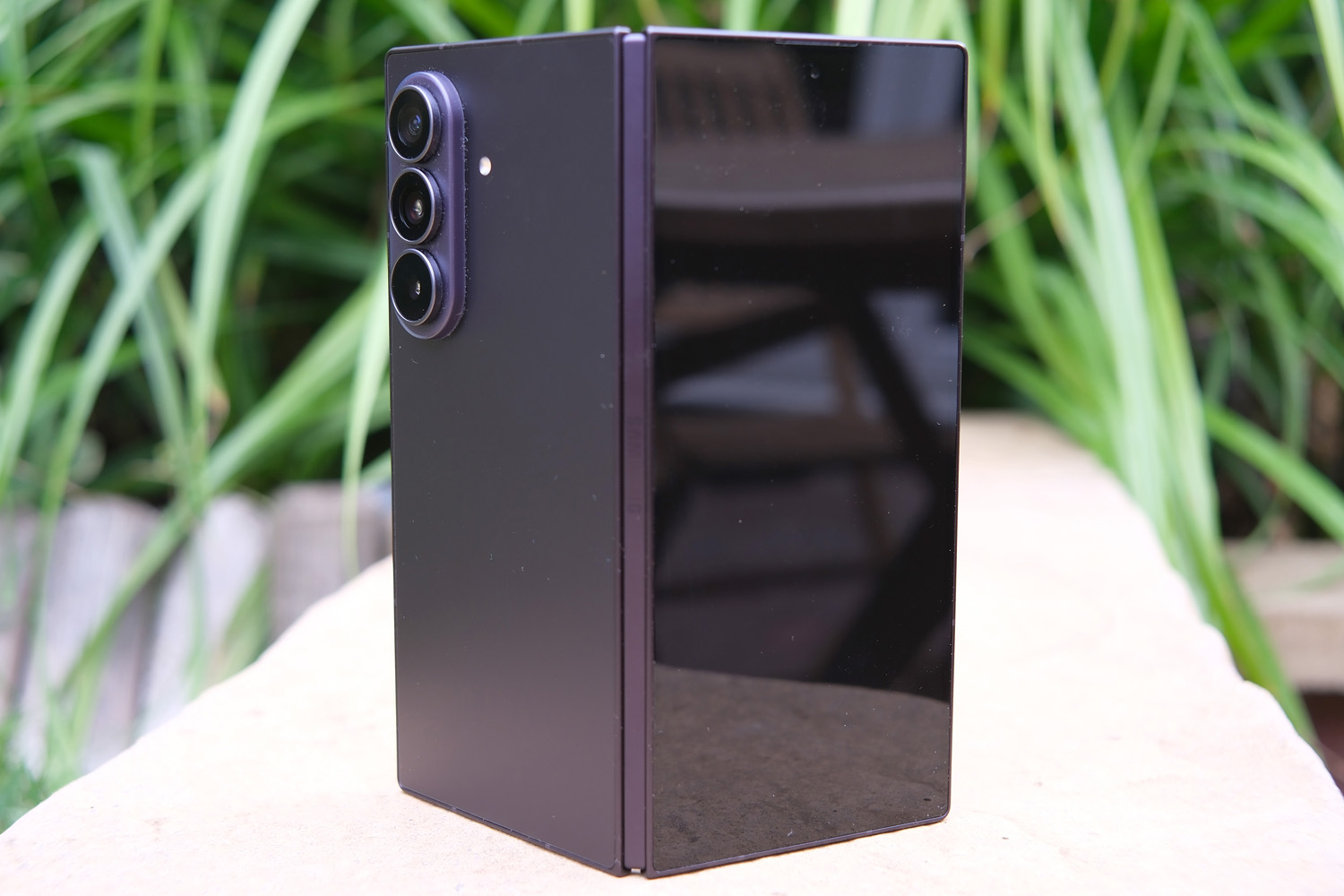
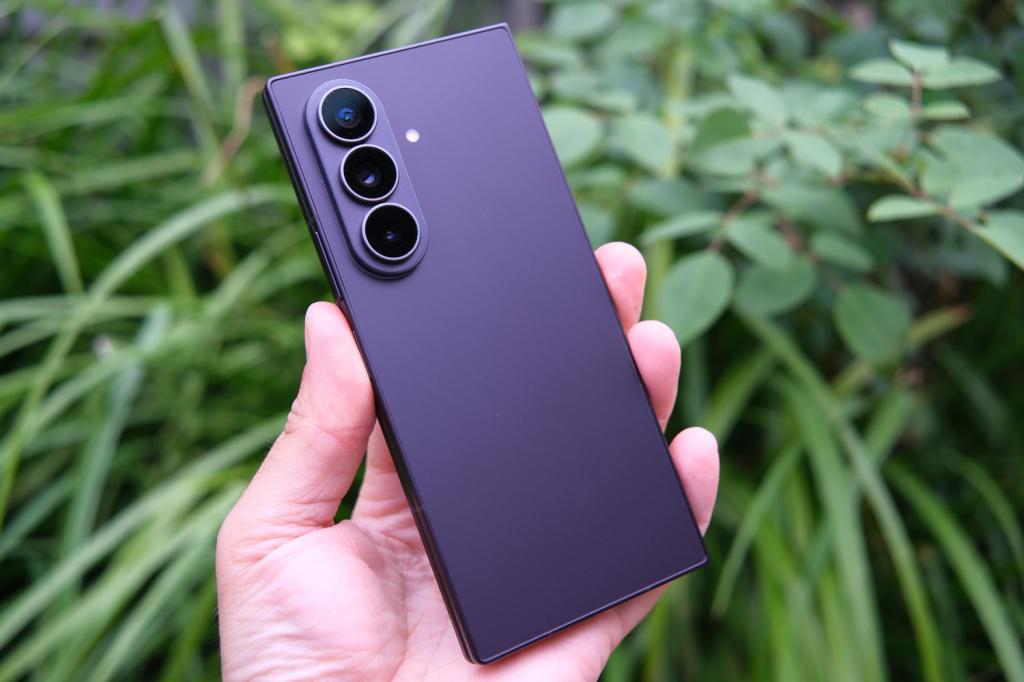
At first glance you’ll struggle to tell the Z Fold8 Ultra apart from its Fold7 predecessor, unless you’re a savant when it comes to Samsung smartphone colour schemes. The Violet Shadow unit I was sent for testing is a lot more subtle than last year’s Blue Shadow, while Graphite and Cream are the two safer bets. My personal pick is Green Shadow, which reminds me of British Racing Green, but it’s only available when buying direct from the Samsung web store.
This year’s phone is a fraction of a millimetre thinner than the old one, not including the camera bump (which has actually grown). They weigh an identical 215g, so I simply couldn’t tell them apart in the hand. That’s not a bad thing, of course: it’s still among the slimmest book-style foldables around, with a familiar boxy shape that gives you plenty to grip onto. The rear glass still largely refuses to accumulate smudges, the edges that have been slightly softened in the name of comfort, and the fingerprint-sensing power button is as easy to reach as ever.
It’s all change underneath, with a new Flex Titanium hinge that’s thinner yet stronger. The way it now snaps closed is rather satisfying, as is how it suddenly springs open as you get close to the fully unfolded position. You can still use it in a halfway-house position, with Samsung’s screen-splitting Flex Mode kicking in for compatible apps.
These changes have also helped majorly reduce the visibility of the inner screen’s crease. It’s not quite to the level of Oppo’s Find N6, but still almost impossible to see unless held at an extreme angle or showing a mostly black screen.
Samsung says the hinge is more durable than before and can withstand hundreds of thousands of folds in its lifetime, which sounds promising for long-term ownership. The IP48 resistance rating hasn’t changed between generations though. Honor has the lead here, with Google a close second. While the Galaxy can survive an accidental dip, I’d still avoid taking it to the beach.
The one thing that Ultra devotees could argue is missing is support for Samsung’s S Pen stylus. It’s a gap Motorola has been happy to fill with the Razr Fold.
Have the Galaxy Z Fold8 Ultra’s screens improved in meaningful ways?
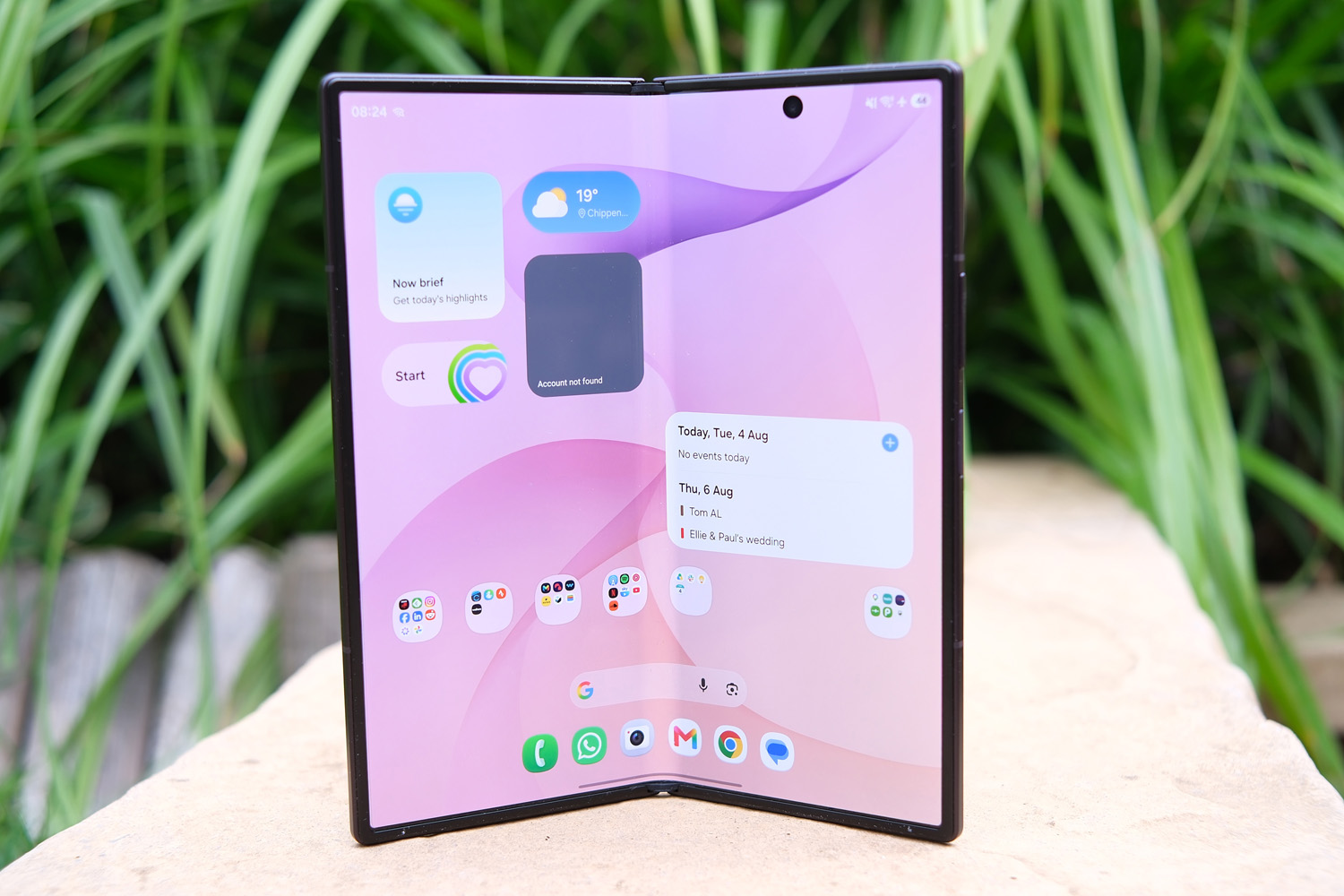
They’re the same size as last year, but Samsung has given each of the Galaxy Z Fold8 Ultra’s screens some love. The 6.5in outer panel is as skinny as ever, with the same better-than-1080p resolution and smooth 120Hz adaptive refresh rate. Colours, contrast and black levels are all exceptional, as I’ve come to expect from an AMOLED. Viewing angles are also spot on.
Boosting brightness to a peak 3000 nits (up from 2600nits on the Fold7) has helped with outdoor visibility. I had no issues seeing what was onscreen even when the sun was shining strongest.
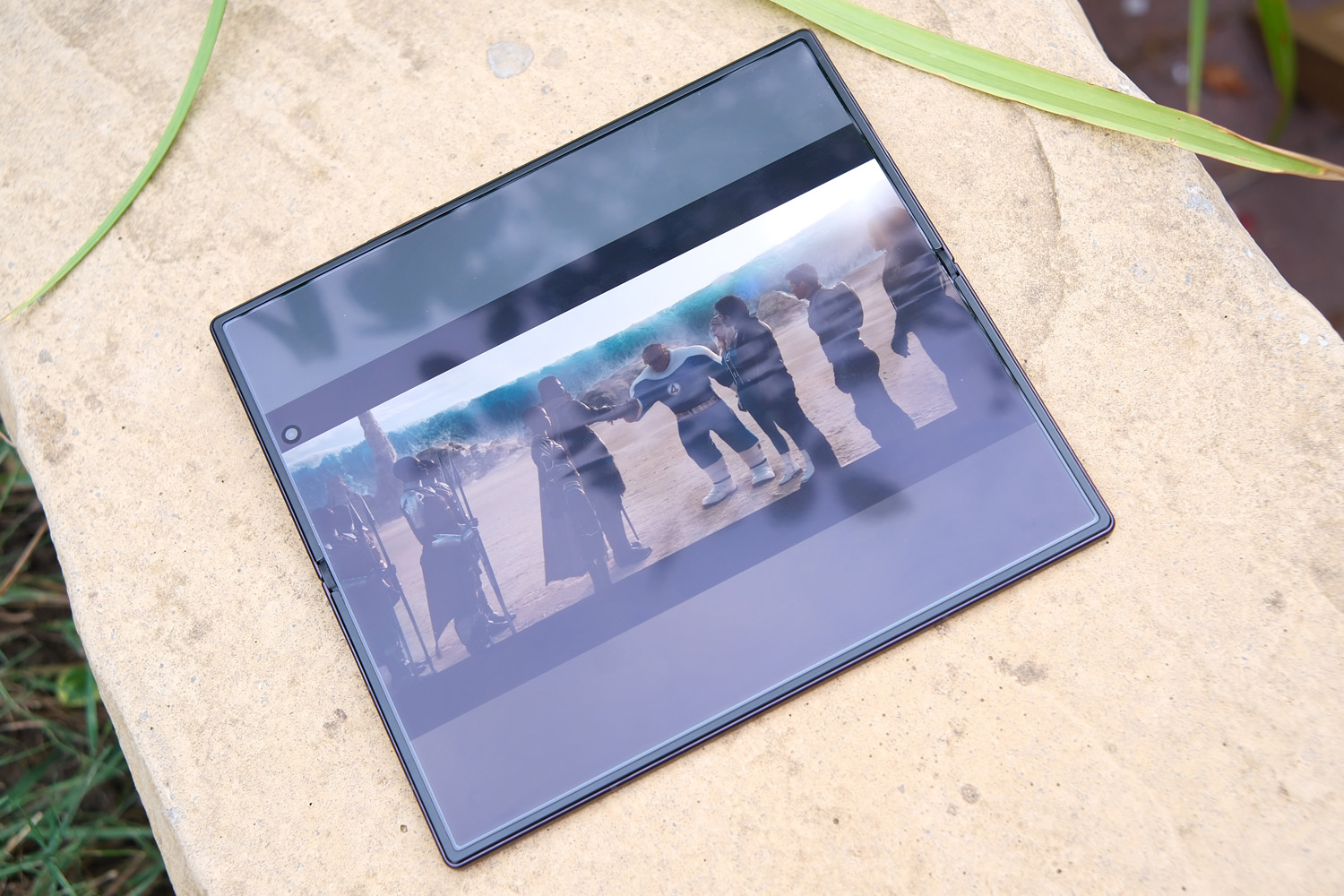
The 8in inner panel has seen even more attention. It gets just as bright now, but has been treated to an anti-reflective film that’s a genuine improvement over the outgoing phone. The Fold7 could really suffer with distracting glare, but the Fold8 Ultra is up there with the best for its ability to shrug off strong light sources.
Resolution has gotten usefully higher, making text appear brilliantly sharp and images well defined. Image quality is otherwise a direct match for the outer screen, with vivid colour, wonderfully deep blacks and a near-infinite contrast ratio. Films, games and photos all look superb.
Sadly neither panel inherits the neat Privacy Display function seen on the Galaxy S26 Ultra, again making me question what this phone has done to earn its new designation.
It’s also only once you’ve held the passport-like Galaxy Z Fold8 that the Ultra’s overly slender outer screen starts to grate. News stories and headlines that comfortably fit on the wider phone are now cramped and spill across multiple lines. UI elements feel more tightly grouped. Sure, you don’t need to vertically scroll so much here, but the narrower view ends up feeling more compromised. It’s amazing what a tiny difference in icon size and spacing did to my typing speed and accuracy using the onscreen keyboard.
A single app on the inner display feels much more comfortable, but the squashed feeling comes back with any side-by-side multitasking. Neither screen is as suited to multimedia content, with black bar letterboxing and a smaller physical video window than what the 4:3 aspect ratio Z Fold8’s inner screen can produce.
Did Samsung upgrade the wrong camera sensor?
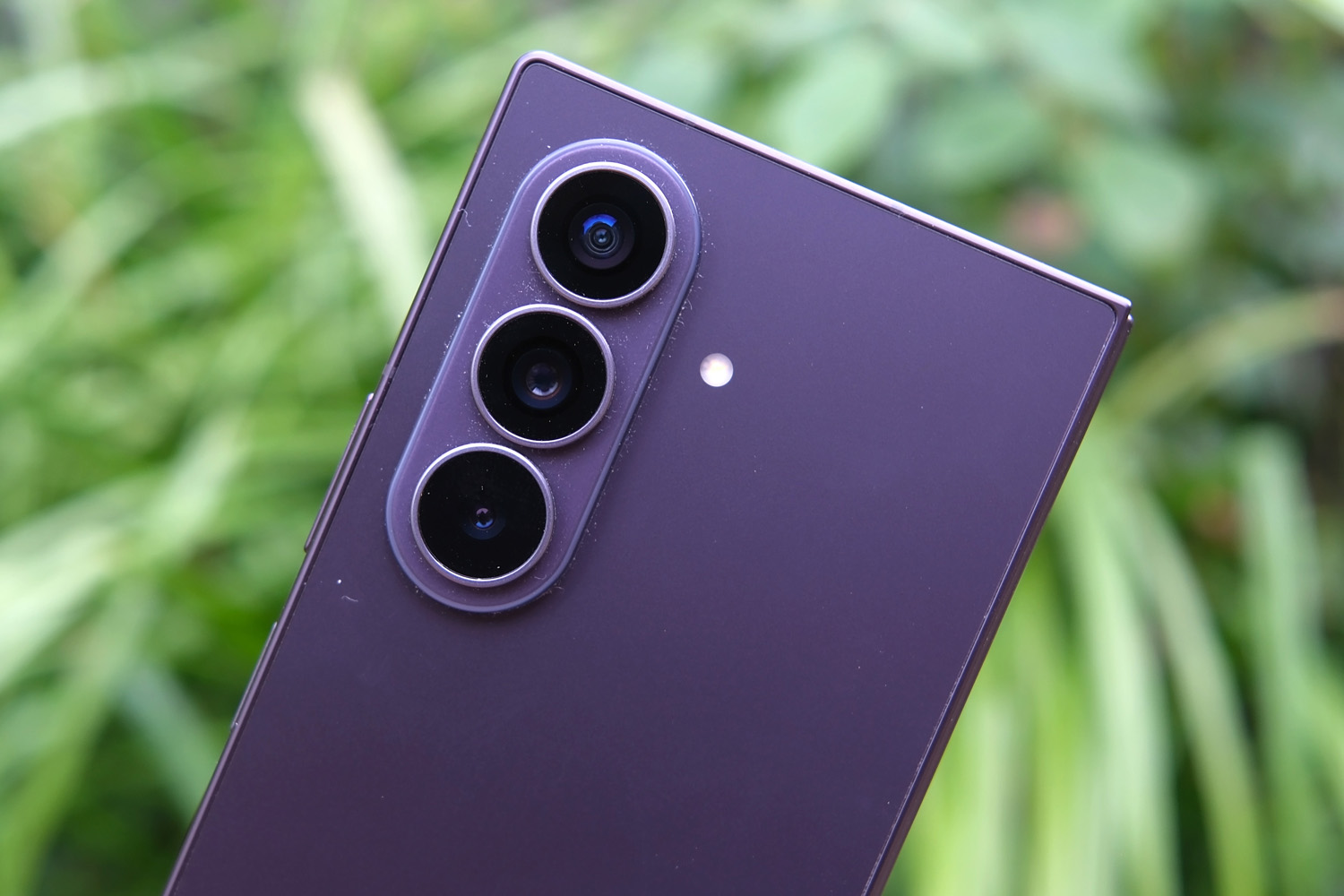
It’s great to see the Z Fold8 Ultra being brought up to par with the Galaxy S26 Ultra in one respect, but I can’t help but be disappointed Samsung chose to update the ultrawide lens rather than the telephoto.
While the 50MP sensor can now cram more of a scene into frame without suffering from over-sharpening and aggressive noise reduction like the outgoing phone’s 12MP unit, I simply wasn’t reaching for it as often as I was the zoom. I imagine most people will feel the same.
The S26 Ultra’s 50MP periscope almost certainly wouldn’t have fit in the Fold’s skinny frame, but it does mean the 10MP telephoto is now the weakest of the trio here. It has a smaller sensor size and lower pixel count than rivals, putting it behind on definition. It’s not nearly as adept as the Honor Magic V6 when it comes to depth blur, and as soon as digital magnification comes into play the level of detail quickly drops off further. It’s on par quality-wise with the vanilla Galaxy S26, a phone that costs less than half its price.
Unsurprisingly the 200MP main snapper is the star of the show, being able to resolve lots of fine detail and striking a fine balance between exposing for highlights and preserving shadow definition. Colours stay largely true to life – a big departure from older Galaxy phones that really ramped up the vibrancy – with a warmth that’s slightly lacking from the other two lenses.
I appreciate the abundance of filters in the camera app – and how easy it is to create your own – to give snaps more character. Being able to use the outer screen as a viewfinder for clearer selfies is also a boon, given the two punch-hole webcams have lowly 10MP resolutions. The Pixel 10 Pro Fold’s colourful animations to a better job of commanding childrens’ attention for portraits though.
Samsung’s image processing algorithms are very consistent, meaning it compares favourably with foldables that put a bigger emphasis on photography. Low light performance is also more than respectable, so long as you use the lead lens and lean more towards static subjects than moving ones. The other two cameras need stronger software tweaks, resulting in more noticeable sharpening.
What is new on the software side with OneUI 9?
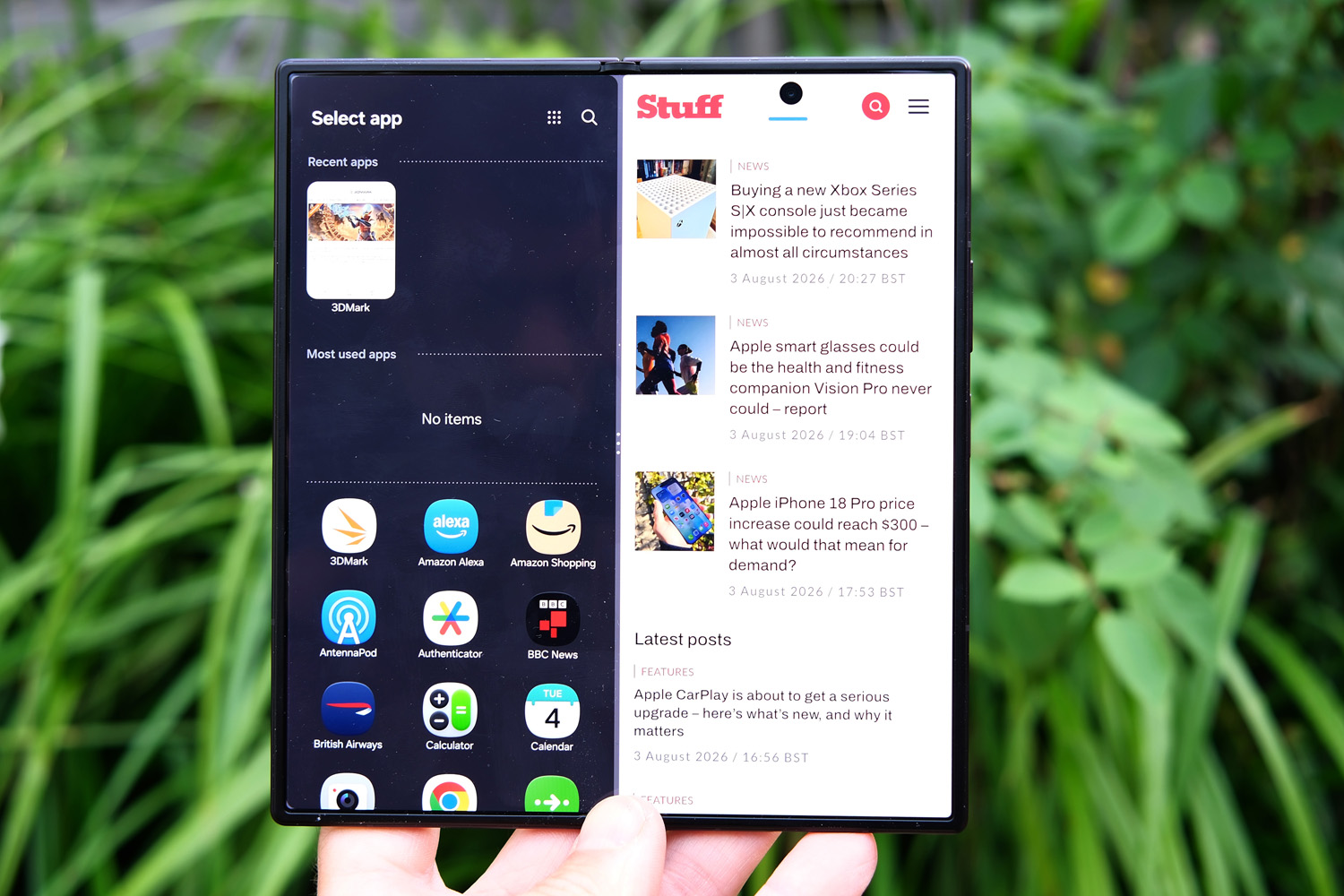
If you’re coming from a recent Samsung phone, the Z Fold8 Ultra’s software will all seem very familiar. The firm has largely focused on automation, better integration of Google’s Gemini assistant, and more ways to bring Galaxy AI to the fore than anything visual. It’s running on top of Android 17 now, but the icons, quick settings menu and pre-loaded apps are all carry-overs from OneUI 8.
I’m a big fan of the multiple ways you can launch apps in split view: a two-finger swipe from the side, dragging out app icons from the bottom bar (revealed with a short swipe up) or saving app pairs as homescreen shortcuts make this a great handset for multitasking.
Vertical and horizontal splits, three-app support and an extra floating window on top really put everything you could need on a single screen, while the 90:10 split ensures the app you’re working on right now doesn’t feel cramped. I used this a lot more than on the wider Galaxy Fold8, simply because a 50:50 split leaves both apps feeling as skinny as if you were using the outer display.
Galaxy AI has the usual assortment of generative image editing tools, automatic voice recording transcribing, live foreign language translation, writing assistance and web page summaries. All work very well and could be handy in specific situations, but there’s still nothing here I’d willingly pay a monthly fee to use. That’s especially true of the updated Now Nudge prompt, which is meant to suggest relevant apps to open in dual window – except it largely just supports Samsung’s own at the moment (with a few exceptions). It has yet to offer anything especially useful in over a week of use.
At least you’re getting Samsung’s class-leading software commitment of seven years of OS upgrades and security patches.
Is the Galaxy Z Fold8 Ultra’s performance & battery life flagship-grade?
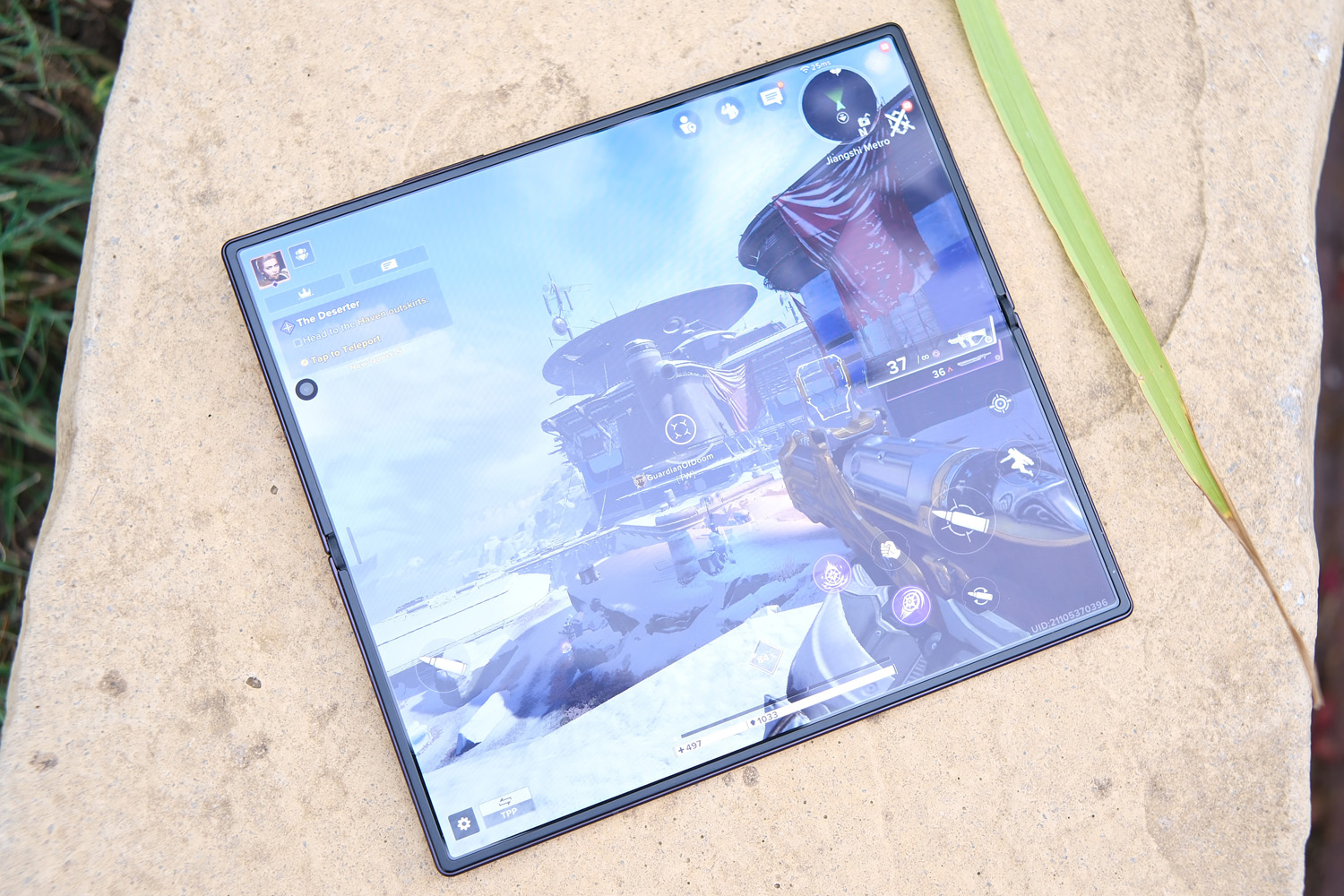
With a Snapdragon 8 Elite Gen 5 for Galaxy chipset running the show, there’s little doubt the Galaxy Z Fold8 Ultra is a fire-breather. You have to step up to the wallet busting 1TB edition to get 16GB of RAM, but in my experience there’s little to be gained performance-wise by doing to; apps and games run wonderfully here, either solo or side-by-side on the inner display.
As with the Galaxy Fold8, Samsung has blocked the majority of synthetic benchmark apps from running on review units ahead of launch. That meant I was unable to run Geekbench 6 and Geekbench AI; while they would install after the firm provided journalists with a fix, they would hang before completing their runs. I had more success with browser test Speedometer 3.1, which scored marginally less than the Fold8, and 3DMark. The gaming test scored a little higher, but fell a little short of the Galaxy S26 Ultra.
I was able to play Diablo Immortal and Call of Duty Mobile for a long stretch at smooth frame rates without the phone getting uncomfortably hot, so only the most demanding gamers need look elsewhere.
It’s also a fact that unless you’re counting frames or timing how long it takes to process 4K video edits, there’s really not a huge difference between this Fold generation and the one that came before it.
| Samsung Galaxy Z Fold8 Ultra benchmark scores | |
| Speedometer 3.1 | 37.1 |
| 3DMark Wild Life Extreme | 5487 |
Battery is where the Fold8 Ultra has really progressed in the right direction. Samsung has finally moved towards silicon-carbon battery chemistry, after several years of being left behind by the increasingly high capacity Chinese competition. You’re getting 5000mAh here, a useful boost over the Fold 7’s meagre 4400mAh unit that would often struggle to get through a full day of productivity.
That’s still a way off the 6600mAh Honor Magic V6, but a bit of caution is understandable given Samsung’s explosive history with big battery phones. I found I had more than enough juice to last a typical day now, and didn’t need to charge at any point between breakfast and bedtime when pushing it to the limit either. It still needed refuelling overnight, but I was glad not to have to bring a power bank along when travelling for work.
Samsung has also raised charging speeds to 45W over USB-C. That’s close to double what the old phone could manage, albeit still short of the S26 Ultra’s 60W speeds – which again makes me wonder why this phone deserves an Ultra label. Qi2 magnetic charging is also still MIA, with wireless speeds a modest 20W. If you really hate dead time during top-ups, Motorola and Honor remain class leaders.
Should you buy the Samsung Galaxy Z Fold8 Ultra in 2026?

Do you own a Galaxy Z Fold that’s now a few generations old and have grown to love the skinny form factor? Then the Fold8 Ultra will make a lot of sense. It brings flagship-grade performance, considerably longer battery life, faster charging speeds, and competitive cameras. The brighter screens are more durable, which bodes well for long-term ownership, and have a less visible crease.
For the most part, however, these are only iterative upgrades over the outgoing Z Fold7 – which remains on sale for less cash. It will eventually get most of the Z Fold8 Ultra’s software additions and isn’t far behind for photography or CPU muscle, so there’s little incentive for owners to make a year-on-year upgrade.
Samsung also hasn’t been adventurous enough with silicon-carbon tech to catch Honor, Motorola and Oppo on battery capacity. Then there’s the upcoming Google Pixel 11 Pro Fold, which will almost certainly bring goodies like IP68 protection and Qi2 magnetic wireless charging. I’d definitely wait until all the players are in the game before parting with $2000. The Ultra is a great phone, but one among equally compelling rivals.
My bigger issue is that the Galaxy Z Fold8 has sucked the wind out of the Ultra’s sails. The passport-shaped Fold8 is more affordable and not that far behind on performance or lifespan, yet has a shape that fits better in your hand and suits more types of content; that makes it far more appealing to foldable newcomers, leaving the Ultra for existing converts only.
What are the Samsung Galaxy Z Fold8 Ultra’s technical specifications?
Scroll to see more →
| Specifications | Samsung Galaxy Z Fold8 Ultra |
|---|---|
| Screens | 6.5in, 2520×1080, 120Hz AMOLED (outer) / 8.0in, 2504×2256, 120Hz AMOLED (inner) |
| CPU | Qualcomm Snapdragon 8 Elite Gen 5 for Galaxy |
| Memory | 12GB/16GB |
| Cameras | 200MP + 10MP telephoto (3x) + 50MP ultrawide rear. 10MP inner. 10MP outer |
| Storage | 256GB/512GB/1TB on-board |
| Operating system | Android 17 w/ OneUI |
| Battery | 5000mAh w/ 45W wired, 20W wireless charging |
| Dimensions | 158x73x8.9mm (folded) / 158x143x4.1mm (unfolded), 215g |




Read the full article here


