

The Android world was quick to turn sci-fi folding displays into tech reality. Samsung, Google, Motorola, OnePlus, Xiaomi… almost every brand has a flip-style or book-style foldable on their slate – or is about to, looking at Stuff’s list of upcoming smartphones.
And indeed – one of the key things we are expecting from Apple this fall is a foldable iPhone. The launch of one has been long-rumored, which is no surprise given other manufacturers’ penchant for them. It would be a big departure for Apple, though. It’s been a long-held assumption the company wouldn’t take the plunge until it found a way around the persistent display crease….read on for more on that. Here’s everything we know so far about the iPhone Fold.
When will we get the iPhone Fold?
The new device could launch at an Apple Event on 8 September and I expect it to be called the iPhone Fold, even though iPhone Ultra has also been touted as a name. According to the Weibo leaker Instant Digital the “iPhone Fold has now begun trial production at Foxconn,” which is Apple’s primary manufacturing partner for smartphones.
This suggests Apple is on schedule with the planned launch and that it won’t creep into next year when we are expecting the standard iPhone 18 to launch. However, some rumors have suggested that the iPhone Fold may not be available right away after the September reveal. A Nikkei Asia report suggested there were “complex” issues being worked on that’ll take some time to sort out.
Normally, pre-orders go live on the following Friday after the event, with availability a week later. If the standard dates are followed, that means you could be using a foldable iPhone on 18 September.
Industry analyst Trendforce had previously suggested 2027 as a date, reportedly because foldable displays don’t meet Apple’s standards for reliability, and a visible crease is deemed unacceptable. Others had suggested even later dates but 2026 has been a likely date for at least a year now.
Will the iPhone Fold actually be more like a Flip?
Apple hasn’t made any significant design changes to the iPhone range for a few years now. The iPhone 16 and iPhone 17 vertical camera bumps or camera bars and new colour options are the biggest departure, but the flat sides, flat screen and rounded corners are very similar to previous efforts. Not even the camera control touch button breaks the iPhone’s distinctive lines. Yes the iPhone Air is thinner, but it’s hardly a break from the norm.
Patents previously awarded to Apple related to foldable phone concepts don’t give much away, with rather generic-looking handsets shown in the diagrams filed to the US patent office. Patent number US10955880B2 describes a hinge mechanism for foldable phones, while patent number US11550369B2 describes a multi-layered construction for flip phones.
And it does seem that Apple is opting for a top-down folding design, like the Galaxy Flip. It should be around the same size as current iPhones when unfolded.
Additionally, Apple has obtained at least five US patents related to a possible iPhone Fold. Among these, patent number US10694624B2 describes a foldable smartphone with an exposed display region. Another depicts a foldable phone with a self-healing crease. The fact Apple holds these patents doesn’t even guarantee a foldable iPhone is on the way, but does suggest the company is considering it.
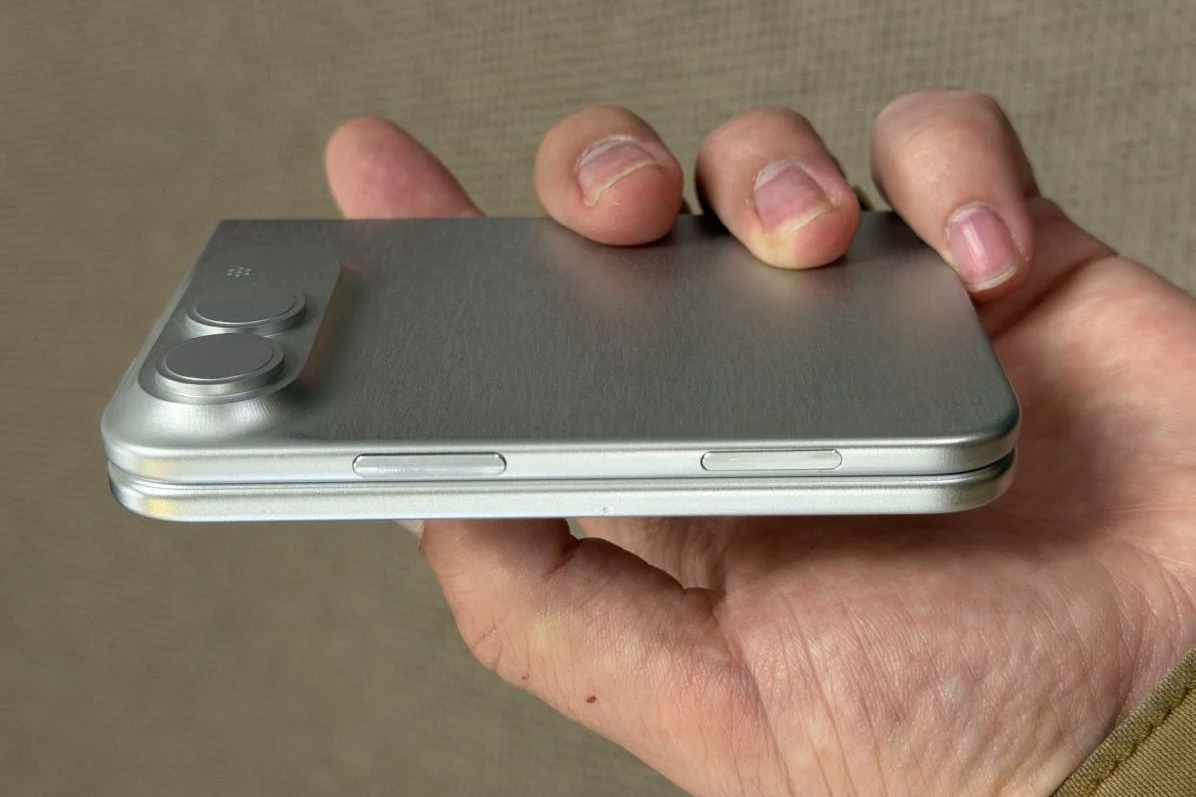
As for what it could look like? Well, we have a better idea now, thanks to YouTuber Vadim Yuryev who showed off an iPhone Ultra mock-up that reveals a book-style folding device that, when opened, lands much closer to iPad mini territory than a traditional iPhone.
Note this is different than another iPhone Fold dummy that appeared late last year.
So what to make of these – the metal dummy showed by YouTuber Vadim Yuryev has some interesting dimensions. The inner display is said to measure around 7.8 inches with a 4:3 aspect ratio – just shy of the iPad Mini’s 8.3-inch screen. That squarer layout could make apps, video, and games feel more at home than on the tall, narrow displays we’re used to on today’s iPhones.
Closed, though, things get a bit more divisive. Most rumours point to a 5.5-inch outer display, while other reports suggest that it could be slightly smaller at 5.3 inches. Either way, that puts it closer to the iPhone 13 Mini than any recent full-size iPhone, which might take some getting used to – especially if you’ve got bigger hands.
The proportions are also unusual. Compared to an iPhone 17 Pro Max turned sideways, the foldable is roughly the same width, but significantly taller when opened – around 57 per cent taller, according to the dummy measurements. That extra vertical space could make a noticeable difference for widescreen videos and games that rely on on-screen controls.
Rather than the full-width camera bar seen on recent Pro models, this design uses a smaller raised plateau housing just two lenses. That aligns with current expectations, suggesting this foldable may prioritise its form factor over packing in a full triple-camera setup.
The dummy is around 11mm thick when folded, while other rumours suggest Apple is aiming closer to 9–9.5mm. If those slimmer estimates prove accurate – and if the device really does come in at roughly 4.5mm when unfolded, as some leaks claim – it could end up being Apple’s thinnest device yet.
Whispers back in Autumn 2024 suggested Apple had moved development staff away from its Vision Pro headset – which was reportedly ending production imminently – to work on the upcoming foldable instead. November then seemingly confirmed Apple had entered a “formal development process” with display manufacturers – the first step towards a full production version of a folding iPhone.The info came from a Korean source, Yeux1122, who claimed a supply chain source had spilled the beans.
Twitter tipster Jukanlosreve previously suggested the folding iPhone would be a book-style device measuring 9.2mm when folded, and 4.6mm when ope and that the inner screen would be similar to two 6.1in iPhones sandwiched together, although the dimensions stated seemed iffy to us.
Display details are already around
During the reveal, I expect Apple to talk in depth about the durability of the foldable display. This topic has faded a little in terms of Android phones because of hardware improvements.
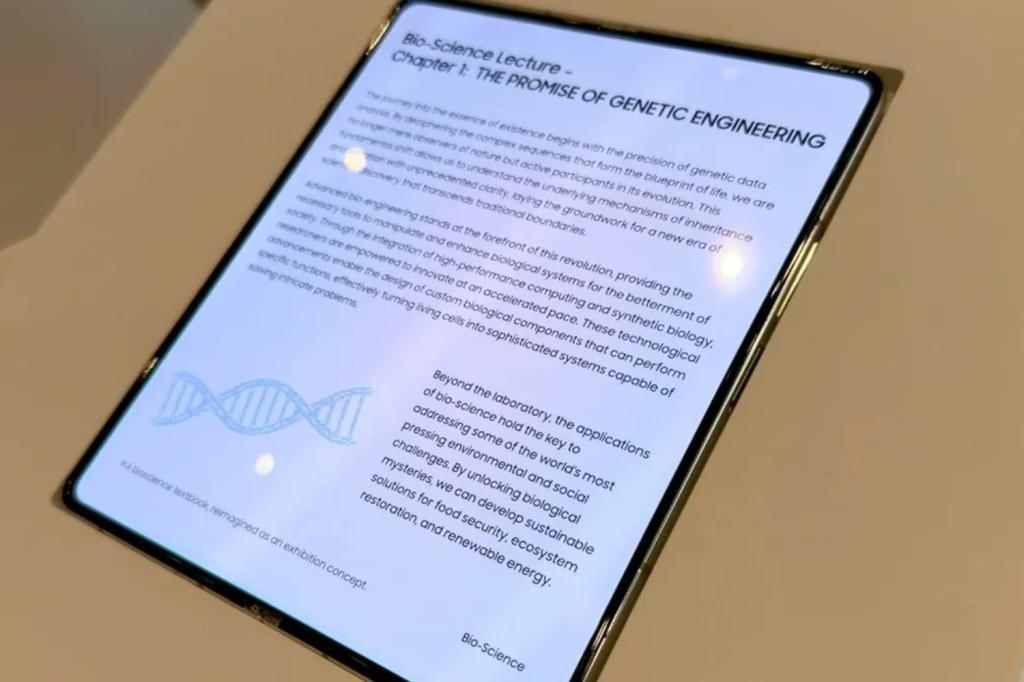
Samsung is reportedly providing the display and during CES 2026 the company showed off a prototype showing a creaseless OLED display. Stuff saw it in person during the show which was back in January: “This new prototype is fairly impressive – it has no crease when you look at it from the front. When you tilt it and look at the screen from the side, the crease becomes more noticeable. But it’s leaps and bounds better that the Galaxy Z Fold 7 or any other foldable phone I’ve used.”
I’ve also heard that iOS 27 will have app features that change between folded and unfolded states and we should get some software information about this that we won’t get at WWDC26
Bloomberg’s Mark Gurman suggested the screen crease will be all but invisible to the human eye, which would put even the best current-gen foldables to shame.
What other iPhone Fold specs do we have an idea about?
The screen surround could be made from titanium alloy or carbon fibre. Underneath there could be a 5000mAh battery, while the camera setup will include main and ultrawide rears – but no mention of a telephoto.
Analyst Ming–Chi Kuo also shared that due to space constraints, it looks like Apple will be ditching Face ID and returning to Touch ID. I find this very unlikely. With the iPhone 16e, Touch ID was firmly killed off. It it makes a comeback in the foldable iPhone, it would be a backward step, even if it is on a power button, as on the standard iPad.
However, the leaked metal dummy above also shows a Touch ID power button instead of Face ID, likely due to space constraints, alongside a dedicated camera control button – something Apple appears to be positioning as a way to adjust settings or shoot one-handed without shifting your grip.
Kuo also suggests the rear camera will feature a dual-lens setup and that there will be a front-facing camera accessible in both folded and unfolded states. The hinge will reportedly combine stainless steel with a titanium alloy and a casing made from titanium alloy for better durability. The 5000mAh battery will likely use the cells from the iPhone 17, so should be longer lasting than ever.
Kuo expects a price around $2500, which is stunningly high while Bloomberg reporter Mark Gurman reported a $2000 price point previously. That’s higher than almost all Android-powered foldables out there, not counting tri-fold devices like the Huawei Mate XT Ultimate. Barclays analyst Tim Long also suggested $2299 could be the starting point for the new model.
Pros and cons of foldable displays
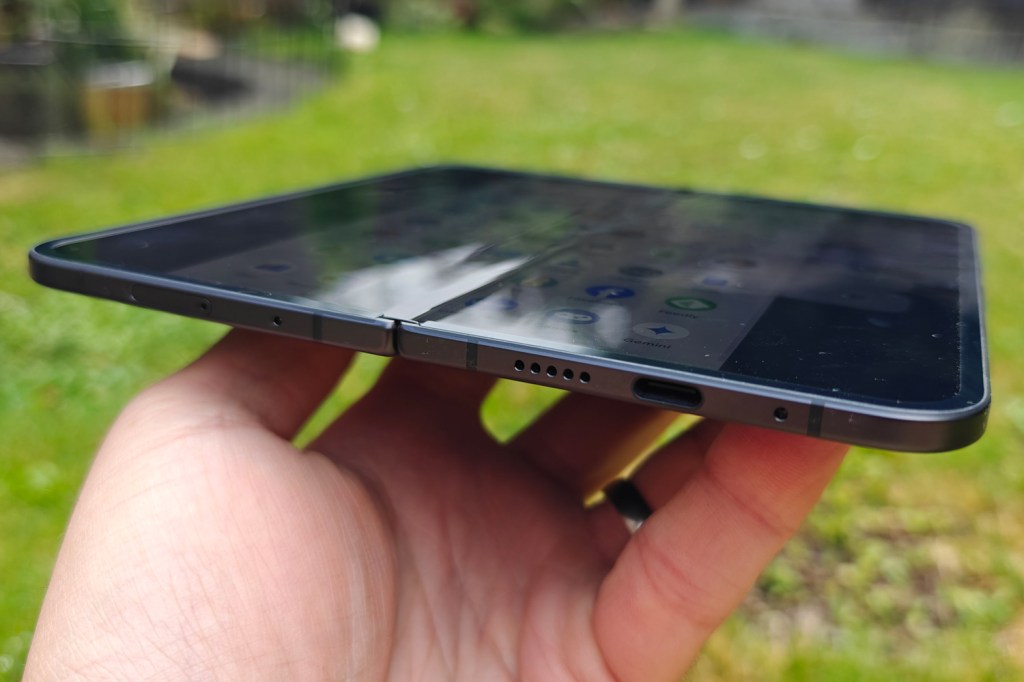
Flexible OLED panels let gadget makers squeeze much larger screens into smaller devices – either letting you carry a larger screen around more easily (see every book-style foldable on sale right now), or shrinking the device down without entirely compromising on screen space (the modern take on the flip phone).
Durability and price are the biggest concerns right now, though both are improving with each new generation of panel. It has to withstand lots of repetitive flexing, and the hinge makes it very tricky to achieve the same water and dust resistance ratings as a traditional phone. The added complexity of manufacturing makes costs much higher than a regular flat OLED panel, too.
There’s also the matter of the crease. Every foldable phone we’ve tried has some form of crease; it’s more visible on some than others, but it’s always there. Whether Apple considers this acceptable, or if it wants to engineer a folding screen without a visible crease appears to be the biggest cork in the iPhone Fold bottle.
The iPhone Fold’s most significant selling point would undoubtedly be its unique design, setting it apart from all previous iPhone models. However, much attention will surely be on how iOS operates on this new device. The bottom line: Apple needs to provide more than just the ability to fold to make it a worthwhile purchase.


Read the full article here
