




Introduction
Meet the second generation of Samsung’s tough-meets-luxury smartwatch. The original Galaxy Watch Ultra’s blend of rugged construction, adventure-ready fitness smarts and premium materials proved popular enough with occasional outdoorsy types to earn a sequel – one that addresses its predecessor’s shortcomings, brings an even bigger battery, and doubles down on AI health insights.
Despite taking a year off in 2025 to give the more traditional Galaxy Watch 8 Classic some time to shine, no other Android wearable stepped up to the OG Watch Ultra’s level of eminence in the interim. That makes this newcomer the de facto Android alternative to Apple’s latest Watch Ultra, and a genuine surrogate to GPS adventure watches from the likes of Garmin.
Combine that lack of competition with rising component costs, however, and it’s no big shock that prices have shot up between generations. A Galaxy Watch Ultra 2 will now set you back £649 (US prices were still unknown at the time of writing), making it a serious investment when the also-new Galaxy Watch 9 series isn’t all that far removed in terms of features. Does that mean only trail runners and scuba divers need apply?
Design & build
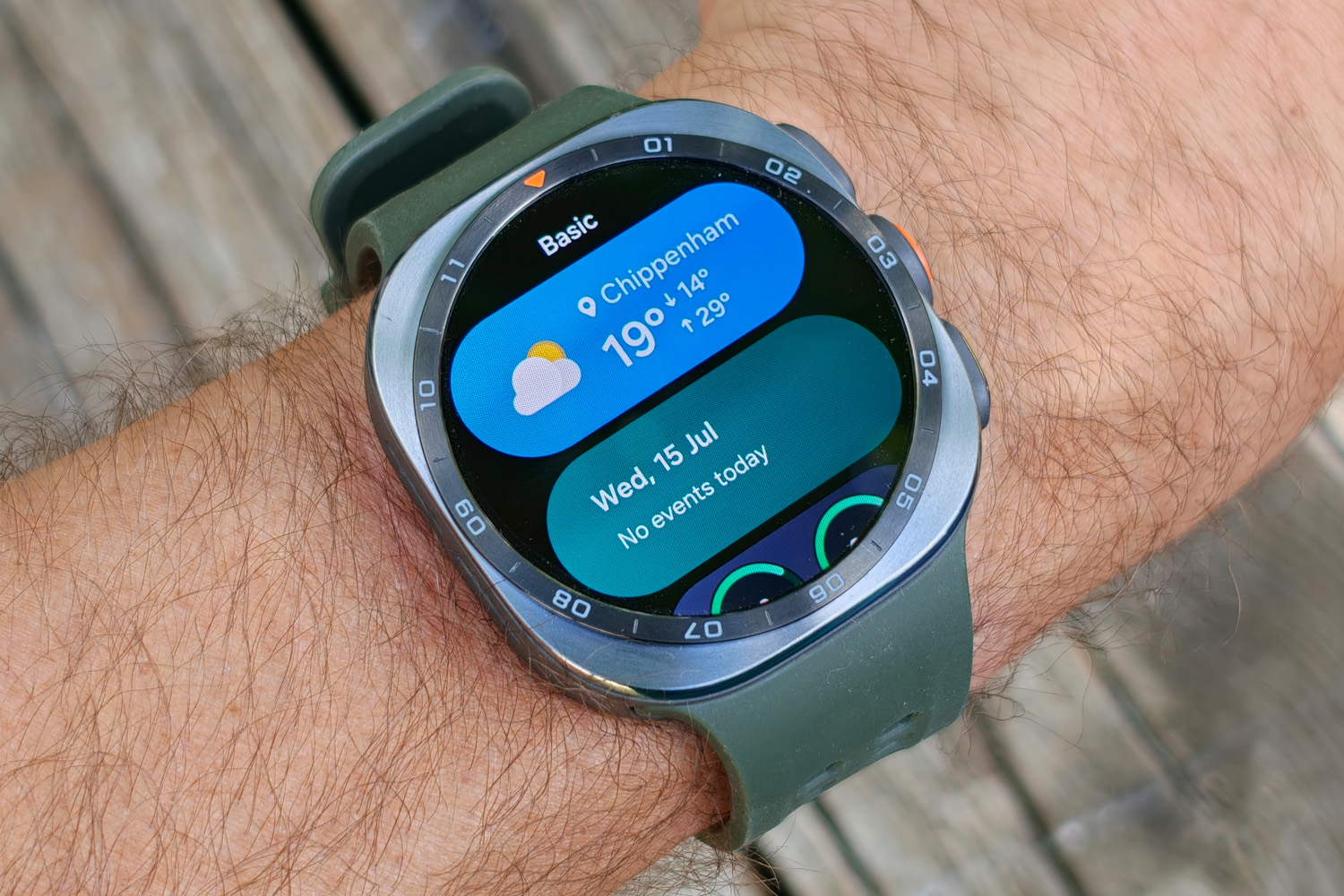
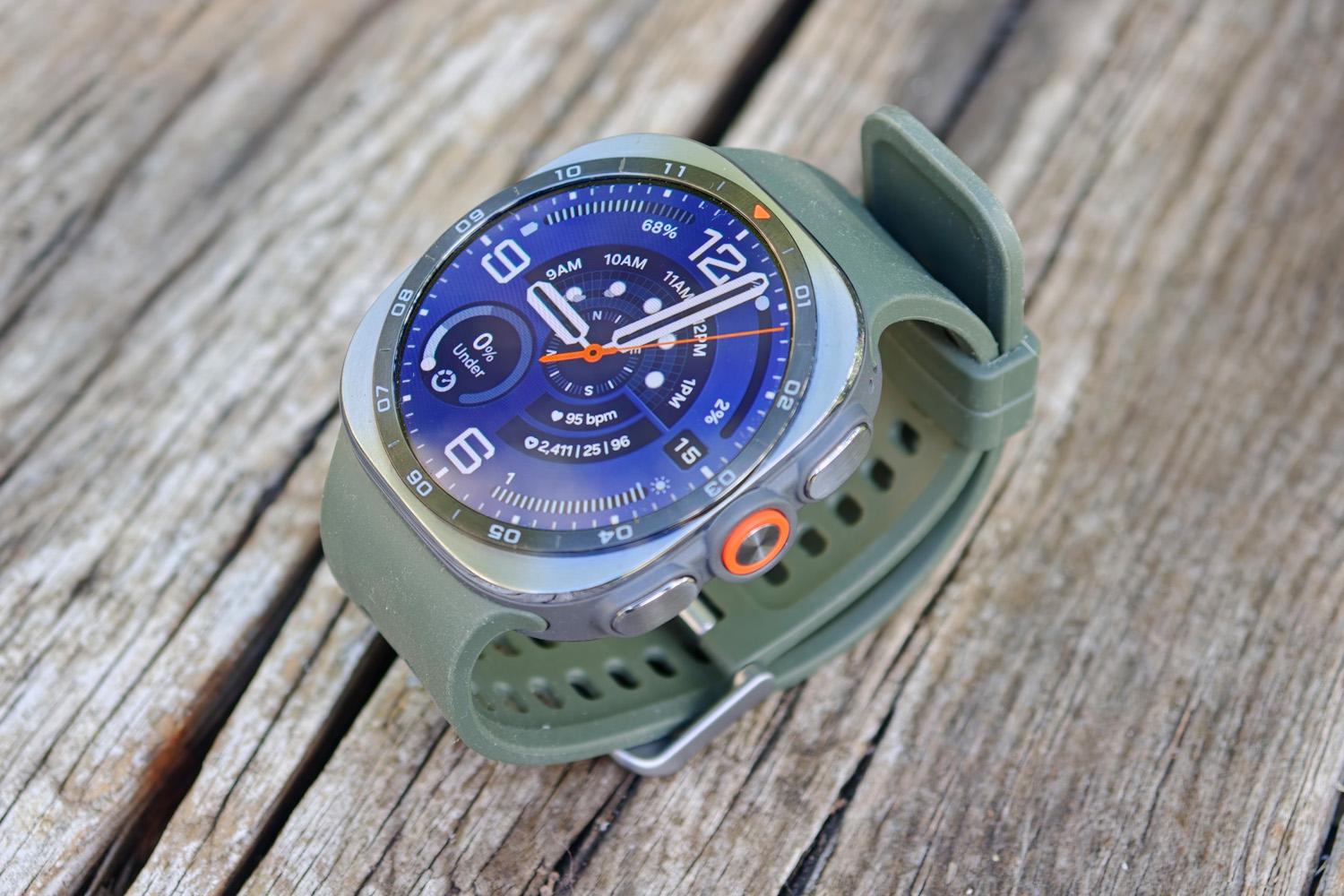
After the original Galaxy Watch Ultra (rightly) received some flak for following too closely in Apple’s orange footsteps, it’s great to see Samsung doing more of its own thing on the colour front here. The Marine band included with my Titanium Silver review unit has an earthy tone that’s all the rage right now and avoids looking too flashy.
The Watch Ultra 2 can also be had in darker Titanium Grey, but only in a single size. At 47mm it still has serious wrist presence, but the case is 12% thinner than before. I found it even easier to slide under a shirt cuff now. The titanium construction is properly tough, too – though the central part’s matte finish could potentially be mistaken for cheaper plastic. It’s a mistake you don’t make with the Apple Watch Ultra 3’s all-titanium shell.
Generational differences are minimal, with the same squircle shape and same three button layout – that’s one more than the regular Galaxy Watch models. The extra shortcut key lets you jump straight into specific exercise modes. Subtle crown guards now cover more of the middle button to stop accidental presses and add to the Watch’s adventure vibe. It looks more purposeful than the minimal Galaxy Watch 9, but not so much that it’ll only appeal to men.
Numbers replace plain indicators around the fixed bezel, marking this out as the new model; I think it looks a little busier, but also more like a mechanical watch. It doesn’t physically rotate like the Galaxy Watch 8 Classic, but sliding your finger around the edge of the display still scrolls through menus with satisfying haptic feedback. The 12 o’clock marker keeps a splash of orange, as does the trim around the extra shortcut key, but they’re subtle enough not to clash with the band.
Samsung has again used proprietary lugs here; to my eyes they look identical to the first-gen Watch Ultra’s, but without one to hand I can’t say for sure if the bands are backwards-compatible. There’s a healthy market for third-party ones if it is. If not, Samsung will sell you the ridged Peakform band and fabric Trail Band in a handful of colours.
I can’t fault the official one that comes bundled with the watch, though: at 1.9mm it’s considerably slimmer than the first Watch Ultra’s, and a fair bit lighter too. It keeps the double buckle, which kept the watch securely fastened while exercising, and the indented design helped cut down on wrist sweat.
One of my main complaints about the OG Watch Ultra was that it wasn’t certified for diving, despite having 10ATM water resistance and saltwater compatibility for open water swimming. Samsung was clearly listening: the sequel brings proper diving certification, along with IP69K water resistance (meaning it’ll survive high pressure water jets). Diving specialist Mares has also been brought in to assist with an exclusive app that’ll track depth, dive time, water temperature and other useful metrics. It’s set to launch later this year; hopefully I’ll get the chance to test it out.
Screen
The original Watch Ultra’s screen was already a stunner, so I can’t fault Samsung for largely sticking to the same formula for the sequel. A cleverly placed titanium outer bezel once again lets the circular AMOLED blend in to the watch body perfectly. Resolution is still razor-sharp at a glance, colours still have that trademark OLED punch, and viewing angles remain outstanding.
At 1.52in the panel has grown ever-so-slightly from the old model’s 1.5in. That’s enough to best Wear OS rivals like the Oppo Watch X3, without also forcing the overall size of the watch to grow to outlandish proportions. It undoubtedly looks big on my wrist, but not comically so.
The combination of raised outer bezel and sapphire crystal glass once again provide excellent drop and impact protection. I’ve had zero surface scrapes or scratches after two weeks of wear. Other than some fingerprint smudges (which polish off easily enough) the Watch Ultra 2 still looks box fresh.
Brightness sees the biggest generational upgrade, with Samsung saying a peak 5000 nits earns it the “world’s brightest smartwatch” title. I guess the firm considers Garmin’s Fenix 8 Pro MicroLED, which claims an identical figure, more of a sports watch than a smart one. Either way, there’s no denying this is a superb shiner: even when the sun was at its strongest during an especially hot summer day, it was perfectly legible from all angles. With the right watch face, it’s like you’re looking at a traditional timepiece rather than a smartwatch.
Automatic brightness is quick to kick in, so I’ve yet to be blinded by the screen when checking the time in a dark room. Night mode watch faces also make a return, turning the entire dial red based on how much ambient light is around. You still can’t adjust its brightness separately though; I often found it was brighter than I needed just to check the time.
Interface
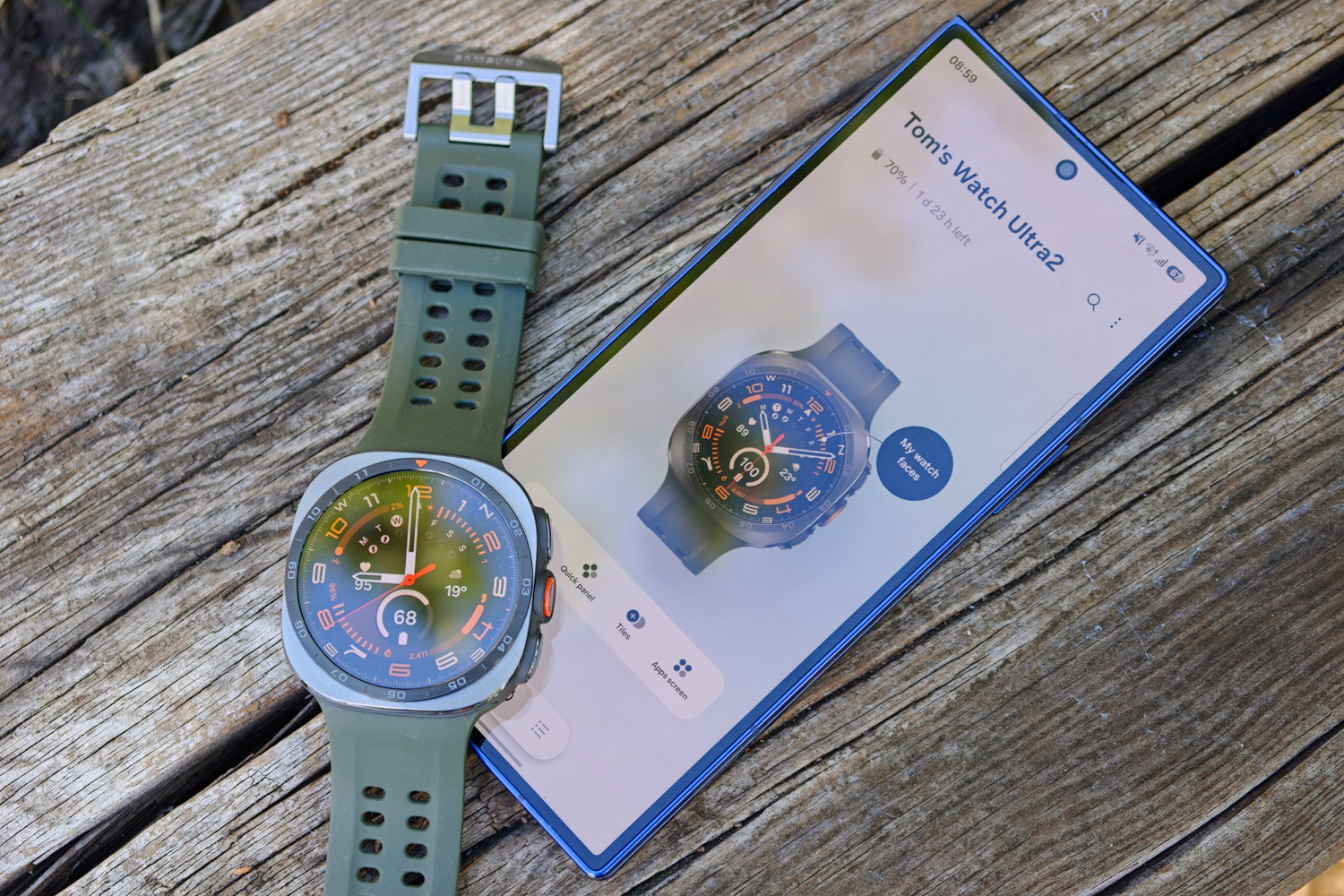
Samsung opting for Qualcomm silicon for its new wearable generation rather than its own Exynos chips was a bit of a swerve, but one that gets no complaints from me. On paper the Snapdragon Wear Elite brings a 30% uplift to CPU and nearly 20% faster GPU than the original Watch Ultra’s hardware; in use that translates to speedier app launches and smoother animations. There’s also a dedicated NPU to speed up things like Gemini voice commands and other AI-assisted tasks.
Wear OS 7 really flies here, even with Samsung’s OneUI 9 layer on top. The overall look and feel hasn’t changed much from the Galaxy Watch 8 Classic, with icons that are a dead ringer for the ones found on Samsung’s smartphones and the usual selection of in-house apps. With 64GB of storage there’s loads of room to add more via the Play Store, as well as all the music playlists you could want for a week of workouts.
Samsung’s clever stacked tiles still live to the right of the main watch face and the Now Bar puts notifications at the bottom of it, along with media controls. I love being able to customise the order and pick which tiles are relevant, cutting down on unnecessary swipes and taps.
Google’s Gemini assistant has been on watches for a year now; like the previous generation you can ask it multi-step queries, interact with specific Google apps, and control your connected smart home kit. Bixby is there in reserve to interface with Samsung’s apps like health and exercise. The big new addition is raise to talk, which activates voice without having to say “hey Google” or press a button first. It knows the difference between looking at your watch to check the time or a notification and wanting to talk – it worked so well I disabled the wake word recognition altogether.
Health & fitness
With a mostly unchanged set of biosensors, the Galaxy Watch Ultra 2 brings back every fitness function and health tracking metric seen on the original Watch Ultra. Beyond the obvious – heart rate, blood oxygen, skin temperature, step count, sleep and cycle tracking, plus ECG if you’re paired to a Samsung smartphone – it also includes the running assessment that dynamically adjusts to match your ability, bedtime guidance and snore detection at night time, and Antioxidant measuring.
I remain unconvinced by the latter, as it gave mixed results and demands you remove the watch to place your thumb over the sensor. The AGES index, which is meant to help push you towards a healthier diet, is also rather nebulous.
The newer in-depth health insights are a lot more useful. After wearing the Watch Ultra 2 for a week, a new Vitals score tracks your blood oxygen, heart rate variability, heart rate, skin temperature and respiratory rate, while the Heart Health score takes BMI, vascular load, vigorous activity into account. The daily cardio load and fitness index figures clue you in on how hard to train and how you stack up to other users in the same age range.
It brings the Galaxy Watch closer in line to multi-sport watches that are laser-focused on training, but only for those that want it – the Galaxy Health app is customisable enough and avoids overwhelming you with data at first, so casual fitness fans aren’t bamboozled. They might also appreciate the AI insights that appear at the top of the app, though they largely just repeat info you’ll find further down the page; anyone that works out regularly will already know what to look for and can probably turn them off. I found it especially annoying that Samsung snuck adverts for its (then upcoming) Unpacked event in here too.
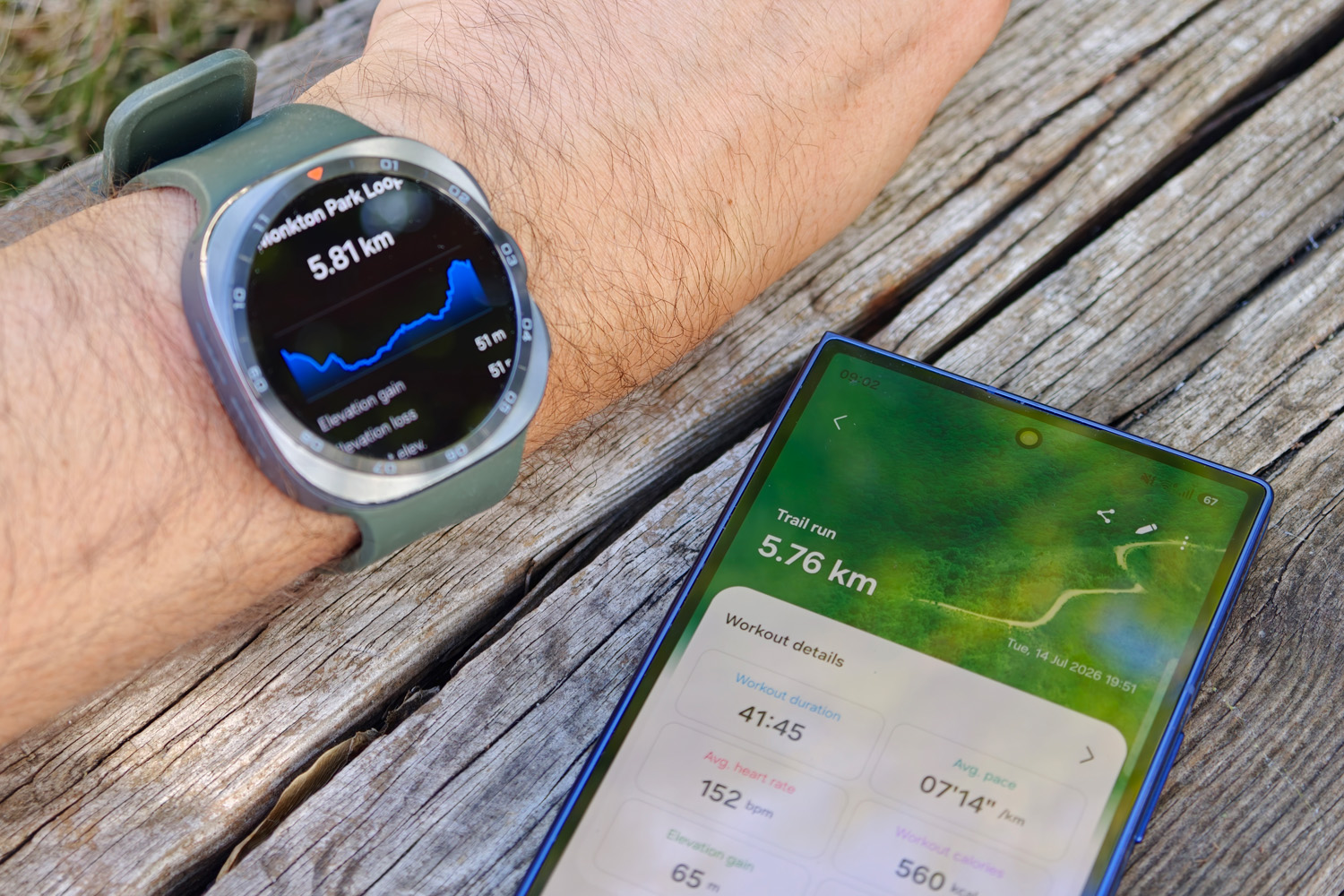
Trail run is the big new exercise addition, with real-time elevation shown onscreen after you upload a GPX route. The watch uses the on-board AI to compare heart rate, pace and skin temperature with your body composition data to give live hydration guidance, which is a first for any smartwatch. Record temperatures meant I’ve yet to attempt any mountain pass excursions, but it did chirp in when running a route that was partly off-road, and suggested how much to drink post-workout to restore what I’d lost through sweat.
There’s nothing to fault when it comes to general workout tracking, with heart rate and GPS accuracy remaining mostly on par with the best multi-sport watches. That said, Samsung still hasn’t added hardware features like ANT+ connectivity, meaning Garmin remains hard to beat for pairing to a cycle computer or static trainer.
Battery life
Samsung has really stepped up its battery game for the Watch Ultra 2: its 800mAh cell is a significant 35% increase over the original Watch Ultra’s 590mAh, despite the watch case having slimmed down between generations.
That translates to an extra day of life between charges in typical use, meaning I was making it to the end of a third day – or longer when I disabled the always-on display. That’s better than both the latest Google Pixel Watch and the Apple Watch Ultra 3, making it the mainstream longevity hero. The dual-chipset Oppo Watch X3 goes for longer, but it’s a bit of a left-field choice in Europe and not available in the US at all.
There’s also still a big gulf between smartwatches like this and GPS watches from the likes of Garmin, which can manage multiple weeks between charges. It’s something to think about if you’re serious about sports training, or regularly travel for multiple days without a charger.
You still refuel the Watch Ultra 2 with Samsung’s magnetic charging puck, which is convenient and doesn’t need any sort of alignment like rivals with pogo pins. It got me back up to full from near empty in under an hour – just enough that it was ready to wear again after my morning shower and breakfast routine.
Should you buy the Samsung Galaxy Watch Ultra 2 in 2026?

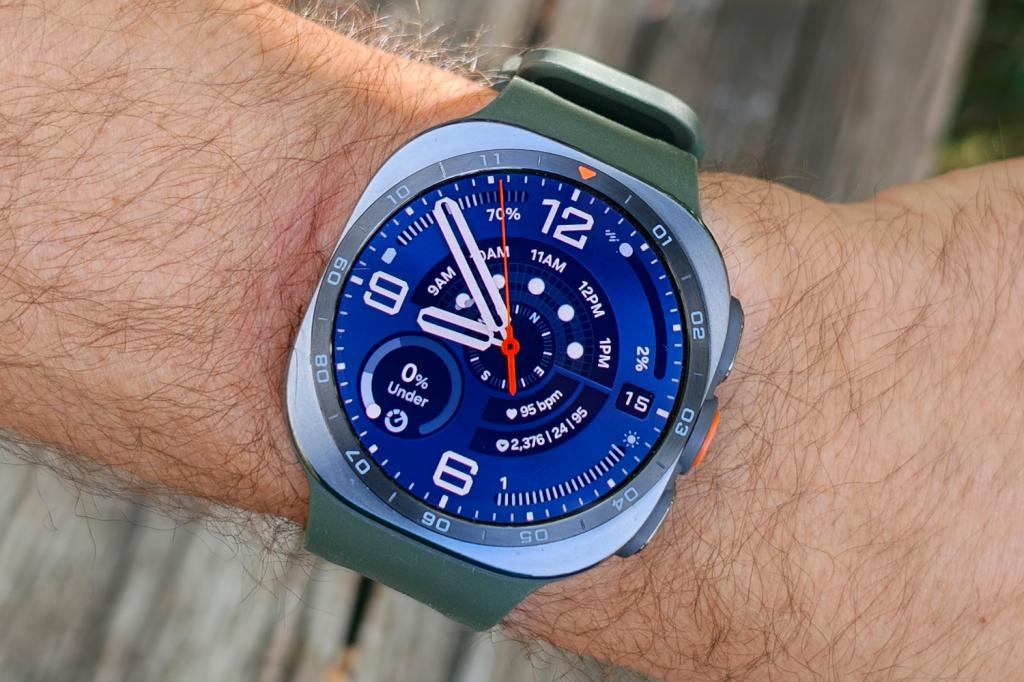
There’s no question the Galaxy Watch Ultra 2 is the ideal Wear OS smartwatch for outdoorsy types. It’s rugged, ocean-approved and goes for days between charges. The new trail running mode and more in-depth health tracking features could even be enough to tempt GPS sports watch owners. It also looks the part and adds software quality of life features that actually got me talking to my watch on the regular.
It’s undeniably expensive, though. The regular Galaxy Watch costs half as much, yet has largely identical software. Sure, you’ll have to charge it more often – and you can’t take it scuba diving – but for most people it’ll be the obvious choice.
If you want your Android smartwatch to make a statement, though, then look no further.
Samsung Galaxy Watch Ultra technical specifications
Scroll to see more →
| Specifications | Samsung Galaxy Watch Ultra 2 |
|---|---|
| Screen | 1.52in, 480×480 AMOLED |
| CPU | Snapdragon Wear Elite |
| Memory | 2GB RAM |
| Storage | 64GB on-board |
| Operating system | Wear OS 7 w/ OneUI 9 |
| Battery | 800mAh |
| Dimensions | 48x48x10.7mm |




Read the full article here


